Drugs, Health Technologies, Health Systems
Health Technology Review
Short-Stay Crisis Units in the Emergency Department: Current Landscape and Evidence on Safety and Effectiveness
Key Messages
The Challenge
Emergency departments (EDs) in Canada are experiencing ongoing overcrowding, with a growing number of visits related to mental health and substance use crises. These settings are typically not ideal for delivering mental health care due to a lack of privacy and an overstimulating environment, contributing to poor patient experiences, repeat visits, and highlighting broader gaps in accessible and effective community-based services. Short-stay crisis units (SSCUs) aim to address these challenges by providing rapid assessment and brief stabilization in a more therapeutic care setting.
The Evidence
This report draws on evidence from a pan-Canadian survey of hospital-based, SSCUs and a rapid review of published evidence on the safety and effectiveness of these units in improving mental health outcomes and alleviating overcrowding in EDs. We searched key resources, including journal citation databases, and conducted a focused internet search for relevant evidence published since 2015.
What We Found
We received responses from 10 relevant units in 7 jurisdictions across Canada. The findings suggest a highly variable landscape. SSCUs in Canada differ in name, model of care, staffing, referral pathways, capacity, and length of stay targets. All units were open 24 hours a day, 7 days a week, and did not charge fees. Those who responded described clear benefits including a safer and calmer space for patients experiencing a crisis, fewer unnecessary inpatient admissions, and stronger links to community care. Common barriers included funding, space, staffing, unclear admission criteria, and pressure to repurpose beds during periods of high hospital demand.
Evidence from 7 included publications suggest that SSCUs may improve some system-level outcomes, particularly wait times in EDs, length of stay in EDs, and use of restraints, but the evidence base remains limited and mixed. Findings on admissions, readmissions, and patient outcomes were less consistent, and most studies were conducted outside Canada.
Why it Matters
Overall, SSCUs appear promising, but they are not a one-size-fits-all solution. Their success likely depends on clear pathways, interdisciplinary staffing, stable funding, strong links to community resources, and careful alignment with local system needs. The findings of this report can be used as guidance for decision-makers across Canada who may be in the process of, or considering, implementing or making changes to SSCUs.
Context
Mental Health Crisis Care and Emergency Department Overcrowding
Emergency department (ED) overcrowding is an ongoing issue in Canada. An important group accessing the ED are people experiencing acute mental health crises. Internationally, visits to the ED for mental health concerns are increasing while the number of available beds is decreasing, resulting in challenges in providing timely and appropriate care.1-3 In Canada last year, approximately 10% of people who had at least 1 ED or urgent care centre visit for mental health and substance use, had 4 or more visits for the same concern in a 365-day period.4 ED boarding times (the time a patient remains in the ED after a decision to admit has been made)5 for patients presenting with mental health concerns have also been found to be disproportionately longer compared to other patient presentations.6
EDs are not an ideal environment to treat patients with mental health concerns, and are reported to have negative impacts on mental health due to the overstimulating environment, lack of privacy, long wait times, and competing clinical needs.7 This can make relationship building between the treating physician and patient particularly difficult, especially when compounded with language or cultural differences. Access to care can be especially hard for people who are racialized, people experiencing homelessness, Indigenous Peoples, and people with lived experience of substance use.8 In 2024, 41% of adults in Canada with a mental health disorder reported an unmet need for mental health care.9
Short-Stay Crisis Units
Short-stay crisis units (SSCUs) are hospital-based units typically located in or near an ED. They offer a therapeutic space for stabilization, assessment, and appropriate referrals for people experiencing a mental health crisis. SSCUs currently exist across Canada and internationally and may be referred to by different names, including emergency psychiatry assessment, treatment, and healing units; behavioural assessment units; psychiatric emergency services; psychiatric observation units; crisis stabilization units; and psychiatric decision units, among others.
SSCUs were originally conceptualized as a response to the rising number of people presenting to the ED with mental health crises and the need for specialized care.10 Objectives are typically 2-fold: reduce pressure on EDs by improving patient flow via a dedicated pathway, and provide better quality of mental health care.3,11 SSCUs function on a few key assumptions: that a structured, calm space is more healing for an individual undergoing an acute mental health crisis than a general ED waiting room; that acute distress is time-limited and short, targeted intervention can shift the trajectory of care; that timely assessment by trained staff can identify the appropriate interventions needed; and, that avoiding unnecessary inpatient admissions is beneficial to both the patient and the system.
When assessing the effectiveness of SSCUs, relevant outcomes include ED length of stay (LOS), total LOS, readmission rates, inpatient admissions, use of outpatient services, medication stabilization, and patient-reported outcomes. ED LOS is defined as the time from ED arrival (triage or registration) to physical departure from the ED (discharge, admission, or transfer). Total LOS includes total time in both the ED and the SSCU.
Why Is It Important to Do This Review?
The number of visits to the ED for acute mental health crises are continually increasing in Canada.6,8,12-14 In a series of reports published by Canada’s Drug Agency on emergency department overcrowding, SSCUs were identified as a potential intervention to help alleviate ED overcrowding and improve patient outcomes in settings where mental health-related presentations represent a substantial proportion of visits. A review of the available evidence and the current landscape of these units across Canada is important to guide informed decision-making regarding their implementation into clinical practice.
Purpose and Objectives
To support decision-making around mental health crisis care and ED overcrowding, we prepared this Environmental Scan to summarize information on the current landscape of SSCUs in Canada and to summarize the available evidence regarding their safety and effectiveness. This review also summarized the available evidence on patient and staff experiences with this intervention.
Research Questions
What is the landscape of short-stay, hospital-based crisis units across Canada?
What evidence exists on the safety and effectiveness of short-stay crisis units in alleviating emergency department overcrowding?
What evidence exists on the safety and effectiveness of short-stay crisis units in improving patient mental health outcomes?
Approach
We conducted an Environmental Scan to capture a variety of information related to SSCUs. This scan consisted of a survey and a literature search. To address research question 1, we conducted a survey to capture information about SSCU models, components of care, and implementation considerations, targeted at relevant personnel from SSCUs across Canada. To address research questions 2 and 3, an information specialist conducted a customized literature search, balancing comprehensiveness with relevance, of multiple sources and grey literature on December 12, 2025. The main search concept was SSCUs, and the search was limited to English-language documents published since January 1, 2015. A more detailed summary of methods is available in Appendix 2.
Findings
Survey Results
This section addresses the following research question:
1. What is the landscape of short stay, hospital-based crisis units across Canada?
We received 10 responses from clinicians and unit managers representing SSCUs in 7 provinces across Canada (Newfoundland and Labrador, Prince Edward Island, Nova Scotia, Ontario, Saskatchewan, Alberta, and British Columbia).
Most SSCUs served both individuals presenting with mental health concerns and those with substance use and addiction concerns, with some differences in triage and treatment modalities.
Those who responded highlighted the SSCU’s role in transitioning patients to community-based care.
Common facilitators for implementation included interdisciplinary staffing with appropriate expertise, treatment focused on personal skill building, and clear admission criteria and triage protocols.
Common barriers to implementation included lack of funding, physical space, and staffing; lack of understanding of the treatment model from administrators and staff in the ED; and the repurposing of SSCU beds to patients receiving acute care.
The findings presented are based on survey responses received between March 17, 2026, and April 13, 2026. We received 14 survey responses for 9 of 13 jurisdictions in Canada (i.e., Newfoundland and Labrador, Prince Edward Island, Nova Scotia, New Brunswick, Ontario, Saskatchewan, Alberta, British Columbia, and Nunavut). Ten of these responses spoke specifically to SSCUs consistent with our definition, while 4 described other models of mental health care in the ED setting. We have excluded these 4 responses from the main findings of this report but have provided a brief description of these alternate models in the section titled Other Models of Psychiatric Emergency Services. Table 1 and Table 2 provide a summary of the structural and operational components of the SSCUs identified in the survey.
We sent invitations to participate in the survey to a total of 40 individuals across 11 jurisdictions. We targeted staff familiar with specific SSCU delivery models, services provided, staffing, hours, and other structural, operational, implementation, and evaluation considerations. Those who responded included 3 individuals whom we contacted directly as well as 11 individuals who subsequently received the survey invitation from the initial contacts. They reported holding positions such as psychiatrist, unit manager, program medical director, nurse manager, and social worker. A list of participating organizations is provided in Appendix 4, Table 8.
Models of Care
We provided those who responded to the survey with the following definition of an SSCU and asked if it aligned with the model they used: “A mental health assessment service that is hospital-based, allows overnight stays (less than 1 week), and primarily aims to assess and stabilise patients undergoing a mental health or behavioural crisis, with the purpose of reducing the need or length of stay of standard acute psychiatric admission, and/or reducing mental health presentation or length of wait at the emergency department.”15
Most people who responded noted that this definition aligned with the model of care they used. Four specified that they aim for an LOS of less than 72 hours, while 1 indicated a maximum LOS of 48 hours. However, in most cases, those who responded suggested that LOS is not strictly enforced, depends on presentation, and if longer stays are required patients can be transferred to the psychiatric inpatient unit. All who responded noted that the primary purpose of the SSCU is either to help alleviate ED overcrowding or to reduce inpatient psychiatric admissions. While all SSCUs were located within hospitals, the SSCU in Newfoundland was located specifically in a mental health and addictions centre. In Nova Scotia, the SSCU is located on a different floor, separate from the ED.
SSCU Position Within Community Mental Health Care Model
Seven of 10 people who responded indicated that the jurisdiction within which their SSCU operates follows a “stepped care” model for treating patients with mental health concerns, and that the SSCU is incorporated into this model. A stepped care model refers to a system in which services are organized based on patient acuity, starting with the least intrusive intervention necessary and allowing a “step up” to more intensive care or a “step down” to less intensive care.16 Most people who responded to the survey indicated that their SSCU is meant to serve individuals who require more intensive care (e.g., acute detoxification, crisis stabilization) than what is available in the community, but less intensive care and shorter LOS than an inpatient unit. One person who responded from a large, 21-bed unit in Alberta indicated that they have both high observation, secure rooms as well as regular rooms available within their unit, so individuals can transition between those 2 levels of care within the unit as required.
Those who responded from both Prince Edward Island and British Columbia noted the importance of “bridging” programs that serve as a transition from the SSCU back to the community. In Prince Edward Island, there is a service that will check in on patients who were discharged within 72 hours of their psychiatric emergency visit. In British Columbia, the “Bridging Care Program”17 is a recovery-oriented day program that offers group and individual therapy and training, Monday to Friday, that is often used for patients discharged from the SSCU.
Numerous people who responded mentioned challenges in maintaining patients of the appropriate acuity in the SSCU. In some cases, it was noted that patients receiving acute care will often get admitted to the SSCU when there are no spaces available in the acute care units. A person who responded from Alberta noted an influx of patients who would not require SSCU admission if they had access to appropriate community resources.
Population Served
Almost all people who responded indicated that the SSCU serves only adults from mostly urban populations. The most notable exception was a unit in Ontario that serves adults and adolescents 16 years of age and older, from a mostly rural population. Another unit from Ontario and the 1 in Prince Edward Island indicated that they serve both adult and pediatric patients.
Referral Pathways and Admission
All SSCUs receive patients directly from the ED. In all instances, patients were required to complete the full ED pathway (i.e., triaged and medically cleared by a clinician in the ED) before being admitted. Two units also allowed self-presentations, and 2 accepted referrals from outpatient psychiatry. One person who responded from Calgary noted that they have patients referred from EDs across the city (not just from the hospital where the SSCU is located). Most SSCUs required formal admission of patients, while 1 was described as an observation unit, and 1 required hospital registration and creation of an ED chart but patients were not formally admitted.
Staffing
In most cases staffing in the SSCUs included a combination of clinical and support staff. Clinical staff included emergency physicians, psychiatrists, nurse practitioners, registered nurses, psychiatric nurses, registered practical nurses, occupational therapists, recreational therapists, social workers, and addiction counsellors. Support staff included outreach workers, security, and reception and clerical support. At a minimum, all units reported employing psychiatrists, registered nurses, and social workers. Approximately one-half of those who responded reported employing reception and clerical staff. A detailed list of staff by province is provided in Appendix 1, Table 4.
Services Provided
All the SSCUs identified in the survey provide assessment and stabilization, crisis counselling, medication review and prescription, and referrals and discharge planning. Some units also provide short-term case management. One unit in Ontario provides community treatment orders, and placements with community addiction services or long-term care.
Substance Use and Addictions Care
Most people who responded indicated that their SSCU serves both individuals presenting with mental health concerns and those with substance use and addiction concerns. Three of these indicated that the triage process differs slightly for those presenting with substance use as their main concern, with those individuals requiring a full assessment in the ED before being admitted. Treatment modalities for those with substance use concerns were also slightly different, with 1 unit in Ontario indicating that patients waiting for detoxification participate in virtual groups from an addictions treatment facility.
One unit in Alberta indicated that staff from their Acute Care Addiction Recovery Program18 are heavily involved in the care of individuals presenting with substance use to monitor withdrawals, plan treatment, and connect with community-based care. Patients seeking sobriety are connected with treatment centres; those not seeking sobriety, are supported and connected to community resources and discharge. Another response indicated that they aid with withdrawal management, and another that those patients can get referred to the addictions liaison team.
Table 1: Summary of Structural Components
Unit location | Time operational | Fundinga | Ages served | Capacity and location within hospital | Hours of operation | Rural or urban classification of population served | MH or SU classification of population served |
|---|---|---|---|---|---|---|---|
Newfoundland and Labrador | |||||||
St. John’s | 15 years or more | Government Hospital | Adults | 6 beds Within mental health and addictions-specific hospital | 24 hours, 7 days per week | Mostly urban | Both MH and SU concerns |
Prince Edward Island | |||||||
Charlottetown | Planned but never opened | Government | Adults and pediatric | 4 beds Within psychiatric ED (nearby to general ED) | 24 hours, 7 days per week | Mostly urban | Both MH and SU concerns |
Nova Scotia | |||||||
Halifax | “Decades” | Hospital | Adults | 5 beds Sixth floor of general hospital | 24 hours, 7 days per week | Mostly urban | Both MH and SU concerns |
Ontario | |||||||
Halton | 10 years | Government | Adults and pediatric | 2 beds Location: NR | 24 hours, 7 days per week | Suburban | Both MH and SU concerns |
Owen Sound | 5 years | Hospital | Adults and Pediatric (16 years and older) | 8 beds Location: NR | 24 hours, 7 days per week | Mostly rural | Both MH and SU concerns |
Saskatchewan | |||||||
Saskatoon | 6 years | Government | Adults | 8 beds Location: NR | 24 hours, 7 days per week | Mostly urban | Both MH and SU concerns |
Alberta | |||||||
Calgary | 8 years | Government | Adults | 10 beds Location: NR | 24 hours, 7 days per week | Mostly urban | Both MH and SU concerns |
Calgary | 25 years | Government Hospital | Adults | 21 beds Location: NR | 24 hours, 7 days per week | Mostly urban | Both MH and SU concerns |
Edmonton | 7 years | Government Hospital | Adults | 4 beds Location: NR | 24 hours, 7 days per week | Mostly urban | Both MH and SU concerns |
British Columbia | |||||||
Victoria | 20 years | Government Hospital | Adults | 3 designated beds but no firm capacity Location: Within psychiatric ED | 24 hours, 7 days per week | Mostly urban | Both MH and SU concerns |
ED = emergency department; MH = mental health; NR = not reported; SU = substance use.
aSurvey options included “government,” “hospital,” “private,” or “other.” No further details were provided.
Table 2: Summary of Operational Components
Unit location | Name | Primary purpose | Referral pathway | Admission or observation unit | Maximum LOS | Number of FTE staff |
|---|---|---|---|---|---|---|
Newfoundland and Labrador | ||||||
St. John’s | Short-stay unit | NR | Transfer from ED (must complete full ED pathway) | Formal admission | NR | 16 clinical and 2 support |
Prince Edward Island | ||||||
Charlottetowna | Mental health and addictions ED short-stay unit | Reduce inpatient psychiatric admissions | Transfer from ED (must complete full ED pathway and be medically cleared by EM physician) | Formal admission | 72 hours | 10 clinical and 4 support |
Nova Scotia | ||||||
Halifax | Psychiatric emergency service | Provide a structured environment to help stabilize mental health crises | Transfer from ED (must complete full ED pathway) Outpatient psychiatry clinic | Formal admission | 72 hoursb | 10 clinical and 2 support |
Ontario | ||||||
Halton | Brief assessment service | Reduce inpatient psychiatric admissions | Transfer from ED | Formal admission | No set maximum (10 days was the longest) | 3 clinical and 0 support |
Owen Sound | Crisis support program | Reduce inpatient psychiatric admissions | Transfer from ED Self-presentation Outpatient psychiatry clinic | Observation unit | 72 hours | 10 clinical and 2 support |
Saskatchewan | ||||||
Saskatoon | Mental health short-stay unit | Alleviate ED overcrowding | Transfer from ED (must complete full ED pathway) | Formal admission | 7 days | 13 clinical and 1 support |
Alberta | ||||||
Calgary | Crisis stabilization unit | Alleviate ED overcrowding | Transfer from ED | Formal admission | No set maximum | 13 clinical and 4 support |
Calgary | Short-stay unit and/or unit 130 | Alleviate ED overcrowding | Transfer from ED | Formal admission | 72 hours | 30 clinical and 10 support |
Edmonton | Safe observation and assessment unit | Reduce inpatient psychiatric admissions | Transfer from ED | Requires hospital registration but not formally admitted | 48 hours | 4 clinical and 2 support |
British Columbia | ||||||
Victoria | No specific name (short-stay beds are within PES area) | Reduce inpatient psychiatric admissions | Transfer from ED to PES, referral to psychiatry, then admission to SSCU by psychiatrist | Formal admission | 72 hours | 23 clinical and 6 support |
ED = emergency department; EM = emergency medicine; FTE = full-time equivalent; LOS = length of stay; NR = not reported; PES = psychiatric emergency services; SSCU = short-stay crisis unit.
aSurvey responses indicative of planned operations if the unit had ever opened.
bSeventy-two hours is the goal, but it depends on the presentation. The SSCU does take patients receiving acute care so it can be difficult to meet this goal.
Table 3: Summary of Services Offered at SSCUs in Canada
Unit location | Assessment and stabilization | Crisis counselling | Medication review and prescription | Referrals and discharge planning | Short-term case management | Other |
|---|---|---|---|---|---|---|
Newfoundland and Labrador | ||||||
St. John’s | Yes | Yes | Yes | Yes | No | No |
Prince Edward Island | ||||||
Charlottetown | Yes | Yes | Yes | Yes | No | No |
Nova Scotia | ||||||
Halifax | Yes | Yes | Yes | Yes | No | No |
Ontario | ||||||
Halton | Yes | Yes | Yes | Yes | Yes | Yes (CTO, CAS and LTC placement) |
Owen Sound | Yes | Yes | Yes | No | No | No |
Saskatchewan | ||||||
Saskatoon | Yes | Yes | Yes | Yes | Yes | No |
Alberta | ||||||
Calgary | Yes | Yes | Yes | No | No | No |
Calgary | Yes | Yes | Yes | Yes | No | No |
Edmonton | Yes | No | Yes | Yes | Yes | No |
British Columbia | ||||||
Victoria | Yes | No | Yes | Yes | No | No |
CAS = community addiction services; CTO = community treatment order; LTC = long-term care; SSCU = short-stay crisis unit.
Implementation Considerations
Facilitators and Barriers
The most common facilitator to opening and operating SSCUs, as indicated by those who responded, was the presence of experienced, supportive staff that understand the model of care. Those who responded to the survey also indicated that it was important to have input from physicians, the community, and those with lived experience into the planning and service model of the unit, and physician interest in managing and treating complex cases. Other facilitators were sponsorship from hospital leadership, funding, clear admission criteria, physical space, fast turnaround of patient admission and care processes, and appropriate, interdisciplinary staffing levels.
Common barriers to opening and operating SSCUs identified by those who responded included appropriate staffing, lack of funding, and suitable physical space. One person who responded indicated the need but difficulty in ensuring 24 hours a day, 7 days a week support from a psychiatrist. In numerous cases, those who responded indicated that due to high patient volumes in the general ED, SSCUs had difficulty operating as separate units, with their beds often repurposed as additional acute care spaces. Another theme was a general lack of understanding from administrators and ED staff of the SSCU model, and a lack of clarity around which patients are eligible for the unit.
In 1 case, where the SSCU is embedded within a psychiatric ED, the person who responded indicated that there is nothing in the environment to distinguish those admitted to the SSCU from those just arriving for assessment or those waiting for admission to the inpatient unit. Therefore, it is challenging to have an SSCU-specific service model or programming.
Benefits and Drawbacks
The most reported benefits of SSCUs revolved around improved patient care. Six people who responded to the survey indicated that patients are assessed and stabilized in a safe setting by experienced staff, with 2 people who responded to the survey indicating that they often have a shorter LOS. Four people who responded to the survey identified reduced avoidable inpatient admissions and connections to community resources for ongoing support as benefits. One person who responded noted the opportunity to support longer-term recovery through connections to community programs.
A frequently reported drawback of SSCUs was that the unit may become a default disposition for patients presenting to the ED with a crisis to avoid decision-making, especially where there is a lack of understanding of their services and of admission criteria. Additional concerns included units being repurposed due to system pressures such as bed shortages or staffing issues (2 people who responded), premature patient discharge (1 person who responded), and challenges in creating safe discharge plans for patients with needs beyond the scope of crisis services (e.g., housing) (1 person who responded).
Other Models of Psychiatric Emergency Care
We received 4 responses describing models of care for emergency psychiatry that do not fit the definition of an SSCU. Two responses representing 3 hospital sites in Ontario indicated that they have separate, locked areas within the ED used for the assessment of patients presenting with mental health concerns but that do not allow for overnight stays and focus on medical treatment rather than therapy or skill building. These units indicated that barriers to implementing an SSCU include funding for trained staff capable of providing focused therapy, and provincial directives that advise against holding patients with mental health concerns in the ED. One response from New Brunswick indicated that while they do not have a dedicated SSCU, they have 4 beds within their psychiatric inpatient unit with concentrated nursing care with the goal of crisis stabilization and an LOS of less than 72 hours. Consistent with most responses, the largest barriers to a dedicated unit were space, funding, and staffing.
Figure 1: Case Study — SOA Unit, Royal Alexandra Hospital, Edmonton, Alberta
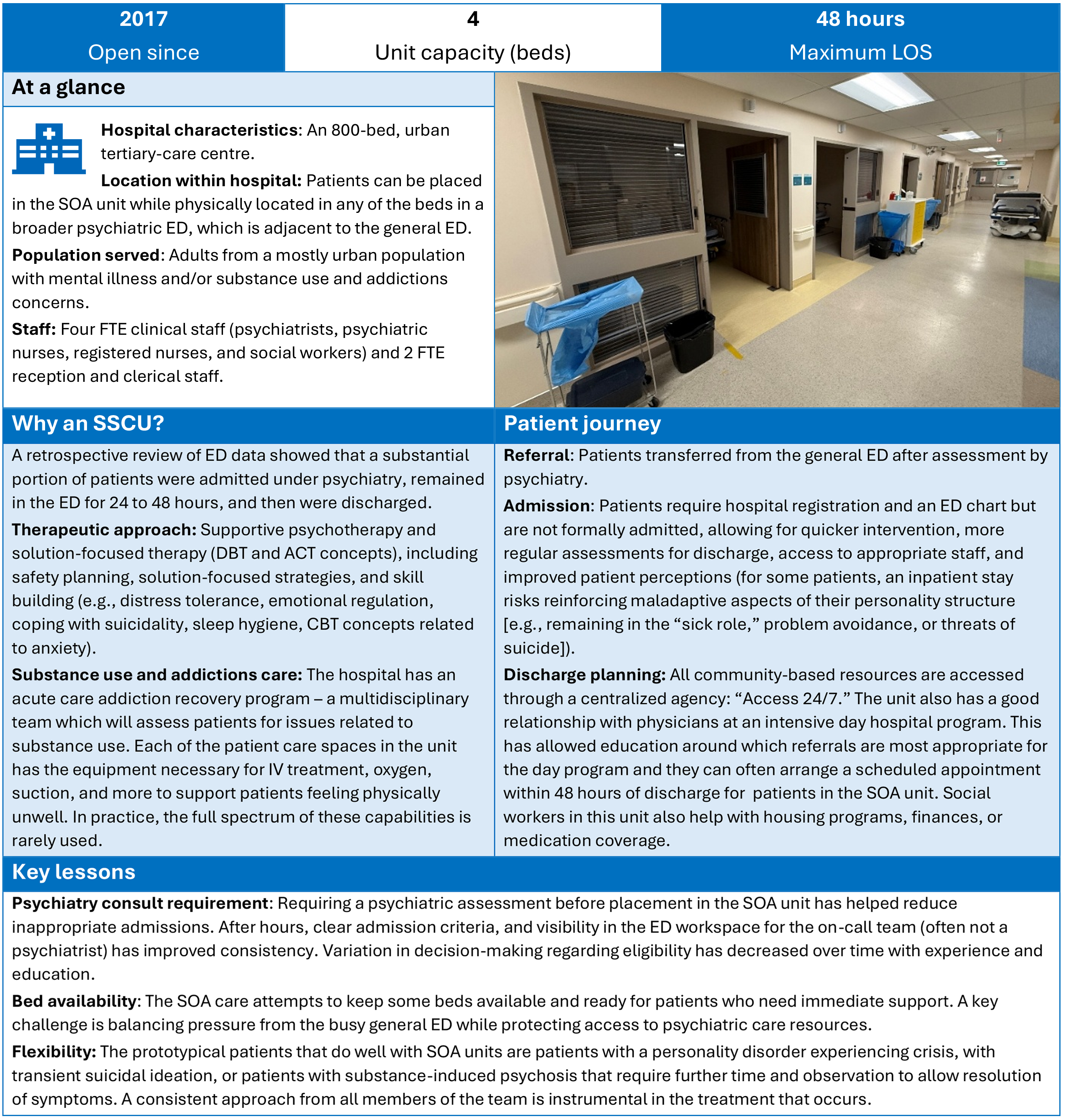
ACT = acceptance and commitment therapy; DBT = dialectical behaviour therapy; ED = emergency department; FTE = full-time equivalent; LOS = length of stay; SOA = safe observation and assessment; SSCU = short-stay crisis unit.
Source: Reproduced with permission from Dr. Mark Corie, Psychiatrist, Royal Alexandra Hospital.
Literature Findings
This section addresses the following research questions:
2. What evidence exists on the safety and effectiveness of short-stay crisis units in alleviating emergency department overcrowding?
3. What evidence exists on the safety and effectiveness of short-stay crisis units in improving mental health outcomes?
We included 7 publications from the literature that examined the impact of SSCUs on ED overcrowding and mental health outcomes.
Evidence suggests that SSCUs may be associated with reductions in ED wait times, ED LOS, and the use of restraints. Findings on their effect on inpatient admissions were inconsistent; however, SSCUs were associated with shorter inpatient LOS.
Limited evidence suggests no substantial impact on suicidality or risk of repeat attempts.
Implementation facilitators identified in the literature include close collaboration with hospital and community services, clear admission criteria, structured care planning, and care that is culturally sensitive.
We included 7 publications from the literature search that met our inclusion criteria (Appendix 2, Table 6): 1 systematic review (SR),19 2 before and after interventional studies,20,21 1 mixed-methods study,3 2 qualitative studies,22,23 and 1 cross-sectional observational study.24 Studies were conducted in Australia,11,19,23 France,20 South Africa,24 the UK,3 and the US,21,22 with most focusing on adult populations, and 1 including adolescents. A list of other references of potential interest can be found in Appendix 5.
Unit Characteristics
Across the included studies, most SSCUs were operating 24 hours a day, 7 days a week11,20,23 with capacity ranging from 5 to 12 beds3,11,20,21,23 and maximum LOS ranging between 24 to 72 hours.3,11 Units were implemented across diverse hospital settings and governed by mental health3,11 or clinical toxicology services23 rather than emergency medicine.
Staffing models were multidisciplinary, including nurses (mainly mental health nurses), physicians, social workers, and addiction specialists.3,11,20,21,23,24 Most units operated with relatively high staff to patient ratios, such as 1:1 or 1:2.3 Referral pathways commonly originated from the ED, intensive care unit, inpatient wards, or community services, with patients typically requiring medical clearance before admission.3,20,23 Care focused on assessment, stabilization, and discharge planning with community linkages.11,20,21,23
Summary of ED Overcrowding and Mental Health Outcomes
A mixed-method study performed in the UK comprised a survey, SR, interrupted time series, synthetic control study, cohort study, and qualitative interviews, with a critical interpretive synthesis approach.3 Within the SR component, the authors of several primary studies reported a positive association between implementation of an SSCU and reductions in ED wait times and long waits (greater than 24 hours), although others reported there were no substantial changes compared to preimplementation or control sites.3 The authors reported that limited evidence suggested reduced ED boarding time following SSCU implementation in before and after studies or when compared to patients visiting a hospital without an SSCU.3 The authors went on to report that SSCUs were associated with reduced psychiatric admissions in the short term; however, findings were inconsistent, with no long-term effect,3 and there was some evidence of increased admissions following initial SSCU use.3 Finally, authors noted that SSCUs were also associated with shorter inpatient LOS, and that limited evidence suggested no substantial impact on suicidality or risk of repeat attempts.3
An SR included 14 studies from Australia, Canada, and the US examining the effectiveness of SSCUs in improving patient flow through the ED. The authors concluded that evidence consistently showed improvements in ED LOS and reductions in the use and duration of restraints, as well as fewer patients restrained.3,19 Findings for readmission rates were inconclusive with unclear comparators.19 One primary study conducted in the US (N = 2,369) examined both ED LOS and total LOS before and after implementation of an SSCU serving adolescent patients aged 12 to 17 years. Authors reported no significant change in total LOS for patients who were eligible for the unit, but a significant decrease in ED LOS. This was associated with a decrease in beds lost to boarding in the pediatric ED of 544 hours per month.21 Another study, conducted in France (N = 348), also reported a reduction in ED wait times after the implementation of an SSCU.20
Staff and Patient Experiences
Two qualitative studies,22,23 1 mixed-methods study,3 and 1 cross-sectional survey study24 explored the experiences of patients and staff in SSCUs. The qualitative interview study (N = 73) within the mixed-methods study included first-time visitors to SSCUs, members of the units’ clinical teams, and clinicians referring to the units. The authors noted that patients generally reported more positive experiences in SSCUs compared to EDs, describing units as clean, calm, and safe.3 Although concerns about noise, privacy, and safety were noted, staff were often perceived as empathetic, approachable and nonjudgmental, providing a more humanizing experience.3 However, patients in some settings reported limited interaction with staff, particularly in shorter-stay units which left them isolated and confused.3 The authors also noted that staff felt that SSCUs provided a therapeutic, calm, and appropriate alternative to care in the ED, and that they valued the multidisciplinary and nurse-led models, which enabled skill development and autonomy.3 Staff highlighted challenges related to communication, referral processes, and system pressures, as well as the emotional demands of the role.3
In 1 study investigating the experiences of people presenting to the SSCU with alcohol or drug intoxication,23 the authors noted that patients described receiving expert, nonjudgmental care from a large multidisciplinary team, in a comfortable and busy space, as well as satisfaction with discharge planning, especially when linked to community supports.23 In another study, examining experiences of Black patients in a locked SSCU in the US (N = 11), the authors reported themes of criminalization, vulnerability, stigma, mismatches between expected and received care, and inequities related to race, ethnicity, and socioeconomic status, particularly during transport and admission processes.22 The cross-sectional observational study measured levels of compassion fatigue and compassion satisfaction in nurses working at SSCUs across 8 hospitals in South Africa.24 Overall, the nurses reported moderate compassion satisfaction, moderate burnout, and high secondary traumatic stress.24
Implementation Considerations
Across the included studies, successful implementation of SSCUs was reported to be supported by close collaboration and integration of units with hospital and community services, clear admission criteria, and structured care planning to facilitate patient flow and discharge.20,23 Broad admission criteria were associated with longer LOS and increased bed occupancy.20 Some units reassigned existing staff, reducing set-up costs.21 Locating the unit close to the ED could increase inappropriate referrals but also provide opportunity for improved communication between teams.3 Delivering trauma informed, culturally sensitive, and individualized care was identified as critical while restrictive practices (i.e., restraints) and law enforcement involvement were reported to negatively impact patient experience, particularly among racialized groups.22
Limitations
We did not receive eligible survey responses from 6 jurisdictions in Canada nor from all SSCUs in operation, resulting in gaps in the data and results.
The SSCUs captured in the survey mostly served adults in urban populations, minimizing the generalizability of findings to other settings and populations present in Canada.
There are numerous names that may be used to refer to services that fit our definition of “short-stay crisis unit,” resulting in a risk of missing relevant people who responded to the survey and information sources in our literature search.
Methodological Limitations
This Environmental Scan aimed to provide an overview of some SSCUs operating across Canada rather than a comprehensive inventory of all SSCUs. We did not receive responses (or received ineligible responses based on our SSCU definition) from 6 jurisdictions in Canada nor from all operating SSCUs in the jurisdictions who did respond, resulting in gaps in the data and results. Some people who responded to the survey may not be aware of, or have access to, the information sought in the survey, and therefore, the results may not be entirely accurate or representative of the current landscape of SSCUs in Canada. We did attempt to mitigate this limitation by using purposive sampling and snowballing techniques to distribute the survey to those most knowledgeable about SSCUs. These sampling methods themselves; however, introduce the risk of sampling bias.
While we use the term “short-stay crisis unit” in this report, there are numerous names that may be used to refer to services that fit the same definition (e.g., behavioural assessment unit, psychiatric observation unit), so there is a possibility that this report is missing some relevant information sources that use alternative names. We tried to mitigate this risk by searching for different terms in the literature. Furthermore, only English-language studies were included. The intention of this report was to provide an overview of the type of literature that is available on the topic of SSCUs, rather than to comprehensively explore the safety and effectiveness results. Given the nature of the study designs appropriate for this topic, we anticipate that study quality assessments guided by standard appraisal tools would result in a “low quality” rating due to unavoidable biases, even though studies may be well designed. We did not perform a critical appraisal of the included studies however and therefore cannot comment on the risk of bias or certainty of the evidence. Finally, a single reviewer screened the studies and extracted data which may increase the risk of error and bias in study selection and data extraction. No evidence was found exploring the specific needs of those who are unhoused or Indigenous populations.
Generalizability
Due to the size and variability of jurisdictions in Canada, the findings of this survey may not be applicable to the needs of all communities. Most SSCUs represented in this survey served only adults, and therefore the evidence may not be applicable to SSCUs meant for pediatric patients. Similarly, we received responses from SSCUs that largely serve urban or suburban populations. Jurisdictions in Canada consist of many rural and remote populations, and these were not represented in this report. The studies included in this report took place across a variety of locations including Australia, France, South Africa, the UK, and the US. However, because none of these studies were conducted in Canada, differences in patient populations, ED workflows, and community mental health resources, may limit the generalizability of this evidence to settings in Canada.
Conclusions and Implications for Decision-Making
Summary of Evidence
This Environmental Scan aimed to provide an overview of both the components and experiences of SSCUs in Canada and the available literature on their safety and effectiveness for patients experiencing mental health crises. A survey of jurisdictional contacts and a search of published and unpublished literature were conducted.
The survey results summarized in this report suggest considerable heterogeneity in the names, models of care, referral pathways, capacities, and staffing of SSCUs across Canada. For example, the number of beds available ranged from 2 to 21, and full-time equivalent staff ranged from 3 to 40. All units were open 24 hours a day, 7 days a week, no fees were charged to the patients, and the units were funded by either their ministry of health, the hospital, or a combination of both. Most units served only adults and reported a goal LOS of 72 hours but noted that this was flexible depending on the case. All those who responded to the survey indicated benefits from SSCUs included providing a safe space for patients experiencing crisis to stabilize and be referred to community, while also avoiding unnecessary and sometimes harmful inpatient admissions. Common challenges included securing stable funding, suitable physical space, and appropriate staff. Operationally, some people who responded noted difficulties with SSCU beds being reassigned to patients receiving acute care when ED volume was high, a lack of understanding from ED staff on the unit’s purpose and admission criteria, and limited community resources for appropriate discharge planning.
Our literature search identified 7 relevant publications. Overall, the authors of these publications indicated that SSCUs appear to improve ED LOS while reducing the use of restraints.
Considerations for Future Research
Given the limited availability of studies conducted in Canada, future research could evaluate whether SSCUs improve clinical and health system outcomes within publicly funded health care settings. Outcomes of interest might include the number of inpatient psychiatric admissions, ED LOS, and patient-reported experiences of care. Research could also examine whether these models provide equitable access and benefit across diverse populations prevalent in Canada, including women, racialized groups, people experiencing homelessness, Indigenous Peoples, people with lived experience of substance use, and those living in rural and remote communities. Community partnerships and follow-up pathways that optimize outcomes beyond the initial SSCU visit could also be assessed.
Implications for Decision-Making
Potential implementers of an SSCU may wish to reflect on the composition of the population the unit is intended to serve. Structural barriers to the access and quality of mental health care services in Canada have been documented for certain groups including women, racialized groups, Indigenous Peoples, people with lived experience of substance use, and people experiencing homelessness.8 If 1 or more of these populations make up a substantial portion of those presenting to the ED with mental health or substance use concerns, SSCUs should be prepared to provide appropriate care. This could include relevant staff training, for example, the presence of an Indigenous Elder or strong relationships with supportive housing organizations. While locked units and the use of restraints can provide a level of security, 1 included study noted that this may negatively impact patient experience, particularly among racialized groups.22
Decision-makers and clinicians planning to implement an SSCU may wish to ensure the unit is equipped to support patients with mental health concerns as well as those experiencing substance use or addiction-related issues. These patients may require medical clearance before transfer to the SSCU. Where detoxification or withdrawal management is expected to occur within the unit, appropriate medical equipment (e.g., IV therapy capabilities) and staff with relevant clinical expertise may be needed. Some people who responded to the survey also identified the value of a dedicated addictions liaison team to support treatment and discharge planning for this population. Decision-makers should consider how the needs of patients with substance use and addiction concerns will be safely and effectively addressed within the SSCU model.
Almost all of the people who responded to the survey indicated that their SSCU fits within a broader “stepped care” model of mental health care in the community, serving as both a diversion from inpatient psychiatric admission and a transition to community-based care. Decision-makers who intend to implement an SSCU may wish to consider what other mental health resources (e.g., supported housing, addiction services, peer support programs, outpatient psychiatry) are available in their jurisdiction to support the implementation of an SSCU. One person who responded noted that a facilitator to the implementation of their unit was the involvement of experts, community, and those with lived experience in the planning stages. The development of services that follow up with patients after discharge, as is the case for a planned unit in Prince Edward Island, or the collaboration with outpatient day programs, as in a unit in British Columbia, are something to consider.
Relatedly, to properly serve the appropriate acuity of patients, it is suggested that beds be reserved for those eligible for the SSCU. Strict and clear admission criteria and referral pathways, and clear communication between the general staff in the ED and the SSCU can contribute to this goal. A local assessment of the number of eligible visits may help guide the number of beds needed. These factors, along with 24 hours, 7 days a week operating hours, have the added benefit of ensuring that patients are transferred quickly from the general ED to the SSCU, which is another important contributor to successful treatment.
Finally, appropriate and consistent staffing is integral to the successful implementation of a SSCU. This includes ensuring adequate support from staff with relevant expertise, such as psychiatrists, registered nurses, and social workers, as well as fostering effective teamwork, proactive patient engagement, and a shared culture of care. Decision-makers may wish to consider both preimplementation and ongoing staff training. For example, at the safe observation and assessment unit in Edmonton, Alberta, training is delivered by physicians from a local day hospital program, simultaneously building staff capacity and strengthening relationships with an important community partner.
The limitations of this Environmental Scan, such as the variability in terminology and models of care of included SSCUs and concerns regarding the generalizability of findings to settings in Canada, should be considered when interpreting the conclusions of this report. Despite this, the findings can serve as a starting point for jurisdictions that may wish to implement or make changes to SSCUs.
Acknowledgements
The authors would like to thank the following content experts who provided feedback throughout the project and who externally reviewed this document. They have granted permission to be cited.
Grace MacEwen, BScN, RN
Clinical Supervisor, Health PEI
Mark Corie, MD, FRCPC
Psychiatrist, Royal Alexandra Hospital
References
1.Goldsmith LP, Anderson K, Clarke G, et al. The psychiatric decision unit as an emerging model in mental health crisis care: a national survey in England. Int J Ment Health Nurs. Aug 2021;30(4):955-962. doi:10.1111/inm.12849 PubMed
2.Goldsmith LP, Anderson K, Clarke G, et al. Service use preceding and following first referral for psychiatric emergency care at a short-stay crisis unit: A cohort study across three cities and one rural area in England. Int J Soc Psychiatry. Jun 2023;69(4):928-941. doi:10.1177/00207640221142530 PubMed
3.Gillard S, Anderson K, Clarke G, et al. Evaluating mental health decision units in acute care pathways (DECISION): a quasi-experimental, qualitative and health economic evaluation. Meta-Analysis Systematic Review Research Support, Non-U.S. Gov't. Health Soc Care Deliv Res. Dec 2023;11(25):1-221. doi:10.3310/PBSM2274 PubMed
4.Canadian Institute for Health Information. Frequent Emergency Room Visits for Help With Mental Health and Substance Use. Accessed March 3, 2026, https://www.cihi.ca/en/indicators/frequent-emergency-room-visits-for-help-with-mental-health-and-substance-use
5.Boudi Z, Lauque D, Alsabri M, et al. Association between boarding in the emergency department and in-hospital mortality: A systematic review. PLoS One. 2020;15(4):e0231253. doi:10.1371/journal.pone.0231253 PubMed
6.Chisholm C, Wang X, Lategan C, Hsu Z, Ridout A, Lang E. Correction: Disparities in emergency department boarding: contrasting mental health and non-mental health patients. Canadian Journal of Emergency Medicine. 2025/04/01 2025;27(4):316-316. doi:10.1007/s43678-025-00904-7
7.Sacre M, Albert R, Hoe J. What are the experiences and the perceptions of service users attending Emergency Department for a mental health crisis? A systematic review. Int J Ment Health Nurs. 2022;31(2):400-423. doi:https://doi.org/10.1111/inm.12968 PubMed
8.Public Health Agency of Canada. Inequalities in mental health, well-being and wellness in Canada. 2024. Pan-Canadian Health Inequalities Reporting Initiative. https://health-infobase.canada.ca/mental-health/inequalities/
9.Canadian Institute for Health Information. Canadians With a Mental Health Disorder Who Have an Unmet Need for Mental Health Care. Accessed April 27, 2026, https://www.cihi.ca/en/indicators/canadians-with-a-mental-health-disorder-who-have-an-unmet-need-for-mental-health-care
10.Orlandini L, Maisano B, Ornago AM, et al. Factors associated with hospitalization from a geriatric short-stay unit (OBI-GER): a retrospective cohort study. Aging Clin Exp Res. Jul 25 2025;37(1):231. doi:10.1007/s40520-025-03125-1 PubMed
11.Mitchell D, Bressington D. An Evaluation Protocol for A Stabilisation and Referral Area (SARA): A Novel Short Stay Psychiatry Unit Serving A Remote Region of Australia. Alpha Psychiatry. Apr 2025;26(2):39448. doi:10.31083/AP39448 PubMed
12.Beaudry G, Drouin O, Gravel J, et al. A comparative analysis of pediatric mental health-related emergency department utilization in Montréal, Canada, before and during the COVID-19 pandemic. Ann Gen Psychiatry. Jun 13 2022;21(1):17. doi:10.1186/s12991-022-00398-y PubMed
13.Baia Medeiros DT, Hahn-Goldberg S, O’Connor E, Aleman D. Analysis of emergency department length of stay for mental health visits: A case study of a Canadian academic hospital. Canadian Journal of Emergency Medicine 2019;21(3):374-383. doi:10.1017/cem.2018.417 PubMed
14.Arneja J, Batomen B, Fleury M-J, Nandi A. Trends and socioeconomic inequalities in acute mental health service use in Canada, 2004-2019: a nationally representative retrospective cohort study. BMJ Mental Health. 2025;28(1):e301600. doi:10.1136/bmjment-2025-301600 PubMed
15.Anderson K, Goldsmith LP, Lomani J, et al. Short-stay crisis units for mental health patients on crisis care pathways: systematic review and meta-analysis. Review. BJPsych Open. Jul 25 2022;8(4):e144. doi:10.1192/bjo.2022.534 PubMed
16.Mental Health Commission of Canada. Stepped Care 2.0: What makes it different? Accessed April 22, 2026, https://mentalhealthcommission.ca/resource/what-is-stepped-care-2-0-4-pager/
17.Health Quality BC. Bridging Care Program. Accessed April 18, 2026, https://healthqualitybc.ca/quality-awards/winners/bridging-care-program/
18.Alberta Health Services. Programs & Services - Acute Care Addiction Recovery Program. Accessed April 18, 2026, https://www.albertahealthservices.ca/findhealth/service.aspx?Id=1068151#:~:text=The%20ACARP%20Team%20works%20with,counselling%2C%20peer%20and%20psychosocial%20supports
19.Magarey AW, Weng J, Looi JCL, Allison S, Bastiampillai T. Systematic Review of Psychiatric Observation Units and Their Impact on Emergency Department Boarding. Systematic Review. Prim Care Companion CNS Disord. Nov 7 2023;25(6):07. doi:10.4088/PCC.22r03468
20.Madieta L, Kazour F, Gohier B. Acute psychiatric care: Initial findings from a post-emergency department unit. Encephale. Apr 2026;52(2):212-214. doi:10.1016/j.encep.2025.06.002 PubMed
21.Claudius I, Tolles J, Fleischman R, et al. Process and Impact of Development of an Adolescent Emergency Psychiatry Unit at a Large Urban Hospital. Pediatr Emerg Care. Aug 1 2024;40(8):598-602. doi:10.1097/PEC.0000000000003212 PubMed
22.Smith CM, Daley LA, Lea C, et al. Experiences of Black Adults Evaluated in a Locked Psychiatric Emergency Unit: A Qualitative Study. Research Support, N.I.H., Extramural Research Support, Non-U.S. Gov't. Psychiatr Serv. Oct 1 2023;74(10):1063-1071. doi:10.1176/appi.ps.20220533 PubMed
23.Carland JE, Nguyen Y, Paul H, et al. A 3-year experience of an Australian short-stay Psychiatric, Alcohol and Non-prescription Drug Assessment Unit: unit activity and the patient experience. Emerg Med J. Oct 1 2025;01:01. doi:10.1136/emermed-2024-214653
24.Maila S, Martin PD, Chipps J. Professional quality of life amongst nurses in psychiatric observation units. S Afr J Psychiatr. 2020;26:1553. doi:10.4102/sajpsychiatry.v26i0.1553 PubMed
25.Page MJ, Moher D, Bossuyt PM, et al. PRISMA 2020 explanation and elaboration: updated guidance and exemplars for reporting systematic reviews. BMJ. 2021;372:n160. doi:10.1136/bmj.n160 PubMed
Appendix 1: Detailed Findings
Please note that this appendix has not been copy-edited.
Survey Findings
Table 4: Type of Staff at SSCUs in Canada
Staff type | Newfoundland and Labrador | Prince Edward Island | Nova Scotia | Ontario | Saskatchewan | Alberta | British Columbia |
|---|---|---|---|---|---|---|---|
Clinical staff | |||||||
Physicians (emergency medicine) | No | No | No | No | No | Some | Yes |
Physicians (psychiatry) | Yes | Yes | Yes | Yes | Yes | Yes | Yes |
Nurse practitioners | Yes | No | No | No | No | No | No |
Registered nurses | Yes | Yes | Yes | Some | Yes | Yes | Yes |
Registered psychiatric nurses | No | No | No | Some | Yes | Yes | Yes |
Registered or licensed practical nurses | No | Yes | No | Yes | No | Some | No |
Social workers | Yes | Yes | Yes | Some | Yes | Yes | Yes |
Case managers or care coordinators | No | No | No | No | No | No | No |
Other | No | No | No | No | Yes (Continuing care aid) | Some (Addictions counsellors, occupational therapists, recreational therapists, outreach workers) | Yes (Mental health workers) |
Support staff | |||||||
Reception and clerical staff | NR | Yes | Yes | No | No | Yes | Yes |
Researchers | NR | No | No | No | No | No | No |
Information technology | NR | No | No | No | No | No | No |
Other | NR | No | No | No | No | No | Yes (Learning health system facilitator) |
NR = not reported; SSCU = short-stay crisis unit.
Literature-Based Findings
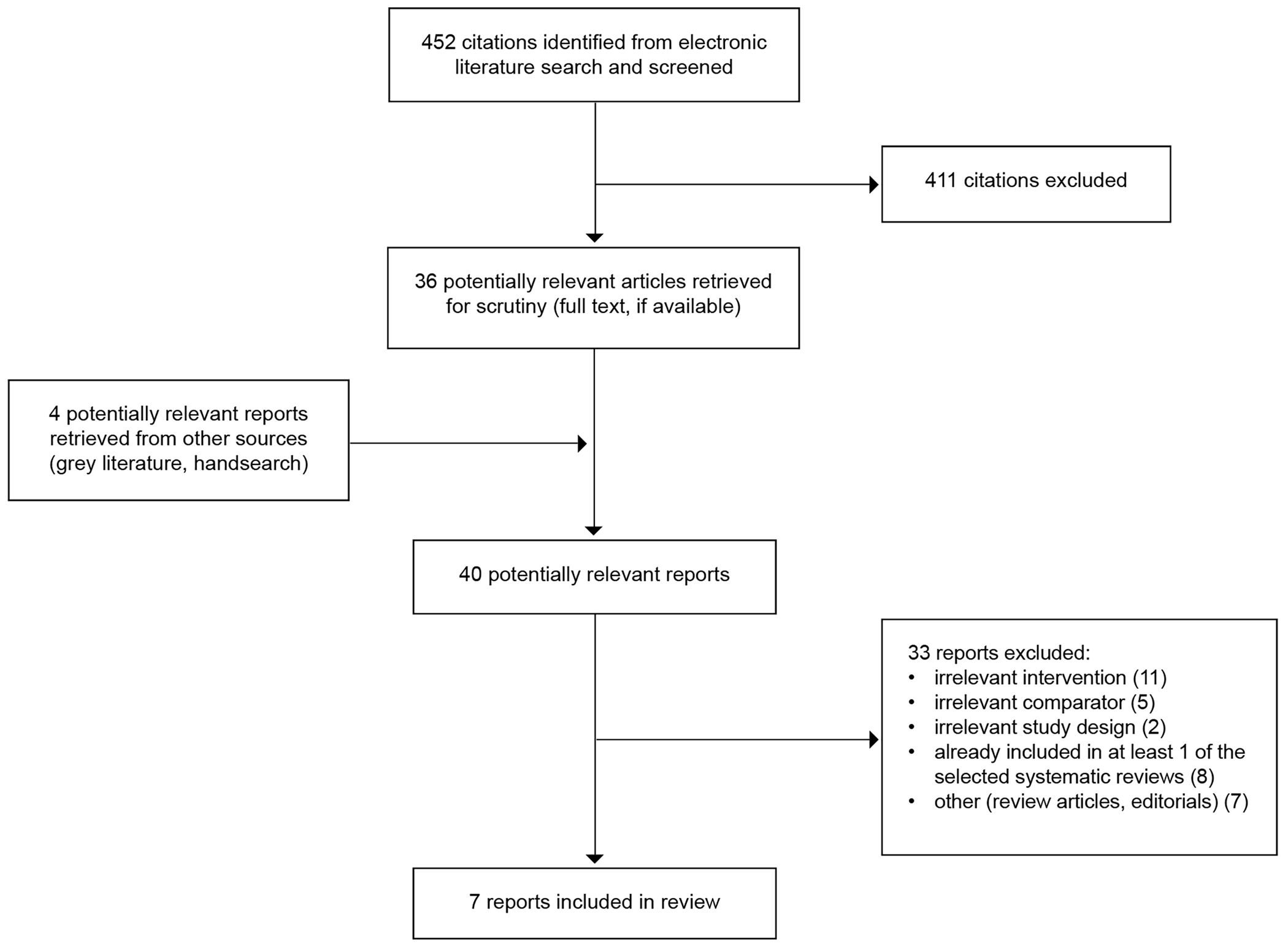
A total of 452 citations were identified in the electronic database searches. Following screening of titles and abstracts, 411 were excluded, and 40 potentially relevant articles were retrieved for full-text review. Of these articles, 8 met the inclusion criteria and were included in this report.
Table 5: Key Characteristics of Included Studies
Study authors (year) Study design | Country of publication Setting | Population | Intervention and Comparator(s) | Outcome(s) | Authors` conclusions |
|---|---|---|---|---|---|
Carland et al. (2025)23 Australia Mixed methods (retrospective record review and qualitative using inductive approach) | Australia Tertiary, public, teaching hospital (level 1 trauma centre) | People who were admitted into the PANDA unit (Interviews were done to explore admission experience and experience with care provided). | Intervention: PANDA unit Short-stay unit colocated with ED for people with alcohol or other drug intoxication or behavioural disturbance with coexisting general medical, drug, and alcohol, toxicological and/or mental health concerns. Comparator: No comparator. | PANDA unit activity:
Patient interviews:
| Most admissions to PANDA were related to alcohol use, methamphetamine use, and/or suicidality; 64.5% were male; and 15% of patients were readmitted to PANDA within 28 days. Patient experience interviews described 3 key themes:
|
Madieta et al. (2026)20 Before and after program evaluation | France A general, university hospital with a psychiatry and addiction medicine department. | Patients (adults) admitted to UPSAM over a 6-month period | Intervention: UPSAM implementation Post-ED short-stay unit provides care to patients experiencing acute distress. Unit is designed and equipped with suicide prevention measures. Comparator: Pre-UPSAM implementation |
| Implementation of UPSAM was associated with a substantial decrease in ED wait times (time between ED admission and UPSAM admission). The unit allowed for referrals to and from across different regional departments and collaboration with other ambulatory care services. |
Claudius et al. (2024)21 Before and after proof of concept | US Two large urban hospitals (level 1 trauma centres) with designated pediatric EDs, designed for patients who were underinsured or those with state-sponsored insurance. | Adolescent patients aged 12 to 17 years presenting to the pediatric ED for a mental health complaint or identified as requiring substantial mental health care after evaluation for another chief complaint. | Intervention: APEU in intervention hospital Nine-bed locked unit located adjacent to the pediatric ED. Built solely for patients with psychiatric concerns with safeguards to prevent self-harm. Comparator: Control hospital with no APEU but a designated pediatric ED. |
| Opening an APEU which was separate and close to the ED was feasible. There was a substantial decrease in the pediatric ED LOS associated with the opening of the APEU for adolescents and pediatric patients aged between 5 and 20 years. As a result, there was a decrease in bed hours lost to boarding (decrease in boarding time; more beds available in the pediatric ED). This study was also able to show that the development of a unit with minimal infrastructure or staff changes is feasible. |
Magarey et al. (2023)19 SR | Australia Included studies from: Australia (9), Canada (1), and the US (4). Most were located at large urban general hospitals. | Patients presenting to a hospital ED with a psychiatric illness. | Intervention: Admission to psychiatric observation unit Units included had a LOS of < 72 hours and provided care to people presenting with acute mental health crises or suicidal ideation. Comparator: Preimplementation or no comparator |
| There is some benefit to introducing psychiatric observation units for decreasing ED LOS. The introduction of psychiatric observation units was also associated with improvements in readmission rates and use of restraints. However, 10 of 14 included studies had serious overall risk of bias due to confounding. |
Gillard et al. (2023)3 Mixed-method study: 1 SR, 1 national survey, 1 retrospective ITS, 1 synthetic control design, 1 cohort study, 1 qualitative study, and 1 economic evaluationa | UK For the ITS, synthetic control study, cohort, and EE: 4 mental health trusts (2 metropolitan areas, 1 suburban, and 1 rural area) that had an operational PDU and EDs at NHS hospitals in the same area as the PDUs. | Adult patients who present to the ED experiencing complex psychiatric crisis who present an immediate safety risk to themselves or others. National survey: Site and service managers Cohort study: People experiencing their first visit to a PDU over a 6-month period. Qualitative study: First-time patients in the PDU, clinical staff in the PDU, and staff at PDU referral sources. | SR: Before and after intervention studies of psychiatric decision units (short-stay facilities, usually nurse-led, at psychiatric or general hospital sites that offer assessment, care, and referral with a typical LOS of 24 to 72 hours) Retrospective ITS: PDU opening – 24 months before and 24 months after Synthetic control: Sites with PDUs compared to synthetic control from areas without PDUs. Cohort study: Nine months before and 9 months after the patient’s first visit to PDU. EE: Before and after PDU implementation periods and before and after PDU visit. | National survey: Prevalence, structural, and operational characteristics of PDUs, and presence of other NHS crisis care services SR: ED LOS, use of restraints, number of inpatient admissions, 30-day readmission rates, psychometric outcomes ITS: The number of voluntary adult inpatient admissions and the number of mental health-related ED visits. Secondary outcomes include inpatient admission frequency, LOS of inpatient admission, bed occupancy of inpatient ward, mental health-related wait times over 4 hours. Synthetic control: Rate of admissions to any psychiatric acute admission per 10,000 patients in the area served by the MHT; rate of mental health visits at the ED per 10,000 patients served by the acute care service provider. Secondary outcomes include average LOS in inpatient ward, ED wait times, and proportion of patients waiting less than 4 to 12 hours. Qualitative study: Experiences of the PDUs and crisis care pathway, experience working at PDUs, expectations of PDUs and experiences referring patients to PDUs. EE: Site-level resource use and health care cost before and after PDU implementation, costs of operating PDU, ROI, estimated individual patient-level changes in resource use, and costs to NHS 9 months following PDU visit for each site. | When PDUs have a clear aim and are integrated with a range of crisis and community mental health support, they improve quality of care and facilitate access to appropriate care having the potential to reduce the level and cost of acute and emergency mental health service use. PDUs with:
Service user interviews:
Staff interviews:
|
Smith et al. (2023)22 Qualitative | US Large academic medical centre | Adult participants aged 18 years or older who had been recently treated in the locked PEU and self-identified as Black. | Intervention: Admission and treatment in locked PEU Comparator: NA |
| Participants reported that although they recognized the need for help and some positive experiences with the medical personnel, they had negative experiences associated with criminalization, vulnerability [limited agency, sense of helplessness and neglected], stigma, and a mismatch between expected and actual care received. For racialized groups, socially conscious and trauma-informed approaches need to be used to reduce barriers to care. |
Maila et al. (2020)24 Qualitative | South Africa Eight hospitals in the Metropole District Health Services in the Western Cape. | Nurses that work in psychiatric observation units (including psychiatric nurse specialists, RNs, enrolled nurses [no formal education or training in psychiatric nursing] and enrolled nursing assistants). | Intervention: Psychiatric observation units In general hospitals for patients (referred to as mental health care users) requiring involuntary admissions Comparator: NA | Professional Quality of Life questionnaire:
| All those who responded reported moderate compassion satisfaction, moderate burnout, and high secondary traumatic stress. Psychiatric nurse specialists and RNs experienced higher burnout and secondary traumatic stress and lower compassion satisfaction compared to junior (category) nurses. |
Mitchell et al. (2025)11 Service evaluation protocol | Australia Teaching hospital in remote Australia | Patients admitted into the SARA unit | Intervention: 12-month evaluation of a new SARA unit An inpatient unit providing short-term care to people presenting to ED with psychological distress. It is connected to the ED and shares a model of care to enhance collaboration between ED and mental health. Comparator: Preimplementation of SARA unit | Focused on the R,E, and A aspects of the RE-AIM program evaluation framework:
Long-term evaluation will be conducted at 24 months and 60 months. | Authors aim to evaluate the SARA unit over a 12-month period using the RE-AIM framework. (It is envisioned that findings from this study will help develop this model but also the implementation of similar models in other regions.) |
APEU = Adolescent Psychiatric Emergency Unit; ED = emergency department; EE = economic evaluation; ITS = interrupted time series; KPI = key performance indicator; LOS = length of stay; MHT = mental health trust; NA = not applicable; NHS = National Health Service; PANDA = Psychiatric, Alcohol and Non-Prescription Drug Assessment; PDU = psychiatric decision unit; PEU = psychiatric emergency unit; RE-AIM = reach, effectiveness, adoption, implementation, and maintenance; RN = registered nurse; ROI = return on investment; SARA = stabilization and referral area; SR = systematic review; UPSAM = Unité Psychiatrique Sarthe Anjou Mayenne.
aAll costs reported in 2019-2020 British Pound prices, with costs taken from the NHS’ National Schedule of Unit Costs and from the annual Unit Costs of Health and Social Care.
Appendix 2: Detailed Methods
Please note that this appendix has not been copy-edited.
Literature Search Methods
An information specialist conducted a literature search on key resources including MEDLINE, PsycInfo, the Cochrane Database of Systematic Reviews, the International Health Technology Assessment (HTA) Database, the websites of HTA agencies in Canada and major international HTA agencies, as well as a focused internet search. The search approach was customized to retrieve a limited set of results, balancing comprehensiveness with relevance. The search strategy comprised both controlled vocabulary, such as the National Library of Medicine’s MeSH (Medical Subject Headings), and keywords. Search concepts were developed based on the elements of the research questions and selection criteria. The main search concept was SSCUs. The search was completed on December 12, 2025, and limited to English-language documents published since January 1, 2015.
Selection Criteria and Methods
One reviewer screened citations and selected studies. In the first level of screening, titles and abstracts were reviewed and potentially relevant articles were retrieved and assessed for inclusion. The final selection of full-text articles was based on the inclusion criteria presented in Table 4.
Table 6: Criteria for Literature Screening
Criteria | Description |
|---|---|
Population | People of any age experiencing a mental health or behavioural crisis that present to the ED |
Intervention | Q1 to Q3: SSCUs A mental health assessment service that is:
Primarily aims to assess and/or stabilize, with the purpose of reducing the need or LOS of standard acute psychiatric admission, and/or reducing mental health presentation or length of wait at the ED. |
Comparator | Q1: NA Q2 and Q3: Any comparators (e.g., standard of care in the ED, hospital admission, preintervention) |
Study designs | Health technology assessments, systematic reviews, randomized controlled trials, nonrandomized studies, clinical practice guidelines, program evaluations, review articles |
Time frame | Q2 and Q3: 2015 to present (10 years) |
ED = emergency department; LOS = length of stay; NA = not applicable.
Exclusion Criteria
Articles were excluded if they:
did not meet the selection criteria outlined in Table 6
were duplicate publications or were published before 2015
were SRs in which all relevant studies were captured in other more recent or more comprehensive SRs
were primary studies captured in 1 or more included SRs.
Data Extraction
One reviewer extracted data directly into standardized tables created in Microsoft Word, which were modified as necessary. The extracted information included study characteristics, methodology (e.g., study design), population, intervention, comparator, and results regarding the outcomes of interest.
Engagement Approach
The CDA-AMC engagement team began outreach in December 2025. The primary purpose of engagement was to identify a content expert with administrative and operational knowledge of, and experience, working at an SSCU in Canada to review the draft survey and provide input to ensure clinical relevance. A second content expert was identified to serve as a peer reviewer. The project team identified potential experts through academic and grey literature and existing contacts through CDA-AMC. Project details, and the engagement opportunities, were shared with content experts by email or through teleconference. Each content expert who agreed to participate gave informed consent and completed a conflict of interest form and were provided with compensation for their work at the standard rate issued by CDA-AMC.
From December 2025 to March 2026, the project teams continued to identify and reach out to potential interested parties or individuals with administrative and/or operational expertise at an SSCU. The project team reached out to existing contacts to advise them about the project the survey and to answer any questions.
A draft version of the report was posted on the CDA-AMC website for public review and feedback from May 20, 2026, to June 3, 2026. All individuals originally contacted were advised of the feedback opportunity via email. Participants who responded to the survey were contacted to ensure responses were summarized correctly.
Survey
We conducted a survey to identify SSCUs that previously operated, are currently operating, or are being planned across Canada. The survey comprised 39 questions, which explored multiple aspects of SSCUs, including structural components, operational components, and implementation and evaluation considerations. The questions were both open-ended and closed-ended and are presented in Appendix 3, Table 7. A content expert reviewed the survey and project team members reviewed and piloted the survey, which was distributed using Alchemer. Both English and French versions of the survey opened on March 17, 2025, and we collected responses until April 10, 2025. We distributed the survey electronically to jurisdictional contacts.
We used purposive sampling to identify those who responded to the survey and who were the most likely to be able to provide survey responses, which included managers, directors, administrators, and staff familiar with SSCUs in Canada. We identified these contacts through members of the Health Technology Expert Review Panel, expert members involved in related earlier work through CDA-AMC (i.e., ED overcrowding, urgent care centres), engagement team networks through CDA-AMC, and internet searching. We made an effort to have representation from as many jurisdictions in Canada as possible by reaching out to contacts in each jurisdiction with at least 1 known SSCU. We used a snowball sampling approach to identify individuals who were knowledgeable about SSCUs who were not on our original contacts list, by indicating in the survey invitation that contacts had the option to share the survey with their contacts. We sent 1 email reminder to those who did not respond to the survey 1 week after the initial invitation. All who responded provided explicit permission to use the information that they provided in this report. Information about the people who responded to the survey is outlined in Appendix 4, Table 8.
External Review
Peer Review
Before the review phase began, 1 clinical expert with expertise in emergency psychiatric nursing reviewed the project plan. This same expert, and another with expertise in psychiatry and the operation of an SSCU, reviewed the draft version of this report, and their feedback was incorporated into the final version of this report.
Selection of Included Studies
Figure 2 presents the Preferred Reporting Items for Systematic reviews and Meta-Analyses (PRISMA)25 flow chart of the study selection.
Appendix 3: Survey Questions
Category of interest | Question | Response options |
|---|---|---|
Respondent demographic information | Your name | Open ended |
Your email address | Open ended | |
Your organization | Open ended | |
Your position title | Open ended | |
In which jurisdiction do you work? | Newfoundland and Labrador Prince Edward Island Nova Scotia New Brunswick Quebec Ontario Manitoba Saskatchewan Alberta British Columbia Yukon Northwest Territories Nunavut Pan-Canadian or national | |
Structural components of short-stay crisis units | What is the name of the short-stay crisis unit? | Open ended |
With which hospital or emergency department is this short-stay crisis unit affiliated? | Open ended | |
Is the centre currently operational? | Yes No, the short-stay crisis unit is no longer operational. No, the short-stay crisis unit is being planned and will open in the future. | |
How long has the unit been operational? If the unit is no longer open, please indicate the length of time it was operational before closing. | Open ended | |
The following is a definition of short-stay crisis units: “A mental health assessment service that is hospital-based, allows overnight stays (< 1 week), and primarily aims to assess and stabilise patients undergoing a mental health or behavioural crisis, with the purpose of reducing the need or length of stay of standard acute psychiatric admission, and/or reducing mental health presentation or length of wait at the emergency department.” Does this definition align with the model of short-stay crisis unit referenced in your responses? | Yes, Yes, with some differences (please describe) No (please provide details) | |
Please briefly describe the model of care you use (i.e., setting, primary aim, patient pathway and flow, partnership with community-based services). | Open ended | |
What population is served by the short-stay crisis unit? [Select all that apply] | Adults Pediatric (aged younger than 18 years) All of the above | |
How would you classify the population served? | Mostly urban Mostly rural Mostly remote Other, please specify | |
Does the short-stay crisis unit serve both patients with mental health concerns and those with substance use or addictions concerns? | Only patients with mental health concerns Only patients with addictions or substance use concerns Both | |
Does your jurisdiction follow a stepped care model for treating patients with mental health concerns (i.e., services are organized based on acuity, starting with the least intrusive intervention necessary and allows individuals to “step up” to more intensive care or “step down” to less intensive care)? | Yes No | |
If yes, is the short-stay crisis unit incorporated into this model? How is it functioning and are you finding the acuity of those presenting to the unit appropriate? | Open ended | |
How is the short-stay crisis unit funded? [Select all that apply] | Government Hospital Private Other, please specify | |
Are patients charged a fee to receive services? | Yes, always Sometimes, depending on the service No, never Other, please specify | |
If yes, please describe the services for which you charge a fee | Open ended | |
What type of clinical staff work at the short-stay crisis unit? [Select all that apply] | Physicians (emergency medicine) Physicians (psychiatry) Nurse practitioners Registered nurses Registered psychiatric nurses Registered or licensed practical nurses Other, please specify | |
What is the number of full-time equivalent health care staff employed? | Open ended | |
What type of nonclinical staff work at the short-stay crisis unit? [Select all that apply] | Reception and clerical staff Social workers Case managers or care coordinators Researchers Information technology Other, please specify | |
What is the number of full-time equivalent nonclinical staff employed? | Open ended | |
What is the presentation pathway for the short-stay crisis unit? [Select all that apply] | Walk-in (self-referral) Transfer from emergency department Local crisis assessment and treatment team Street triage team Outpatient psychiatric clinic Other, please specify | |
Operational components of short-stay crisis units | Are patients required to complete the regular emergency department triage pathway before being transferred to the short-stay unit, or can they bypass the emergency department once identified as suitable? | Must complete full emergency department pathway Are transferred immediately |
Is there a specific triage process for those presenting with substance use as their main concern? | Yes (please describe) No | |
Are there differences in the treatment modalities used for those presenting with substance use versus those with mental health conditions? | Yes (please describe) No | |
Are patients formally admitted to the short-stay unit (i.e., requiring hospital registration and discharge), or is it a more informal observation unit? | Admission required Observation unit Other, please specify | |
What is the capacity of the short-stay unit (i.e., how many beds or chairs does it offer)? | Open ended | |
What is the maximum length of stay at the short-stay unit? | 24 hours 48 hours 72 hours Other, please specify | |
What services are offered at the short-stay crisis unit? (Select all that apply) | Assessment and stabilization Crisis counselling Medication review and prescription Referrals and discharge planning (e.g., linkage to community support services) Short-term case management Other, please specify | |
Is the short-stay crisis unit open 24/7? | Yes No (please expand) | |
What was the primary reason for opening the short-stay crisis unit? | To help alleviate emergency department overcrowding To divert mental health patients away from the emergency department To reduce inpatient psychiatric admissions To provide access to mental health care services to individuals who do not have a primary care provider To reduce repeat emergency department visits Other, please specify | |
Implementation and evaluation of short-stay Crisis units | Were any evaluations of the short-stay crisis unit conducted? If yes, would you be willing to share or provide details? | No Yes (please describe) |
In your experience, what are the challenges to opening and operating a short-stay crisis unit? | Open ended | |
In your experience, what are the facilitators to opening and operating a short-stay crisis unit? | Open ended | |
What drawbacks have you observed at your centre related to the short-stay crisis unit? | Open ended | |
What benefits (to patient or system-level outcomes) have you observed at your centre related to the short-stay crisis unit? | Open ended | |
Final thoughts | Is there anything else you would like us to know about this short-stay crisis unit? | Open ended |
Appendix 4: Information on Survey Respondents
Table 8: Information on Survey Respondents
Jurisdiction (number of responses) | Organization represented by survey respondents |
|---|---|
Newfoundland and Labrador (1) | Newfoundland and Labrador Health Services (Mental Health and Addictions Centre) |
Prince Edward Island (1) | Health PEI (Queen Elizabeth Hospital) |
Nova Scotia (1) | Nova Scotia Health (Queen Elizabeth II Health Sciences Centre) |
New Brunswick (1) | Horizon Health (Dr. Everett Chalmers Regional Hospital)a |
Ontario (4) | Brightshores Health System Halton Healthcare The Ottawa Hospitala Hôpital Montforta |
Saskatchewan (1) | Saskatchewan Health Authority (Royal University Hospital) |
Alberta (3) | Recovery Alberta (Peter Lougheed Centre, Royal Alexander Hospital, Rockyview General Hospital) |
British Columbia (1) | Royal Jubilee Hospital |
Nunavut (1) | Government of Nunavut (Qikiqtani General Hospital)a |
aSurvey response pertained to a different model of psychiatric emergency care (not a short-stay crisis unit) so was excluded from the main findings and tables of this report. Instead, the details provided are summarized in the Other Models of Psychiatric Emergency Care section.
Appendix 5: References of Potential Interest
CADTH. Emergency Department Overcrowding: An Environmental Scan of Contributing Factors and a Summary of Systematic Review Evidence on Interventions. Published November 2023.
Centre for Clinical Effectiveness. Models of care for mental health in ED: scoping review. Centre for Clinical Effectiveness, Monash Innovation and Quality, Monash Health; 2017. https://monashhealth.org/wp-content/uploads/2019/01/Models-of-Care-ED_Mental-Health_Scoping-Review2017_FINAL.pdf
Facility Guidelines Institute. Design of behavioral health crisis units. June 2022. https://fgiguidelines.org/wp-content/uploads/2022/06/FGI-Design-of-BHCUs_2022-06.pdf
Mitchell D, Bressington D. An Evaluation Protocol for A Stabilisation and Referral Area (SARA): A Novel Short Stay Psychiatry Unit Serving A Remote Region of Australia. Alpha Psychiatry. Apr 2025;26(2):39448. doi:10.31083/AP39448.
ISSN: 2563-6596
Canada’s Drug Agency (CDA-AMC) is a pan-Canadian health organization. Created and funded by Canada’s federal, provincial, and territorial governments, we’re responsible for driving better coordination, alignment, and public value within Canada’s drug and health technology landscape. We provide Canada’s health system leaders with independent evidence and advice so they can make informed drug, health technology, and health system decisions, and we collaborate with national and international partners to enhance our collective impact.
Disclaimer: CDA-AMC has taken care to ensure that the information in this document was accurate, complete, and up to date when it was published, but does not make any guarantee to that effect. Your use of this information is subject to this disclaimer and the Terms of Use at cda-amc.ca.
The information in this document is made available for informational and educational purposes only and should not be used as a substitute for professional medical advice, the application of clinical judgment in respect of the care of a particular patient, or other professional judgments in any decision-making process. You assume full responsibility for the use of the information and rely on it at your own risk.
CDA-AMC does not endorse any information, drugs, therapies, treatments, products, processes, or services. The views and opinions of third parties published in this document do not necessarily reflect those of CDA-AMC. The copyright and other intellectual property rights in this document are owned by the Canadian Agency for Drugs and Technologies in Health (operating as CDA-AMC) and its licensors.
Questions or requests for information about this report can be directed to Requests@CDA-AMC.ca.