Drugs, Health Technologies, Health Systems
Reimbursement Recommendation
Tafasitamab (Minjuvi)
Indication: Tafasitamab in combination with rituximab and lenalidomide for the treatment of adult patients with grade 1, 2, or 3a relapsed or refractory follicular lymphoma
Sponsor: Incyte Biosciences Canada Corporation
Recommendation: Reimburse with conditions
Summary
What Is the Reimbursement Recommendation for Minjuvi?
Canada’s Drug Agency (CDA-AMC) recommends that Minjuvi be reimbursed by public drug plans “in combination with rituximab and lenalidomide [rituximab-lenalidomide] for the treatment of adult patients with grade 1, 2, or 3a relapsed or refractory follicular lymphoma [FL]” if certain conditions are met.
Why Did CDA-AMC Recommend Reimbursement?
Evidence from 1 clinical trial showed that Minjuvi in combination with rituximab-lenalidomide improved progression-free survival (PFS) compared with rituximab-lenalidomide alone in patients with grade 1, 2, or 3a relapsed or refractory FL. The pan-Canadian Oncology Drug Review Expert Review Committee (pERC) determined that adding Minjuvi to rituximab-lenalidomide provides acceptable clinical value compared with rituximab-lenalidomide alone for the treatment of grade 1, 2, or 3a relapsed or refractory FL. This determination was enough for pERC to recommend that Minjuvi be reimbursed. Given that Minjuvi is expected to be an additive treatment to rituximab-lenalidomide, acceptable clinical value refers to added benefit over rituximab-lenalidomide alone. pERC also determined that Minjuvi in combination with rituximab-lenalidomide addresses the need identified by both patients and clinicians for additional chemotherapy-free treatment options that are feasible for administration in a community setting.
Which Patients Are Eligible for Coverage?
Minjuvi in combination with rituximab-lenalidomide should only be covered for adults with relapsed or refractory grade 1, 2, or 3a FL who have received at least 1 previous treatment with systemic anti-CD20 immunotherapy or chemoimmunotherapy for the condition. Patients should have good performance status and should not have a nonfollicular indolent lymphoma or active lymphoma in the brain.
What Are the Conditions for Reimbursement?
Minjuvi should only be reimbursed if treatment is started in combination with rituximab-lenalidomide, the patient is under the care of a clinician who has expertise in managing FL and supports are available for managing infusion-related reactions, and the cost of Minjuvi is reduced. Treatment should be discontinued upon completion of 12 treatment cycles or if the patient experiences disease progression or unacceptable side effects.
Important budget impact considerations must be addressed for health systems to be able to adopt Minjuvi in combination with rituximab-lenalidomide.
Review Background
Disease background:
FL is a form of non-Hodgkin lymphoma (NHL) that originates from a type of white blood cell called B cells, which form abnormal clusters (i.e., follicles) within lymph nodes. FL is a heterogeneous disease with a diverse clinical trajectory and its symptoms and psychosocial impacts can have a negative effect on health-related quality of life (HRQoL). Given the relapsing and remitting course of FL, patients may require multiple intermittent treatments during their lifetime. According to the WHO classification, grades 1 to 3a FL are considered indolent (whereas grade 3b FL is more aggressive and is typically treated in a different manner).
In the US, FL has an estimated incidence of 3.18 cases per 100,000 people; the estimated incidence in Europe is 2.18 cases per 100,000 people per year. Published FL prevalence and incidence statistics from Canada are not available.
Indication and reimbursement request: Tafasitamab (Minjuvi) has been approved by Health Canada “in combination with rituximab and lenalidomide for the treatment of adult patients with grade 1, 2, or 3a relapsed or refractory follicular lymphoma.” The sponsor is seeking reimbursement for this patient population.
The application was submitted by the sponsor before receiving a Notice of Compliance from Health Canada. The CDA-AMC review reflects the anticipated indication for tafasitamab at the time the review was conducted, which was in combination with rituximab-lenalidomide for the treatment of adult patients with relapsed or refractory FL.
Drug under review: Tafasitamab is an Fc-enhanced humanized monoclonal antibody against the B-cell CD19 antigen. It is available as a lyophilized powder for solution for administration by IV infusion. The dosage of tafasitamab recommended in the product monograph is 12 mg/kg, administered once weekly for cycles 1 to 3 and once every 2 weeks for cycles 4 to 12. Tafasitamab is administered with IV rituximab 375 mg/m2 for 5 cycles (once weekly for cycle 1 and once every 4 weeks for cycles 2 to 5) and oral lenalidomide 20 mg/day for 12 cycles (on days 1 to 21 of each cycle). The regimen consists of a total of twelve 4-week cycles.
Treatment costs: At the submitted price of $1,167.86 per vial, the cost of tafasitamab per 28-day cycle is expected to be $23,357.20 per patient in cycles 1 to 3 and $11,678.60 in cycles 4 to 12 based on the Health Canada–recommended dosage. Tafasitamab is indicated for use in combination with rituximab-lenalidomide; the cost of the regimen is expected to be $33,899 per patient in cycle 1, $27,552 in cycles 2 and 3, $15,873 in cycles 4 and 5, and $13,794 in cycles 6 to 12, based on the Health Canada–recommended dosage.
Highlights of Input From Interested Parties
The patient group (Lymphoma Canada) noted the following regarding impacts of the disease, unmet needs, and important outcomes:
Symptoms such as fatigue, enlarged lymph nodes, abdominal pain or indigestion, night sweats, and bodily aches and pains have a significant impact on patients’ quality of life (QoL). Patients also described psychosocial impacts of the disease, including stress of diagnosis, anxiety or worry, fear of progression, difficulty sleeping, frequency of health care appointments, and inability to continue daily activities.
Survey responses suggested that patients are less satisfied with treatment options in later lines of therapy, reflecting both fewer options and potentially more complex disease management. Patients stated that there is a need for more treatment options for patients with FL.
Patients reported that longer survival, control of disease and symptoms, longer remission, improved QoL, and fewer side effects are important outcomes.
The clinician groups (Leukemia & Lymphoma Society of Canada [LLSC] Nurses Network, Ontario Health [Cancer Care Ontario] Hematology Cancer Drug Advisory Committee, and Lymphoma Canada – Clinician Group) and the clinical experts consulted by CDA-AMC noted the following regarding unmet needs arising from the disease and place in therapy for the drug under review:
Most treatments for FL are not curative, and many patients will ultimately experience disease relapse and need multiple additional lines of therapy throughout their lifetime. Each successive line of chemoimmunotherapy is associated with shortened duration of remission and increased risk of cumulative toxicity. Patients who are older or frail may experience challenges with the toxicities of chemotherapy-based regimens. Patients with early relapse or resistance to anti-CD20 therapy may experience limited durability of response. Traditional chemoimmunotherapy regimens require frequent visits to centralized cancer centres, and complex management of treatment-related toxicities. Many patients are ineligible for CAR T-cell therapy due to advanced age, comorbidities, or significant geographic and logistical barriers to accessing specialized centres. CAR T-cell therapy is associated with significant risks and additional barriers to treatment (e.g., inpatient hospitalization, availability of a dedicated caregiver).
In the treatment of patients with relapsed or refractory FL, there remains an unmet need for effective, well-tolerated, feasible, more convenient (e.g., shorter visits, subcutaneous or oral components) chemotherapy-free therapies that can be delivered in community settings. There is also a need for treatments that maintain good clinical status for those who wish to consider CAR T-cell therapy in the third-line or later setting.
Tafasitamab in combination with rituximab-lenalidomide is anticipated to be a treatment option for patients requiring second-line or later therapy for relapsed or refractory FL.
The participating public drug programs raised potential implementation issues related to considerations for initiating and prescribing therapy, the generalizability of trial populations to broader populations, care provision issues, system and economic issues, and the potential need for a provisional funding algorithm.
Recommendation
With a vote of 15 in favour to 0 against, pERC recommends that tafasitamab be reimbursed “in combination with rituximab-lenalidomide for the treatment of adult patients with grade 1, 2, or 3a relapsed or refractory follicular lymphoma” only if the conditions listed in Table 1 are met.
Table 1: Reimbursement Conditions and Reasons
Reimbursement condition | Reason | Implementation guidance |
|---|---|---|
Initiation | ||
1. Treatment with tafasitamab plus rituximab-lenalidomide should be reimbursed when initiated in adult patients who meet all the following criteria: 1.1. have relapsed or refractory grade 1, 2, or 3a FL 1.2. have previously received treatment with at least 1 prior systemic anti-CD20 immunotherapy or chemoimmunotherapy 1.3. have good performance status. | Evidence from the inMIND trial demonstrated that treatment with tafasitamab plus rituximab-lenalidomide provided a clinical benefit in patients with these characteristics. The inMIND trial enrolled patients who had an ECOG PS score of 0 to 2. | Patients who had previously received rituximab-lenalidomide were excluded from the inMIND trial. pERC agreed with the clinical experts that treatment with tafasitamab plus rituximab-lenalidomide may be considered, based on clinical judgment, for patients who experience relapse following the completion of treatment with rituximab-lenalidomide. However, there is limited evidence to inform this practice. pERC agreed that, for a limited time following implementation, patients who have already initiated treatment with rituximab-lenalidomide for grade 1, 2, or 3a relapsed or refractory FL, have been receiving this treatment for less than 6 months, and meet the eligibility criteria may be eligible to have tafasitamab added to rituximab-lenalidomide, at the discretion of the treating physician. pERC noted that the reimbursement recommendations for CAR T-cell therapies tisagenlecleucel and axicabtagene ciloleucel do not allow CAR T-cell treatment in patients who have received prior CD-19–targeted therapy. |
2. Patients are ineligible for treatment with tafasitamab plus rituximab-lenalidomide if they have any of the following: 2.1. nonfollicular indolent lymphoma 2.2. active CNS lymphoma involvement. | Although the inMIND trial enrolled patients with marginal zone lymphoma, only evidence pertaining to the trial population with FL was reviewed, in alignment with the approved Health Canada indication. Patients with CNS lymphoma involvement were not included in the inMIND trial. | In rare cases of FL-associated CNS involvement, and recognizing that CNS disease frequently indicates transformation, pERC agreed that patients may still be considered for tafasitamab plus rituximab-lenalidomide if the CNS disease is being treated and the patient is neurologically stable. |
Discontinuation | ||
3. Treatment with tafasitamab plus rituximab-lenalidomide should be discontinued upon the occurrence of any of the following:
| In the inMIND trial, treatment with tafasitamab was discontinued upon completion of 12 treatment cycles or with disease progression or unacceptable toxicity. These criteria for discontinuation are aligned with clinical practice, as described by the clinical experts consulted by CDA-AMC. | pERC agreed with the clinical experts that if 1 of the drugs is discontinued due to intolerance, the remaining drugs in the regimen could be continued at the discretion of the treating physician until the discontinuation criteria in condition 3 are met. pERC agreed with the clinical experts that re-treatment with tafasitamab plus rituximab-lenalidomide could be considered if a patient experiences relapsed FL after a disease-free interval of at least 6 months following the completion of 12 cycles of tafasitamab. |
Prescribing | ||
4. Tafasitamab in combination with rituximab-lenalidomide should be prescribed under the care of clinicians with expertise in managing FL and with immediate access to emergency equipment and appropriate medical support to manage infusion-related reactions. | This is meant to ensure that tafasitamab in combination with rituximab-lenalidomide is prescribed for appropriate patients and that adverse effects are managed in an optimized and timely manner. | Rituximab was administered via IV in the inMIND trial. pERC agreed with the clinical experts that the subcutaneous formulation of rituximab could be substituted as part of the tafasitamab plus rituximab-lenalidomide regimen. pERC also agreed with the clinical experts that a rituximab biosimilar could be used in this regimen. |
5. Tafasitamab should only be reimbursed when treatment is started in combination with rituximab-lenalidomide. | The inMIND trial used tafasitamab in combination with rituximab-lenalidomide. pERC did not review evidence supporting the efficacy and safety of tafasitamab when initiated as monotherapy or in combination with other anticancer drugs. | — |
Pricing | ||
6. A reduction in price. | Using the CDA-AMC base-case analysis, the ICER for tafasitamab plus rituximab-lenalidomide was $164,872 per QALY gained when compared with rituximab-lenalidomide in the indicated population. A band 4a price reduction would be required to achieve cost-effectiveness at a $50,000 per QALY threshold. A band 2a price reduction would be required to achieve cost-effectiveness at a $100,000 per QALY threshold. Price reductions for any given willingness-to-pay threshold are available in the CDA-AMC Main Report and Supplemental Material document. Cost-effectiveness relative to BO, BR, O-CHOP, R-CHOP, O-CVP, R-CVP, O-GDP, R-GDP, and autologous stem cell transplant in the indicated population is uncertain given the lack of evidence regarding comparative efficacy for grade 1, 2, 3a relapsed or refractory FL. To ensure cost-effectiveness, tafasitamab plus rituximab-lenalidomide should also be negotiated so that the drug price does not exceed the lowest-cost rituximab- or obinutuzumab-based chemotherapy regimens reimbursed for the indicated population. | The CDA-AMC analysis is based on public list prices for all treatments. Further price reductions may be required if there are price arrangements (discounts) currently in place for any treatment included in the economic analysis. |
Feasibility of adoption | ||
7. The economic feasibility of adoption of tafasitamab plus rituximab-lenalidomide must be addressed. | At the submitted price, the incremental budget impact of tafasitamab plus rituximab-lenalidomide is expected to be greater than $40 million in year 2. In jurisdictions where rituximab-lenalidomide is not reimbursed by public drug plans, the adoption of tafasitamab plus rituximab-lenalidomide for the indicated population would require public reimbursement of the whole regimen, resulting in higher budget impact for those jurisdictions. | — |
BO = bendamustine and obinutuzumab; BR = bendamustine and rituximab; CDA-AMC = Canada’s Drug Agency; CLL = chronic lymphocytic leukemia; CNS = central nervous system; ECOG PS = Eastern Cooperative Oncology Group Performance Status; FL = follicular lymphoma; O-CHOP = obinutuzumab, cyclophosphamide, doxorubicin hydrochloride (hydroxydaunomycin), vincristine (Oncovin), and prednisone; O-CVP = obinutuzumab, cyclophosphamide, vincristine, and prednisone; O-GDP = obinutuzumab, gemcitabine, dexamethasone, and cisplatin; pERC = pan-Canadian Oncology Drug Review Expert Review Committee; R-CHOP = rituximab, cyclophosphamide, doxorubicin hydrochloride (hydroxydaunomycin), vincristine (Oncovin), and prednisone; R-CVP = rituximab, cyclophosphamide, vincristine, and prednisone; R-GDP = rituximab, gemcitabine, dexamethasone, and cisplatin.
aFor the statement regarding the size of the price reduction required, band 1 = 1% to 24%, band 2 = 25% to 49%, band 3 = 50% to 74%, and band 4 = 75% or greater.
Rationale for the Recommendation
Clinical Value
Based on the totality of the clinical evidence, pERC concluded that tafasitamab in combination with rituximab-lenalidomide demonstrates acceptable clinical value compared with rituximab-lenalidomide alone in patients with grade 1, 2, or 3a relapsed or refractory FL. Given that tafasitamab is expected to be an add-on treatment to rituximab-lenalidomide in second and later lines of therapy, acceptable clinical value refers to added value versus rituximab-lenalidomide.
Evidence from 1 ongoing phase III, randomized, double-blind, placebo-controlled, multicentre trial (inMIND; N = 548) demonstrated that treatment with tafasitamab plus rituximab-lenalidomide results in added clinical benefit in PFS for patients with grade 1, 2, or 3a relapsed or refractory FL compared with placebo plus rituximab-lenalidomide. The primary end point in the trial was PFS by investigator assessment. At the primary analysis, after a median follow-up time of 14.32 months for the tafasitamab plus rituximab-lenalidomide arm and 14.13 months for the placebo plus rituximab-lenalidomide arm, the median PFS by investigator was 22.37 months (95% CI, 19.22 months to not evaluable) in the tafasitamab plus rituximab-lenalidomide arm and 13.93 months (95% CI, 11.53 to 16.39 months) in the placebo plus rituximab-lenalidomide arm, with a between-group hazard ratio (HR) of 0.434 (95% CI, 0.324 to 0.580). When compared to placebo plus rituximab-lenalidomide, the between-group differences in Kaplan-Meier–estimated probabilities of PFS at 12 and 24 months were ██████ ████ ███ ██ and ██████ ████ ███ ██, respectively, in favour of tafasitamab plus rituximab-lenalidomide. pERC noted that the PFS benefit for the 2-year time point was associated with uncertainty due to imprecision reflected in the wide 95% CI.
At the primary analysis, with a median follow-up time of 15.80 months for the tafasitamab plus rituximab-lenalidomide arm and 14.62 months for the placebo plus rituximab-lenalidomide arm, the median overall survival (OS) had not been reached in either treatment arm. When compared to placebo plus rituximab-lenalidomide, the between-group differences in Kaplan-Meier–estimated probabilities of being alive at 12 and 24 months were ██████ ████ ███ ██, and ██████ ████ ███ ██, respectively, in favour of tafasitamab plus rituximab-lenalidomide. pERC noted uncertainty in the OS results due to imprecision in the treatment effect estimates and insufficient duration of follow-up. The committee agreed that, at the time of the primary analysis, OS results were considered descriptive and were supportive of the primary end point; however, longer-term follow-up is required to adequately evaluate this outcome.
Patient groups, clinician groups, and clinical experts consulted by CDA-AMC identified the need for effective chemotherapy-free treatments that are well-tolerated as well as more convenient and feasible for administration in a community setting. Patients also expressed a need for additional therapy options for FL. pERC concluded that tafasitamab in combination with rituximab-lenalidomide addresses some patient needs by offering a chemotherapy-free treatment option that delays disease progression and may prolong survival for patients with grade 1, 2, or 3a relapsed or refractory FL. The committee also determined that tafasitamab plus rituximab-lenalidomide addresses the need for treatments that are feasible for administration in a community setting.
In the inMIND trial, there was little to no difference in HRQoL between the tafasitamab plus rituximab-lenalidomide group and the placebo plus rituximab-lenalidomide group. However, the committee was unable to draw conclusions on HRQoL due to the high amount of missing data. pERC agreed with the clinical experts consulted by CDA-AMC that the types of adverse events observed in the trial for tafasitamab plus rituximab-lenalidomide are considered generally manageable in clinical practice.
pERC considered 4 sponsor-submitted matching-adjusted indirect treatment comparisons (MAICs) assessing tafasitamab plus rituximab-lenalidomide versus bendamustine plus rituximab (BR), bendamustine plus obinutuzumab (BO), tisagenlecleucel (tisa-cel), and axicabtagene ciloleucel (axi-cel), and noted that conclusions could not be drawn regarding the comparative efficacy of tafasitamab plus rituximab-lenalidomide versus those comparators due to the methodological limitations of the submitted MAICs. pERC determined that the evidence from the inMIND trial in comparison to rituximab-lenalidomide alone was sufficient to demonstrate acceptable clinical value for tafasitamab in combination with rituximab-lenalidomide.
Further information on the committee’s discussion around clinical value is provided in the Summary of Deliberation section.
Developing the Recommendation
The determination of acceptable clinical value was sufficient for pERC to recommend reimbursement of tafasitamab. As part of the deliberation on whether to recommend reimbursement, the committee also considered unmet clinical need, unmet nonclinical need, and health inequity. Information on this discussion is provided in the Unmet Clinical Need and Distinct Social and Ethical Considerations domains in the Summary of Deliberation section.
Because pERC recommended that tafasitamab in combination with rituximab-lenalidomide be reimbursed, the committee also deliberated on whether reimbursement conditions should be added to address important economic considerations, health system impacts, or social and ethical considerations, or to ensure clinical value is realized. The resulting reimbursement conditions, with accompanying reasons and implementation guidance, are stated in Table 1.
Summary of Deliberation
pERC considered all domains of value of the deliberative framework before developing its recommendation: clinical value, unmet clinical need, distinct social and ethical considerations, economic considerations, and impacts on health systems. For further information on the domains of value, refer to Expert Committee Deliberation at Canada’s Drug Agency.
The committee considered the following key discussion points, organized by the 5 domains of value.
Clinical Value
Appropriate comparators: pERC considered rituximab-lenalidomide to be an appropriate comparator to tafasitamab plus rituximab-lenalidomide but noted that, at the time of this review, rituximab-lenalidomide is not reimbursed in some jurisdictions in Canada. pERC agreed with the clinical experts consulted by CDA-AMC that other relevant comparators are rituximab-containing chemoimmunotherapy regimens (i.e., BR, R-CVP [rituximab, cyclophosphamide, vincristine, and prednisone], R-CHOP [rituximab, cyclophosphamide, doxorubicin hydrochloride (hydroxydaunomycin), vincristine (Oncovin), and prednisone], or R-GDP [rituximab, gemcitabine, dexamethasone, and cisplatin]), obinutuzumab-containing chemoimmunotherapy regimens (i.e., BO, O-CVP [obinutuzumab, cyclophosphamide, vincristine, and prednisone], O-CHOP [obinutuzumab, cyclophosphamide, doxorubicin hydrochloride (hydroxydaunomycin), vincristine (Oncovin), and prednisone], or O-GDP [obinutuzumab, gemcitabine, dexamethasone, and cisplatin]), autologous stem cell transplant and, in the third-line or later setting, CAR T-cell therapy (i.e., axi-cel or tisa-cel).
Efficacy versus rituximab-lenalidomide: The inMIND trial demonstrated that treatment with tafasitamab plus rituximab-lenalidomide resulted in a statistically significant improvement in the primary end point of PFS based on investigator assessment compared to placebo plus rituximab-lenalidomide (HR for median PFS = 0.434; 95% CI, 0.324 to 0.580). At 12 months, the probability of PFS by investigator was 79.0% (95% CI, 72.8% to 84.0%) in the tafasitamab plus rituximab-lenalidomide arm and 54.0% (95% CI, 47.1% to 60.5%) in the placebo plus rituximab-lenalidomide arm, with a difference between groups of ██████ ████ █. At 2 years, the probabilities of PFS by investigator were 41.7% (95% CI, 28.4% to 54.6%) and 31.8% (95% CI, 23.6% to 40.2%) in the tafasitamab plus rituximab-lenalidomide arm and the placebo plus rituximab-lenalidomide arm, respectively, with a difference between groups of ██████ ████ █. The probability of OS at 12 months was 96.4% (95% CI, 92.8% to 98.2%) in the tafasitamab plus rituximab-lenalidomide arm and 93.7% (95% CI, 90.0% to 96.1%) in the placebo plus rituximab-lenalidomide arm, with a difference between groups of ██████ ████ █. The probability of OS at 2 years was 92.5% (95% CI, 87.0% to 95.8%) and 85.5% (95% CI, 76.2% to 91.4%) in the tafasitamab plus rituximab-lenalidomide arm and the placebo plus rituximab-lenalidomide arm, respectively, with a difference between groups of ██████ ████ █. The duration of follow-up was insufficient to adequately assess OS benefit. The overall response rate (ORR) by investigator was 83.5% (95% CI, 78.57% to 87.72%) in the tafasitamab plus rituximab-lenalidomide arm and 72.4% (95% CI, 66.67% to 77.56%) in the placebo plus rituximab-lenalidomide arm. The difference between groups was ██████ ████ █ and the odds ratio was 2.0 (95% CI, 1.30 to 3.02). HRQoL results, as assessed by the Functional Assessment of Cancer Therapy – Lymphoma (FACT-Lym) total score, showed little to no difference in HRQoL at the end of treatment between the tafasitamab plus rituximab-lenalidomide group and placebo plus rituximab-lenalidomide group. However, conclusions regarding HRQoL outcomes could not be drawn due to missing data.
Clinical importance of treatment effects: pERC considered outcomes of importance identified by patient groups and clinicians, which included prolonging life, controlling the disease and its symptoms, prolonging the duration of remission, improving QoL, and minimizing side effects of treatments. Thresholds for clinically meaningful between-group differences were selected in consultation with the clinical experts for the probability of PFS at 12 months and at 2 years (10 percentage points), probability of OS at 12 months and 2 years (4 to 5 percentage points), and for ORR (10 percentage points). The difference in the probability of PFS exceeded the threshold at 12 months and met it at 2 years, indicating a clinically meaningful difference in PFS between groups at these time points. The difference in the probability of OS at 2 years exceeded the threshold, suggesting a clinically meaningful difference at this time point. The between-group difference in ORR also exceeded the threshold, indicating a clinically meaningful difference.
Certainty of the evidence: pERC discussed the certainty of evidence as assessed using the Grading of Recommendations Assessment, Development and Evaluation (GRADE) method. For added PFS value, the certainty was rated as high at 12 months, indicating a clinically important improvement in PFS with the addition of tafasitamab to rituximab-lenalidomide at this time point. The certainty for the added PFS value at 2 years was rated down to moderate for imprecision because the 95% CI for the difference between groups included the threshold for clinically meaningful difference. The certainty for the effects on OS was rated as low at both 12 months and 2 years due to imprecision and immature data. The results suggest that the addition of tafasitamab to rituximab-lenalidomide may result in little to no difference in OS at 12 months and may result in a clinically important improvement in OS at 2 years. The certainty of the added value in ORR was rated as moderate (rated down for imprecision), showing that the addition of tafasitamab to rituximab-lenalidomide likely results in a clinically meaningful improvement in this outcome. Little to no difference in HRQoL was demonstrated at the end of treatment, with low certainty in the between-group difference due to imprecision and missing data. There was moderate certainty in the findings that the addition of tafasitamab to rituximab-lenalidomide results in an increase in serious adverse events.
Efficacy and safety versus relevant therapies: Four sponsor-submitted MAICs compared tafasitamab plus rituximab-lenalidomide with BR, BO, tisa-cel, and axi-cel for grade 1, 2, or 3a relapsed or refractory FL in adult patients across the end points of PFS, OS, ORR, complete response, and time to next treatment. The MAICs were associated with major limitations and uncertainty, preventing firm conclusions on comparative efficacy. Because safety was not assessed, there is no evidence on how tafasitamab plus rituximab-lenalidomide compares with these treatments in terms of harms. In addition, an evidence gap remains regarding both the efficacy and safety of tafasitamab plus rituximab-lenalidomide versus other relevant comparators.
Clinical value: Based on the preceding considerations, pERC determined that for adult patients with grade 1, 2, or 3a relapsed or refractory FL who have previously received treatment with at least 1 prior systemic anti-CD20 immunotherapy or chemoimmunotherapy, tafasitamab plus rituximab-lenalidomide may be an alternative option for select patients in the second-line or later setting.
Unmet Clinical Need
Input on unmet clinical need: Input from the patient group identified a need for treatments that prolong survival, provide durable disease and symptom control, improve QoL and have fewer side effects. Patients also highlighted an unmet need for a chemotherapy-free option. Patients as well as the clinical experts and clinician groups noted the need for therapies that provide longer remission, limit cumulative toxicity, and offer options for patients who are ineligible for or unable to access CAR T-cell therapy.
Severity of the disease: FL is the second most common form of NHL and the leading subtype of indolent NHL, accounting for approximately 35% of all cases of NHL and 70% of indolent lymphomas. FL is an incurable, indolent cancer and a chronic disease that requires long-term management of its relapsing course, with most patients requiring 3 or more lines of treatment. As a result, survival, response rates, and duration of responses all decrease with each subsequent line of therapy. Approximately 20% of patients with FL experience disease progression within 2 years of initial diagnosis or systemic treatment, which is associated with poorer prognosis and increased number of treatment lines.
Availability of treatment options: Available treatments for relapsed or refractory FL are rituximab-lenalidomide, rituximab- or obinutuzumab-based chemoimmunotherapy (BR, R-CVP, R-CHOP, R-GDP, BO, O-CVP, O-CHOP, O-GDP), autologous stem cell transplant, and CAR T-cell therapy (tisa-cel and axi-cel in the third-line setting). The clinician groups and clinical experts noted that treatment effectiveness decreases with each additional line of therapy, leading to shorter remissions and greater toxicity. They also noted a need for additional treatment options due to cumulative treatment burden, limited response durability, and lack of chemotherapy-free options with improved tolerability.
Distinct Social and Ethical Considerations
Input on unmet nonclinical need: Input from interested parties identified a need in relapsed or refractory FL for treatments that are more convenient and feasible for administration in a community setting. Reduced overall burden on patients and caregivers was noted as a goal of therapy. According to the clinical experts consulted by CDA-AMC, tafasitamab can be readily administered in cancer centres or infusion units capable of delivering similar agents, such as rituximab. They added that although tafasitamab requires an intensive IV administration schedule (weekly for the first 3 cycles), creating a significant time burden for patients and caregivers, the regimen can be administered in community hospitals making it more convenient and allowing patients to remain closer to home.
Equity considerations: pERC discussed that geographic location (i.e., residence in rural or remote regions) and socioeconomic status can restrict access to specialized therapies and lead to inequities in care. pERC also noted that FL predominantly affects older individuals. pERC further noted that therapies that can be administered in outpatient or community settings may lessen travel demands and enhance access; however, ongoing system-level barriers may still impede equitable access across patient groups.
Significant unmet nonclinical need or health inequity: pERC noted that barriers to access for some specialized treatments such as CAR T-cell therapy, as well as the logistical burden of frequent clinic visits, travel to tertiary centres, and prolonged treatment administration due to socioeconomic factors and geographic distance disproportionately affect marginalized populations. pERC acknowledged that the fixed-duration, and outpatient administration of tafasitamab plus rituximab-lenalidomide of may help address certain unmet nonclinical needs and inequities.
Economic Considerations
Health impacts of tafasitamab plus rituximab-lenalidomide versus relevant comparators: Tafasitamab plus rituximab-lenalidomide is predicted to be associated with a gain of 1.18 life-years (LYs) compared to rituximab-lenalidomide and may result in a gain of 1.01 quality-adjusted life-years (QALYs) compared to rituximab-lenalidomide over a lifetime (40-year) horizon.
The Pharmacoeconomic report focused on rituximab-lenalidomide but noted that the comparative effectiveness of tafasitamab plus rituximab-lenalidomide was unknown relative to rituximab- or obinutuzumab-based chemotherapy regimens (i.e., R-CHOP, O-CHOP, R-CVP, O-CVP, BO, or BR).
Cost of tafasitamab plus rituximab-lenalidomide versus relevant comparators: Tafasitamab plus rituximab-lenalidomide is predicted to be associated with higher costs to the health care system than rituximab-lenalidomide (incremental costs = $167,150) over a lifetime (40-year) horizon, primarily driven by increased costs associated with drug acquisition.
Key findings of the economic evaluation: Based on the submitted evidence using the sponsor’s cost-utility analysis, the CDA-AMC base-case analysis estimated that the incremental cost-effectiveness ratio (ICER) for tafasitamab plus rituximab-lenalidomide in adult patients with grade 1, 2, or 3a relapsed or refractory FL was $164,872 per QALY gained when compared with rituximab-lenalidomide (Figure 1). The comparative effectiveness of tafasitamab plus rituximab-lenalidomide relative to rituximab- or obinutuzumab-based chemotherapy regimens (i.e., R-CHOP, O-CHOP, R-CVP, O-CVP, BO, or BR) was unknown due to uncertainty associated with the sponsor’s submitted indirect treatment comparisons and lack of comparative efficacy evidence.
Figure 1: Estimate of the ICER Used by pERC to Inform the Price Condition
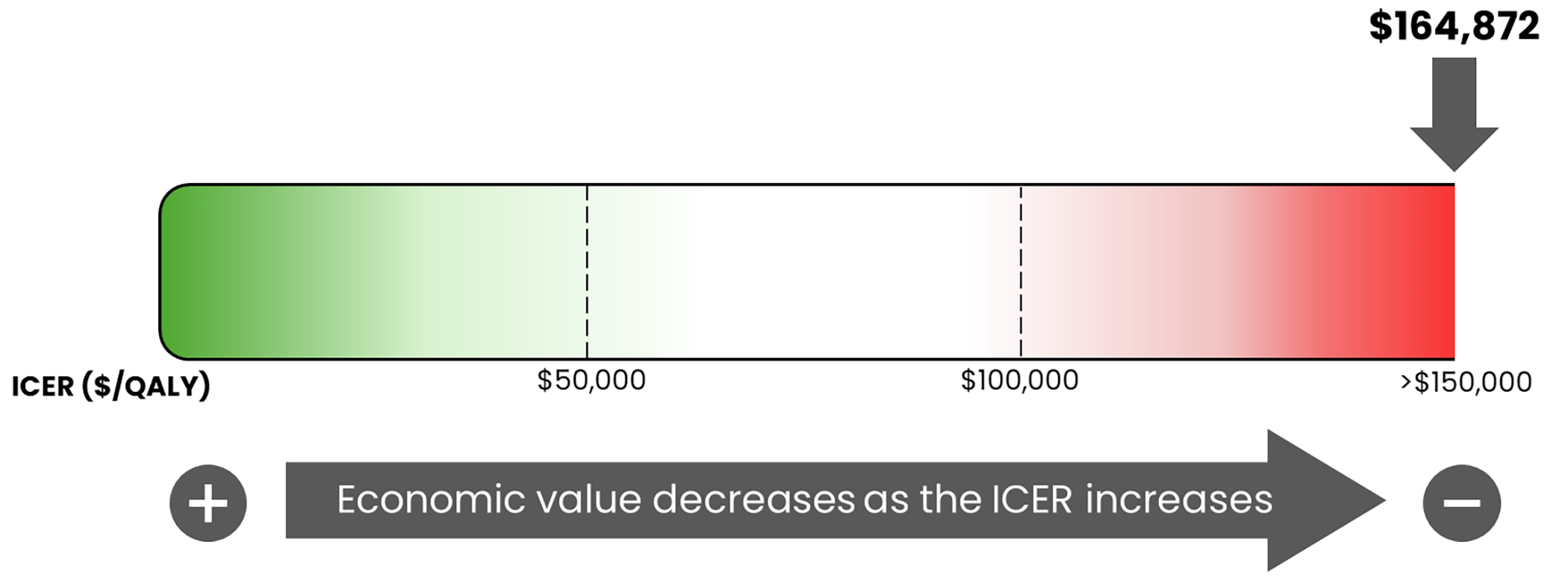
ICER = incremental cost-effectiveness ratio; QALY = quality-adjusted life-year.
Certainty of the evidence: Due to considerable uncertainty associated with the sponsor’s submitted indirect treatment comparisons, comparative efficacy between tafasitamab plus rituximab-lenalidomide relative to BO and BR was too uncertain to determine. In addition, O-CHOP, R-CHOP, O-CVP, R-CVP, O-GDP, R-GDP, and autologous stem cell transplant were not included in the cost-utility analysis. If it is anticipated that there are no differences in health outcomes between tafasitamab plus rituximab-lenalidomide versus these comparators, then the cost of tafasitamab plus rituximab-lenalidomide should not exceed that of those comparators for the treatment of adult patients with relapsed or refractory FL.
Other considerations: Rituximab-lenalidomide is not funded across all jurisdictions in Canada (i.e., it is not funded in Newfoundland and Labrador, Prince Edward Island, Nova Scotia, New Brunswick, and Ontario). In jurisdictions where rituximab-lenalidomide is not funded, rituximab- or obinutuzumab-based regimens (e.g., R-CHOP, O-CHOP, R-CVP, O-CVP, BO, or BR) were considered the most relevant comparators to tafasitamab plus rituximab-lenalidomide based on clinical expert input. pERC agreed that re-treatment with tafasitamab plus rituximab-lenalidomide could be considered in patients who experience a relapse after a disease-free interval of at least 6 months following the completion of 12 cycles of tafasitamab. Although re-treatment was not considered in the budget impact analysis, pERC discussed that re-treatment might happen infrequently and not significantly affect the budget impact analysis.
Impacts on Health Systems
Anticipated budget impact: CDA-AMC estimated that by year 3 of reimbursement, 699 patients would be eligible for tafasitamab plus rituximab-lenalidomide; of these, 293 patients would be expected to receive tafasitamab plus rituximab-lenalidomide. The estimated incremental budget impact of reimbursing tafasitamab plus rituximab-lenalidomide is predicted to be approximately $134.5 million over the first 3 years, with an expected expenditure of $132.1 million (tafasitamab plus rituximab-lenalidomide = $163.8 million). The actual budget impact of reimbursing tafasitamab will depend on the market uptake of tafasitamab plus rituximab-lenalidomide and the rate of displacement of existing comparators by tafasitamab plus rituximab-lenalidomide. The incremental budget impact of reimbursing tafasitamab plus rituximab-lenalidomide is predicted to be greater than $40 million in year 2 and year 3, and the economic feasibility of adoption must be addressed.
In jurisdictions where rituximab-lenalidomide is not reimbursed by public drug plans (i.e., Newfoundland and Labrador, Prince Edward Island, Nova Scotia, New Brunswick, and Ontario), the adoption of tafasitamab plus rituximab-lenalidomide for the indicated population would require public reimbursement of the whole regimen (i.e., tafasitamab, lenalidomide, and rituximab), resulting in higher incremental costs and higher budget impact for those jurisdictions.
Sources of Information Used by the Committee
To make its recommendation, the committee considered the following information (links to the full documents for the review can be found on the project web page):
the CDA-AMC review of the clinical and pharmacoeconomic evidence submitted by the sponsor, as well as relevant ethical issues related to tafasitamab (refer to the Main Report and Supplemental Material document)
the sponsor’s comments on the draft report and the CDA-AMC responses
patients’ perspectives gathered by 1 patient group, Lymphoma Canada (refer to the Patient and Clinician Group Input document)
input from 3 clinician groups, LLSC Nurses Network, Ontario Health (Cancer Care Ontario) Hematology Cancer Drug Advisory Committee, and Lymphoma Canada – Clinician Group (refer to the Patient and Clinician Group Input document)
input from public drug programs that participate in the reimbursement review process (refer to the Supplemental Material document)
input from 2 clinical experts with expertise in the management of FL consulted by CDA-AMC.
pERC Information
Members of the Committee
Dr. Catherine Moltzan (Chair), Dr. Kelvin Chan (Vice-Chair), Paul Agbulu, Dr. Phillip Blanchette, Dr. Matthew Cheung, Dr. Michael Crump, Annette Cyr, Dr. Jennifer Fishman, Dr. Jason Hart, Terry Hawrysh, Dr. Yoo-Joung Ko, Dr. Aly-Khan Lalani, Amy Peasgood, Dr. Anca Prica, Dr. Michael Raphael, Dr. Adam Raymakers, Dr. Patricia Tang, Dr. Pierre Villeneuve, and Danica Wasney.
Meeting date: May 13, 2026
Regrets: Two expert committee members did not attend.
Conflicts of interest: None
ISSN: 2563-6596
Canada’s Drug Agency (CDA-AMC) is a pan-Canadian health organization. Created and funded by Canada’s federal, provincial, and territorial governments, we’re responsible for driving better coordination, alignment, and public value within Canada’s drug and health technology landscape. We provide Canada’s health system leaders with independent evidence and advice so they can make informed drug, health technology, and health system decisions, and we collaborate with national and international partners to enhance our collective impact.
Disclaimer: CDA-AMC has taken care to ensure that the information in this document was accurate, complete, and up to date when it was published, but does not make
any guarantee to that effect. Your use of this information is subject to this disclaimer and the Terms of Use at cda-amc.ca.
The information in this document is made available for informational and educational purposes only and should not be used as a substitute for professional medical advice, the application of clinical judgment in respect of the care of a particular patient, or other professional judgments in any decision-making process. You assume full responsibility for the use of the information and rely on it at your own risk.
CDA-AMC does not endorse any information, drugs, therapies, treatments, products, processes, or services. The views and opinions of third parties published in this document do not necessarily reflect those of CDA-AMC. The copyright and other intellectual property rights in this document are owned by the Canadian Agency for Drugs and Technologies in Health (operating as CDA-AMC) and its licensors.
Questions or requests for information about this report can be directed to Requests@CDA-AMC.ca.