Drugs, Health Technologies, Health Systems
Reimbursement Recommendation
Gilteritinib (Xospata)
Indication: For post-transplant maintenance for measurable residual disease positive FLT3-ITD mutated acute myeloid leukemia
Sponsor: The Leukemia/Bone Marrow Transplant Program of British Columbia, on behalf of BC Cancer
Final Recommendation: Reimburse with conditions
Summary
What Is the Reimbursement Recommendation for Xospata?
Canada’s Drug Agency (CDA-AMC) recommends that Xospata be reimbursed by public drug plans as posttransplant maintenance for measurable residual disease (MRD)–positive, FLT3 internal tandem duplication (ITD)–mutated acute myeloid leukemia (AML), if certain conditions are met.
Why Did CDA-AMC Recommend Reimbursement?
The pan-Canadian Oncology Drug Review Expert Review Committee (pERC) determined that Xospata demonstrates acceptable clinical value compared with active surveillance in patients with MRD-positive, FLT3 ITD–mutated AML. A substantial unmet clinical need in the MRD-positive, post–allogeneic hematopoietic cell transplantation (allo-HCT) setting was identified by pERC due to the severity of the disease, specifically the poor outcomes associated with relapsed or refractory AML, as well as the lack of approved or funded treatment options. This determination was sufficient for pERC to recommend that Xospata be reimbursed. Given that Xospata is expected to be an additive treatment to active surveillance, acceptable clinical value refers to added value versus active surveillance.
Evidence from a post hoc subgroup analysis of a clinical trial suggested that 24 months of treatment with Xospata may improve the length of time patients stay in remission and live longer. The committee considered the results from this study to be highly uncertain, hypothesis-generating, and inconclusive based on the statistical analyses; however, pERC also noted that the results are clinically important for this population due to the biologic plausibility that Xospata would be effective in this population, given that MRD positivity is a known prognostic factor for relapse in patients with FLT3 ITD–mutated AML.
Patients and clinicians identified a need for effective and well-tolerated therapies that can be safety administered following transplant to eradicate residual disease, as well as treatments that result in improved health-related quality of life (HRQoL). Xospata may meet some of the needs identified, providing a new therapy for patients who are MRD-positive in the post–allo-HCT maintenance setting that may delay or prevent relapse. No definitive conclusion could be reached regarding the effects of gilteritinib on HRQoL due to the absence of quality-of-life data for patients who are MRD-positive. pERC concluded that gilteritinib may address an unmet clinical need to a degree that justifies a positive recommendation despite the uncertainty in the clinical value.
Which Patients Are Eligible for Coverage?
Xospata should only be reimbursed as maintenance treatment for adult patients (aged ≥ 18 years) with newly diagnosed FLT3 ITD–mutated AML who have achieved complete remission with induction therapy, and who are MRD-positive following allo-HCT.
What Are the Conditions for Reimbursement?
Xospata should only be reimbursed for a maximum of 24 months, if prescribed by clinicians with expertise in managing patients with AML who have received a stem cell transplant, and if the cost of Xospata is reduced.
Review Background
Disease background: Acute myeloid leukemia (AML) is a heterogeneous blood cancer caused by the uncontrolled multiplication of myeloid blast cells in the bone marrow, peripheral blood, and / or other tissues. Normal hematopoiesis is disrupted by the proliferation of AML cells, leading to cytopenias caused by reduced production of functional red blood cells, neutrophils, and platelets. In Canada, 1,165 people were diagnosed with AML in 2022, and in 2023, 1,362 people died from the disease. FLT3 mutations occur in approximately 30% of patients with newly diagnosed AML.
Indication and reimbursement request: Gilteritinib (Xospata) has been approved by Health Canada for the treatment of adult patients who have relapsed or refractory AML with an FLT3 mutation. The sponsor is seeking reimbursement for posttransplant maintenance for measurable residual disease (MRD)–positive, FLT3 internal tandem duplication (ITD)–mutated AML.
Drug under review: Gilteritinib is a small molecule that inhibits multiple receptor tyrosine kinases, including FLT3. It is available as 40 mg oral tablets, and the dosage recommended in the product monograph is 120 mg (three 40 mg tablets) orally once daily.
Treatment costs: At the submitted price of $276.68 per tablet, the 28-day cost of gilteritinib is expected to be $23,242 per patient, based on the Health Canada–recommended dosage.
Highlights of Input From Interested Parties
The patient group (the Leukemia & Lymphoma Society of Canada) noted the following regarding impacts of the disease, unmet needs, and important outcomes:
AML negatively impacts patients’ mental health, disrupts their personal and social life, and poses a significant burden for caregivers as many patients require a substantial degree of caregiver support for day-to-day tasks. Treatment experience and tolerability vary across patients depending on factors such as disease subtype, mutation status, prior therapies, and whether the patient has received a stem cell transplant.
Patients desire longer (and sustained) remission and minimized relapse, as well as a reduced frequency of side effects and overall improved quality of life. The patient group emphasized the importance of extended remission for patients with FLT3 ITD–mutated AML following transplant, which offers the opportunity for patients to return to normal life and daily functioning.
The clinician groups (the Canadian Leukemia Study Group and Ontario Health [Cancer Care Ontario] Hematology Cancer Drug Advisory Committee) and the clinical experts consulted by Canada’s Drug Agency (CDA-AMC) noted the following regarding unmet needs arising from the disease and place in therapy for the drug under review:
There are currently few treatment options available for patients with AML, and current options are associated with increased toxicity and unstable blood counts requiring transfusions. Given the lack of treatment options, delaying or preventing relapse following allogeneic hematopoietic cell transplantation (allo-HCT) was considered a major unmet need for patients diagnosed with FLT3 ITD–mutated AML.
Apart from best supportive care, which includes close surveillance after transplant, there are no approved maintenance therapies for the population under review.
The participating public drug programs raised potential implementation issues related to considerations for initiation and discontinuation of therapy, generalizability of trial populations to broader populations, and care provision.
Recommendation
With a vote of 12 to 5, the pan-Canadian Oncology Drug Review Expert Review Committee (pERC) recommends that gilteritinib be reimbursed as posttransplant maintenance for MRD-positive, FLT3 ITD–mutated AML, only if the conditions listed in Table 1 are met.
Table 1: Reimbursement Conditions and Reasons
Reimbursement condition | Reason | Implementation guidance |
|---|---|---|
Initiation | ||
1. Treatment with gilteritinib should be reimbursed as maintenance therapy in adult patients (aged ≥ 18 years) with newly diagnosed FLT3 ITD–mutated AML who have achieved complete remission with induction therapy, and who are MRD-positive following allo-HCT. | Evidence from the MORPHO trial suggested RFS and OS benefits in patients who met the characteristics listed in this condition. | FLT3 ITD mutational status is currently determined as part of the standard of care for newly diagnosed AML. In the MORPHO trial, eligible patients were those who had confirmed AML in first morphologic complete remission. Patients must not have received more than 2 cycles of induction chemotherapy to achieve a first morphologic complete remission, and must have proceeded to allo-HCT within 12 months. pERC agreed with the clinical experts that patients who have achieved complete remission, regardless of cycle number and completed allo-HCT, should be eligible for gilteritinib maintenance. In the MORPHO trial, bone marrow aspirates for MRD detection were collected immediately before allo-HCT, and 30 to 90 days after allo-HCT. pERC agreed with the clinical experts that a 30- to 90-day time frame would be appropriate and noted that up to 120 days to accommodate testing delays would be acceptable. pERC noted that MRD testing for FLT3 ITD before or after transplant is not routinely available or funded in clinical practice in Canada. |
2. Patients must not have: 2.1. KPS < 70% 2.2. Long QT syndrome or QTcF > 450 ms. | Patients with these characteristics were excluded from the MORPHO trial. | pERC agreed with the clinical experts that select patients with a KPS < 70 could be considered for treatment with gilteritinib at the discretion of the treating physician. pERC also noted that it would be reasonable to prescribe gilteritinib in patients with secondary AML as these patients were not excluded from the MORPHO trial. pERC and the clinical experts noted that patients with active CNS leukemia will not receive transplant and therefore would not be eligible for treatment with gilteritinib, although patients with prior, treated CNS leukemia (including those who are CSF-positive for AML blasts) could receive gilteritinib in this setting. In all cases, pERC and the clinical experts noted that gilteritinib should only be given in these populations if patients are well enough to tolerate treatment. |
Discontinuation | ||
3. Reimbursement of gilteritinib as maintenance therapy following allo-HCT should be discontinued upon the occurrence of any of the following: 3.1. relapse 3.2. unacceptable toxicity 3.3. completion of 24 months of treatment. | In the MORPHO trial, treatment with gilteritinib continued for a maximum of 24 months (730 days) and was discontinued upon disease relapse, unacceptable toxicity, or patient request. | pERC noted that there is no evidence to support retreatment following a treatment pause or stoppage for reasons other than progressive disease. pERC and the clinical experts noted that patients who experience a relapse at least 6 months after stopping maintenance treatment may benefit from retreatment with gilteritinib, although there is no evidence to support retreatment with gilteritinib. |
Prescribing | ||
4. Gilteritinib should be prescribed by clinicians with expertise in managing patients with AML who have received a stem cell transplant. | This is meant to ensure that gilteritinib is prescribed for appropriate patients and that adverse effects are managed in an optimized and timely manner. | pERC agreed with the clinical experts that gilteritinib should be prescribed by a specialist (i.e., transplant physician or clinician with expertise in managing patients with AML who have had a stem cell transplant), as not all clinicians who treat AML are transplant clinicians or work in a centre with appropriate resources to optimize treatment response. |
5. Gilteritinib maintenance should not be given in combination with other anticancer drugs. | There is no evidence supporting the concomitant use of other anticancer drugs with gilteritinib. | Although there is no evidence, pERC suggested that patients should not be eligible to switch from quizartinib to gilteritinib for maintenance treatment if MRD-positive on quizartinib, and that a switch would only be warranted in the case of intolerance to quizartinib. |
Pricing | ||
6. A reduction in price. | Using the CDA-AMC base-case analysis, the ICER for gilteritinib was $277,163 per QALY gained when compared with best supportive care in the indicated population. A band 4 price reductiona would be required to achieve cost-effectiveness at a $50,000 per QALY threshold. A band 3 price reductiona would be required to achieve cost-effectiveness at a $100,000 per QALY gained threshold. Price reductions for any given willingness-to-pay threshold are available in the CDA-AMC Main Report and Supplemental Material document. | The CDA-AMC analysis is based on public list prices for all treatments. Further price reductions may be required if there are price arrangements (discounts) currently in place for any treatment included in the economic analysis. Likewise, further price reductions may be required to address the economic feasibility of adoption. |
Feasibility of adoption | ||
7. The economic feasibility of adoption of gilteritinib must be addressed. | At the submitted price, the magnitude of uncertainty in the budget impact must be addressed to ensure the feasibility of adoption, given the difference between the sponsor’s estimate and the CDA-AMC estimate(s). | — |
8. The organizational feasibility must be addressed: 8.1. Access to FLT3 ITD MRD testing will be required to identify patients who may be eligible for treatment with gilteritinib. | FLT3 ITD MRD is a biomarker that is not currently assessed in routine clinical practice. | pERC noted that the test to detect FLT3 ITD MRD status should be an ultrahigh sensitivity NGS assay with a sensitivity threshold of at least 1 × 10⁻⁵ (able to detect 1 leukemic cell in 100,000), consistent with the sensitivity used in the MORPHO trial. |
allo-HCT = allogeneic hematopoietic cell transplant; AML = acute myeloid leukemia; CDA-AMC = Canada’s Drug Agency; CNS = central nervous system; CSF = cerebrospinal fluid; ITD = internal tandem duplication; MRD = measurable residual disease; NGS = next generation sequencing; pERC = pan-Canadian Oncology Drug Review Expert Review Committee; QALY = quality-adjusted life-year; RFS = recurrence-free survival.
aFor the statement regarding the size of the price reduction required, band 1 = 1% to 24%, band 2 = 25% to 49%, band 3 = 50% to 74%, and band 4 = 75% or greater.
Rationale for the Recommendation
Clinical Value
Based on the totality of the clinical evidence, pERC concluded that gilteritinib demonstrates acceptable clinical value compared with active surveillance in patients with MRD-positive, FLT3 ITD–mutated AML. Given that gilteritinib is expected to be an additive treatment to active surveillance, acceptable clinical value refers to added value versus active surveillance.
pERC, in consultation with the clinical experts, emphasized that there was a substantial unmet clinical need in the MRD-positive, post–allo-HCT setting due to the severity of the disease, specifically the poor outcomes associated with relapsed or refractory AML, as well as the lack of approved or funded treatment options available for maintenance therapy following allo-HCT in patients with FLT3 ITD–mutated AML. As such, and in line with the reimbursement request, evidence from 1 post hoc subgroup analysis of patients with MRD-positive disease (N = 180) peritransplant (i.e., with MRD positivity determined immediately before HCT and/or after HCT but before randomization) from the MORPHO trial was reviewed by pERC. Patients and clinicians identified a need for effective and well-tolerated therapies that can be safety administered after transplant to eradicate residual disease, as well as treatments that result in improved health-related quality of life (HRQoL).
Results from the subgroup analysis suggested that gilteritinib may result in added clinical benefit in relapse-free survival (RFS) and overall survival (OS). In the MRD-positive subgroup, the landmark RFS rate at 24 months was █████ in patients treated with gilteritinib versus █████ in patients treated with placebo (hazard ratio [HR] = 0.515; 95% confidence interval [CI], 0.316 to 0.838), and the 24-month OS rate was █████ in patients treated with gilteritinib versus █████ in patients treated with placebo (HR = 0.614; 95% CI, 0.358 to 1.053). Although these results were highly uncertain and were only considered hypothesis-generating and inconclusive based on the statistical analyses, pERC considered the results to be biologically plausible and clinically important for this population, given that MRD-positive disease is a known prognostic factor for relapse in patients with FLT3 ITD–mutated AML.
pERC concluded that gilteritinib may meet some of the needs identified, providing a new therapy that may delay or prevent relapse in patients who are MRD-positive in the post–allo-HCT maintenance setting. Although patients also expressed an unmet need for treatments that improve quality of life, no definitive conclusion could be reached regarding the effects of gilteritinib on HRQoL due to the absence of quality-of-life data for patients who are MRD-positive. Overall, pERC concluded that gilteritinib may address an unmet clinical need to a degree that justifies a recommendation to reimburse despite the uncertainty in the clinical value.
Further information on the committee’s discussion around clinical value is provided in the Summary of Deliberation section.
Developing the Recommendation
The determination of acceptable clinical value was sufficient for pERC to recommend reimbursement of gilteritinib. As part of the deliberation on whether to recommend reimbursement, the committee also considered unmet clinical need, unmet nonclinical need, and health inequity. Information on this discussion is provided in the Unmet Clinical Need and Distinct Social and Ethical Considerations domains in the Summary of Deliberation section.
Because pERC recommended that gilteritinib be reimbursed, the committee also deliberated on whether reimbursement conditions should be added to address important economic considerations, health system impacts, or social and ethical considerations, or to ensure clinical value is realized. The resulting reimbursement conditions, with accompanying reasons and implementation guidance, are stated in Table 1.
Summary of Deliberation
pERC considered all domains of value of the deliberative framework (clinical value, unmet clinical need, distinct social and ethical considerations, economic considerations, and impacts on health systems) before developing its recommendation. For further information on the domains of value, refer to Expert Committee Deliberation at Canada’s Drug Agency.
The committee considered the following key discussion points, organized by the 5 domains of value.
Clinical Value
Appropriate comparators: pERC noted that, at the time of this review, the standard of care for AML following transplant consists of active surveillance; thus, placebo was considered an appropriate comparator for gilteritinib in the target patient population. pERC and the clinical experts consulted for this review noted that alternative FLT3 inhibitors (e.g., midostaurin or sorafenib) are not indicated or funded for maintenance therapy but may be used. pERC discussed the place in therapy of gilteritinib, noting that quizartinib received a recommendation to reimburse in July 2025. Due to the timing of the submission, quizartinib was still undergoing pan-Canadian Pharmaceutical Alliance (pCPA) negotiation, and comparisons between gilteritinib and quizartinib were not available. In April 2026, quizartinib received a Letter of Intent for newly diagnosed AML in combination with standard cytarabine and anthracycline induction and standard cytarabine consolidation chemotherapy, and as maintenance monotherapy, which would be the anticipated new standard for FLT3-ITD positive AML.
Efficacy versus placebo (active surveillance): pERC discussed the evidence submitted for this review, which consisted of a subgroup analysis of patients who were MRD-positive from the phase III MORPHO study (███). The committee discussed the results for the overall MORPHO population (N = 356), highlighting that the original study narrowly did not meet its primary end point (RFS HR = 0.679; 95% CI, 0.459 to 1.005; P = 0.0518), which limits the interpretability of any efficacy findings for gilteritinib as maintenance therapy. However, the committee remarked that the subgroup analysis of the MORPHO trial in patients with MRD-positive disease peritransplant (███) suggested that treatment with gilteritinib for 24 months following allo-HCT may result in a clinically meaningful improvement in RFS (HR = 0.515; 95% CI, 0.316 to 0.838). While the point estimate for OS suggested a clinical benefit (HR = 0.614; 95% CI, 0.358 to 1.053), there was greater uncertainty in this outcome due to the width of the 95% CI. Although prespecified, pERC emphasized that subsequent findings from the subgroup analyses are hypothesis-generating, providing only supportive signals rather than robust, confirmatory evidence of clinical efficacy. Additionally, pERC noted a strong degree of selection bias based on a post hoc analysis of a subgroup with favourable results, and lack of control for multiplicity. However, pERC acknowledged that MRD is a prognostic biomarker of relapse in patients with FLT3 ITD–mutated AML and noted that the findings from this subgroup analysis suggest that gilteritinib may be an appropriate treatment option for patients who are MRD-positive.
Certainty of the evidence and clinical importance of treatment effects: pERC discussed the Grading of Recommendations Assessment, Development and Evaluation (GRADE) certainty of evidence assessment of the MRD-positive subgroup analysis of the MORPHO trial. pERC noted that, compared to placebo, 24 months of maintenance treatment with gilteritinib may result in clinically meaningful improvements in RFS and OS, albeit with low certainty. pERC discussed the outcomes outlined as important by patients and clinicians, which included delaying or preventing relapse following HCT, avoiding treatments with severe side effects, and improved quality of life. Thresholds for clinically meaningful between-group differences were suggested by the clinical experts consulted by CDA-AMC for the probability of RFS and OS (10% to 15%) at 24 months. Based on these thresholds, the results for these outcomes may be considered clinically important for patients who are MRD-positive. The clinical experts highlighted the biologic plausibility for the efficacy in this population, given that MRD positivity is a known prognostic factor for relapse in patients with FLT3 ITD–mutated AML. However, the committee considered there to be substantial uncertainty in the results, given the lack of 95% CIs for each outcome — which could plausibly include the possibility of no clinical benefit — as well as the indeterminacy of the statistical analyses.
Harms: pERC discussed the adverse events (AEs) from the MORPHO trial, noting that the increased cytopenias are consistent with the known toxicity profile of gilteritinib, and highlighted the higher rate of withdrawal from treatment in the gilteritinib arm due to AEs compared to placebo (19.7% versus 10.7%). Management of posttransplant toxicities, particularly graft-versus-host disease (GVHD), is an important consideration of AML treatment following allo-HCT. pERC noted that there was a lower proportion of patients who were MRD-positive with acute GVHD (15.7% versus 23.3%), but a higher proportion of patients with chronic GVHD (43.8% versus 38.9%).GVHD remains a concern following transplant and requires frequent and closer monitoring; however, the clinical experts noted that this would not extend beyond typical follow-up requirements following transplant.
Efficacy versus quizartinib: The committee noted that no direct or indirect evidence comparing gilteritinib and quizartinib was included in the application to CDA-AMC, primarily due to differences in study design. However, pERC emphasized that the lack of direct or indirect comparative evidence with quizartinib remains a substantial limitation.
Clinical value: Based on the preceding considerations, the committee was uncertain whether there was added clinical value for gilteritinib as maintenance therapy versus active surveillance.
Unmet Clinical Need
Input on unmet clinical need: Given that 30% to 45% of patients experience relapse after transplant, patient groups, clinician groups, and clinical experts consulted by CDA-AMC identified a need for new, well-tolerated treatments that can be safely administered after transplant to eradicate residual disease and provide longer, sustained remission; minimize relapse; and result in fewer side effects and overall improved quality of life.
Severity of the disease: pERC noted that the prognosis of relapsed AML following allo-HCT is poor, with many patients not achieving a subsequent remission and 2-year survival rates consistently lower than 15%. Patient group input highlighted that AML is associated with significant functional impairment (often severely limiting independence, social participation, and quality of life), and with increased dependence on caregiver support.
Availability of treatment options: Currently, there are no approved and/or funded maintenance therapies in Canada to prevent relapse in patients diagnosed with MRD-positive FLT3 ITD–mutated AML following allo-HCT. The clinical experts noted that some clinicians have accessed certain medications as posttransplant maintenance, albeit via non–publicly funded or compassionate pathways only. The committee noted that negotiations for public funding of quizartinib concluded in April 2026, resulting in a Letter of Intent for adult patients with newly diagnosed FLT3 ITD–mutated AML across induction, consolidation, and maintenance phases of treatment, with or without transplant, but may not yet be widely accessible. As such, pERC acknowledged the unmet therapeutic need for novel treatments. pERC noted that there is no requirement for MRD positivity in patients who receive quizartinib throughout the multiphase treatment algorithm, and that patients should not be eligible to switch to gilteritinib for maintenance treatment if MRD-positive while taking quizartinib. However, pERC agreed with the clinical experts consulted for this review that switching from quizartinib to gilteritinib may be reasonable if a patient experiences intolerance to quizartinib, although pERC noted that they reviewed no evidence to support this.
Significant unmet clinical need: AML itself is not a rare disease, although the committee noted challenges with evidence generation in the specific subpopulation of patients with FLT3 ITD–mutated AML who are MRD-positive, highlighting that it is unlikely that additional evidence for this specific population will be produced. Although the committee also noted that AML — particularly relapsed and refractory AML — is a severe disease, and that there is a lack of treatment options available for posttransplant maintenance, pERC determined there was no significant unmet need as described in the recommendation framework in the Procedures for Reimbursement Reviews.
Distinct Social and Ethical Considerations
Input on unmet nonclinical need: Patients and clinicians emphasized the need for effective treatments that are feasible to deliver and that minimize travel-related burden and costs, particularly for those in rural or remote areas. The committee also highlighted that treatment for this highly morbid disease requires long periods of inpatient care in specialized academic centres, and that relapses following allo-HCT likely augment these burdens. Furthermore, an oral treatment option that can be administered at home may provide benefit, although it is unclear.
Equity considerations: The committee considered the primary equity concerns to be related to access barriers related to travel and cost, particularly those in remote or underresourced settings. pERC highlighted that the requirement for MRD testing could introduce additional barriers and burden (e.g., travel and related expenses) for patients and caregivers. pERC considered the health inequities and determined that gilteritinib is unlikely to address these.
Economic Considerations
Health impacts of gilteritinib versus relevant comparators: The results of the CDA-AMC base case suggest that gilteritinib will be associated with a gain of 1.89 life-years compared to best supportive care. When the impact on HRQoL is also considered, gilteritinib may result in a gain of 1.77 quality-adjusted life-years (QALYs) compared to best supportive care.
Cost of gilteritinib versus relevant comparators: The results of the CDA-AMC base case suggest that gilteritinib will be associated with higher costs to the health care system than best supportive care (incremental costs = $490,297), primarily driven by increased drug acquisition costs associated with gilteritinib.
Key findings of the economic evaluation: The incremental cost-effectiveness ratio (ICER) of gilteritinib compared to best supportive care was $277,163 per QALY gained in the CDA-AMC base case (Figure 1). This finding is uncertain because of the lack of long-term survival data.
Figure 1: Estimate of the ICER Used by pERC to Inform the Price Condition
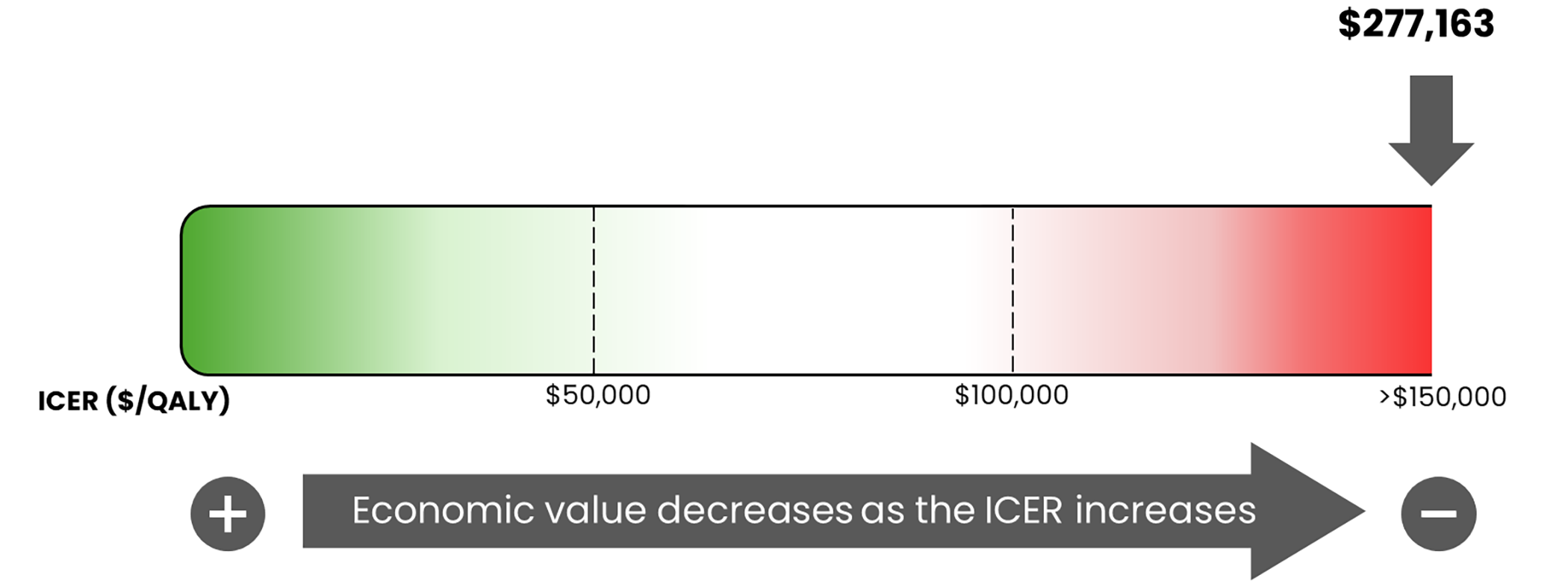
ICER = incremental cost-effectiveness ratio; pERC = pan-Canadian Oncology Drug Review Expert Review Committee; QALY = quality-adjusted life-year.
Certainty of the evidence: The cost-effectiveness of gilteritinib is uncertain due to the lack of long-term efficacy data.
Impacts on Health Systems
Anticipated budget impact: CDA-AMC estimated that by year 3 of reimbursement, 199 patients would be eligible for gilteritinib, of whom 173 are expected to receive gilteritinib. The estimated incremental budget impact of reimbursing gilteritinib is predicted to be approximately $76 million over the first 3 years, with an expected expenditure of $78 million on gilteritinib. The actual budget impact of gilteritinib is highly dependent on the use of quizartinib in the posttransplant population.
Organizational implications: pERC discussed the organizational feasibility implications for gilteritinib, which included the requirement for FLT3 ITD MRD testing, which is not available in Canada and is not conducted as part of clinical practice in Canada before or after allo-HCT.
Testing procedure considerations: pERC discussed the challenges in accessing gilteritinib due to the lack of FLT3 ITD MRD testing in Canada and anticipated health system impacts related to it. MRD testing for FLT3 ITD is not routinely available or funded in clinical practice in Canada. An ultrahigh sensitivity next-generation sequencing test that would have a similar sensitivity threshold to the test used in the MORPHO trial is being validated at several Canadian centres. However, pERC acknowledged several implementation considerations, including timelines for availability, personnel training, funding, and navigating the reimbursement process for genetic and laboratory tests across Canadian jurisdictions.
Sources of Information Used by the Committee
To make its recommendation, the committee considered the following information (links to the full documents for the review can be found on the project webpage):
the CDA-AMC review of the clinical and pharmacoeconomic evidence submitted by the sponsor, as well as relevant ethical issues and potential impacts of testing procedures related to gilteritinib (refer the Main Report and Supplemental Material document)
the sponsor’s comments on the draft report and the CDA-AMC responses
patients' perspectives gathered by 1 patient group, the Leukemia & Lymphoma Society of Canada (refer to the Patient and Clinician Group Input document)
input from 2 clinician groups, the Canadian Leukemia Study Group and Ontario Health (Cancer Care Ontario) Hematology Cancer Drug Advisory Committee (refer to the Patient and Clinician Group Input document)
input from public drug programs that participate in the reimbursement review process (refer to the Supplemental Material document)
input from 2 clinical experts with expertise in the management of AML consulted by CDA-AMC.
pERC Information
Members of the Committee
Dr. Catherine Moltzan (Chair), Dr. Kelvin Chan (Vice-Chair), Paul Agbulu, Dr. Phillip Blanchette, Dr. Matthew Cheung, Dr. Michael Crump, Annette Cyr, Dr. Jennifer Fishman, Dr. Prafull Ghatage, Dr. Jason Hart, Terry Hawrysh, Dr. Yoo-Joung Ko, Dr. Aly-Khan Lalani, Amy Peasgood, Dr. Anca Prica, Dr. Michael Raphael, Dr. Adam Raymakers, Dr. Patricia Tang, Dr. Pierre Villeneuve, and Danica Wasney.
Meeting date: June 10, 2026
Regrets: One expert committee member did not attend.
Conflicts of interest: None
ISSN: 2563-6596
Canada’s Drug Agency (CDA-AMC) is a pan-Canadian health organization. Created and funded by Canada’s federal, provincial, and territorial governments, we’re responsible for driving better coordination, alignment, and public value within Canada’s drug and health technology landscape. We provide Canada’s health system leaders with independent evidence and advice so they can make informed drug, health technology, and health system decisions, and we collaborate with national and international partners to enhance our collective impact.
Disclaimer: CDA-AMC has taken care to ensure that the information in this document was accurate, complete, and up to date when it was published, but does not make any guarantee to that effect. Your use of this information is subject to this disclaimer and the Terms of Use at cda-amc.ca.
The information in this document is made available for informational and educational purposes only and should not be used as a substitute for professional medical advice, the application of clinical judgment in respect of the care of a particular patient, or other professional judgments in any decision-making process. You assume full responsibility for the use of the information and rely on it at your own risk.
CDA-AMC does not endorse any information, drugs, therapies, treatments, products, processes, or services. The views and opinions of third parties published in this document do not necessarily reflect those of CDA-AMC. The copyright and other intellectual property rights in this document are owned by the Canadian Agency for Drugs and Technologies in Health (operating as CDA-AMC) and its licensors.
Questions or requests for information about this report can be directed to Requests@CDA-AMC.ca