Drugs, Health Technologies, Health Systems
Reimbursement Recommendation
Retifanlimab (Zynyz)
Indication: In combination with carboplatin and paclitaxel for the first-line treatment of adult patients with metastatic or inoperable locally recurrent squamous cell carcinoma of the anal canal
Sponsor: Incyte Biosciences Canada Corporation
Final Recommendation: Reimburse with conditions
Summary
What Is the Reimbursement Recommendation for Zynyz?
Canada’s Drug Agency (CDA-AMC) recommends that Zynyz be reimbursed in combination with carboplatin and paclitaxel by public drug plans for the first-line treatment of adult patients with metastatic or inoperable locally recurrent squamous cell carcinoma of the anal canal (SCAC).
Why Did CDA-AMC Recommend Reimbursement?
The pan-Canadian Oncology Drug Review Expert Review Committee (pERC) determined that Zynyz in combination with carboplatin and paclitaxel demonstrates acceptable clinical value versus carboplatin and paclitaxel alone in patients with metastatic or inoperable locally recurrent SCAC in the first-line setting. This determination was sufficient for pERC to recommend that Zynyz be reimbursed. Given that Zynyz is expected to be an additive treatment to carboplatin and paclitaxel, acceptable clinical value refers to added value versus carboplatin and paclitaxel alone.
Evidence from a clinical trial showed that Zynyz in combination with carboplatin and paclitaxel improved overall survival (OS) at 36 months and progression-free survival (PFS) at 24 months versus carboplatin and paclitaxel alone in patients with metastatic or inoperable locally recurrent SCAC in the first-line setting. In addition, Zynyz in combination with carboplatin and paclitaxel may have improved health-related quality of life (HRQoL) at the end of treatment compared with carboplatin and paclitaxel alone. Zynyz in combination with carboplatin and paclitaxel was associated with increased toxicity; however, the safety profile of Zynyz was considered to be consistent with the known safety profile of immunotherapy and expected to be manageable through standard clinical practices.
Zynyz in combination with carboplatin and paclitaxel likely addresses some needs identified by patients, including extending OS and PFS and potentially improving HRQoL.
Which Patients Are Eligible for Coverage?
Zynyz in combination with carboplatin and paclitaxel should only be covered for adults with unresectable or metastatic SCAC who have not received prior systemic therapy for SCAC, with the exceptions of chemotherapy administered concomitantly with radiotherapy as a radiosensitizing agent, and prior neoadjuvant or adjuvant systemic anticancer therapy if completed at least 6 months before treatment initiation. Patients should have good performance status scores.
What Are the Conditions for Reimbursement?
Zynyz should only be reimbursed if prescribed in combination with carboplatin and paclitaxel for the first 6 cycles and by clinicians with expertise in treating SCAC, and if the cost of Zynyz is reduced. Treatment should be discontinued if disease progresses, if toxicity is unacceptable, or after completing 13 cycles of Zynyz or 6 cycles of carboplatin and paclitaxel.
Review Background
Disease background: Squamous cell carcinoma of the anal canal (SCAC) is a rare malignancy that arises from cells lining the anal canal and margin, with most patients presenting with symptoms such as anal bleeding, pain, and a sensation of a rectal mass. SCAC is characterized by a poor prognosis in locally recurrent or metastatic settings. Patients in the advanced stages of the disease face a poor survival rate, with 5-year overall survival (OS) rates of 18% to 36%. Anal cancer accounts for approximately 0.5% of all new cancer cases worldwide. In 2022, 740 people were diagnosed with anal cancer in Canada.
Indication and reimbursement request: Health Canada has approved retifanlimab (Zynyz) in combination with carboplatin and paclitaxel for the first-line treatment of adult patients with metastatic or with inoperable locally recurrent SCAC. The sponsor is seeking reimbursement for this patient population.
Drug under review: Retifanlimab is an immune checkpoint inhibitor. It is available as a solution administered by IV infusion, and the dosage recommended in the product monograph is 500 mg every 4 weeks over 30 minutes, in combination with carboplatin and paclitaxel for 6 cycles followed by retifanlimab 500 mg as monotherapy every 4 weeks for all cycles thereafter. Treatment should continue until disease progression or unacceptable toxicity, or up to 12 months.
Treatment costs: At the submitted price of $16,090.00 per vial, the 28-day cycle cost of retifanlimab is expected to be $16,090 per patient, based on the Health Canada–recommended dosage. Retifanlimab is indicated for use in combination with carboplatin and paclitaxel; the cost of the regimen is expected to be $21,365 per patient per 28 days.
Highlights of Input From Interested Parties
The patient groups (the Colorectal Cancer Resource & Action Network in collaboration with the Canadian Cancer Survivor Network, Gastrointestinal Society, HPV Global Action, and Save Your Skin Foundation, as well as Colorectal Cancer Canada) noted the following regarding impacts of the disease, unmet needs, and important outcomes.
The disease causes significant physical symptoms, which can severely affect daily functioning. It also has a substantial impact on quality of life and mental health. Patients often face stigma, guilt, and shame related to their cancer diagnosis, which leads to misconceptions and delays in seeking medical advice.
SCAC disproportionately affects some systematically marginalized populations, including those who identify as members of the 2SLGBTQ+ communities, gay men, and individuals living with HPV and HIV.
There is a high unmet clinical need for a treatment that meaningfully extends survival while preserving the ability to maintain daily activities. There are inequities in access to prevention, screening, diagnosis, and treatment among patients with lower socioeconomic status and those living in remote areas.
Extending survival, maintaining daily activities including work and caregiving, decreasing out-of-pocket costs, and experiencing fewer side effects were identified as important treatment goals.
The clinician groups (the Canadian GI Oncology Evidence Network and Ontario Health Gastrointestinal Cancer Drug Advisory Committee) and the clinical experts consulted by Canada’s Drug Agency (CDA-AMC) noted the following regarding unmet needs arising from the disease and place in therapy for the drug under review.
The lack of effective treatment options beyond carboplatin plus paclitaxel in the first-line setting, and the need for treatments with more durable disease control that also improve progression-free survival (PFS) and OS and have fewer toxicities, are among important unmet needs for patients with metastatic or inoperable locally recurrent SCAC.
The clinical experts consulted by CDA-AMC expected a shift in the treatment paradigm from using chemotherapy alone to using chemoimmunotherapy in the first-line setting for metastatic or inoperable locally recurrent SCAC.
The participating public drug programs provided input regarding considerations for initiation, renewal, discontinuation, prescribing of therapy, relevant comparators, and system and economic considerations.
Recommendation
With a vote of 16 in favour to 0 against, the pan-Canadian Oncology Drug Review Expert Review Committee (pERC) recommends that retifanlimab be reimbursed in combination with carboplatin and paclitaxel for the first-line treatment of adult patients with metastatic or inoperable locally recurrent SCAC, only if the conditions listed in Table 1 are met.
Table 1: Reimbursement Conditions and Reasons
Reimbursement condition | Reason | Implementation guidance |
|---|---|---|
Initiation | ||
1. Treatment with retifanlimab in combination with carboplatin and paclitaxel should be reimbursed when initiated in adult patients who meet all of the following criteria: 1.1. have a confirmed diagnosis of unresectable or metastatic SCAC 1.2. have not received prior systemic therapy for SCAC, with the exception of chemotherapy administered concomitantly with radiotherapy as a radiosensitizing agent, and prior neoadjuvant or adjuvant systemic anticancer therapy if completed at least 6 months before treatment initiation 1.3. have a good performance status. | Evidence from the POD1UM-303 trial demonstrated that treatment with retifanlimab provided added clinical benefit compared to placebo when used in combination with carboplatin and paclitaxel. The POD1UM-303 trial enrolled patients who had the characteristics stated and an ECOG PS score of 0 to 1. | pERC agreed with the clinical experts that patients with an ECOG PS score of 2 could be considered for treatment with retifanlimab in combination with carboplatin and paclitaxel at the discretion of the treating clinician, in addition to those with an ECOG PS score of 0 or 1 studied in the POD1UM-303 trial. In the POD1UM-303 trial, patients with active CNS metastases were excluded. pERC agreed with the clinical experts that patients with CNS metastases can be considered for retifanlimab on an individual basis based on clinical stability, neurologic symptoms, steroid requirements, and overall risk-benefit assessment, provided that they have ECOG PS scores lower than 3. In the POD1UM-303 trial, patients with HIV infection were eligible for study inclusion if the infection was stable. pERC agreed with the clinical experts that stable HIV disease should be determined at the discretion of the treating clinician and should not require strict adherence to the POD1UM-303 trial inclusion criteria based on CD4+ count and viral load. pERC agreed with the clinical experts that, for a limited time following implementation, patients who have already initiated treatment with carboplatin and paclitaxel in the first-line setting may be eligible to have retifanlimab added to carboplatin and paclitaxel, at the discretion of the treating clinician. pERC noted that patients with metastatic or inoperable locally recurrent squamous cell carcinoma of the anal margin should be eligible for treatment with retifanlimab in combination with carboplatin and paclitaxel. Although the POD1UM-303 trial did not include patients with squamous cell carcinoma of the anal margin, the clinical experts noted that it is treated in a similar manner to SCAC in clinical practice in Canada, and that patients with squamous cell carcinoma of the anal margin are expected to benefit from treatment with retifanlimab in combination with carboplatin and paclitaxel. |
Discontinuation | ||
2. Treatment should be discontinued upon occurrence of any of the following: 2.1. disease progression 2.2. unacceptable toxicity 2.3. maximum 13 cycles of retifanlimab treatment and 6 cycles of carboplatin with paclitaxel treatment. | In the POD1UM-303 trial, treatment with retifanlimab was continued for up to 13 cycles in the absence of disease progression or intolerable toxicity. Patients were treated with retifanlimab every 4 weeks in combination with carboplatin and paclitaxel for 6 cycles, followed by retifanlimab monotherapy every 4 weeks for up to 7 additional cycles. | pERC agreed with the clinical experts that if disease progression occurs during a treatment pause or observation period, retreatment with retifanlimab can be considered, particularly if the progression occurs more than 6 months after treatment interruption and if the patient had previously derived clinical benefit. Retreatment for up to 1 additional year of therapy may be reasonable. The use of retifanlimab monotherapy vs. retifanlimab in combination with chemotherapy should be left to the discretion of the treating clinician. pERC agreed with the clinical experts that if 1 component of the regimen is discontinued due to intolerance, retifanlimab treatment may be continued for a maximum of 13 treatment cycles. No strict minimum number of chemotherapy cycles is required, as long as the patient has received at least 1 dose of chemotherapy concurrently with retifanlimab. |
Prescribing | ||
3. Treatment with retifanlimab in combination with carboplatin and paclitaxel should be prescribed by clinicians with expertise in treating SCAC. | This is meant to ensure that retifanlimab in combination with carboplatin and paclitaxel is prescribed for appropriate patients and that adverse effects are managed in an optimized and timely manner. | — |
4. Retifanlimab should be prescribed in combination with carboplatin and paclitaxel in the first 6 cycles for eligible patients. | In the POD1UM-303 trial, retifanlimab was used in combination with carboplatin and paclitaxel in the first 6 cycles. | pERC agreed with the clinical expert input that there is limited evidence to support use with alternate chemotherapy regimens; however, substitution may be considered on a case-by-case basis when carboplatin and/or paclitaxel are contraindicated or not tolerated, at the discretion of the treating clinician. |
Pricing | ||
5. A reduction in price. | Using the CDA-AMC base-case analysis, the ICER for retifanlimab in combination with carboplatin and paclitaxel was $138,857 per QALY gained when compared with carboplatin and paclitaxel alone in the indicated population. A band 3 price reductiona would be required to achieve cost-effectiveness at a $50,000 per QALY gained threshold. A band 2 price reductiona would be required to achieve cost-effectiveness at a $100,000 per QALY threshold. Price reductions for any given willingness-to-pay threshold are available in the CDA-AMC Main Report and Supplemental Material document. | The CDA-AMC analysis is based on public list prices for all treatments. Further price reductions may be required if there are price arrangements (discounts) currently in place for any treatment included in the economic analysis. |
CDA-AMC = Canada’s Drug Agency; CNS = central nervous system; ECOG = Eastern Cooperative Oncology Group; ICER = incremental cost-effectiveness ratio; pERC = pan-Canadian Oncology Drug Review Expert Review Committee; PS = performance status; QALY = quality-adjusted life-year; SCAC = squamous cell carcinoma of the anal canal.
aFor the statement regarding the size of the price reduction required, band 1 = 1% to 24%, band 2 = 25% to 49%, band 3 = 50% to 74%, and band 4 = 75% or greater.
Rationale for the Recommendation
Clinical Value
Based on the totality of the clinical evidence, pERC concluded that retifanlimab in combination with carboplatin and paclitaxel demonstrates acceptable clinical value compared with carboplatin and paclitaxel alone for the first-line treatment of adults with metastatic or inoperable locally recurrent SCAC. Given that retifanlimab is expected to be an additive treatment to carboplatin and paclitaxel, acceptable clinical value refers to added value versus carboplatin and paclitaxel alone.
Evidence from 1 double-blind, randomized, placebo-controlled phase III trial (the POD1UM-303 trial; N = 308) demonstrated that treatment with retifanlimab in combination with carboplatin and paclitaxel likely results in added clinical benefits for patients with metastatic or inoperable SCAC in the first-line setting, compared with carboplatin and paclitaxel alone, in terms of PFS and OS. Retifanlimab in combination with carboplatin and paclitaxel, compared to carboplatin and paclitaxel, likely results in a clinically important increase in the probability of being progression-free at 24 months and alive at 36 months, although there is some uncertainty regarding the long-term benefits, given that there was a limited number of patients remaining at risk beyond 24 months. The evidence also suggests that retifanlimab in combination with carboplatin and paclitaxel may result in a clinically important improvement in health-related quality of life (HRQoL) as assessed by the European Organisation for Research and Treatment of Cancer Quality of Life Questionnaire Core 30 (EORTC QLQ-C30) global health score at the end of treatment, compared with carboplatin and paclitaxel alone.
Retifanlimab in combination with carboplatin and paclitaxel was associated with increased toxicity, including serious adverse events, grade 3 or higher adverse events, and immune-related adverse events, compared with carboplatin and paclitaxel alone. However, the safety profile of retifanlimab was consistent with the known safety profile of immunotherapy and expected to be manageable through standard clinical practices and established guidelines.
Patients emphasized the need for treatments that extend survival while preserving daily activities, functional status, and quality of life while minimizing treatment-related toxicity and treatment burden. pERC concluded that retifanlimab in combination with carboplatin and paclitaxel likely addresses some of the identified needs, including extending OS and PFS, and potentially improving HRQoL.
Further information on the committee’s discussion of clinical value is provided in the Summary of Deliberation section.
Developing the Recommendation
The determination of acceptable clinical value was sufficient for pERC to recommend reimbursement of retifanlimab. As part of the deliberation on whether to recommend reimbursement, the committee also considered unmet clinical need, unmet nonclinical need, and health inequity. Information on this discussion is provided in the Unmet Clinical Need and Distinct Social and Ethical Considerations domains in the Summary of Deliberation section.
Because pERC recommended that retifanlimab be reimbursed, the committee also deliberated on whether reimbursement conditions should be added to address important economic considerations, health system impacts, or social and ethical considerations, or to ensure clinical value is realized. The resulting reimbursement conditions, with accompanying reasons and implementation guidance, are stated in Table 1.
Summary of Deliberation
pERC considered all domains of value of the deliberative framework before developing its recommendation: clinical value, unmet clinical need, distinct social and ethical considerations, economic considerations, and impacts on health systems. For further information on the domains of value, refer to Expert Committee Deliberation at Canada’s Drug Agency.
The committee considered the following key discussion points, organized by the 5 domains of value.
Clinical Value
Appropriate comparators: pERC considered carboplatin with paclitaxel to be the appropriate comparator for retifanlimab in combination with carboplatin and paclitaxel, in adult patients with metastatic or inoperable locally recurrent SCAC in the first-line setting.
Efficacy versus carboplatin with paclitaxel: One multicentre, double-blind, randomized, placebo-controlled, phase III pivotal trial (the POD1UM-303 trial; N = 308) showed PFS and OS results in favour of retifanlimab in combination with carboplatin and paclitaxel compared to placebo in combination with carboplatin and paclitaxel in patients with metastatic or inoperable SCAC who had not received prior systemic treatment for SCAC. The probability of being progression-free at 24 months was 28.2% (95% confidence interval [CI], 20.5% to 36.4%) in the retifanlimab in combination with carboplatin and paclitaxel group and 13.5% (95% CI, 8.2% to 20.2%) in the placebo in combination with carboplatin and paclitaxel group, with a between-group difference of █████ ████ ███ ████ ██ ███████ The probability of being alive at 36 months was 47.5% (95% CI, 38.8% to 55.6%) in the retifanlimab in combination with carboplatin and paclitaxel group and 34.3% (95% CI, 26.4% to 42.3%) in the placebo in combination with carboplatin and paclitaxel group, with a between-group difference of █████ ████ ███ ████ ██ ███████ The difference between retifanlimab plus carboplatin and paclitaxel compared with placebo plus carboplatin and paclitaxel in EORTC QLQ-C30 global health score at the end of treatment was █████ ████ ███ █████ ██ ███████ The between-group difference in mean change from baseline in the European Organisation for Research and Treatment of Cancer Quality of Life Questionnaire for Anal Cancer (EORTC QLQ-ANL27) bowel function (stoma) domain, which is an HRQoL measure specific to anal cancer, at the end of treatment was █████ ████ ███ ██████ ██ ███████
Clinical importance of treatment effects: Input from patients and clinicians indicated that durable disease control, improved survival, symptom relief, maintenance of functional status, improved HRQoL, and minimized toxicity are important treatment outcomes. pERC considered the benefits of retifanlimab in combination with carboplatin and paclitaxel on PFS and OS to be likely clinically meaningful for patients with metastatic or inoperable locally recurrent SCAC, a population with limited effective treatment options and a poor prognosis. The committee considered the benefit of retifanlimab in combination with carboplatin and paclitaxel on global HRQoL may be potentially clinically meaningful; however, the evidence was very uncertain on the effect of this regimen on bowel function.
Comparative harms versus carboplatin with paclitaxel: In the POD1UM-303 trial, retifanlimab in combination with carboplatin and paclitaxel was associated with more harms compared with carboplatin and paclitaxel alone. The evidence suggests that retifanlimab plus carboplatin and paclitaxel likely results in an increase in the proportion of patients with serious adverse events and grade 3 or higher adverse events when compared with placebo plus carboplatin and paclitaxel. Input from the clinical experts consulted by CDA-AMC indicated that increased toxicity with the addition of retifanlimab to carboplatin and paclitaxel is expected, and that the safety profile of retifanlimab is consistent with the known safety of immunotherapy and is expected to be manageable in clinical practice. The committee considered the harms to be notable but representative of a manageable toxicity profile.
Certainty of the evidence: pERC discussed the Grading of Recommendations Assessment, Development and Evaluation (GRADE) assessment of selected outcomes from the POD1UM-303 trial and noted that certainty of the OS and PFS outcomes was moderate due to imprecision. There was also some uncertainty regarding the long-term benefits, given that there was a limited number of patients remaining at risk beyond 24 months. The certainty of the outcomes for the EORTC QLQ-C30 global health score and EORTC QLQ-ANL27 bowel function (stoma) domain was low and very low, respectively, due to potential attrition bias and imprecision. Evidence for the proportion of patients with serious adverse events and the proportion of patients with grade 3 or higher adverse events was of moderate certainty due to imprecision.
Treatment eligibility in subpopulations: In the POD1UM-303 trial, patients with active central nervous system (CNS) metastases were excluded, and patients living with HIV were eligible if their HIV infection was stable. pERC discussed reimbursement eligibility in these subpopulations. The committee considered input from the clinical experts indicating that patients with CNS metastases may be considered for treatment based on clinical stability and the overall benefit-risk assessment, and that HIV stability should be assessed at the discretion of the treating clinician rather than according to the trial-specific HIV eligibility criteria. pERC also acknowledged input from patients and clinicians that SCAC disproportionately affects people living with HIV and that barriers to accessing care may exist in this population. Therefore, the committee considered reimbursement of retifanlimab in combination with carboplatin and paclitaxel for patients with CNS metastases or stable HIV to be reasonable on a case-by-case basis, at the discretion of the treating clinician. The drug programs also raised the question of whether patients with metastatic or inoperable locally recurrent squamous cell carcinoma of the anal margin should be eligible for treatment. pERC noted that reimbursement in this population would be reasonable, given input from clinician experts and a clinician group that squamous cell carcinoma of the anal margin is managed similarly to SCAC in clinical practice in Canada and that these patients would be expected to derive similar benefit from treatment.
Time-limited reimbursement in patients who have initiated or completed chemotherapy: pERC acknowledged that some patients may have started first-line treatment with carboplatin and paclitaxel before funding for retifanlimab is implemented. Based on clinical expert input, pERC considered it reasonable, at the discretion of the treating clinician, to allow time-limited reimbursement of retifanlimab for patients receiving first-line carboplatin and paclitaxel who have not experienced disease progression while on carboplatin and paclitaxel. pERC also discussed that there may be a prevalent population of patients who did not have access to retifanlimab in the first-line setting. pERC noted that, on a time-limited basis, this legacy population may be considered for retifanlimab therapy at disease relapse given the potential for time-limited reimbursement of retifanlimab monotherapy in patients whose disease has already progressed on carboplatin and paclitaxel. In the POD1UM-303 trial, patients randomized to placebo in combination with carboplatin and paclitaxel were permitted to receive retifanlimab monotherapy for up to 13 cycles following disease progression.
Clinical value: Based on the preceding considerations, the committee determined that there was added clinical value with retifanlimab in combination with carboplatin and paclitaxel versus carboplatin and paclitaxel alone.
Unmet Clinical Need
Input on unmet clinical need: Patient and clinician input identified an unmet need for more effective and better-tolerated first-line treatments for metastatic or inoperable locally recurrent SCAC. Patients emphasized the need for treatments that extend survival while preserving daily activities, functional status, and quality of life, while minimizing treatment-related toxicity and treatment burden. Clinicians highlighted the lack of effective treatment options beyond carboplatin plus paclitaxel, the limited benefit of subsequent therapies, and the absence of available immunotherapy options. They emphasized the need for more durable disease control, improved PFS and OS, better symptom relief, and treatments with fewer toxicities.
Severity of the disease: pERC acknowledged input from patients and clinicians that metastatic or inoperable locally recurrent SCAC is a life-threatening cancer associated with substantial morbidity and mortality, poor survival outcomes, significant symptom burden, and negative impacts on psychosocial well-being and quality of life.
Availability of treatment options: pERC acknowledged input from clinicians that treatment options for patients with metastatic or inoperable locally recurrent SCAC are limited and typically consist of carboplatin plus paclitaxel as the preferred standard regimen in the first-line setting. Cisplatin plus fluorouracil may still be used in selected patients but is generally considered an alternative regimen in the first line due to increased toxicity. There are also few effective options in the second line and beyond, and they generally provide modest benefit. There is currently no publicly funded chemoimmunotherapy regimen for metastatic or inoperable locally recurrent SCAC.
Distinct Social and Ethical Considerations
Input on unmet nonclinical need: pERC noted that access to chemotherapy and specialist oncology care may be challenging for patients in rural or remote areas because chemotherapy requires infusion-based care in specialized oncology centres. Current treatment places a substantial burden on patients and caregivers due to repeated IV infusions; frequent clinic visits; ongoing monitoring; and impacts on daily activities, work, family responsibilities, and quality of life.
Equity considerations: pERC noted that SCAC disproportionately affects certain systemically marginalized and equity-deserving populations, including gay men, people living with HIV or HPV, and those who are members of 2SLGBTQ+ communities. Inequities in access to prevention, screening, diagnosis, specialist care, and treatment were identified among people with lower socioeconomic status, those living in rural or remote areas, and some immigrant populations.
Economic Considerations
Health impacts of retifanlimab in combination with carboplatin and paclitaxel versus relevant comparators: Retifanlimab in combination with carboplatin and paclitaxel is predicted to be associated with a gain of 1.51 life-years compared to carboplatin and paclitaxel alone, and may result in a gain of 1.16 quality-adjusted life-years (QALYs) compared to carboplatin and paclitaxel alone over a lifetime (40-year) horizon.
Cost of retifanlimab in combination with carboplatin and paclitaxel versus relevant comparators: Retifanlimab in combination with carboplatin and paclitaxel is predicted to be associated with higher costs to the health care system than carboplatin and paclitaxel alone (incremental costs = $160,909) over a lifetime (40-year) horizon, primarily driven by increased costs associated with drug acquisition.
Key findings of the economic evaluation: Based on the submitted evidence using the sponsor’s cost-utility analysis, the CDA-AMC base-case analysis estimated that the incremental cost-effectiveness ratio (ICER) for retifanlimab in combination with carboplatin and paclitaxel in the indicated population was $138,857 per QALY gained when compared with carboplatin and paclitaxel alone (Figure 1).
Figure 1: Estimate of the ICER Used by pERC to Inform the Price Condition
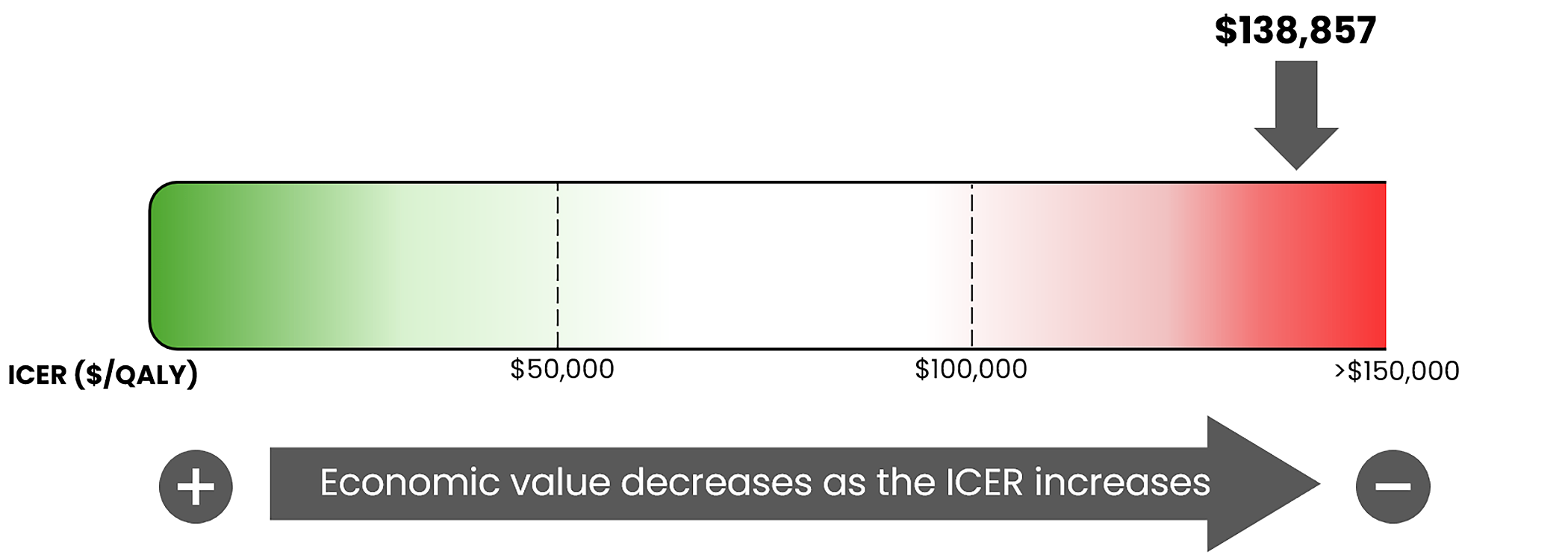
ICER = incremental cost-effectiveness ratio; pERC = pan-Canadian Oncology Drug Review Expert Review Committee; QALY = quality-adjusted life-year.
Certainty of the evidence: pERC noted that there is outstanding uncertainty in the economic analysis, particularly related to the PFS estimates, which may be overestimated compared to the trial findings. Additionally, the long-term efficacy of retifanlimab in combination with carboplatin and paclitaxel remains uncertain due to a lack of long-term data.
Impacts on Health Systems
Anticipated budget impact: CDA-AMC estimated that 633 patients would be eligible for retifanlimab in combination with carboplatin and paclitaxel over a 3-year period, of whom 528 are expected to receive retifanlimab in combination with carboplatin and paclitaxel. The estimated incremental budget impact of reimbursing retifanlimab in combination with carboplatin and paclitaxel is predicted to be approximately $76,443,334 over the first 3 years, entirely reflecting the expenditure on retifanlimab. The committee noted that if patients with metastatic or inoperable locally recurrent squamous cell carcinoma of the anal margin are treated with retifanlimab in combination with carboplatin and paclitaxel, the anticipated budget impact would increase.
Sources of Information Used by the Committee
To make its recommendation, the committee considered the following information (links to the full documents for the review can be found on the project web page):
the CDA-AMC review of the clinical and pharmacoeconomic evidence submitted by the sponsor, as well as relevant ethical issues related to retifanlimab in combination with carboplatin and paclitaxel (refer to the Main Report and Supplemental Material document)
the sponsor’s comments on the draft report and the CDA-AMC responses
patients' perspectives gathered by 2 patient groups: the Colorectal Cancer Resource & Action Network in collaboration with the Canadian Cancer Survivor Network, Gastrointestinal Society, HPV Global Action, and Save Your Skin Foundation, as well as Colorectal Cancer Canada (refer to the Patient and Clinician Group Input document)
input from 2 clinician groups: the Canadian GI Oncology Evidence Network and the Ontario Health Gastrointestinal Cancer Drug Advisory Committee (refer to the Patient and Clinician Group Input document)
input from the public drug programs that participate in the reimbursement review process (refer to the Supplemental Material document)
input from 2 clinical experts consulted by CDA-AMC with expertise in the management of SCAC.
pERC Information
Members of the Committee
Dr. Catherine Moltzan (Chair), Dr. Kelvin Chan (Vice-Chair), Paul Agbulu, Dr. Phillip Blanchette, Dr. Matthew Cheung, Annette Cyr, Dr. Jennifer Fishman, Dr. Prafull Ghatage, Dr. Jason Hart, Terry Hawrysh, Dr. Yoo-Joung Ko, Dr. Aly-Khan Lalani, Amy Peasgood, Dr. Anca Prica, Dr. Michael Raphael, Dr. Adam Raymakers, Dr. Patricia Tang, Dr. Pierre Villeneuve, and Danica Wasney
Meeting date: August 12, 2026
Regrets: Two expert committee members did not attend.
Conflicts of interest: None
ISSN: 2563-6596
Canada’s Drug Agency (CDA-AMC) is a pan-Canadian health organization. Created and funded by Canada’s federal, provincial, and territorial governments, we’re responsible for driving better coordination, alignment, and public value within Canada’s drug and health technology landscape. We provide Canada’s health system leaders with independent evidence and advice so they can make informed drug, health technology, and health system decisions, and we collaborate with national and international partners to enhance our collective impact.
Disclaimer: CDA-AMC has taken care to ensure that the information in this document was accurate, complete, and up to date when it was published, but does not make any guarantee to that effect. Your use of this information is subject to this disclaimer and the Terms of Use at cda-amc.ca.
The information in this document is made available for informational and educational purposes only and should not be used as a substitute for professional medical advice, the application of clinical judgment in respect of the care of a particular patient, or other professional judgments in any decision-making process. You assume full responsibility for the use of the information and rely on it at your own risk.
CDA-AMC does not endorse any information, drugs, therapies, treatments, products, processes, or services. The views and opinions of third parties published in this document do not necessarily reflect those of CDA-AMC. The copyright and other intellectual property rights in this document are owned by the Canadian Agency for Drugs and Technologies in Health (operating as CDA-AMC) and its licensors.
Questions or requests for information about this report can be directed to Requests@CDA-AMC.ca.