Drugs, Health Technologies, Health Systems
Health Technology Review
Offloading Devices for Adults With Diabetic Foot Ulcer
Key Messages
What Is the Issue?
Offloading devices provide mechanical support needed to alleviate pressure at the site of a diabetic foot ulcer. These devices protect the ulcer from further trauma to help with healing and prevent lower limb amputation.
There are different types of offloading devices available, and suitability may differ based on ulcer severity and ulcer location.
Health care decision-makers may be uncertain about best practices for implementing the use of offloading devices and related care for adults with diabetic foot ulcers. This Rapid Review was prepared in response to a request from decision-makers.
What Did We Do?
We sought to identify evidence-based guidelines regarding the use of offloading devices to manage diabetic foot ulcers. We excluded guidelines focused solely on the use of these devices to prevent diabetic foot ulcers.
We searched key resources, including journal citation databases, and conducted a focused internet search for relevant evidence published between January 1, 2021, and August 7, 2026.
What Did We Find?
We found 5 relevant evidence-based guidelines (1 from Canada, 4 developed in the US or for international use).
Overall, all guidelines recognize offloading devices as an important pressure offloading intervention for diabetic foot ulcers. Offloading devices may be considered as an adjunct treatment to surgery when ulcers persist after nonsurgical offloading. Shoe lifts for the contralateral limb may improve comfort and balance.
Knee-high or ankle-high nonremovable offloading devices are recommended over removable types for plantar foot ulcers, including when mild infection or mild decreased blood supply is present.
Removable offloading devices may be considered when people with plantar ulcers are experiencing:
both mild infection and mild decreased blood supply
moderate to severe infection and/or decreased blood supply.
Felted foam may be considered when nonremovable or removable offloading devices are unavailable.
Some guidelines suggest considering factors beyond ulcer location and severity when deciding on the device type, such as the lifestyle and preferences of the person with diabetic foot ulcer, as well as local resources and support available.
What Does This Mean?
Offloading devices remain an important component of a comprehensive care plan for managing diabetic foot ulcers.
The care team may consider nonremovable offloading devices as their first choice for pressure offloading plantar diabetic foot ulcers, specifically total contact casts or irremovable knee-high cast walkers. They may wish to explore prescribing other offloading device types with consideration of contraindications, presence of infection and/or decreased blood flow, device availability, the lifestyle and preferences of the person living with the diabetic foot ulcer, as well as local resources and care available.
Decision-makers may wish to assess feasibility of implementing these guidelines in practice. Most recommendations may have limited applicability in Canada and likely did not consider the perspectives of populations disproportionately affected by diabetic foot ulcers in Canada.
Abbreviations
CIHI
Canadian Institute for Health Information
COMET
Core Outcome Measures in Effectiveness Trials
GRADE
Grading of Recommendations Assessment, Development and Evaluation
HTA
health technology assessment
IWGDF
International Working Group on the Diabetic Foot
PAD
peripheral artery disease
RNAO
Registered Nurses’ Association of Ontario
Research Question
What are the evidence-based guidelines regarding the use of offloading devices for adults with diabetic foot ulcer?
Context and Policy Issues
Diabetic Foot Ulcers
Diabetic foot ulcers are the leading cause of nontraumatic lower limb amputations in Canada.1 Ulcers refer to open sores that are difficult to treat and take a long time to heal.2,3 A lower limb amputation can negatively impact an individual’s function, mental health, and quality of life.4 It can also increase the risk of premature death.4
Adults with diabetes have a 15% to 25% lifetime risk of developing a foot ulcer.1,4 Based on diabetes prevalence in 2020 to 2021, the Canadian Institute for Health Information (CIHI) estimated that around 550,000 to 920,000 people with diabetes in Canada are likely to experience a diabetes-related foot complication in their lifetime.4 Furthermore, this number is likely to increase over time given that the prevalence of diabetes is expected to rise with the aging population.4 Diabetic foot ulcers develop mainly from loss of sensation (neuropathy) and narrowing of arteries (peripheral artery disease [PAD]) from elevated blood sugar over time.1,3,5 Neuropathy increases the risk of wounds from external and repetitive trauma, while also making it more difficult for the individual to notice wounds.1,3 Narrow arteries slow down healing by decreasing blood flow.1,3,5
In Canada, complications associated with diabetes disproportionately impact some equity-deserving groups.6,7 In particular, Indigenous Peoples experience a high burden of foot-related complications with diabetes compared to non-Indigenous populations in Canada.6-9 A scoping review suggests that diabetic foot disease and complications are likely underestimated in Indigenous populations because of limited data and high-quality studies.7 Additionally, most studies report on First Nations and Métis data with limited representation for Inuit.7 CIHI also found higher rates of diabetic foot ulcers in rural areas, neighbourhoods with lower income, areas with low education, and areas with a high proportion of individuals with a less extensive social network (e.g., living alone, single parents).6 Inequities in diabetes-related complications have been attributed to barriers and unmet need along the continuum of care (e.g., preventive care, access to integrated care and supplies).6-10 The multifactorial and complex pathophysiology of diabetic foot ulcers necessitates an interprofessional approach to care. Depending on ulcer severity, different health care professionals may be involved in providing care to prevent or manage diabetic foot ulcers. People with diabetic foot ulcers may receive care from a family doctor, nurse, podiatrist, chiropodist, a surgeon, and an infectious disease specialist.11,12 They may receive care for diabetic foot ulcers at different health care spaces, such as a specialized foot clinic, a primary care office, the emergency department, an advanced wound care clinic, and at a specialist’s practice.11 Additionally, presence of a foot ulcer may reflect progression of diabetes and signals the need for care that extends beyond ulcer treatment and includes comprehensive diabetes care.10
Diabetic foot ulcers impose considerable health system and societal costs in Canada, whether or not they lead to an amputation.4 CIHI estimated that hospital stays for lower limb ulcers and a foot amputation cost around $21,000 and $23,000 per visit, respectively.4 These estimates represent only a portion of total costs as it excludes other fees, such as physician compensation, mobility aids, and rehabilitation costs.4
Offloading Devices
Effective prevention and care practices can prevent worsening of diabetic foot ulcers and avoid amputation, and may result in cost-savings to the health system.1,4 Offloading devices relieve pressure on the foot ulcer via mechanical support in efforts to promote healing, prevent reoccurrence, and prevent amputation.1
These devices can be broadly grouped into removable or nonremovable options. Nonremovable devices maintain adherence but do not allow for frequent wound inspections or dressing changes unlike removable devices.1 They can also disrupt an individual’s ability to perform everyday activities, such as sleep and showering.1,13,14 Some types of offloading devices require customization and frequent visits with trained health care professionals.1 Table 1 summarizes some of the different types of offloading devices.
Care pathways and coverage for offloading devices and related care for diabetic foot ulcers vary across Canada.10,11 Access remains a barrier for many people with diabetic foot ulcers given limited public funding for offloading devices and related care (e.g., podiatry).10 Cost is a considerable factor that influences an individual’s purchase of an offloading device, regardless of their preference.3
Table 1: Types of Offloading Devices
Type of offloading device | Description |
|---|---|
Fibreglass total contact casting (nonremovable) | Fibreglass total contact casts are custom made, knee-high devices that redistribute pressure from the foot to the calf.1 They require skilled application and need to be changed every 1 to 2 weeks.1,13 Their nonremovable nature does not allow for more frequent wound inspection, so wound seepage is a contraindication.1 Additionally, their rigid material can limit mobility, impact sleep, and reduce the ability to perform some activities of daily living.13,14 |
Cast walkers (removable or nonremovable) | A prefabricated knee-high brace is designed to maintain a total contact fit with removable or nonremovable options available.15 Overall, removable options provide easy access to wounds and maintain mobility better than nonremovable options.1,14 Removable options can be removed without health care professionals.14 However, some individuals using removable cast walkers described them as heavy and bulky; this may risk nonadherence.13,14 Nonremovable cast walkers may be referred to as instant total contact casts.1 This type uses the frame of a removable cast walker with the semipermanent binding of a fibreglass total contact cast.1 It allows for more frequent wound inspection and makes reapplication easier compared to fibreglass total contact casts.1 However, fit can be a concern for some noncustom, nonremovable options.1 |
Specialized footwear or therapeutic shoes (removable) | Prescription shoes with orthotic inserts.13,15 They require proper fitting and may require regular adjustment.13 Those wearing the footwear may be less willing to partake in certain activities because of a fear of damaging them (e.g., due to rain exposure).14 |
Felted foam (removable) | A fixed bilayer of felted foam pad for part of the sole that corresponds to the site of the ulcer.1 |
Healing sandal (removable) | A sandal with a rigid rocker.1 They can be custom made or commercially available.1 |
Why Is It Important to Do This Review?
Decision-makers may be uncertain about best practices for the selection, use, and maintenance of offloading devices given the many different types and lack of standard care pathways for people with diabetic foot ulcers. A review of the evidence-based guidelines can inform decision-making regarding the use of offloading devices to maximize health outcomes in people with foot ulcers.
Objective
To support decision-making about offloading devices for people with diabetic foot ulcer, we prepared this Rapid Review to summarize and critically appraise available evidence-based guidelines with recommendations about offloading devices available for this indication.
Methods
An information specialist conducted a customized literature search, balancing comprehensiveness with relevance, of multiple sources and a focused internet search on August 7, 2026.
One reviewer screened citations and selected studies based on the inclusion criteria presented in Table 2, and critically appraised included publications using AGREE II.16
Appendix 1 presents a detailed description of methods and selection criteria for evidence-based guidelines.
Criteria | Description |
|---|---|
Population | Adults with diabetic foot ulcer |
Intervention | Offloading devices |
Comparator | NA |
Outcomes | Recommendations regarding the use of offloading devices (e.g., most appropriate type, expertise or specialty care needed for people using offloading devices) |
Study designs | Evidence-based guidelines |
Publication date | Since January 1, 2021 |
NA = not applicable.
Summary of Evidence
Quantity of Evidence-Based Guidelines Available
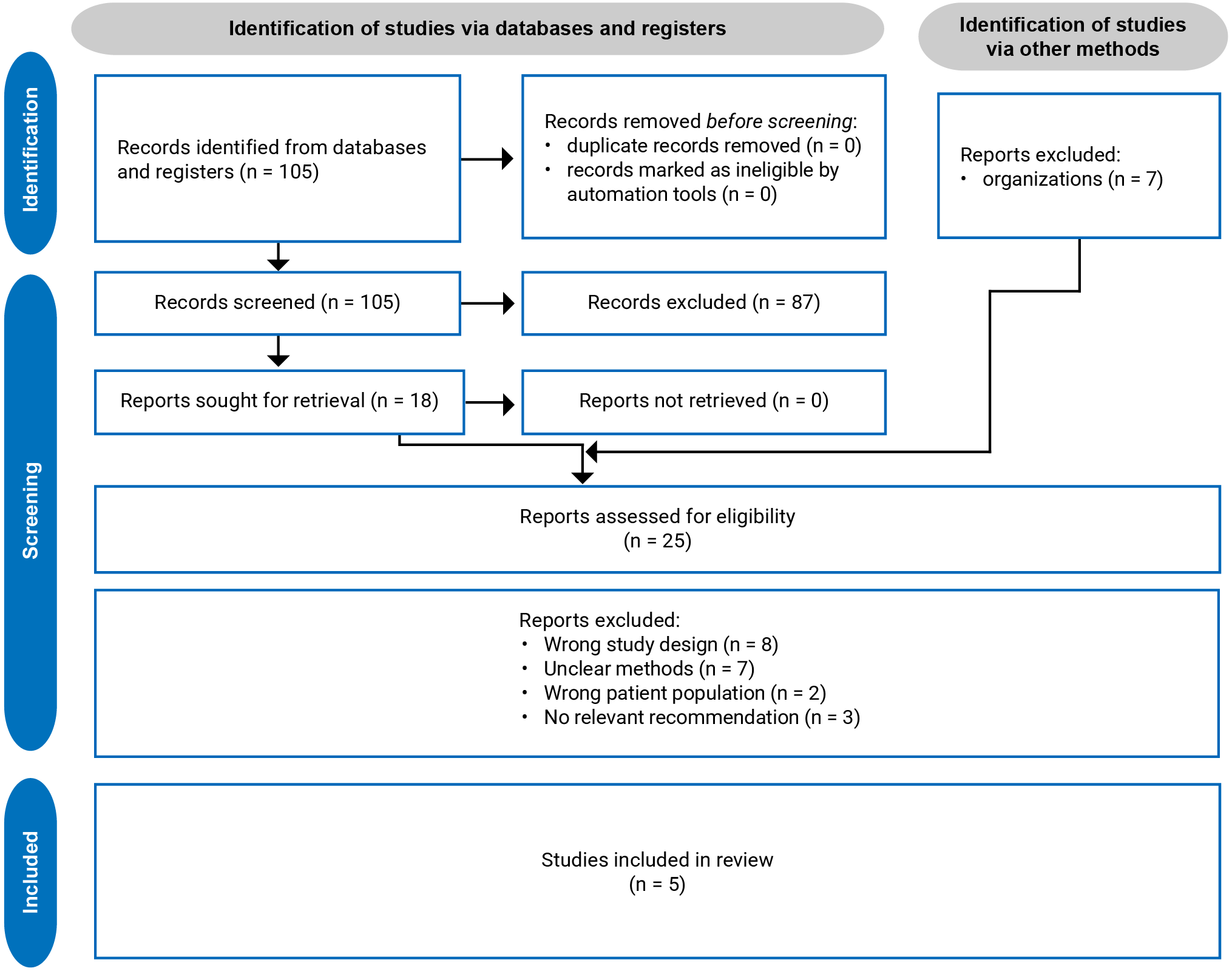
This Rapid Review includes 5 evidence-based guidelines17-21 that met our inclusion criteria. Appendix 2 presents the Preferred Reporting Items for Systematic reviews and Meta-Analyses (PRISMA)22 flow chart of the study selection.
Summary of Guideline Characteristics
We identified 5 evidence-based guidelines with guidance or recommendations about offloading devices for people with diabetic foot ulcers.17-21 Appendix 3 provides details regarding the characteristics of included publications.
One guideline was developed by the Registered Nurses’ Association of Ontario (RNAO) for use in Canada,18 whereas 4 guidelines were developed for international use or by organizations in the US.17,19-21 The guideline by the International Working Group on the Diabetic Foot (IWGDF)20 aims to guide relevant health care providers all over the world. US organizations developed the remaining 3 guidelines, including the American Diabetes Association,21 Wound Health Society,19 and a collaboration of other US organizations17 relevant to PAD.
Most guidelines consider a variety of interventions for diagnosis, treatment, and prevention of diabetes or diabetic foot ulcers.18-21 The guideline by IWGDF20 limits its interventions of interest to offloading devices. However, the guideline by IWGDF included in this review is 1 of 7 in a suite of guidelines on the prevention and management of diabetes-related foot disease. The guideline by Gornik et al.17 considers interventions to diagnose and manage adults with atherosclerotic and thrombotic disease of lower extremity arteries linked to PAD.
Most guidelines consider a broad range of benefits and risks as outcomes of interest, such as ulcer healing, plantar pressure, reoccurrence, amputation rates, and quality of life.17,18,20,21 However, most guidelines do not provide a detailed list of all outcomes considered, except for the guideline by the RNAO. One guideline, by the Wound Health Society,19 does not provide details about its outcomes of interest. Guidelines by the RNAO18 and the IWGDF20 explicitly state considering outcomes beyond clinical benefits, such as cost, cost-effectiveness, patient values, health equity, feasibility, and acceptability.
All included guidelines report conducting a systematic search of published literature to inform recommendations.17-21 The guideline by the RNAO18 also conducted an Environmental Scan of guidelines to inform development. All guidelines evaluated evidence quality.17-21 Four guidelines used established tools to assess risk of bias in the supporting evidence base.17,18,20,21 The guideline by the Wound Health Society19 used a 3-tier rating approach based on study design to assess evidence quality. It is unclear whether the 3-tier approach used by Wound Health Society has been validated or previously published.
All guideline development groups17-21 developed their recommendations via consensus or voting but only 3 assessed recommendation strength.17,18,20 Guidelines by the RNAO18 and IWGDF20 followed the Grading of Recommendations Assessment, Development and Evaluation (GRADE) evidence-to-decision framework. The guideline by Gornik et al.17 used the American College of Cardiology and American Health Association’s class of recommendation to assess recommendation strength. The guideline by the American Diabetes Association21 and Wound Health Society19 do not present recommendation strength.
The guideline by RNAO18 includes good practice statements in addition to recommendations, whereas other guidelines17,19-21 have recommendations only. The guideline by the RNAO18 instructs readers to interpret good practice statements as strong recommendations. Good practice statements are not based on an evidence review unlike the guideline’s recommendations.18 The development group consider these statements to have a clear and explicit rationale connecting indirect evidence to the statement and an inefficient use of time for the expert panel to assess.18
Summary of Critical Appraisal
Overall, included guidelines in this review vary in quality. Appendix 4 provides additional details about the strengths and limitations of guidelines.
Four guidelines17,19-21 describe their health questions inclusive of outcomes of interest, but it remains unclear if relevant and critical outcomes were considered. In 2024, the Core Outcome Measures in Effectiveness Trials (COMET) Initiative developed a standardized set of core outcomes for studies on interventions for foot ulceration related to diabetes via expert consensus.23 This standardized set represents the outcomes most relevant to people with ulcers and their caregivers, and health care professionals. Only the guideline by the RNAO18 reports considering most outcomes included in the COMET Initiative’s standardized set except for quality of life and mortality. Three guidelines17,20,21 consider all clinical benefits and risks and it is unclear how they may have considered or prioritized the outcomes in the COMET Initiative’s standardized set. The guideline by the Wound Health Society19 does not report their outcomes of interest and may be at risk of selection bias.
Additionally, the included guidelines had variable reporting on nonclinical outcomes. The RNAO18 and the IWGDF20 included outcomes such as cost, cost-effectiveness, patient values, health equity, feasibility, and acceptability with clear descriptions of how they were considered. For the remaining 3 guidelines, it is unclear whether or how development groups considered outcomes outside of clinical outcomes when formulating recommendations for 3 guidelines in this review.17,19,21 This limitation may reduce the applicability of their recommendations about offloading devices, including for populations who disproportionately experience foot complications related to diabetes.
There is evidence suggesting removable devices can be as effective as nonremovable devices with maintained adherence.1,24 Of the 2 guidelines with guidance on device type,19,20 the guideline by the IWGDF20 explicitly states adherence as an outcome and includes encouraged adherence as part of its recommendations, when relevant. It is unclear whether or how the guideline by the Wound Health Society19 considers adherence in its ranking of most effective devices for plantar diabetic foot ulcers.
Most guideline development groups include a wide range of relevant health professional perspectives, except for the guideline by the Wound Health Society.19 An advisory group with clinicians, researchers, and academics contributed to the development of the guideline by Wound Health Society,19 but it is unclear what type of clinicians were involved.19 The guideline by RNAO18 did not include a physician’s perspective, even though the guideline’s intended users include the interprofessional team. It is unclear if the guideline by the American Diabetes Association considers the perspectives of people living with diabetes.21 Better clarity around included perspectives would help inform applicability and feasibility of adopting recommendations.
All guidelines report using systematic methods to find literature but vary in the level of detailed reporting.17-21 The guidelines by the IWGDF20 and RNAO18 describe their development and validation processes, the guideline development group’s deliberation methods, and rationale for recommendations. However, the guideline by RNAO18 did not include an evidence review to inform the development of good practice statements. It remains unclear what the guideline development group considers as “clear and explicit rationale” that connects indirect evidence to the statement. The guideline by Gornik et al.17 has minimal discussion of evidence strength or limitations of the supporting evidence. The guideline by Wound Health Society19 has little to no details about its development and validation processes, how the expert panel considered or deliberated on the evidence, and strength or weaknesses of the supporting evidence. These limitations reduce transparency and the ability to assess rigour of development for these 2 guidelines. Additionally, they increase the risk of selection and reporting bias.
The included guidelines reported variable approaches to assessing the strength of the evidence and recommendations.17-21 All guidelines assessed the strength of the supporting evidence base, though 1 guideline uses a limited tool to evaluate evidence strength.19 The guideline by Wound Health Society19 uses a 3-tiered approach that considers only study design to assesses evidence quality. This approach lacks consideration of risk of bias beyond what may be inherent to specific study designs. Additionally, the guideline by the Wound Health Society lacks a summary of the supporting evidence that informed the development of their recommendations.19 Two guidelines lack assessments of recommendation strength.19,21 Without proper assessment of evidence and recommendations, guideline users may be uncertain about the balance of benefits and harms of a given intervention, how risk of bias may have impacted outcomes, and the degree of confidence in the resulting recommendations.
Most guidelines17,18,20 have clear and unambiguous recommendations except for 1 guideline.19,21 The recommendation from the guideline by the American Diabetes Association21 applies to people at high risk of ulceration inclusive of people with ulcers.21 Additionally, most of the supporting evidence applies to ulcer prevention versus treatment. Rationale for use in a treatment context is limited to the development group’s acknowledgement of offloading or pressure relief as a basic principle of ulcer treatment versus referencing or summarizing published literature.21 The intended population for this recommendation is therefore ambiguous.
It remains unclear if funding and conflicts of interest influenced the content of 3 guidelines in this review. The American Diabetes Association funded the development of their guideline without an explicit statement about the independence of the development group.21 The guideline by Gornik et al.17 does not provide information about how they addressed significant conflicts of interest. The guideline by Wound Health Society19 provides no information about funding and conflict of interest.
Summary of Findings
Overall, all included evidence-based guidelines recognize or recommend offloading devices as an effective intervention to manage diabetic foot ulcers.17,19-21 Of the 5 guidelines we identified, 2 guidelines19,20 have recommendations about types of offloading devices and 3 have guidance or recommendations about the overall use of offloading devices.17,18,21
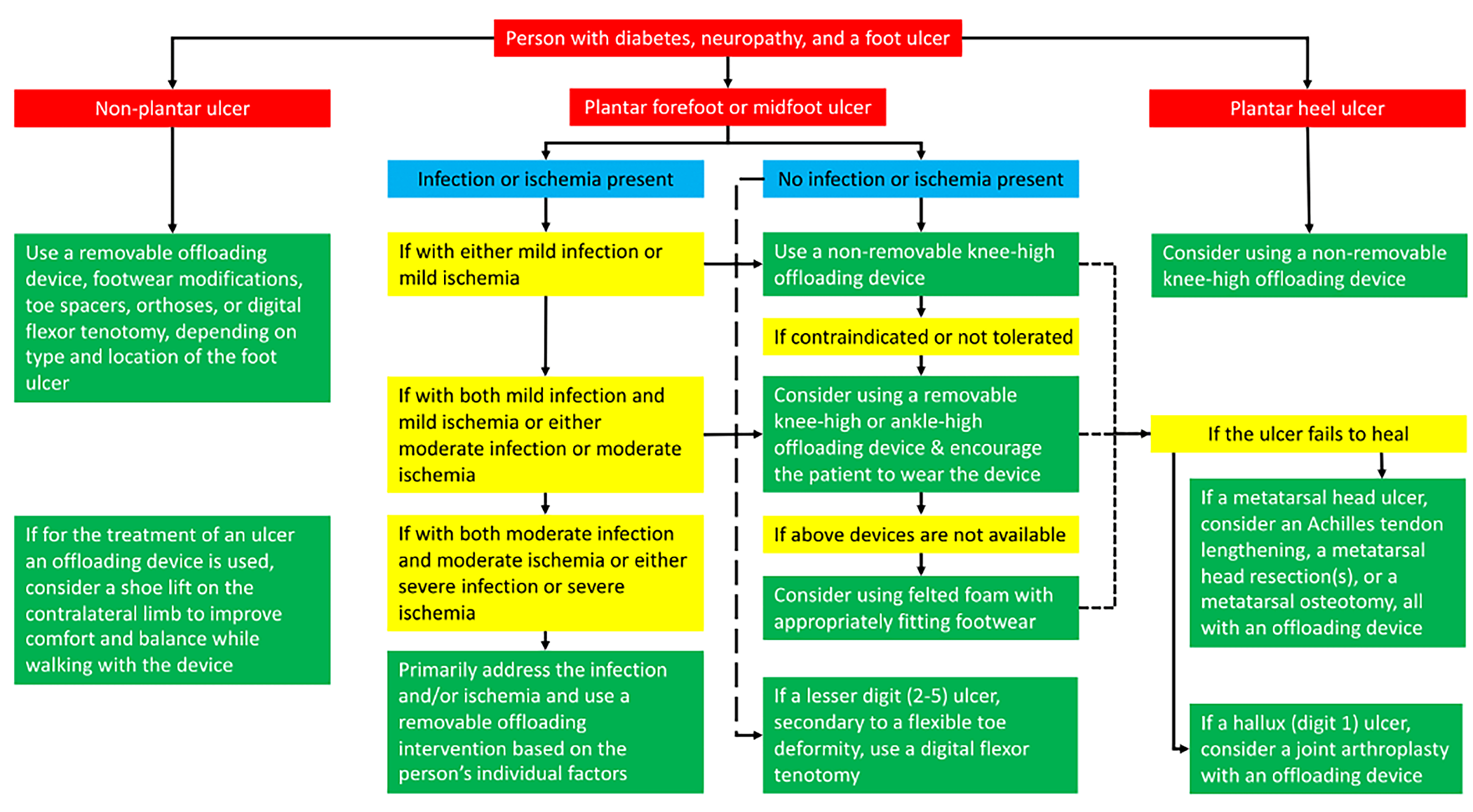
Figure 1 includes the IWGDF’s flow diagram that summarizes their recommendations. The flow diagram may help inform which types of offloading devices are recommended by the IWGDF depending on the ulcer location, presence of infection or ischemia, contraindication, or persistence of the ulcer.
Appendix 5 presents additional details regarding the relevant recommendations from included evidence-based guidelines.
Overall Use of Offloading Devices
The American Diabetes Association recommends specialized therapeutic footwear for people living with diabetes at high risk for ulceration, including those with existing foot ulcers.21 While this recommendation is mostly focused on prevention, the American Diabetes Association acknowledged offloading or pressure relief as 1 of the basic principles of ulcer treatment in their rationale.21 They based this recommendation on randomized controlled trials at risk of limited validity and did not assess recommendation strength.21
The RNAO listed offloading devices as an evidence-informed option as part of their good practice statement for implementing care plans.18 While the RNAO’s good practice statements are not based on an evidence review, the guideline instructs readers to interpret them as strong recommendations.18 The development group considers this good practice statement to have a clear and explicit rationale connecting indirect evidence to the statement, though further details on the rationale were not provided.18
Plantar Diabetic Foot Ulcers
In general, The IWGDF and Wound Health Society favour nonremovable knee-high offloading devices for plantar diabetic foot ulcers with varying levels of recommendation strength or evidence quality across recommendations.19,20 The guideline by Wound Health Society19 considers total contact casts and nonremovable cast walkers to be the most effective for plantar diabetic foot ulcers followed in order by removable cast walkers, healing sandals, custom shoes, insoles, and postoperative shoes. They assessed the quality of supporting evidence to be of the highest level (i.e., level 1; based on meta-analysis or at least 2 randomized controlled trials) but they did not assess recommendation strength.19 The guideline by IWGDF20 recommends against using conventional footwear over an offloading device (low evidence quality; strong recommendation). The IWGDF20 also provides more specific recommendations on offloading device use for plantar diabetic foot ulcers based on the presence or absence of infection or ischemia (restricted blood supply).
Without Infection or Ischemia
The guideline by the IWGDF20 recommends prescribing knee-high nonremovable devices based on local resources and the individual’s context for plantar forefoot or midfoot ulcers (moderate evidence quality; strong recommendation). The IWGDF recommends considering a total contact cast or a nonremovable knee-high walker based on individual factors and acceptability (moderate evidence quality; conditional recommendation).20 They also recommend considering nonremovable knee-high devices for rearfoot plantar ulcers (very low evidence quality; conditional recommendation).20
In cases of contraindication to nonremovable devices, the IWGDF recommends considering removable knee-high or ankle-high offloading devices as a second option for plantar ulcers and encouraging use during all weight-bearing activities (low evidence quality; conditional recommendation).20 If those removable or nonremovable devices are unavailable, they recommend considering felted foam with appropriately fitting footwear (very low evidence quality; conditional recommendation).20
With Infection or Ischemia
The IWGDF provides guidance on types of offloading devices to use depending on the severity of infection or ischemia for plantar forefoot or midfoot ulcers.20 The related recommendations are as follows:
For either mild infection or mild ischemia, they recommend considering nonremovable knee-high offloading devices (low evidence quality; conditional recommendation).20
For both mild infection and mild ischemia, they recommend considering removable offloading devices with encouragement for adherence (low evidence quality; conditional recommendation).20
For either moderate infection or moderate ischemia, they recommend considering removable knee-high or ankle-high offloading devices (low evidence quality; conditional recommendation).20
For both moderate infection and moderate ischemia, they recommend primarily addressing the infection and ischemia and using a removable offloading device chosen based on the individual’s context (very low evidence quality; strong recommendation).20
For either severe infection or severe ischemia, they recommend primarily addressing the infection or ischemia and using a removable offloading device chosen based on the individual’s context (very low evidence quality; strong recommendation).20
Nonplantar Diabetic Foot Ulcers
The IWGDF recommends removable offloading devices, footwear modifications, toe spacers, orthoses, or digital flexor tenotomy, depending on the type and location of the foot ulcer (very low quality of evidence; strong recommendation).20
Peripheral Artery Disease
The guideline by Gornik at al.17 recommends offloading devices for people with chronic limb-threatening ischemia and diabetic foot ulcers to promote tissue growth and healing (strong evidence quality; strong recommendation).
Persistent Ulcers
The IWGDF recommends offloading devices as adjunct treatment to various surgical interventions when ulcers persist after nonsurgical offloading.20 For neuropathic plantar metatarsal head ulcers, the IWGDF recommends offloading devices as adjunct to Achilles tendon lengthening (moderate evidence quality; conditional recommendation) and metatarsal head resection (low evidence quality; conditional recommendation). For ulcers on metatarsal heads 2 to 5, they recommend metatarsal osteotomy with an offloading device (low evidence quality; conditional recommendation).20 For neuropathic hallux ulcers, they recommend offloading devices with joint arthroplasty (low evidence quality; conditional recommendation).20
Other
The IWGDF recommends considering shoe lifts on the contralateral limb to improve comfort and balance when using an offloading device for all indications (very low evidence quality; conditional recommendation).20
Figure 1: IWGDF’s Flow Diagram on Recommended Offloading Devices
IWGDF = International Working Group on the Diabetic Foot.
Source: IWGDF (2023).20 This article is an open access article distributed under the terms and conditions of the Creative Commons Attribution (BY-NC-ND) licence (https://creativecommons.org/licenses/by-nc-nd/4.0/)
Limitations
Methodology and Engagement Approach
As part of the organizational commitment to reconciliation and inclusion, diversity, equity and accessibility at Canada’s Drug Agency, we know it is important to consider and learn from First Nations, Inuit, and Métis Peoples and other diverse perspectives in our work. Given the nature and scope of the request was focused on reviewing published clinical data, we did not search for or include additional sources of perspectives and experiences from the qualitative literature or other evidence that is relevant to equity-deserving groups, or directly engage with patients, caregivers, or health care professionals. We acknowledge this scope as a limitation of our work, and that this Rapid Review may not highlight or identify perspectives and evidence of relevance to those who may be disproportionately affected by diabetic foot-related disease in Canada. We also recognize that the research team consists of settler researchers, and we come to this work with our individual privileges and biases. Understanding the perspectives and priorities of First Nations, Inuit, and Métis Peoples and other underserved groups as they relate to diabetic foot-related disease can support informed health care decision-making.
Generalizability
Recommendations specific to the type of offloading device may not be relevant or feasible to implement in practice in Canada. Most guidelines in this review were developed by international or US organizations.17,19-21 While the recommendations about types of offloading devices are generally consistent with each other, it is likely that development groups of these guidelines did not consider the local context in Canada.19,20 The only guideline intended for use in Canada (by the RNAO)18 does not recommend a specific type of offloading device. Instead, the RNAO recognizes overall use of offloading device as an evidence-informed treatment.18
Equity Considerations
It remains unclear whether recommendations specific to offloading devices are relevant and applicable to populations experiencing health disparities. Two guidelines explicitly state considering health equity as an outcome in development.18,20 However, the guideline by the IWGDF20 may have limited generalizability to the context in Canada given its international scope. The only guideline for use in Canada in this report, the guideline by RNAO,18 provides no information about how the development committee arrived at the relevant good practice statement. The remaining guidelines in this report either provided no details about health equity considerations or discussed health equity broadly at the indication level (e.g., PAD, diabetes).17,19,21
Focus On Ulcer Management
We did not include any recommendations focused only on the use of offloading devices for ulcer prevention, and excluded any guidelines with recommendations limited to offloading device use for prevention. While the primary focus of this report is on management of diabetic foot ulcer, we recognize that offloading devices play a role in the care continuum beyond treatment. Additionally, we recognize that offloading devices represent 1 component of a range of treatments available for the prevention and management of diabetic foot ulcers.
Applying and Maintaining an Offloading Device
No guidelines have recommendations about applying and maintaining offloading devices for people with diabetic foot ulcers, including the needed training, skills, and experience by health care professionals. This is likely due to an evidence gap, as an international guideline by the IWGDF20 underscores the lack of literature on this topic and acknowledges the difference in availability of trained health care professionals between jurisdictions. They suggest that the “person applying the offloading should be a properly trained healthcare professional who according to their national or regional standards has the knowledge, expertise, and skills necessary to treat diabetic foot ulcer.”20 The guideline by RNAO18 defines specialized nursing expertise as training in advanced lower limb assessment, prevention, and management from Nurses Specialized in Wound, Ostomy and Continence Canada or equivalent.
Conclusions and Implications for Decision-Making or Policy-Making
This Rapid Review evaluated evidence-based guidelines with recommendations about the use of offloading devices for people with diabetic foot ulcers. We found 5 relevant evidence-based guidelines that met our selection criteria.17-21 Two guidelines, specifically by the IWGDF20 and the Wound Health Society,19 have recommendations about specific types of offloading devices for different clinical scenarios or in order of effectiveness, respectively. Other guidelines discuss use of offloading devices in general for people with diabetic foot ulcers.17,18,21
Summary of Evidence
All guidelines identified for this review, regardless of quality, recognize that offloading devices can be an effective pressure offloading intervention for people with diabetic foot ulcers.17-21 However, the most appropriate type of offloading device depends on a variety of factors, such as ulcer location and severity, individual factors and preferences (e.g., lifestyle, costs), and local resources (expertise available). In general, these recommendations align with other existing literature, including a health technology assessment (HTA) by the University of Calgary and other guidelines.25,26
Types of Offloading Devices
Both guidelines by the IWGDF20 and Wound Health Society19 recommend nonremovable knee-high devices as first-line treatments for plantar ulcers, including total contact casts and nonremovable cast walkers. This aligns with the findings of the HTA by the University of Calgary1 and a scoping review25 of guidelines published in 2022. For rearfoot or heel ulcers, IWGDF recommends considering knee-high nonremovable devices over removable devices.20
The guideline by the IWGDF20 recommends considering knee or ankle-high removable devices in certain circumstances, including:
nonplantar ulcers
when nonremovable devices are contraindicated or not tolerated for midfoot or forefoot ulcers
as adjunct treatment after primarily addressing moderate ischemia and moderate infection
after primarily addressing severe ischemia or severe infection.
The guideline by the American Diabetes Association recommends specialized therapeutic footwear for people at high risk of ulceration, including people with existing ulcers.21 However, the recommendation and supporting evidence seems to mostly focus on prevention. This recommendation requires further clarity around its targeted population.
Generalizability to the Context in Canada
People in Canada can experience barriers accessing offloading devices and related care.10 The Canadian guideline by the RNAO18 recognize offloading as an evidence-informed treatment option for diabetic foot ulcers. Other guideline development groups likely did not consider context specific to health care systems in Canada when creating recommendations for specific types of offloading devices.19,20 Results of a 2020 survey reveal that treatment pathways and standard of care for foot-related complications with diabetes vary between provinces in Canada.1 Additionally, health care professionals noted several barriers that influence ulcer reoccurrence rates, including costs of offloading devices, lack of time for device application, and lack of and time to provide comprehensive care for people with diabetic foot ulcers.1
Recommendations about device types may also have limited relevance or applicability to populations disproportionately impacted by foot-related complications with diabetes in Canada. Guidelines with recommendations about device types were developed for an international audience or by US organizations.19-21 Some equity-deserving groups experience high rates of foot complications related to diabetes, such as people living in rural and remote areas, neighbourhoods with lower income, areas of low education, and areas with a high proportion of individuals with a less extensive social network.6,8,10 Additionally, Indigenous Peoples in Canada are more likely to have diabetes-related foot complications earlier in life.10 These equity-deserving groups experience intersecting barriers when accessing needed care and support along the continuum of care (from prevention to treatment).7,8,10,27 Furthermore, Indigenous Peoples may delay seeking care because of mistrust that stems from the ongoing impact of colonization and racism in the health care system.8,27 Adopting these recommendations about offloading devices in practice may require evaluating the feasibility and suitability when providing care for individuals in these equity-deserving groups.
Considerations for Clinical Practice or Considerations for Decision-Making or Policy-Making
Choosing an Appropriate Offloading Device
Clinicians may wish to consider individual factors that may impact suitability of the offloading devices when prescribing a device to an individual with a diabetic foot ulcer. Considerations for the person wearing the device may include activity levels, tolerability for nonremovable versus removable devices, preferences, budget, distance, and availability of relevant health care professionals for maintenance. An HTA concluded that each offloading device has benefits and drawbacks in terms of clinical effectiveness, tolerability for the person wearing the device, and cost-effectiveness.1 Qualitative literature suggests that wearing offloading devices affects an individual’s sleep and mobility, can result in stigma, and requires time commitment for appointments.1,14 Taken together with evidence-based recommendations, these factors can influence both the initial choice of an offloading device and an individual’s ability to use the offloading device consistently.
Literature suggests that adherence can influence the effectiveness of offloading devices in ulcer healing.24 Some literature suggests that forced adherence with nonremovable devices is a considerable factor in its effectiveness.1,24 The RNAO suggests considering adherence when choosing the most appropriate offloading device for people with diabetic foot ulcers.18 To improve adherence, the findings of a rapid qualitative review highlight the value of collaborative discussions between the individual and the health care professional about the individual’s preferences and their plans to integrate offloading devices in their everyday life.14 It may also be helpful for people new to wearing these devices to hear from people who are experienced in wearing these devices about their experience with foot ulcers and their approach to using offloading devices.14 These findings underscore the value of considering an individual’s lifestyle and their local context when prescribing an offloading device.
Adapting Available Guidelines for the Context in Canada
Decision-makers may consider adapting guidelines about offloading devices for health care systems in Canada. A previous review made a similar suggestion when comparing Canadian guidelines (published before 2021) to international guidelines.28 The 2024 guidelines by RNAO18 appear to have incorporated the review’s suggestions to improve the quality of Canadian guidelines.28 The review suggested using rigorous methodology and GRADE for recommendation development.28 It also highlighted the value of an interprofessional care team with systematic review expertise and representation from people with diabetic foot ulcers in developing and representing best care practices in Canada.28
Adapting international guidelines incorporates consideration of local barriers and contexts, such as availability of related care and expertise and funding for offloading devices. An example of this is the adaptation of the IWGDF recommendations by Diabetes Australia.29 It considers the context in Australia and provides rationale, justifications, and implementation considerations, including those for geographically removed and Aboriginal and Torres Strait Islander Peoples.29
Assembling Care Teams for People With Diabetic Foot Ulcers
Decision-makers may also consider implementing a care pathway that fosters collaboration and integrated care for people with foot complications related to diabetes. Identified guidelines provide some guidance about general care for people with diabetic foot ulcers. Pressure offloading is 1 treatment in a suite of interventions considered by the care team (e.g., wound dressings, debridement).1 Hence, a wide range of health care professionals may be part of the care team.1
General guidance about the care team for people with diabetic foot ulcers from guidelines in this review includes the following:
The guideline by the American Diabetes Association21 recommends an interprofessional approach facilitated by a podiatrist in conjunction with other appropriate team members for individuals with foot ulcers.
The guideline by RNAO18 recommends that “health service organizations implement a specialized wound care team to support persons at risk of or living with diabetic foot ulcers.”
The guideline by Gornik et al.17 suggests podiatrists and other professionals trained in foot care are best suited to evaluate diabetic foot ulcers for pressure offloading. Pressure offloading and wound care strategies may be coordinated by multispecialty care when podiatrists are unavailable.17
An example of a multidisciplinary care approach for wound care was a quality improvement initiative by the Ottawa Hospital.30 They implemented a multispecialist limb-preservation clinic and program in 1 physical space.30 Their published results suggest that the program is achieving its mandate to provide high-quality wound care.30 It also suggests that a shared space for key specialists allow for seamless collaboration.30 However, the publication does not report any health outcomes.
A publication by Wounds Canada12 highlights that care teams should have expertise in glycemic control, infection control, offloading of high-pressure areas, lower extremity vascular status, and local wound care. They suggest that health care professionals should be able to support a self-management approach to care.12 They also highlight the individual receiving care and their caregivers as critical members of the care team, as well as the importance of an integrated approach to care.12 The Wounds Canada guideline aims to support clinicians, students, and policy-makers in Canada.31 It is developed by experts in Canada and it specifically reflects the country’s health care context.31 However, we were unable to confirm whether the guideline development group conducted a systematic search needed for inclusion in this Rapid Review.
Future Research
Researchers may wish to explore preferences of people in Canada who disproportionately experience diabetic foot ulcers as they relate to offloading devices, including Indigenous Peoples living with diabetes. Their preferences may differ from non-Indigenous populations. Exploring priorities relevant to offloading device use may better inform effective and person-centred clinical pathways for these populations in Canada.
Researchers may also consider evaluating what expertise and training are needed to best support the application and maintenance of offloading devices. This could inform the development of clinical pathways that optimize health outcomes for people with diabetic foot ulcers.
References
1.University of Calgary. Offloading devices for diabetic foot ulcers. 2020. Accessed August 11, 2026. https://www2.gov.bc.ca/assets/gov/health/about-bc-s-health-care-system/health-care-partners/health-authorities/bc-health-technology-assessments/offloading-devices-dfu-hta.pdf
2.John Hopkins. Foot ulcers. Accessed August 11, 2026. https://www.hopkinsmedicine.org/health/conditions-and-diseases/diabetes/foot-ulcers
3.Wounds Canada. What are diabetic foot ulcers? Accessed August 11, 2026. https://www.woundscanada.ca/patient-or-caregiver/preventing-and-managing-wounds/wound-basics-dev/293-patient-caregiver/wound-index/582-diabetic-foot-ulcers-overview
4.CIHI. Amputations signal opportunities to improve diabetes care and reduce system costs. 2024. Accessed August 11, 2026. https://www.cihi.ca/en/equity-in-diabetes-care-a-focus-on-lower-limb-amputation/amputations-signal-opportunities-to-improve-diabetes-care-and-reduce-system-costs
5.Bowering K, Embil JM. Foot care. Can J Diabetes. 2013;37 Suppl 1:S145-9. doi:10.1016/j.jcjd.2013.01.040 PubMed
6.CIHI. Inequalities in diabetes-associated lower limb amputations. 2024. Accessed August 11, 2026. https://www.cihi.ca/en/equity-in-diabetes-care-a-focus-on-lower-limb-amputation/inequalities-in-diabetes-associated-lower-limb-amputations
7.Blanchette V, Patry J, Brousseau-Foley M, et al. Diabetic foot complications among Indigenous peoples in Canada: a scoping review through the PROGRESS-PLUS equity lens. Front Endocrinol (Lausanne). 2023;14:1177020. doi:10.3389/fendo.2023.1177020 PubMed
8.Isa D, Pace D. Is ethnicity an appropriate measure of health care marginalization? A systematic review and meta-analysis of the outcomes of diabetic foot ulceration in Aboriginal populations. Can J Surg. 2021;64(5):E476-E483. doi:10.1503/cjs.004619 PubMed
9.Kim AY, Hanley J, Fuhrer R, de Mestral C. Regional and rural-urban differences in incidence rates of types 1 and 2 diabetes mellitus-related foot complications and lower-extremity amputation in selected Canadian provinces and territories. Can J Diabetes. 2026. doi:10.1016/j.jcjd.2026.05.006 PubMed
10.CIHI. Advancing equity in diabetes prevention and care. 2024. Accessed August 11, 2026. https://www.cihi.ca/en/equity-in-diabetes-care-a-focus-on-lower-limb-amputation/advancing-equity-in-diabetes-prevention-and-care#ref26
11.Mestral C, Banasiak K, Evans R, et al. Results of the Diabetes Canada foot care special interest group survey: Insights on improving care from providers in the trenches. 2019. Accessed August 11, 2026. https://crm1.diabetes.ca/bbis_crmlive/file/diabetes-communicator/The-Diabetes-Communicator-Summer-2019.pdf
12.Botros M, Kuhnke J, Evans R, et al. Best practice recommendations for the prevention and management of diabetic foot ulcers. Wounds Canada; 2025. Accessed August 11, 2026. https://www.woundscanada.ca/doclink/11-bpr-chapter-11-2025/eyJ0eXAiOiJKV1QiLCJhbGciOiJIUzI1NiJ9.eyJzdWIiOiIxMS1icHItY2hhcHRlci0xMS0yMDI1IiwiaWF0IjoxNzM4ODYwNTI0LCJleHAiOjE3Mzg5NDY5MjR9.7_Xyn3zJBXlRG-tMGNhrlqvlmNWFM6NeknMTm729bfg
13.Kumbhar S, Bhatia M. Advancements and best practices in diabetic foot Care: A comprehensive review of global progress. Diabetes Res Clin Pract. 2024;217:111845. doi:10.1016/j.diabres.2024.111845 PubMed
14.CADTH. Off-loading devices for people with diabetic neuropathic foot ulcers: A rapid qualitative review. 2020. Accessed September 24, 2026. https://www.ncbi.nlm.nih.gov/books/NBK565247/
15.Armstrong DG, de Asla RJ. Overview of management of diabetes-related foot disease. UpToDate; 2026. Accessed August 5, 2026. https://www.uptodate.com/
16.Agree Next Steps Consortium. The AGREE II Instrument. AGREE Enterprise; 2017. Accessed January 1, 1800. https://www.agreetrust.org/wp-content/uploads/2017/12/AGREE-II-Users-Manual-and-23-item-Instrument-2009-Update-2017.pdf
17.Gornik HL, Aronow HD, Goodney PP, et al. 2024 ACC/AHA/AACVPR/APMA/ABC/SCAI/SVM/SVN/SVS/SIR/VESS Guideline for the Management of Lower Extremity Peripheral Artery Disease: A Report of the American College of Cardiology/American Heart Association Joint Committee on Clinical Practice Guidelines. J Am Coll Cardiol. 2024;83(24):2497-2604. doi:10.1016/j.jacc.2024.02.013 PubMed
18.RNAO. Diabetic foot ulcers: Prevention, assessment and management third edition. 2024. Accessed August 11, 2026. https://rnao.ca/bpg/guidelines/diabetic-foot-ulcer
19.Lavery LA, Suludere MA, Attinger CE, et al. WHS (Wound Healing Society) guidelines update: Diabetic foot ulcer treatment guidelines. Wound Repair Regen. 2024;32(1):34-46. doi:10.1111/wrr.13133 PubMed
20.Bus SA, Armstrong DG, Crews RT, et al. Guidelines on offloading foot ulcers in persons with diabetes (IWGDF 2023 update). Diabetes/Metab Res Rev. 2024;40(3):e3647. doi:10.1002/dmrr.3647 PubMed
21.American Diabetes Association. Diabetes* ADAPPCf. 12. Retinopathy, Neuropathy, and Foot Care: Standards of Care in Diabetes—2026. Diabetes Care. 2025;49(Supplement_1):S261-S276. doi:10.2337/dc26-S012
22.Page MJ, Moher D, Bossuyt PM, et al. PRISMA 2020 explanation and elaboration: updated guidance and exemplars for reporting systematic reviews. BMJ. 2021;372:n160. doi:10.1136/bmj.n160 PubMed
23.Staniszewska A, Game F, Nixon J, et al. Development of a Core Outcome Set for Studies Assessing Interventions for Diabetes-Related Foot Ulceration. Diabetes Care. 2024;47(11):1958-1968. doi:10.2337/dc24-1112 PubMed
24.Lazzarini PA, Jarl G, Gooday C, et al. Effectiveness of offloading interventions to heal foot ulcers in persons with diabetes: a systematic review. Diabetes/Metab Res Rev. 2020. doi: https://doi.org/10.1002/dmrr.3275 PubMed
25.Sun Y, Ma L, Ji M, Wang Z. Evidence map of recommendations on diabetic foot ulcers care:A systematic review of 22 guidelines. J Tissue Viability. 2022;31(2):294-301. doi:10.1016/j.jtv.2022.03.001 PubMed
26.Giurato L, Scatena A, De Giglio R, et al. Therapeutic footwear in patients with diabetes: a position statement from the Italian diabetic foot study group. Acta Diabetol. 2026. doi:10.1007/s00592-026-02722-4 PubMed
27.Wees T, Pandey M, Nicolay S, Windigo J, Bitternose A, Kopriva D. Identifying barriers to preventive care among First Nations people at risk of lower extremity amputation: a qualitative study. CMAJ open. 2023;11(5):E906-E914. doi:10.9778/cmajo.20220150 PubMed
28.Blanchette V, Patry J, Brousseau-Foley M. Adequacy Between Canadian Clinical Guidelines and Recommendations Compared With International Guidelines for the Management of Diabetic Foot Ulcers. Can J Diabetes. 2021;45(8):761-767.e12. doi:10.1016/j.jcjd.2021.03.004 PubMed
29.Diabetes Australia. Diabetes and feet. 2022. Accessed August 11, 2026. https://www.ndss.com.au/about-diabetes/resources/find-a-resource/diabetes-and-feet-toolkit/
30.Roberts DJ, Murphy C, Strauss SA, et al. Structure, processes, and initial outcomes of The Ottawa Hospital Multi-Specialist Limb-Preservation Clinic and Programme: A unique-in-Canada quality improvement initiative. Int Wound J. 2022;19(2):326-338. doi:10.1111/iwj.13633 PubMed
31.Kuhnke J, Burrows C, Evans R, Botros M, Hoover J, Corks I. Best practice recommendation updates 2024: Methodology for developing foundations of best practice for skin and wound management. 2023;21(2):62-65. doi:10.56885/BEGL1924. Accessed August 11, 2026.
Appendix 1: Detailed Methods and Selection of Included Studies
Please note that this appendix has not been copy-edited.
What Is a Rapid Review?
Rapid Reviews are based on accelerated and abbreviated systematic review methods, balancing timeliness with rigour, to allow for timely decision-making. Due to these abbreviated methods, Rapid Reviews have some limitations. For example, we excluded evidence-based guidelines published before 2021. Focusing on more recently published guidelines are likely to be more reflective of current practices. Additionally, we did not evaluate the evidence reviews conducted to inform recommendations in included guidelines. However, we reported information about evidence quality assessments and the assessment’s findings when available from included guidelines. This Rapid Review intends to summarize recommendations and the guideline development process. Readers should not interpret these findings as prescriptive guidance. Included guidelines may require consideration of applicability to the reader’s context.
Literature Search Methods
An information specialist conducted a literature search on key resources including MEDLINE, Embase, the Cochrane Database of Systematic Reviews, the International HTA Database, the websites of HTA agencies in Canada and major international HTA agencies, as well as a focused internet search. The search approach was customized to retrieve a limited set of results, balancing comprehensiveness with relevance. The search strategy comprised both controlled vocabulary, such as the US National Library of Medicine’s MeSH (Medical Subject Headings), and keywords. Search concepts were developed based on the elements of the research questions and selection criteria. The main search concepts were offloading devices and diabetic foot ulcers. Search filters were applied to limit retrieval to guidelines. The search was completed on August 7, 2026, and limited to English-language documents published since January 1, 2021. The search strategy is available on request.
Selection Criteria and Methods
One reviewer screened citations and selected studies. In the first level of screening, titles and abstracts were reviewed and potentially relevant articles were retrieved and assessed for inclusion. The final selection of full-text articles was based on the inclusion criteria presented in Table 2
Exclusion Criteria
Articles were excluded if they:
did not meet the selection criteria outlined in Table 2
were duplicate publications or were published before 2021
were guidelines with unclear methodology
were guidelines without recommendations about offloading devices or related care
were guidelines with recommendations limited to recommendations about prescription of offloading devices for ulcer prevention
were guidelines with recommendations limited to mobility aids (e.g., crutches, walkers, and wheelchairs)
were guidelines with recommendations based on international guidelines adapted for jurisdictions outside of Canada.
Critical Appraisal of Individual Studies
The included publications were critically appraised by 1 reviewer using the AGREE II instrument.16 Summary scores were not calculated for the included studies; rather, the strengths and limitations of each included publication were described narratively.
Data Extraction
One reviewer extracted data directly into standardized tables created in Microsoft Word, which were modified, as necessary. The extracted information included study characteristics, methodology (e.g., study design), population, intervention, comparator, and results regarding the outcomes of interest.
Appendix 2: Selection of Included Studies
Please note that this appendix has not been copy-edited.
Figure 2: Selection of Included Studies — PRISMA22 Flow Chart of Selected Reports
PRISMA = Preferred Reporting Items for Systematic reviews and Meta-Analyses.
Appendix 3: Characteristics of Included Publications
Please note that this appendix has not been copy-edited.
Table 3: Characteristics of Included Evidence-Based Guidelines
Intended users, target population | Intervention(s) considered | Outcomes considered | Evidence collection, synthesis, and assessment | Recommendation development and evaluation | Guideline validation |
|---|---|---|---|---|---|
American Diabetes Association (2026)21 | |||||
Intended users: Primary care physicians, endocrinologists, nurse practitioners, physician associates or assistant, pharmacists, registered dietitians, diabetes care and education specialists, cardiologists, gastroenterologists, nephrologists, emergency physicians, internists, pediatricians, psychologists, neurologists, ophthalmologists, podiatrists, payers, policy-makers, researchers, research funding organizations, and advocacy groups. Target population: People with diabetes of all ages, including type 1, type 2, gestational, and other types of diabetes or hyperglycemic conditions. Funding: American Diabetes Association general revenue funded the development of guidelines. Committee members received no renumeration for their participation. | Screening, diagnostic, and therapeutic interventions for people with diabetes, as well as interventions for prevention, screening, diagnosis, and management of diabetes-associated complications and comorbidities. | Benefits and risks associated with different care strategies (e.g., peak plantar pressure) | They conducted a systematic search in multiple databases for literature published between June 2024 to July 2025, as well as a manual search of other sources. They used the American Diabetes Association system to evaluate evidence quality (level A to E). They developed evidence summaries that detail their findings with the results of their evidence quality assessment. | The evidence summaries informed the committee’s deliberations on recommendations during virtual and in-person meetings (July 2025). The committee needed to reach 80% consensus for recommendation approval. Recommendations only received a rating for evidence level and not for the strength of recommendation. | The medical affairs team reviews the standard of care for rigour, accuracy, and clarity. Endorsing societies reviewed the draft, such as the American College of Cardiology or the American Geriatric Society. All reviewers approved the guideline before publication. |
Gornik et al. (2024)17a | |||||
Intended users: Health professionals in the US. Target population: Adults with atherosclerotic and thrombotic disease of the lower extremity arteries (or peripheral artery disease), and includes disease of aortoiliac, femoropopliteal, and infrapopliteal arterial segments. Funding: NR | Interventions relevant to the diagnosis and management of patients with lower extremity periphery artery disease | Benefits and risks associated with different care strategies. (e.g., wound healing rate, amputation prevented) | The committee systematically searched for literature published from October 2020 to June 2022 in multiple databases. They also conducted a search update during peer review for literature published through May 2023. The American College of Cardiology and American Health Association’s levels of evidence were used to evaluate literature on clinical strategies, interventions, or treatments, or diagnostic testing. | The committee met at a consensus conference to review recommendations and peer reviewer feedback. The first round of informal voting occurred at the conference, while formal voting occurred after the conference. Each proposed recommendation needed to reach 51% (before the 2026 process document) or 75% consensus (2026 methods) via anonymous vote.a A second or third round may occur to reach consensus. The American College of Cardiology and American Health Association’s class of recommendations were used to assess recommendation strength. | The guideline went through 2 rounds of peer review (the first after developing draft guidelines and the second after voting). Revisions required a revote for acceptance. They sent the guideline to governing bodies for approval, and to the collaborating organization for endorsement. |
RNAO (2024)18 | |||||
Intended users: Nurses, the interprofessional team, educators, health service organizations, academic institutions, and patients and their care partners. Target population: Adults at risk of or living with diabetic foot ulcers, and their care partners. Funding: Government of Ontario | Interventions related to the prevention and treatment of diabetic foot ulcers. | Ulcer occurrence or recurrence, adherence, amputation rates, screening rates, patient satisfaction, neuropathy, healing rates, readmission rates, provider satisfaction, values and preferences,b health equityc | The research team conducted an Environmental Scan of guidelines and standards. They also systematically searched for literature published from January 2013 to February 2022 in multiple databases. They also did an updated search for literature from August 2022 to March 2024. They also conducted an Environmental Scan of guidelines to inform the purpose and scope of the guideline included in this review. The team used the AGREE II, Cochrane Risk of Bias 2.0, ROBINS-I, and ROBIS tools to evaluate risk of bias in identified guidelines and published studies. They used the GRADE methods to assess certainty of evidence. | An expert panel deliberated on each proposed recommendation. The expert panel used the GRADE evidence-to-decision framework to inform the direction and strength of recommendation. This framework helps the panel consider all important factors, such as certainty of evidence, benefits and harms, values and preferences, and health equityb. | External reviewers reviewed the full draft before publication. Reviewers may include nurses, members of the interprofessional team, nurse executives, administrators, research experts, educators, nursing students or persons with lived experience and their family members. The Canadian Association of Foot Care Nurses, Ontario Health, and the Ontario Society of Chiropodists were provided with the opportunity to review the draft guideline and provide feedback. |
Wound Health Society (2023)19 | |||||
Intended users: Clinicians Target population: People with diabetic foot ulcers. Funding: NR | Diagnosis, treatments, and prevention strategies | NR | The development group systematically searched for literature published between January 2006 to present in PubMed, Embase, and Cochrane library databases. They evaluated the evidence quality using a system that assesses it to be level 1, 2, or 3 (high to low).d | An advisory panel participated in a Delphi process to finalize the recommendations. The development group did not evaluate recommendation strength. | NR |
IWGDF (2023)20 | |||||
Intended users: Clinicians and other health professionals, public health agencies, and policy-makers. Target population: People with diabetes and foot ulcers. Funding: Advanced Oxygen Therapy Inc., Essity, Mölnlycke, Reapplix, and Urgo Medical Guideline development provided unrestricted grants for guideline development. | Offloading devices | Clinical benefits and risks (e.g., ulcer healed, plantar pressure, weight-bearing activity, adherence, adverse effects, quality of life, costs, cost-effectiveness), patient values, resources needed, cost-effectiveness, equitye, feasibility and acceptability | The working group conducted a systematic review with meta-analysis to inform recommendations. They searched PubMed, EMBASE, and the Cochrane database for systematic reviews published since August 13, 2018. They also searched 2 trial registries for ongoing studies. They used the SIGN Grading System for Levels of Evidence to assess risk of bias. Additionally, they assessed the quality of reporting via 21-item scoring system developed by IWGDF and EWVMA. Two members developed a summary of findings for their results and evaluation findings to inform recommendations. | Two members drafted recommendations to share with the working group, alongside the summary of findings. They discussed these documents with the rest of the working group, and any changes during online meetings. The working group voted on the direction of the recommendation as for or against and the recommendation strength. They evaluated recommendation strength using GRADE. | The IWGDF editorial board, a panel of international experts, and people with lived experience reviewed the guideline before publication. |
EWVMA = European Wound Management Association; GRADE = Grading of Recommendations Assessment, Development and Evaluation; IWGDF = International Working Group on the Diabetic Foot; NR = not reported; RCT = randomized controlled trial; RNAO = Registered Nurses’ Association of Ontario; SIGN = Scottish Intercollegiate Guidelines Network.
aGornik et al. (2024)17 developed the 2024 guideline using the American College of Cardiology and the American Health Association’s Joint Committee guideline methodology current at the time of development (2020 to 2024). We referred to the 2026 manual to understand their development process because the 2020 to 2024 version is not publicly available. It is possible that manual does not fully reflect the processes in place when the 2024 guideline was developed.
bRNAO defined values and preference as “the relative importance or worth of the health outcomes of following a particular clinical action from a person-centered perspective.”18 The research team included evidence from the systematic review and other insights, such as expert panel insights.18
cRNAO defined health equity as “the potential impact of the recommended practice or intervention on health outcomes or health equity across different populations.”18 They included evidence from the systematic review when available, and other sources, such as expert panel insights.18
dGuideline by Wound Health Society19 used a system with 3 tiers of evidence strength. Level 1 (the highest quality) is defined as “Meta-analysis or at least 2 RCTs supporting the intervention of the guideline. Another route would be multiple laboratory or animal experiments with at least 2 clinical series supporting the laboratory results.”19 Level 3 (the lowest quality) is defined as “suggestive data of proof of principle, but lacking data such as meta-analysis, RCT or multiple clinical series.”19
eIWGDF20 defines equity as “the ability of all people with diabetes and a foot ulcer (i.e., on a societal level) to have equitable access to the procedures required for the classification application.” However, the guideline does not define what dimensions of equity are considered.
Appendix 4: Critical Appraisal of Included Publications
Please note that this appendix has not been copy-edited.
Table 4: Evidence-Based Guidelines for Offloading Devices — Strengths and Limitations of Guidelines Using AGREE II16
Item | American Diabetes Association (2026)21 | Gornik et al. (2024)17 | RNAO (2024)18 | IWGDF (2023)20 | Wound Health Society (2024)19 |
|---|---|---|---|---|---|
Domain 1: Scope and purpose | |||||
1. The overall objective(s) of the guideline is (are) specifically described. | Yes | Yes | Yes | Yes | Yes |
2. The health question(s) covered by the guideline is (are) specifically described. | Yes | Yes | Yes | Yes | No |
3. The population (patients, public, and so on) to whom the guideline is meant to apply is specifically described. | Yes | Yes | Yes | Yes | Yes |
Domain 2: Stakeholdera involvement | |||||
4. The guideline development group includes individuals from all relevant professional groups. | Yes | Yes | No | Yes | Unclear |
5. The views and preferences of the target population (patients, public, and so on) have been sought. | Unclear | Yes | Yes | Yes | No |
6. The target users of the guideline are clearly defined. | Yes | Yes | Yes | Yes | Yes |
Domain 3: Rigour of development | |||||
7. Systematic methods were used to search for evidence. | Yes | Yes | Yes | Yes | Yes |
8. The criteria for selecting the evidence are clearly described. | No | No | Yes | Yes | No |
9. The strengths and limitations of the body of evidence are clearly described. | Yes | No | Yes | Yes | No |
10. The methods for formulating the recommendations are clearly described. | Yes | Yes | Yes | Yes | No |
11. The health benefits, side effects, and risks have been considered in formulating the recommendations. | Yes | Yes | Yes | Yes | No |
12. There is an explicit link between the recommendations and the supporting evidence. | Yes | Yes | Yes | Yes | No |
13. The guideline has been externally reviewed by experts before its publication. | Yes | Yes | Yes | Yes | No |
14. A procedure for updating the guideline is provided. | Yes | Yes | Yes | Yes | No |
Domain 4: Clarity of presentation | |||||
15. The recommendations are specific and unambiguous. | No | Yes | Yes | Yes | No |
16. The different options for management of the condition or health issue are clearly presented. | Yes | Yes | Yes | Yes | Yes |
17. Key recommendations are easily identifiable. | Yes | Yes | Yes | Yes | Yes |
Domain 5: Applicability | |||||
18. The guideline describes facilitators and barriers to its application. | Yes | Yes | Yes | Yes | No |
19. The guideline provides advice and/or tools on how the recommendations can be put into practice. | Yes | Yes | Yes | Yes | No |
20. The potential resource implications of applying the recommendations have been considered. | Yes | No | No | Yes | No |
21. The guideline presents monitoring and/or auditing criteria. | Yes | Yes | Yes | Yes | No |
Domain 6: Editorial independence | |||||
22. The views of the funding body have not influenced the content of the guideline. | No | No | Yes | Yes | No |
23. Competing interests of guideline development group members have been recorded and addressed. | Yes | No | Yes | Yes | No |
IWGDF = International Working Group on the Diabetic Foot; RNAO = Registered Nurses’ Association of Ontario.
aLanguage used in original source.
Appendix 5: Main Study Findings
Please note that this appendix has not been copy-edited.
Table 5: Summary of Recommendations in Included Guidelines
Recommendation(s), supporting evidence, and other relevant information | Quality of evidence and strength of recommendations |
|---|---|
American Diabetes Association (2026)21 | |
Recommendation: “12.31 The use of specialized therapeutic footwear is recommended for people with diabetes at high risk for ulceration, including those with loss of protective sensation, foot deformities, ulcers, callous formation, poor peripheral circulation, or history of amputation” (p. S268). Supporting evidence: The committee acknowledged offloading or pressure relief of ulcerations as 1 of the 5 basic principles of ulcer treatment. | Quality of evidence: B (Evidence from “RCTs with an identified flaw that may limit validity of the results”) Recommendation strength: NA |
Gornik et al. (2024)17 | |
Recommendation: “Patients with chronic limb-threatening ischemia and diabetic foot ulcers should receive pressure offloading, when possible, to promote tissue growth and wound healing” (p. 61). Supporting evidence: “Most published literature supports the use of pressure offloading strategies in the context of diabetic foot ulcer, but these may also be applied to patients with chronic limb-threatening ischemia” (p. 61). The literature suggests that:
Authors acknowledge that published literature on the effectiveness of pressure offloading devices mostly focuses on people with diabetic foot ulcers. They noted that a significant percentage of patients with diabetic foot ulcers have peripheral artery disease according to the 2019 IWGDF guideline. Given this, they postulate that the literature on diabetic foot ulcers is applicable. | Quality of evidence: A or strong (high-quality evidence from more than 1 RCT or meta-analysis of high-quality RCTs or ≥ 1 RCTs corroborated by high-quality registry studies) Recommendation strength: 1 or strong (the guideline committee concluded that benefits from the intervention greatly outweigh the risks) |
RNAO (2024)18 | |
Good practice statementa: “It is good practice for health providers to implement a plan of care with the person living with a diabetic foot ulcer and their care partners that includes evidence-informed management options” (p.70). Best practice management options for diabetic foot ulcers are:
Supporting evidence and considerations
| Quality of evidence: NA Recommendation strength: Stronga |
IWGDF (2023)20 | |
Recommendation: “1a.) In a person with diabetes and a neuropathic plantar forefoot or midfoot ulcer, use a non-removable knee-high offloading device as the first choice of offloading treatment to promote healing of the ulcer” (p.5). Supporting evidence and considerations Overall, their meta-analysis suggests moderate benefits with small undesirable effects from nonremovable knee-high offloading device compared to removable devices. Desirable effects compared to removable devices include:
The undesirable effects include:
The guidelines also noted that nonremovable devices likely to reduce health equity due to implementation of interventions being limited in low income and middle income countries, specifically from inability to pay or lack of access to health care professionals with the skills and resources to provide this intervention (expert opinion and published survey results). | Quality of evidence: Moderate Recommendation strength: Strong |
Recommendation: “1b.) In a person with diabetes and a neuropathic plantar forefoot or midfoot ulcer for which a non-removable knee-high offloading device is to be used, choose either a total contact cast or non-removable knee-high walker based upon local resources and the person’s individual factors and acceptability” (p. 6). Supporting evidence and considerations Overall, their meta-analysis concluded overall desirable effects from total contact casts to be small when compared to nonremovable knee-high walkers. “Many of the important outcomes favour non-removable walkers, but total contact casts show slightly better effect sizes for some of the critically important outcomes (i.e., ulcers healed and amputation)” (p. 7). Compared to nonremovable knee-high walkers, their meta-analysis suggests total contact casts result in:
The working group highlighted some considerations from expert opinion comparing total contact casts to nonremovable knee-high walkers, specifically that total contact casts:
| Quality of evidence: Moderate Recommendation strength: Conditional |
Recommendation: “2. In a person with diabetes and a neuropathic plantar forefoot or midfoot ulcer for whom a nonremovable knee-high offloading device is contraindicated or not tolerated, consider using either a removable knee-high or ankle-high offloading device as the second choice of offloading treatment to promote healing of the ulcer, and encourage the person to use the device during all weight-bearing activities” (p. 7). Supporting evidence and considerations Overall, their systematic review with meta-analysis found neither removable knee-high nor ankle-high offloading devices to be favourable. It found small desirable effects for removable knee-high devices when compared to removable ankle-high devices, specifically:
It also suggests the small undesirable effect for removable knee-high devices compared to removable ankle-high devices, specifically:
Lower adherence may explain the mechanism behind the observed decreases in plantar pressure and weight-bearing activity without decrease in ulcer healing rate. The literature also suggests that knee-high devices are more cost-effective than removable ankle-high devices (1 RCT and 1 economic evaluation). However, the working group noted uncertainty in the evidence given heterogeneity in the intervention and comparator groups. Additionally, they concluded no difference in equity between these devices (expert opinion). They also noted published survey findings that suggest health professionals to slightly prefer removable ankle-high devices. | Quality of evidence: Low Recommendation strength: Conditional |
Recommendation: “3. In a person with diabetes and a neuropathic plantar forefoot or midfoot ulcer, do not use, and educate the person not to use conventional footwear or standard therapeutic footwear over an offloading device, to promote healing of the ulcer” (p. 8). Supporting evidence and considerations Overall, their systematic review with meta-analysis favoured offloading devices to therapeutic footwear. Wearing therapeutic footwear likely reduces ulcer healing and increases plantar pressure, infections, and amputations compared to offloading devices. While offloading devices may increase material costs, an economic evaluation found offloading devices more cost-effective than therapeutic footwear. The working group assessed therapeutic footwear to increase health equity given high availability and lower material costs (expert opinion). | Quality of evidence: Low Recommendation strength: Strong |
Recommendation: “4. In a person with diabetes and a neuropathic plantar forefoot or midfoot ulcer for which offloading devices are not available, consider using felted foam in combination with appropriately fitting footwear as the third choice of offloading treatment to promote healing of the ulcer” (p.9). Supporting evidence and considerations Their systematic review found felted foam as the only “other offloading” intervention with potentially favourable evidence on the ulcers healed. The findings suggest that felted foam with a removable ankle-high device to be more favourable than felted foam alone. The systematic review did not find any evidence related to the cost-effectiveness of felted foam, or any evidence about health equity considerations. The working group judged the added resources for felted foam to be negligible. While it requires frequent replacement, felted foam requires little skill to apply (expert opinion). Given its availability and feasibility, the working group considered felted foam with proper fitting footwear as an acceptable choice for offloading, especially when options in recommendations 1 to 3 are not available. They consider felted foam as a last resort nonsurgical offloading choice that may best as an adjunct offloading intervention (expert opinion). Note: The guideline defines proper fitting footwear as “footwear that provides sufficient room for the patients’ foot shape and the additional felted foam.” | Quality of evidence: Very Low Recommendation strength: Conditional |
Recommendation: “5a. In a person with diabetes and a neuropathic plantar metatarsal head ulcer for which non-surgical offloading treatment fails, consider using Achilles tendon lengthening in combination with an offloading device to promote and sustain healing of the ulcer” (p.10). Supporting evidence and considerations Their meta-analysis found moderate desirable effects and moderate undesirable effects with Achilles tendon lengthening in combination with total contact casts compared to total contact casts alone. Moderate desirable effects include:
Moderate undesirable effects include large increases in new rearfoot ulcers, falls, and infections. The working group assessed surgical offloading combined with offloading devices to be more cost-effective than the use of offloading devices alone based on the moderate desirable effect outweighing the initial cost required. However, health equity is likely reduced given that surgery availability depends on local resources. | Quality of evidence: Moderate Recommendation strength: Conditional |
Recommendation: “5b. a person with diabetes and a neuropathic plantar metatarsal head ulcer for which non-surgical offloading treatment fails, consider using metatarsal head resection in combination with an offloading device to promote and sustain healing of the ulcer” (p.10). Supporting evidence and considerations Their meta-analysis found moderate desirable effects and small undesirable effects with metatarsal head resection in combination with an offloading device compared to offloading device alone. Moderate desirable effects include:
Small undesirable effect includes:
Based on expert opinion, the working group assessed that metatarsal head resection is likely to reduce equity and acceptability. Additionally, availability of the surgery may depend on local resources. | Quality of evidence: Low Recommendation strength: Conditional |
Recommendation: “5c. In a person with diabetes and a neuropathic hallux ulcer for which non-surgical offloading treatment fails, consider using joint arthroplasty in combination with an offloading device to promote and sustain healing of the ulcer” (p.10). Supporting evidence and considerations Their meta-analysis found moderate desirable effects and small undesirable effects metatarsal-joint arthroplasty in combination with an offloading device compared to offloading device alone. Moderate desirable effects include small increases in proportion of ulcers healed and sustained healing, as well as large decreases in amputations The working group noted the lack of evidence for other outcomes of interest (e.g., falls). They also raised uncertainty about the reported lack of new lesions being reported. Based on their experience, they expect new lesions. Additionally, they assessed this surgical intervention with an offloading device as likely to reduce equity and have moderate costs, as well as low acceptability and feasibility. | Quality of evidence: Low Recommendation strength: Conditional |
Recommendation: “5d. In a person with diabetes and a neuropathic plantar ulcer on metatarsal heads 2-5 for which nonsurgical offloading treatment fails, consider using a metatarsal osteotomy in combination with an offloading device to promote and sustain healing of the ulcer” (p.10). Supporting evidence and considerations Their meta-analysis found moderate desirable effects and small undesirable effects metatarsal osteotomy in combination with a nonremovable offloading device compared to offloading device alone. Moderate desirable effects include shorter time to heal and large decreases in amputations. The evidence suggests that this surgery with an offloading device results in moderate decreases in plantar pressure over surgical care. Small undesirable effects include:
The working group also assessed this surgical intervention to likely result in moderate costs and reduced equity, acceptability, and feasibility. | Quality of evidence: Very Low Recommendation strength: Conditional |
Recommendation: “7a. In a person with diabetes and a neuropathic plantar forefoot or midfoot ulcer with either mild infection or mild ischaemia, consider using a non-removable knee-high offloading device to promote healing of the ulcer. 7b. In a person with diabetes and a neuropathic plantar forefoot or midfoot ulcer with both mild infection and mild ischemia, or with either moderate infection or moderate ischemia, consider using a removable offloading device to promote healing of the ulcer” (p.13). Supporting evidence and considerations Their systematic review found nonremovable devices to be more favourable over removable devices for proportion of infected ulcers healed. Level of adherence plays a big role in the favourable effects of nonremovable over removable devices. The guideline states “[based on expert opinion] the presence of mild infection or mild ischaemia should not affect the resources required, cost-effectiveness, equity, acceptability and feasibility considerations for non-removable versus removable offloading devices as outlined in the rationale for Recommendations 1” (p.13). The working group advises against the use of nonremovable devices in cases of mild or moderate infection and ischemia or heavy exudate that require frequent inspection or wound care. However, removable knee-high devices may be rendered nonremovable to promote adherence when the ulcer does not require daily inspection or wound care. | Quality of evidence: Low Recommendation strength: Conditional |
Recommendation: “7c. In a person with diabetes and a neuropathic plantar forefoot or midfoot ulcer with both moderate infection and moderate ischaemia, or with either severe infection or severe ischaemia, primarily address the infection and/or ischaemia, and use a removable offloading intervention over no offloading based on the person’s individual factors to promote healing of the ulcer” (p.13). Supporting evidence and considerations: No evidence exists for offloading devices in cases of severe infection or ischemic complication. Based on their expert opinion, the working group advises that the choice or removable offloading devices needs to consider a patient’s individual factors (e.g., function, ambulatory status, activity level). | Quality of evidence: Very low Recommendation strength: Strong |
Recommendation: “8. In a person with diabetes and a neuropathic plantar rearfoot ulcer, consider using a non-removable knee-high offloading device over a removable offloading device to promote healing of the ulcer” (p.14). Supporting evidence and considerations Their systematic review with meta-analysis found moderate favourable and small undesirable effects with nonremovable devices when compared to removable devices. The findings suggest that nonremovable offloading devices are associated with an improved proportion of plantar rearfoot ulcers healed and shorter time to ulcer healing compared to removable devices. Additionally, nonremovable devices may cause little to no difference in rearfoot plantar pressure compared to removable devices. Insufficient evidence exists about the specific choice of nonremovable device for plantar rearfoot. The working group concluded the site of ulceration results in similar considerations around equity, acceptability, and feasibility when comparing nonremovable and removable devices (expert opinion). Refer to recommendation 1. | Quality of evidence: Very Low Recommendation strength: Conditional |
Recommendation: “9. In a person with diabetes and a non-plantar foot ulcer, use a removable offloading device, footwear modifications, toe spacers, orthoses, or digital flexor tenotomy, depending on the type and location of the foot ulcer, to promote healing of the ulcer” (p.14). Supporting evidence and considerations No evidence exists to that compares offloading devices in people with nonplantar ulcers. Expert opinion suggests “to choose the best modality based on the principle that it prevents any tissue stress or contact with the ulcer and is an appropriate fit for the rest of the foot so as not to produce new lesions” (p.14-15). The working group assessed this recommendation as strong even with the paucity of evidence. They concluded that the use of offloading would lead to better outcomes compared to no offloading intervention. | Quality of evidence: Very low Recommendation strength: Strong |
Recommendation: “10. In a person with diabetes and a foot ulcer for which a knee-high or ankle-high offloading device is used, consider also using a shoe lift on the contralateral limb to improve the person’s comfort and balance with walking in the device” (p. 15). Supporting evidence and considerations The systematic review found 1 study suggesting that removable knee-high device results in small desirable effects when compared to the removable device alone. However, it also found a moderate increase in perceived comfort. The working group also judged additional costs would be negligible and that the intervention would likely be feasible, acceptable with little impact on equity (expert opinion). | Quality of evidence: Very low Recommendation strength: Conditional |
Wound Health Society (2024)19 | |
Guideline #2.1: “The most effective methods to offload plantar DFUs are total contact cast and non-removable cast boots, followed by removable cast boots, healing sandals, custom shoes, and insoles. Post-operative shoes are least effect at off-loading plantar wounds” (p. 36). Principle: “Relieving pressure and shear forces at the site of the diabetic foot ulcer is necessary to maximise healing potential.” Supporting evidence: The guideline does not elaborate on the rationale for this guideline, but it lists 4 studies used to inform this guideline. (i.e., 1 health technology assessment, 2 systematic reviews, and a Rapid Review of RCTs). | Quality of evidence: Level 1 (meta-analysis or at least 2 RCTs supporting the intervention of the guideline. Another route would be multiple laboratory or animal experiments with at least 2 clinical series supporting the laboratory results) Recommendation strength: NA |
IWGDF = International Working Group on the Diabetic Foot; NA = not applicable; RCT = randomized controlled trial; RNAO = Registered Nurses’ Association of Ontario.
aThe guideline by the RNAO18 defined good practice statements as “actional statements that should be done in practice.” They are not based on a systematic review of the evidence, nor do they receive a rating for evidence and recommendation strength. They consider best practice statements as topic areas that “researchers may no longer be conducting studies on the topic or alternative to the actional may be unethical or may go against human rights.”18 The guideline instructs users to interpret good practice statements as strong recommendations given “underlying assumption that there is high certainty of benefits of implementing the action.”18
ISSN: 2563-6596
Canada’s Drug Agency (CDA-AMC) is a pan-Canadian health organization. Created and funded by Canada’s federal, provincial, and territorial governments, we’re responsible for driving better coordination, alignment, and public value within Canada’s drug and health technology landscape. We provide Canada’s health system leaders with independent evidence and advice so they can make informed drug, health technology, and health system decisions, and we collaborate with national and international partners to enhance our collective impact.
Disclaimer: CDA-AMC has taken care to ensure that the information in this document was accurate, complete, and up to date when it was published, but does not make any guarantee to that effect. Your use of this information is subject to this disclaimer and the Terms of Use at cda-amc.ca.
The information in this document is made available for informational and educational purposes only and should not be used as a substitute for professional medical advice, the application of clinical judgment in respect of the care of a particular patient, or other professional judgments in any decision-making process. You assume full responsibility for the use of the information and rely on it at your own risk.
CDA-AMC does not endorse any information, drugs, therapies, treatments, products, processes, or services. The views and opinions of third parties published in this document do not necessarily reflect those of CDA-AMC. The copyright and other intellectual property rights in this document are owned by the Canadian Agency for Drugs and Technologies in Health (operating as CDA-AMC) and its licensors.
Questions or requests for information about this report can be directed to Requests@CDA-AMC.ca.