Drugs, Health Technologies, Health Systems
Reimbursement Review
Mepolizumab (Nucala)
Sponsor: GlaxoSmithKline Inc.
Therapeutic area: Chronic obstructive pulmonary disease
Summary
What Is Chronic Obstructive Pulmonary Disease?
Chronic obstructive pulmonary disease (COPD) is a long-term lung disease that makes it hard to breathe. It happens when the lungs are damaged, often from smoking. COPD arises from multiple factors, including persistent airway inflammation (e.g., chronic bronchitis and bronchiolitis), that lead to structural changes in the lungs and to damage and enlargement of the air sacs (emphysema), resulting in airflow limitation. People with COPD may have a cough that won’t go away, shortness of breath, and phlegm production. The damage to the lungs can’t be reversed.
In 2022 and 2023, the prevalence of COPD in Canada, according to the Canadian Chronic Disease Surveillance System, was 8.74% in patients aged 35 years and older. In 2023 and 2024, COPD and/or bronchitis accounted for 76,968 hospitalizations in Canada.
What Are the Treatment Goals and Current Treatment Options for COPD?
Treatment goals include a reduction in the risk of future worsening (exacerbations), a reduction in mortality, and an improvement in health-related quality of life (HRQoL).
Pharmacologic and nonpharmacologic options are available in practice to manage COPD. Triple inhaled maintenance therapy that combines a long-acting muscarinic antagonist (LAMA), a long-acting beta-2 agonist (LABA), and an inhaled corticosteroid (ICS) is recommended for patients with moderate to severe COPD who continue to have symptoms or exacerbations despite the use of dual therapy (a LAMA plus a LABA).
Nonpharmacologic options include pulmonary rehabilitation, long-term oxygen therapy, noninvasive ventilation, physical activity, and exercise training.
What Is Nucala and Why Did Canada’s Drug Agency Conduct This Review?
Mepolizumab (Nucala) is available as a 100 mg/mL prefilled autoinjector or safety syringe solution for subcutaneous injection. At the time this review was conducted, Health Canada was reviewing Nucala as add-on maintenance treatment for adult patients with COPD with an eosinophilic phenotype. On June 9, 2026, Health Canada approved Nucala as add-on maintenance treatment for adult patients with COPD characterized by raised blood eosinophils inadequately controlled by the combination of an ICS, a LABA, and a LAMA.
Canada's Drug Agency (CDA-AMC) reviewed Nucala to inform a recommendation to the participating public drug programs on whether it should be reimbursed for COPD.
The sponsor is seeking reimbursement as add-on maintenance treatment for adult patients with COPD characterized by raised blood eosinophils inadequately controlled by the combination of an ICS, a LABA, and a LAMA, if the following conditions are met:
background therapy of inhaled triple therapy (an ICS, a LABA, plus a LAMA), or dual therapy (a LAMA plus a LABA) if there is intolerance to an ICS
blood eosinophil count of at least 300 cells/µL, and at least 2 moderate exacerbations and/or at least 1 severe exacerbation in the previous 12 months.
How Did CDA-AMC Evaluate Nucala?
CDA-AMC reviewed the clinical evidence on the beneficial and harmful effects of, as well as the economic evidence for, of Nucala versus other treatments used in Canada as add-on maintenance treatment for adult patients with COPD with an eosinophilic phenotype. Standard of care (SOC) (ICS-based maintenance triple-therapy regimen) was considered to be the relevant treatment to compare with Nucala when the clinical evidence was reviewed.
CDA-AMC identified equity and ethical considerations relevant to Nucala and COPD.
The review was informed by materials submitted by the sponsor, which included clinical and economic evidence.
The review was also informed by 2 patient-group submissions, by 1 clinician-group submission in response to our call for input, and by input from the participating public drug programs related to issues that may impact their ability to implement a recommendation.
Two clinicians who represented Ontario and Alberta were consulted as part of the review process.
What Were the Findings?
Clinical Evidence
CDA-AMC reviewed the following clinical evidence:
One randomized controlled phase III trial (MATINEE) compared Nucala 100 mg as add-on treatment to placebo in 804 patients with frequent exacerbations and COPD that was characterized by increased eosinophil levels. Patients who were randomized were required to have a blood eosinophil count of 300 cells/μL or more.
One randomized controlled phase III trial (METREO) compared Nucala 100 mg as add-on treatment to placebo in 449 patients with frequent exacerbations and COPD characterized by increased eosinophil levels.
One randomized controlled phase III trial (METREX) compared Nucala as add-on treatment to placebo in 463 patients in the high-stratum group who were experiencing frequent COPD exacerbations.
One meta-analysis of pooled data from patients with blood eosinophil counts (BECs) of 300 cells/µL or more from the MATINEE trial, and subgroups of patients from the METREX and METREO trials.
For the comparison of Nucala 100 mg versus placebo:
Nucala 100 mg as an add-on to triple therapy likely results in a clinically important reduction in the annualized rate of exacerbations and a reduction in the risk of moderate or serious exacerbation events compared to placebo over up to 104 weeks of follow-up in patients with COPD with peripheral BECs of 300 cells/µL or more; however, there is uncertainty due to imprecision.
Nucala as an add-on to triple therapy likely results in little-to-no clinically important difference in HRQoL over up to 52 weeks of follow-up compared with placebo in patients with COPD with peripheral BECs of 300 cells/µL or more.
Evidence from the METREX and METREO trials suggests that Nucala 100 mg as an add-on to triple therapy compared to placebo may result in a reduction in the annualized rates of moderate or severe exacerbations, a risk reduction in a first moderate or severe exacerbation, and little-to-no effect on HRQoL in patients with COPD with an eosinophilic phenotype over up to 52 weeks of follow-up.
The safety profile of Nucala across trials was consistent with the safety profile of Nucala in current practice. No new safety signals were identified. The long-term impact of Nucala on patient safety beyond 104 weeks is uncertain. The evidence is very uncertain about the effect of Nucala 100 mg as an add-on to triple therapy on mortality in patients with COPD with an eosinophilic phenotype and in patients with COPD with BECs of 300 cells/µL or more over 52 weeks and up to 104 weeks of follow-up because of low event rates associated with this safety assessment.
Economic Evidence
Nucala is available as a solution for subcutaneous injection (100 mg/mL). At the submitted price of $2,452.58 per vial, the annual cost of Nucala is expected to be $31,884 per patient, based on the Health Canada–recommended dosage.
Clinical efficacy in the economic analysis was derived from the MATINEE, METREX, and METREO trials, which compared Nucala plus SOC with SOC alone. Evidence submitted by the sponsor indicates that Nucala plus SOC is likely to reduce exacerbation rates compared with SOC alone among patients with COPD with BECs of 300 cells/µL or more.
The results of the CDA-AMC base case suggest that:
Nucala plus SOC is likely associated with higher costs to the health care system than SOC alone (incremental costs = $180,029), primarily driven by increased costs associated with Nucala.
Nucala plus SOC likely does not impact mortality (i.e., no difference in life-years between Nucala plus SOC and SOC alone), based on the clinical evidence submitted for review and limitations with the proposed modelling approach. The clinical impact of Nucala plus SOC is solely based on its impact on HRQoL, given that reductions in exacerbations resulted in a gain of 0.10 quality-adjusted life-years (QALYs) compared to SOC alone.
The incremental cost-effectiveness ratio (ICER) of Nucala plus SOC compared to SOC was $1,887,930 per QALY gained in the CDA-AMC base case. The estimated ICER was highly sensitive to the assumption of mortality associated with severe exacerbation. Specifically, if a mortality benefit exists with Nucala, mediated by a reduction in severe exacerbation episodes and associated event mortality risk (i.e., additional exacerbation mortality risk = 6.7% ± baseline mortality risk in patients with COPD), the ICER would decrease to $279,427 to $298,295 per QALY gained.
CDA-AMC estimates that the budget impact of reimbursing mepolizumab plus SOC for the treatment of COPD will be approximately $757 million over the first 3 years of reimbursement, compared to the amount currently spent on SOC alone, with an estimated expenditure on Nucala identical to the budget impact (i.e., $757 million) over this period, given that this is an add-on therapy to SOC. The actual budget impact of reimbursing Nucala plus SOC will depend on the number of people eligible for treatment and the market uptake of Nucala plus SOC. The economic feasibility must be addressed, given that the predicted incremental budget impact of reimbursing Nucala plus SOC is expected to be greater than $40 million in the first 3 years.
Abbreviations
AE
adverse event
AECOPD
acute exacerbation of chronic obstructive pulmonary disease
BEC
blood eosinophil count
CAT
COPD Assessment Test
CDA-AMC
Canada’s Drug Agency
CI
confidence interval
COPD
chronic obstructive pulmonary disease
CTS
Canadian Thoracic Society
FEV1
forced expiratory volume in 1 second
GOLD
Global Initiative for Chronic Obstructive Lung Disease
GRADE
Grading of Recommendations Assessment, Development and Evaluation
HR
hazard ratio
HRQoL
health-related quality of life
ICER
Incremental cost-effectiveness ratio
ICS
inhaled corticosteroid
IL
interleukin
LABA
long-acting beta-2 agonist
LAMA
long-acting muscarinic antagonist
MID
minimal important difference
mITT
modified intention to treat
mITT-300
modified intention-to-treat population with blood eosinophil counts of 300 cells/µL or more
mMRC
modified Medical Research Council
QALY
quality-adjusted life-year
RCT
randomized controlled trial
SC
subcutaneous
SD
standard deviation
SGRQ
St. George's Respiratory Questionnaire
SGRQ-C
COPD-specific St. George's Respiratory Questionnaire
SOC
standard of care
Background
Introduction
The objectives of this report are as follows:
Review and critically appraise the evidence submitted by the sponsor on the beneficial and harmful effects of mepolizumab (Nucala), 100 mg/mL solution for subcutaneous (SC) injection, in the treatment of chronic obstructive pulmonary disease (COPD) in adult patients with an eosinophilic phenotype. The focus will be placed on the assessment of mepolizumab and relevant comparators used in clinical practice in Canada and the identification of gaps in the current evidence; this focus is outlined in Table 1.
Review and critically appraise the economic information submitted by the sponsor, including a cost-effectiveness analysis and budget impact analysis. The focus of the economic review is aligned with the scope of the clinical review, unless otherwise stated. For most reviews, a Canada's Drug Agency (CDA-AMC) base case is developed, informed by clinical expert input, the available clinical evidence, and the best interpretation of the economic evidence based on the information provided by the sponsor.
The application was submitted by the sponsor before receiving a Notice of Compliance from Health Canada. This report reflects the anticipated indication and recommended dosage for mepolizumab during the initial CDA-AMC review period.
Table 1: Information on the Application Submitted for Review and on the CDA-AMC Review
Item | Description |
|---|---|
Information on the application submitted for review | |
Drug | Mepolizumab (Nucala), 100 mg/mL solution for subcutaneous injection. Prefilled autoinjector or safety syringe. |
Sponsor | GlaxoSmithKline Inc. |
Health Canada indication | Proposed indication at the time of review: mepolizumab is indicated as add-on maintenance treatment for adult patients with COPD with an eosinophilic phenotype. Approved indication: as add-on maintenance treatment in adult patients with COPD characterized by raised blood eosinophils inadequately controlled by the combination of an ICS, a LABA, and a LAMA. |
Health Canada approval status | Notice of Compliance |
Health Canada review pathway | Standard review |
NOC date | June 9, 2026 |
Mechanism of action | Mepolizumab is a targeted anti-IL-5 IgG1 kappa monoclonal antibody that binds to soluble IL-5 with high affinity (a dissociation constant of 100 pM), preventing IL-5 from binding to the alpha chain of the IL-5 receptor complex. Type 2 inflammation driven by IL-5 is an important component in the pathogenesis of COPD. The disruption of type 2 inflammatory pathways may play an important role in eliciting the therapeutic effect of mepolizumab. |
Recommended dosage | The recommended dose of mepolizumab is 100 mg administered subcutaneously once every 4 weeks. |
Submission type | Initial |
Sponsor’s reimbursement request | Add-on maintenance treatment for adult patients with COPD with an eosinophilic phenotype, if the following conditions are met:
|
Submitted price | $2,452.58 per vial |
Information on the CDA-AMC review | |
Review type | Standard |
Clinical review focus | Population: as defined in the Health Canada indication Subgroups: patients with baseline BEC of 300 cells/µL or more Intervention: mepolizumab 100 mg Comparators: standard of care with triple inhaled therapyb Efficacy
Safety and tolerability
|
BEC = baseline eosinophil count; CDA-AMC = Canada's Drug Agency; COPD = chronic obstructive pulmonary disease; ICS = inhaled corticosteroid; IgG = immunoglobulin G; IL-5 = interleukin-5; LABA = long-acting beta-2 agonist; LAMA = long-acting muscarinic antagonist.
aModerate exacerbations are defined as acute exacerbations of COPD (AECOPD) that require systemic corticosteroids (intramuscular, IV, or oral) and/or antibiotics. Severe exacerbations are defined as AECOPD that require hospitalization or observation for ≥ 24 hours in an emergency department or urgent care facility.
bStandard of care included the following: budesonide plus glycopyrrolate plus formoterol; fluticasone plus umeclidinium plus vilanterol; budesonide plus formoterol; fluticasone furoate plus vilanterol; fluticasone propionate plus salmeterol; glycopyrronium bromide; umeclidinium bromide; aclidinium bromide; tiotropium bromide.
Submission History for the Drug Under Review
CDA-AMC has previously reviewed mepolizumab for multiple indications, primarily focused on eosinophil-driven inflammatory conditions. The indications previously reviewed were for the treatment of eosinophilic granulomatosis with polyangiitis, for the treatment of adults with severe chronic rhinosinusitis with nasal polyps, and for the treatment of severe eosinophilic asthma. Across these reviews, mepolizumab was consistently recommended for reimbursement.
Sources of Information
The contents of the Reimbursement Review report are informed by materials submitted by the sponsor, input received from interested parties (patient groups, clinician groups, and drug programs), and input from clinical experts consulted for this review.
Calls for patient-group and clinician-group input are issued for each Reimbursement Review. Two patient-group submissions — from the Chronic Obstructive Pulmonary Disease Association (COPD Canada) and the Lung Health Foundation — and 1 clinician-group submission from the Canadian Thoracic Society (CTS) were received. Both patient groups gathered information using email, online surveys, monthly support-group sessions, and 1-on-1 virtual appointments or interviews. The clinician group gathered opinions from different clinicians with expertise in the subject matter. The full submissions received are available on the project landing page in the consolidated input document. The drug programs provide input on each drug being reviewed through the reimbursement review process by identifying issues that may impact their ability to implement a recommendation.
Input from patient and clinician groups is considered throughout the review, including in the selection of outcomes to include in the clinical review and in the interpretation of the clinical and economic evidence. Relevant patient-group and clinician-group input is summarized in the Disease Background, Current Management, and Unmet Needs and Existing Challenges sections.
Each review team includes at least 1 clinical expert with expertise in the diagnosis and management of the condition for which the drug is indicated. Clinical experts are a critical part of the review team and are involved in all phases of the review process. The 2 clinical experts in pulmonary medicine and respirology with expertise in the diagnosis and management of COPD participated as part of the review team, representing Ontario and the Prairies (Manitoba, Saskatchewan, Alberta).
Disease Background
COPD is a progressive and heterogeneous respiratory condition characterized by persistent airflow limitation and symptoms such as dyspnea, chronic cough, sputum production, and exacerbations.1 It involves bronchitis, bronchiolitis, and emphysema, with presentations ranging from isolated bronchitis to mixed phenotypes.2 The disease course is marked by progressive lung function decline and recurrent acute exacerbations of COPD (AECOPD), which substantially worsen prognosis.3,4 Prior exacerbations are the strongest predictor of future events,5 and even 1 moderate to severe episode can significantly reduce forced expiratory volume in 1 second (FEV1) and forced vital capacity;6-8 a second episode within 6 months further impairs recovery.9 Exacerbations are associated with a deterioration in health-related quality of life (HRQoL), increased mortality, and higher health care use.10-12
Prolonged corticosteroid use for AECOPD increases the risk of osteoporosis, diabetes, cardiovascular disease, and mortality in a dose-dependent manner.13 Exacerbations during hospitalization are associated with high mortality — approximately 11% in hospital, 26% at 1 year, and 50% at 5 years — and disease progression tends to accelerate after a second severe exacerbation.9
Up to 40% of patients with moderate to severe COPD exhibit type 2 inflammation, marked by eosinophilia and elevated levels of IL (interleukin)-4, IL-5, and IL-13.14-18 A blood eosinophil count (BEC) of 300 cells/μL or more is associated with an increased exacerbation risk19,20 and predicts corticosteroid responsiveness.14,21,22 The 2025 Global Initiative for Chronic Obstructive Lung Disease (GOLD) report recommends using BEC to guide therapy with an inhaled corticosteroid (ICS).1,23
In Canada, COPD is the second leading cause of hospitalization, after childbirth, and accounted for 76,968 hospitalizations in 2023–2024 (average stay of 7.1 days).24 One in 4 Canadians is projected to develop COPD, with and up to 1 million cases are undiagnosed.25-27 By 2030, direct health care costs in Canada are projected to reach $3 billion, and total COPD-related costs are projected to reach $9.45 billion.28
Patient-group input: Two patient groups described COPD as a progressive, debilitating disease that limits daily activities and has an impact on quality of life. Patients highlighted the need for affordable therapies that reduce exacerbations and improve symptoms. Although none had used mepolizumab, patients viewed biologic treatments positively, based on experience with similar therapies.
Current Management
Treatment Goals
Patient-Group Input
In patient-group inputs, respondents stated that they would prioritize therapies that reduce the frequency and severity of exacerbations and improve daily functioning, energy, and independence. They emphasized the importance of avoiding long-term corticosteroid use, enhancing mobility and symptom control, and ensuring affordable, easy-to-administer options, particularly for older adults. Biologic therapies were viewed as promising if they could meaningfully reduce exacerbations and restore quality of life.
Clinician Input
The CTS clinician-group input and the clinical experts consulted by CDA-AMC for this review identified 3 COPD treatment goals: reducing symptoms, minimizing exacerbations, and lowering mortality in patients at high risk. The CTS group noted that inhaled triple therapy (an ICS, a long-acting beta-2 agonist [LABA], plus a long-acting muscarinic antagonist [LAMA]) remains the cornerstone of therapy, but for those with persistent exacerbations and BECs of 300 cells/μL or more, biologic therapies such as mepolizumab may provide additional benefit. The CTS group also highlighted the importance of individualized, biomarker-guided treatment to target eosinophilic inflammation for the management of COPD in clinical practice.
Current Treatment Options
Two guidelines — the CTS guidelines and the 2025 GOLD report1 — are currently used in Canadian practice for the management of COPD. The GOLD report recommends incorporating a patient’s baseline BEC value to guide treatment selection when an ICS is considered.1 To address exacerbations, the GOLD report recommends the addition of an ICS for patients on dual therapy with a LABA plus a LAMA if they continue to experience exacerbations, provided they present with BECs of 100 cells/µL or more. For patients with BECs of at least 300 cells/µL, the 2025 GOLD report recommends escalating to a triple-therapy regimen with a LABA, a LAMA, and an ICS. For patients who continue to have exacerbations despite LABA plus LAMA plus ICS therapy, the 2026 GOLD report recommends adding a biologic if BEC is at least 300 cells/µL (dupilumab for those with chronic bronchitis, or mepolizumab regardless of bronchitis status).29 The CTS guideline recommendations, although in line with the GOLD report, provide a different approach to COPD management in current practice. The CTS guidelines recommend a stratified treatment approach to manage the risk of acute exacerbations based on a score of 2 or more on the modified Medical Research Council (mMRC) scale, health status impairment (based on a score of 10 or more on the COPD Assessment Test [CAT]), and impaired lung function (FEV1 < 80%).30 Triple therapy with a LABA, a LAMA, and an ICS is also recommended for maintenance for patients with moderate to severe COPD at high risk of AECOPD, whereas prophylactic macrolides and/or phosphodiesterase 4 (PDE-4) inhibitors are recommended for patients on triple therapy whose exacerbations continue. In addition, the CTS guidelines recommend roflumilast or N-acetylcysteine as an add-on for the following groups: patients with COPD with a chronic bronchitis phenotype who are at high risk for exacerbations, patients with a moderate to high symptom burden, and patients with health status impairment (mMRC score of 2 or more, CAT score of 10 or more) whose exacerbations continue despite receiving LAMA, LABA, plus ICS triple inhaled maintenance therapy.30
Input from the clinical experts and clinician group on treatment choice aligned with recommendations outlined in the 2025 GOLD report and the CTS guidelines. The clinical experts added that blood eosinophils are known to modify the disease pathway of COPD (as they signify more inflammation) and may impact the new treatment for pertinent COPD outcomes.
The key characteristics of mepolizumab are summarized with other treatments available as add-on maintenance treatment for adult patients with COPD with an eosinophilic phenotype in the Key Characteristics of Mepolizumab and Comparator Treatments for COPD Patients table in Appendix 1 of the Supplemental Material document (available on the project landing page).
Unmet Needs and Existing Challenges
Patient-Group Input
Patients reported that symptoms and exacerbations persist despite triple inhaled therapy, and that no treatments slow disease progression or restore lung function. Concerns included long-term prednisone toxicity, antibiotic overuse, and limited access to biologics for economically disadvantaged patients. The patient groups also emphasized the emotional and social burden COPD poses to patients, particularly isolation, anxiety, and loss of independence. The groups noted that BEC is a practical biomarker to guide targeted therapy.
Input From Clinician Groups
Clinicians similarly noted that many patients, especially those with eosinophilic inflammation, continue to experience exacerbations despite optimized therapy. Oral treatments such as macrolides and phosphodiesterase 4 inhibitors were described as poorly tolerated, and long-term corticosteroids remain a major concern. According to the CTS clinician-group submission, approximately 15% of patients have persistently elevated BECs (300 cells/μL or more) and up to 40% have intermittent elevations at this threshold. CTS highlighted persistent gaps in spirometry access, phenotyping, and specialist care, particularly in rural regions, and recommended that mepolizumab be reserved for patients with confirmed COPD, a history of at least 2 moderate exacerbations or at least 1 severe exacerbation, and a BEC of 300 cells/μL or more in those under specialist supervision.
Input From Clinical Experts
Both clinical experts consulted during the review emphasized that patients continue to experience exacerbations and disease progression with current triple therapy, leading to death. Therefore, there is a need for treatments that reduce mortality, improve quality of life, modify disease progression, and decrease the frequency of exacerbations. The clinical experts noted that COPD disproportionately impacts systemically marginalized or equity-deserving populations because of a variety of overlapping environmental risk factors and broader social determinants of health. According to the experts, Indigenous populations in Canada are at higher risk for developing COPD than non-Indigenous populations living in Canada, with about a 50% higher prevalence. Factors noted that likely contribute to this prevalence included higher rates of tobacco use as well as indoor and outdoor environmental exposure to smoke.31 The experts also indicated that although the prevalence of COPD in Black populations is similar to that in white populations in North America, Black individuals generally experience an earlier onset of disease and experience a greater severity of symptoms.32 COPD also disproportionately impacts people in low socioeconomic status quintiles in Canada; according to the experts, these individuals are 3 times more likely to experience hospitalization due to COPD than people in the highest income quintiles.33
Considerations for Using the Drug Under Review
Contents within this section have been informed by input from 2 clinical experts consulted for the purpose of this review and from clinician groups, as well as the reimbursement conditions proposed by the sponsor (refer to the Initiation, Renewal, Discontinuation, and Prescribing Conditions Proposed by the Sponsor table in Appendix 1 of the Supplemental Material document). The implementation questions from the public drug programs and corresponding responses from the clinical experts consulted for this review are summarized in the Summary of Drug Program Input and Clinical Expert Responses table in Appendix 1 of the in the Supplemental Material document (available on the project landing page). The following has been summarized by the review team.
Place in Therapy
The clinical experts consulted by CDA-AMC for this review noted that reducing mortality is the most important goal in COPD disease management. The standard of care (SOC) treatments highlighted by the experts aligned with the GOLD and CTS guideline recommendations.
The clinical experts consulted by CDA-AMC recommended that mepolizumab be prescribed to patients with COPD with moderate to very severe lung function and an eosinophilic phenotype who continue to experience moderate or severe exacerbations with conventional first-line COPD drugs (an ICS, a LABA, and a LAMA) owing to insufficient response, intolerance, or contraindication to 1 or more of its components. The experts noted that mepolizumab would be important for patients who, because of intolerance or contraindications, are unable to benefit from 1 or more of the components of current maintenance SOC treatment; however, they do not recommend that mepolizumab be limited to these patients. The clinical experts consulted also recommended that patients undergo a reasonable initial trial with conventional SOC triple therapy before initiating mepolizumab as an add-on, given that some patients with COPD may experience stability with triple therapy alone. The experts said it is unlikely that mepolizumab would cause a shift in the treatment paradigm, but would extend it as an add-on therapy to patients already receiving triple therapy with an ICS, a LABA, and a LAMA.
Patient Population
According to the clinical experts consulted by CDA-AMC, mepolizumab is most suitable for patients with moderate to very severe COPD (diagnosed by spirometry) who have an increased risk of exacerbation and evidence of elevated levels of T helper 2 (Th2) inflammation based on BEC. According to the experts, patients should not be excluded from receiving mepolizumab based on smoking status or age, or prior asthma status if they meet the reimbursement criteria. According to the clinical experts, patients who do not exhibit elevated levels of type 2 inflammation (based on baseline BEC thresholds) should not be eligible for treatment with mepolizumab, as there is insufficient evidence to support clinical benefit in this population. Both clinical expert opinions align with the sponsor-proposed initiation conditions. According to the experts, BEC can be easily assessed in health care jurisdictions in Canada; however, given that spirometry is needed to confirm COPD, the experts highlighted potential equity-access challenges for patients who live in rural or remote areas or in health care settings that do not offer this test.
Assessing the Response to Treatment
According to the experts, the evaluation of treatment response is patient-dependent. Treatment response should be assessed based on patient-reported and clinical outcomes, including a reduction in the frequency of COPD exacerbations, improvements in HRQoL, relief of respiratory symptoms, and enhanced physical functioning.
An expert noted that a reduction in the number of exacerbations 1 year after the initiation of mepolizumab compared to the year before initiation would be considered clinically meaningful to the patient, but added that even when patients do not demonstrate a reduction in exacerbations, other outcomes will be assessed, such as quality of life (e.g., a decrease in St. George's Respiratory Questionnaire [SGRQ] score of at least 4 points), COPD symptoms (e.g., a decrease in CAT score of at least 2 points), and functional capacity (e.g., an increase in 6-minute walk distance of at least 30 m). According to the clinical experts, an annual reassessment would be considered reasonable to assess treatment response after treatment initiation.
Although the sponsor-proposed renewal conditions are subjective and population-dependent, the experts agreed that these aligned with current recommended strategies for other respiratory diseases, like asthma. The experts expressed the need for flexible treatment renewal conditions to accommodate patients whose exacerbation frequency may be triggered by factors not related to underlying COPD disease progression (e.g., COVID-19).
Discontinuing Treatment
According to the clinical experts consulted by CDA-AMC, the decision to discontinue treatment will depend on whether patients experience adverse events (AEs) warranting discontinuation or fail to meet clinical criteria (reduction in frequency of exacerbation, improvement in HRQoL, reduction in COPD symptoms, or improvement in functional capacity), unless the observed clinical worsening can be attributed to another medical comorbidity. One expert noted that failure of a single clinical criterion, such as failure to achieve a decrease in exacerbation, in a patient may not be the best indicator of treatment success or failure. One expert added that other reasons to discontinue treatment could be a lack of clinical response or loss of clinical response over a sufficient time frame (at least 1 year).
Prescribing Considerations
The clinical experts consulted by CDA-AMC recommended that mepolizumab be prescribed by a specialist to optimize treatment response.
The clinical experts expressed different opinions regarding access to mepolizumab for patients with COPD and prior vaccination status for respiratory conditions. One expert recommended that treatment be prescribed to patients who have prior vaccination records for influenza, COVID-19, and respiratory syncytial virus (RSV) vaccines, given that these vaccines may reduce exacerbation events, independent of other drug effects. The other expert encouraged access to treatment for all patients, regardless of their vaccination status, because of the lack of supporting evidence suggesting a lack of efficacy for patients with COPD unvaccinated for these conditions. According to the expert, restricting eligibility would impact patient autonomy, potentially leading to patient challenges to access treatment. The expert also highlighted accessibility issues related to respiratory syncytial virus vaccines for patients with COPD in some Canadian jurisdictions because of a lack of public funding for this vaccine.
The clinical experts’ opinions aligned with the sponsor-proposed prescribing conditions.
Clinical Review
Methods
The review team considered 3 randomized controlled trials (RCTs) in the sponsor’s systematic review. Eligible studies for the systematic review included phase III trials and 1 meta-analysis. Relevant patients and interventions were defined by the indication and reimbursement request and the recommended dosage in the product monograph. The sponsor indicated that the post hoc subgroup analysis of patients who had baseline BECs of 300 cells/µL or more before randomization in the METREX and METREO trials were potentially important for informing the reimbursement recommendation. The review team conducted the review in alignment with the indication and added reporting on the subgroup identified by the sponsor. Relevant comparators were drugs used in clinical practice in Canada to treat patients described in the indication under review. This included SOC triple inhaled therapy with an ICS, a LABA, and a LAMA.
The review team selected outcomes (and follow-up times) for review after considering the sponsor’s Summary of Clinical Evidence, clinical expert input, and patient-group and clinician-group input. Included outcomes are those considered relevant to expert committee deliberations, and they were selected in consultation with committee members. Evidence from the systematic review for the most important outcomes was assessed using the Grading of Recommendations Assessment, Development and Evaluation (GRADE) approach.
The following outcomes were assessed with the GRADE approach, as they were identified by patient groups, clinician groups, and clinical experts as efficacy and safety measures that address the main treatment goals for patients with COPD:
exacerbation, consisting of the annualized rate of moderate or severe exacerbation and time to the first moderate or severe exacerbation
HRQoL (measured using the SGRQ total score)
safety.
Methods for data extraction, risk of bias appraisal, and certainty of evidence assessment are detailed in Appendix 2 of the Supplemental Material document.
Clinical Evidence
In this report, the following sources of evidence submitted by the sponsor are reviewed and appraised:
3 phase III, double-blind, placebo-controlled RCTs included in the systematic review (METREX, METREO, and MATINEE trials)
1 meta-analysis that addressed gaps in the evidence among patients with BECs of at least 300 cells/µL in the 12 months before randomization from the METREX, METREO, and MATINEE RCTs.
Systematic Review
Description of Studies
Study Characteristics
Three pivotal trials identified in the sponsor’s systematic review were summarized in this report. Characteristics of the included studies are summarized in Table 2. Details pertaining to eligibility criteria, interventions and comparators, relevant outcome measures, and trial conduct are detailed in Appendix 3 of the Supplemental Material document. In line with the proposed Health Canada product monograph and reimbursement request under review, this report focuses on the mepolizumab 100 mg group.
The MATINEE,34 METREX,35 and METREO36 studies were multicentre, placebo-controlled, double-masked, parallel-group, phase III RCTs. These trials were designed to compare the efficacy and safety of SC mepolizumab with placebo as add-on treatment to triple inhaled therapy (a LAMA, a LABA, and an ICS) in patients with COPD characterized by eosinophil levels (with the exception of the low or noneosinophilic group in the METREX trial) and a history of moderate or severe exacerbations. The primary outcome across the 3 trials was the annualized rate of moderate to severe exacerbations up to 104 weeks (MATINEE trial) or 52 weeks (METREX and METREO trials). Other key outcomes of interest for this review included time to first moderate or severe exacerbation, annualized rate of exacerbations requiring an emergency department visit and or hospitalization, HRQoL, and safety. The MATINEE trial included 244 sites in 25 countries, with 6 sites in Canada. The METREO trial included 168 sites in 15 countries, with 6 sites in Canada. The METREX trial included 117 sites in 16 countries, with 11 sites in Canada. No formal interim analyses of efficacy were planned or conducted for these studies.37
The MATINEE Study
The MATINEE trial population aligns with the sponsor’s reimbursement request and the proposed Health Canada indication. A total of 804 patients were randomized in a 1:1 ratio to mepolizumab 100 mg or placebo group. The study was designed initially for a duration up to 52 weeks; however, a protocol update (amendment 6) permitted an extension of treatment beyond the fixed duration of 52 weeks to up to 104 weeks for patients randomized.34 After the amendment went into effect, 277 patients were enrolled in the study for a variable duration of at least 52 weeks and up to a maximum of 104 weeks (depending on the week 52 visit of the last randomized patients). All patients were required to have peripheral BECs of 300 cells/µL or more at screening and BECs of at least 150 cells/μL in the 12 months before screening or in the 14 days to 21 days before randomization. Patients who had BECs of less than 300 cells/μL did not proceed to screening visit 1 and were considered a screen failure. Patients who met all the inclusion criteria and none of the exclusion criteria at screening visit 0 and screening visit 1 entered a 2-week run-in period. During the run-in phase, patients who initially had no documented historical BEC of 150 cells/µL or more underwent verification that they met the criteria to be randomized. There were 6 protocol updates implemented throughout the study duration. Protocol amendment 6 extended the study duration, requiring patients in the fixed-duration group who consented to remain in the study (if they hadn’t completed the study at the time of the update) to receive treatment up to week 104 to allow for the collection of exacerbation data.
The METREO and METREX Studies
The METREO trial randomized 675 patients in a 1:1:1 ratio using a block design to investigate mepolizumab 100 mg or mepolizumab 300 mg versus placebo as add-on therapy, every 4 weeks, for up to 52 weeks in patients who had BECs of at least 150 cells/µL at screening or at least 300 cells/µL in the 12 months before randomization. The METREX trial randomized 837 patients in a 1:1 ratio to investigate the efficacy and safety of SC mepolizumab 100 mg compared with placebo as add-on maintenance therapy, every 4 weeks, for up to 52 weeks. Patients were stratified based on BEC into a high-stratum group (BEC of at least 150 cells/µL at screening or at least 300 cells/µL in the 12 months before randomization) or a low-stratum group (BEC less than 150 cells/µL at screening and no evidence of a BEC of 300 cells/µL or more in the 12 months before randomization). Patients who met all the inclusion criteria and none of the exclusion criteria at screening visit 0 and screening visit 1 entered a 1-week to 2-week run-in period, after which they were randomized to a 52-week treatment period and underwent an 8-week follow-up period. In the run-in phase, patients were assessed for their understanding of the daily electronic diary, baseline COPD symptoms were established, and results from assessments collected at screening were received. There were 2 protocol amendments implemented in the METREX trial, which updated the route of treatment administration (SC) and provided clarification of the safety parameters. The METREO study was amended once; the key changes were related to screening requirements for study eligibility and safety assessments.
The inclusion and exclusion criteria of the METREO36 and METREX35 trials were similar to those of the MATINEE trial, although patients were not required to have BECs of 300 cells/µL or more before randomization. Therefore, these 2 populations are not aligned with the population in the reimbursement request. To address this difference, the sponsor conducted exploratory post hoc analyses for the subgroup of patients with peripheral BECs of 300 cells/µL or more at screening or at the time of randomization (modified intention-to-treat population with BECs of 300 cells/µL or more [mITT-300]) in the METREO and METREX trials to align with the population of the MATINEE study.
Table 2: Characteristics of the Studies Included in the Systematic Review
Study name, design, and sample size | Key inclusion criteria | Key exclusion criteria | Intervention and comparator | Relevant end points |
|---|---|---|---|---|
METREX Phase III, randomized, placebo-controlled, double-blind, parallel-group trial N = 837 | Inclusion criteria shared by METREX, METREO, and MATINEE
| Exclusion criteria shared by METREX, METREO and MATINEE
| Intervention: mepolizumab 100 mg SC once every 4 weeks + SOC maintenance inhaler regimen with a LAMA, a LABA, and an ICS Comparator: placebo once every 4 weeks + SOC maintenance inhaler regimen with a LAMA, a LABA, and an ICS | Primary end point common in all 3 trials
Secondary and exploratory end points of interest in METREX, METREO, and MATINEE
|
METREO Phase III, randomized, placebo-controlled, double-blind, parallel-group trial N = 675 | ||||
MATINEE Phase III, multicentre, randomized, placebo-controlled, double-blind, parallel-group, trial N = 804 | Inclusion criteria specific to MATINEE
| Exclusion criteria specific to MATINEE Past history or concurrent diagnosis of asthma, regardless of whether the disease was active or inactive |
BEC = blood eosinophil count; COPD = chronic obstructive lung disease; FEV1 = forced expiratory volume in 1 second; FVC = forced vital capacity; GOLD = Global Initiative for Chronic Obstructive Lung Disease; ICS = inhaled corticosteroid; LABA = long-acting beta-2 agonist; LAMA = long-acting muscarinic antagonist; SC = subcutaneous; SGRQ = St. George’s Respiratory Questionnaire; SOC = standard of care.
aModerate exacerbation was defined as the use of systemic corticosteroids (intramuscular, IV, or oral) and/or treatment with antibiotics. Prior use of antibiotics alone did not qualify as moderate exacerbation unless the use was specifically for the treatment of worsening symptoms of COPD.
bSevere exacerbation was defined as requiring hospitalization, and at least 1 exacerbation must have occurred while the patient was taking an ICS plus a LABA plus a LAMA.
cAt least 1 exacerbation had to have occurred while the patient was taking inhaled triple therapy (an ICS plus a LABA plus a LAMA) unless intolerance or a safety risk was documented with either of the 2 long-acting bronchodilators. If intolerance was documented, an ICS plus a LABA or an ICS plus a LAMA was allowed after discussion with the medical monitor. COPD exacerbation(s) related to laboratory-confirmed COVID-19 infection were not counted as COPD exacerbation(s) for inclusion in the study.
Sources: MATINEE Clinical Study Report,34 METREO Clinical Study Report,36 METREX Clinical Study Report.35 Details included in the table are from the sponsor’s Summary of Clinical Evidence.
Statistical Testing and Analysis Populations
The MATINEE Trial
A sample size of 800 patients (400 per group) was estimated to provide a 90% power to detect a statistically significant difference between the mepolizumab 100 mg group and the placebo group at a 2-sided alpha of 5%, assuming that the true population reduction in the annualized rate of moderate or severe exacerbations after treatment with mepolizumab 100 mg SC compared to placebo was 23% and that the effect size for the analysis was set at 15%.
All efficacy analyses were conducted using the modified intention-to-treat (mITT) population, which included randomized participants who received at least 1 dose of the study treatment. A hierarchical step-down approach was used to control for multiplicity for the primary and secondary end points (time to first moderate or severe exacerbation, proportion of CAT responders [a 2 or more unit reduction in CAT score from baseline] at week 52, proportion of SGRQ total score responders at week 52, proportion of evaluating respiratory symptoms in COPD responders [2 or more unit reduction in total score from baseline] at week 52, and annualized rate of exacerbations requiring emergency department visit and/or hospitalization) to ensure control of the family-wise type I error rate. The COPD-specific SGRQ (SGRQ-C) was used to assess HRQoL and results were converted to SGRQ scores before the final analysis. The mean change from baseline in SGRQ total score was analyzed using a mixed model for repeated measures approach. A logistic regression analysis was used to analyze data and results were pooled using Rubin’s rule.34
Missing data were assumed to be missing at random. Missing data were imputed for patients who had left the study early using observed off-treatment data from patients who continued in the study after withdrawing early from study treatment, and for those who had intercurrent events of treatment discontinuation or 2 or more consecutive missed doses associated with the COVID-19 pandemic. Sensitivity (using multiple imputations and tipping point analyses) and supplementary analyses were performed to assess the robustness of the primary analysis, and other assumptions were assessed to explore the impact of missing data.
The METREX and METREO Trials
Sample size and power calculations for the METREX and METREO studies were based on the overall population. In the METREO trial, a sample size of 220 patients per group was estimated to have more than 90% power to detect a statistically significant difference between the 2 groups at a 2-sided alpha of 5%. The null hypothesis was rejected if the observed reduction in exacerbations for both comparisons was at least 21%, or if the observed reduction for 1 of the comparisons was at least 24%. In the METREX trial, a total of 200 patients per group was estimated to have more than 90% power to detect a statistically significant difference between mepolizumab 100 mg and placebo at a 2-sided alpha of 4%, based on a true population reduction of 35%. The null was rejected if the reduction in exacerbation was greater than 23%.
In the METREX trial, the alpha was split, such that 0.04% was assigned to treatment comparisons in the high-stratum group (BEC of at least 150 cells/μL at screening or at least 300 cells/μL in the 12 months before randomization) and the remaining 0.01% to treatment comparisons involving all patients in the study. The multiplicity of comparisons was controlled using a similar hierarchical approach to the MATINEE trial.
No sample size, power calculations, or multiplicity adjustments were presented for the subgroup of patients with BECs of 300 cells/µL or more. The primary and key secondary outcomes for the primary analysis of the overall population and the subgroup of interest (patients with BECs of at least 300 cells/µL) aligned with the analyses in the MATINEE trial. In the METREO trial, a Hochberg testing procedure was specified to control for the multiple comparisons of each mepolizumab dose versus placebo in the overall population.38 No sensitivity analyses were reported for the subgroup analysis.
There was no prespecified hypotheses testing for mortality in the statistical analysis plan across the 3 trials; the proportions of patients who died on treatment and after treatment were assessed using safety data reported from the studies.
Patient Disposition
Patient disposition in the MATINEE trial, the overall population in the METREO and METREX trials, and the subpopulation of patients with BECs of at least 300 cells/µL are summarized in Appendix 4 of the Supplemental Material document.
The MATINEE Trial
Of the 3,306 patients screened, 2,258 (68%) failed the prescreening visit 0 requirements and 242 (7%) failed to meet the requirements for the screening run-in period. The most common reason for exclusion was failure to meet the inclusion and exclusion criteria requirements of BECs. In total, 806 (24%) patients were randomized to receive treatment with placebo (n = 401) or mepolizumab (n = 403). In each treatment group, randomized patients were placed into 1 of 2 groups to receive treatment until either week 52 (placebo, n = 175; mepolizumab, n = 170) or up to week 104 (placebo, n = 226; mepolizumab, n = 233). The incidence of protocol deviations was similar in the mepolizumab and placebo groups (39% versus 43%). The most frequently reported important protocol deviations were related to visit completion (14% versus 15%) and eligibility criteria not met (10% versus 14%).
In the METREO trial, of the 1,071 patients screened, 396 (37%) were not randomized, primarily because they did not meet the continuation or randomization criteria at the end of the run-in period (223 of 1,071 [21%]). In total, 675 patients were randomized and 674 patients were included in the mITT population. Important protocol deviations were reported for 42% (n = 281 of 674) of patients; the incidence was similar across groups. Most patients (252 of 674 [37%]) had deviations that did not lead to exclusion from the per-protocol population; the most frequent deviations were errors in assessments and/or procedures (101 of 674 [15%]).
In the METREX trial, of the 1,161 patients screened, 324 (28%) were not randomized, primarily because of a failure to meet the inclusion and/or exclusion criteria (131 of 1,161 [11%]), and 837 (72%) were randomized; 88% of the mITT population completed the study. The most common reason for study discontinuation was patient consent withdrawal (6%). Overall, important protocol deviations were recorded for 395 of 836 (47%) patients, but most of these patients (356 of 839 [43%]) had deviations that did not lead to exclusion from the per-protocol population.
Patient disposition and important protocol deviations for the subgroup population in both trials are presented in Appendix 4 of the Supplemental Material document.
Baseline Characteristics
Baseline characteristics in the MATINEE, METREO, and METREX trials are summarized in Table 3. Baseline and demographic characteristics of patients were generally similar in the MATINEE, METREO, and METREX trials. Baseline and demographic characteristics for the subpopulation of patients with BECs of at least 300 cells/µL enrolled in the METREO and METREX trials are summarized in Appendix 4 of the Supplemental Material document.
Table 3: Summary of Baseline Characteristics From the Studies Included in the Systematic Review
Characteristics | MATINEE | METREO (overall population) | METREX (overall population) | METREX (high-stratum population) | ||||
|---|---|---|---|---|---|---|---|---|
Mepolizumab 100 mg (N = 403) | Placebo (N = 401) | Mepolizumab 100 mg (N = 223) | Placebo (N = 226) | Mepolizumab 100 mg (N = 417) | Placebo (N = 419) | Mepolizumab 100 mg (N = 233) | Placebo (N = 229) | |
Age, years | ||||||||
Mean (SD) | 66.4 (8.10) | 66.0 (7.91) | 64.8 (9.06) | 65.8 (8.64) | 65.6 (8.72) | 65.2 (8.56) | 65.2 (8.36) | 65.3 (8.53) |
Sex, n (%) | ||||||||
Female | 127 (32) | 126 (31) | 91 (41) | 70 (31) | 160 (38) | 156 (37) | 84 (36) | 79 (34) |
Male | 276 (68) | 275 (69) | 132 (59) | 156 (69) | 257 (62) | 263 (63) | 149 (64) | 150 (66) |
Race, n (%) | ||||||||
Asian | 56 (14) | 56 (14) | 41 (18) | 42 (19) | 3 (< 1) | 4 (< 1) | 2 (< 1) | 3 (1) |
Black or African-American | 5 (1) | 5 (1) | 4 (2) | 2 (< 1) | 4 (< 1) | 7 (2) | 2 (< 1) | 4 (2) |
White | 338 (84) | 335 (84) | 178 (80) | 182 (81) | 343 (82) | 337 (80) | 199 (85) | 192 (84) |
Other | 4 (< 1) | 5 (1) | 0 | 0 | 67 (16) | 71 (17) | 11 (5) | 16 (7) |
Duration of COPD, n (%) | ||||||||
1 to < 5 years | 104 (26) | 107 (27) | 84 (38) | 79 (35) | 146 (35) | 143 (34) | 82 (35) | 78 (34) |
≥ 5 to < 10 years | 143 (35) | 143 (36) | 83 (37) | 79 (35) | 141 (34) | 142 (34) | 76 (33) | 76 (33) |
≥ 10 to < 15 years | 89 (22) | 90 (22) | 29 (13) | 41 (18) | 73 (18) | 79 (19) | 40 (17) | 44 (19) |
≥ 15 to < 20 years | 39 (10) | 40 (10) | 18 (8) | 18 (8) | 34 (8) | 25 (6) | 19 (8) | 15 (7) |
SGRQ total scorea | ||||||||
Mean (SD) | 55.3 (17.73) | 53.9 (17.86) | 54.1 (17.5) | 56.5 (15.8) | 51.9 (17.3) | 52.9 (15.9) | 54.1 (17.54) | 56.5 (15.81) |
Number of moderate or severe exacerbations, n (%) | ||||||||
0 | 0 | 3 (< 1) | 0 | 0 | 0 | 0 | 0 | 0 |
≥ 1 | 403 (100) | 398 (> 99) | 223 (100) | 226 (100) | 417 (100) | 419 (100) | 233 (100) | 229 (100) |
1 | 40 (10) | 43 (11) | 16 (7) | 29 (13) | 35 (8) | 38 (9) | 23 (10) | 27 (12) |
2 | 254 (63) | 266 (66) | 122 (55) | 110 (49) | 235 (56) | 239 (57) | 128 (55) | 122 (53) |
3 | 70 (17) | 64 (16) | 42 (19) | 44 (19) | 87 (21) | 80 (19) | 82 (35) | 80 (35) |
Smoking history, n (%) | ||||||||
Never smoked | 0 | 0 | 5 (2) | 2 (< 1) | 16 (4) | 24 (6) | 7 (3) | 11 (5) |
Current smoker | 111 (28) | 111 (28) | 55 (25) | 63 (28) | 106 (25) | 116 (28) | 62 (27) | 72 (31) |
Former smoker | 292 (72) | 290 (72) | 163 (73) | 161 (71) | 295 (71) | 279 (67) | 164 (70) | 146 (64) |
COPD = chronic obstructive pulmonary disease; SD = standard deviation; SGRQ = St. George's Respiratory Questionnaire.
aSGRQ total score ranges from 0 to 100, with higher scores indicating poor health-related quality of life.
Source: Sponsor’s submission.38
Treatment Exposure and Concomitant Medications
Details of treatment exposure and use of concomitant medications are presented in Appendix 4 of the Supplemental Material document.
In the MATINEE trial, at least 99% of patients who were enrolled were receiving concomitant medications that included corticosteroids and long-acting anticholinergic respiratory medications. In total, fewer patients in the mepolizumab 100 mg group than in the placebo group started receiving treatment for COPD during the trial treatment period (22% versus 27%). Overall study treatment exposure (mean [SD]) was similar in the mepolizumab (15.1 [6.22]) months and placebo (14.5 [6.01]) months groups.
In the METREX and METREO trials, at least 99% of patients who were enrolled were receiving concomitant medications that included corticosteroids and long-acting anticholinergic respiratory medications. In the METREX trial, the mean (SD) treatment exposure in the high-stratum group was 11.4 (2.05) months in the mepolizumab group and 10.8 (2.95) months in the placebo group. Similarly, in the METREO trial, the mean (SD) treatment exposure was 11.1 (2.71) months in the mepolizumab 100 mg group and 10.4 (3.24) months in the placebo group.
Critical Appraisal
Internal Validity
The MATINEE, METREX, and METREO studies were randomized, multicentre, double-blind, placebo-controlled phase III trials. Appropriate methods for randomization and treatment-allocation concealment were implemented to minimize bias. Randomization sequences were generated centrally using an interactive web (voice) response system system. Baseline characteristics in the MATINEE, METREX, and METREO trials were, overall, balanced among patients with an eosinophilic phenotype, and there were no notable differences in baseline characteristics between treatment groups.
The risk of bias related to knowledge of treatment allocation in the measurement of the primary outcome across the 3 trials was considered low because of the double-blind design. However, there remains a risk of potential detection bias for subjective outcomes such as HRQoL and safety outcomes. Inference of treatment allocation, particularly in the absence of perceived symptom improvement, may have influenced patient or physician decisions to discontinue treatment or withdraw from the study. In the MATINEE trial, overall study discontinuations (16% versus 17%) and treatment discontinuations (19% versus 22%) were comparable in the mepolizumab and placebo groups. Higher discontinuation rates were observed in the placebo arm than in mepolizumab arm in the overall populations of the METREO trial (25% versus 12%) and the METREX trial (21% versus 16%), which may have biased findings in favour of mepolizumab. Despite treatment and study discontinuations, the risk of bias was considered low in the overall populations across the 3 trials. All primary analyses were performed on the mITT population, ensuring that the prognostic balance created from randomization was maintained. Patients who stopped or deviated from the interventions were properly accounted for with the intention-to-treat approach. Appropriate techniques were implemented to account for missing data (multiple imputation technique and tipping point analysis) and findings from sensitivity and supplementary analyses were consistent with the overall findings.
The MATINEE trial was appropriately powered; sample size calculations and assumptions were considered appropriate. Multiplicity adjustments were only implemented for the primary outcome (annualized rate of moderate or severe exacerbations) and the secondary outcome (time to first moderate or severe exacerbation). Therefore, other secondary outcomes (rate of exacerbations requiring emergency department visit and/or hospitalization and the proportion of SGRQ-C total score responders) and other outcomes (such as change from baseline in mean SGRQ total score at week 52) were considered exploratory because of the increased risk of type I error. The negative binomial model used to assess the primary outcome and other outcomes was considered appropriate to account for the overdispersion of data related to the small number of events expected for the primary outcome. Although there were significant protocol updates implemented in the MATINEE trial, which may have introduced attrition bias, appropriate methods were implemented to address missing data and supplementary analyses were designed to assess the robustness of findings. Findings from the sensitivity and supplementary analyses aligned with those from the primary analysis, suggesting that missing data were unlikely to have introduced biased in the estimation of the annualized rate of exacerbations.
The METREO and METREX trials were considered adequately powered; however, in the METREX trial, hypothesis tests and multiplicity adjustments were only maintained for the primary end point and the first secondary outcome in the hierarchy (i.e., time to first moderate or severe exacerbation) in the high-stratum group. In the METREO trial, the prespecified statistical hierarchy used to control for multiplicity was not maintained beyond the primary end point, as the primary end point was not statistically significant after multiplicity adjustment. Therefore, findings for the secondary outcomes in the overall populations of the METREX and METREO trials were considered exploratory because of the increased risk of type I error. In addition, the METREX trial included patients with BECs of less than 150 cells/µL at screening and no evidence of BECs of 300 cells/µL or more in the previous 12 months in the low-stratum group. This population may not be representative of the eosinophilic population reviewed under the Health Canada indication. Overall, protocol amendments implemented in the METREX and METREO trials were considered to have had minimal impact on the assessment of key efficacy outcomes.
The proportion of patients receiving corticosteroids was higher in the placebo group than in the mepolizumab group in the MATINEE trial (19% versus 10%), in the METREO trial (58% versus 50% received systemic corticosteroids), and in the METREX trial (66% versus 56% started systemic corticosteroids). The differential use of corticosteroids in the placebo groups of the 3 trials may be suggestive of an increased frequency of exacerbations in the placebo group, and this may have had an impact on the observed treatment effect of mepolizumab, potentially biasing the results toward the null, as corticosteroids are known to improve inflammation in patients with COPD and may have reduced exacerbation rates in the placebo group.
Overall, 41% of patients experienced an important protocol deviation in the MATINEE study in the mepolizumab 100 mg and placebo groups (39% versus 43%), mainly attributed to deviations in eligibility criteria and visit completion. In the primary analysis, 42% of patients in the METREO trial and 47%of patients in the METREX trial experienced an important protocol deviation, for reasons similar to those reported in the MATINEE trial.
There were no concerns related to risk of bias due to the selection of the reported results. All results presented followed a prespecified analysis plan. Exacerbation, HRQoL, and mortality assessed across trials were considered important by the clinical experts consulted, the patient groups, and clinical group. The time frame across trials was considered appropriate for capturing exacerbations across the year, minimizing the potential for confounding effects due to seasonal variations. No clinically meaningful between-group threshold for exacerbation rates was identified by the clinical experts consulted. A minimal important difference (MID) of 11% was considered clinically meaningful by the sponsor and was consistent with other COPD trials, including the dupilumab trials (NOTUS and BOREAS).39,40 Evidence supporting the validity and MID estimate of the SGRQ total score in patients with COPD showed that a 4-point change in MID between the 2 groups was clinically meaningful.41,42 This MID was considered appropriate by the clinical experts consulted by CDA-AMC during this review.
External Validity
The MATINEE, METREO, and METREX trials were multinational RCTs with sites in Canada. The inclusion and exclusion criteria across the 3 trials were similar and considered appropriate. The clinical experts noted that the key inclusion criteria (peripheral BEC of 300 cells/µL or more at baseline, before randomization) in the MATINEE trial closely aligned with the BEC in patients with COPD with type 2 inflammation in practice who would be expected to receive mepolizumab treatment. The METREX and METREO trial populations did not align with the reimbursement request because of the absence of stringent BEC requirements for patients at screening that reflect COPD severity characteristics20 and markers of type 2 inflammation (elevated peripheral BECs have been recognized to closely align with T2 inflammation in patients with COPD1).
Although patients enrolled in the METREX and METREO trials had eosinophil concentrations 1 year before enrolment, it is unclear how many patients had BECs of 300 cells/µL or more; the patient population excepted would be most likely to receive treatment, according to the clinical experts. Although patients with a previous asthma diagnosis were excluded from these trials, the clinical experts noted that these patients would equally benefit from treatment with mepolizumab if they met the reimbursement criteria. The experts believed that patients who are nonsmokers, younger than 40 years, or who had prior exposure to immunotherapy (e.g., dupilumab) would equally benefit from treatment if they met the reimbursement criteria of the BEC threshold. In general, the clinical experts considered the baseline and demographic characteristics across trials to be generalizable to patients in clinical practice in Canada. Women, Indigenous people, and Black people were generally underrepresented in the 3 trials, which does not align with clinical practice; however, the underrepresentation of these populations would be unlikely to limit the generalizability of the findings to patients in clinical practice, according to the clinical experts.
The dosing schedule assessed across the 3 studies aligned with the proposed indication in the draft product monograph. The use of concomitant medications generally aligned with that in clinical practice. The experts noted some differences in concomitant medication use across studies, which did not align with current practice (e.g., the use of medications under the drug class xanthine was considered higher in the trials than in current practice, although the clinical experts noted that drugs in this class are used by less than 1% of patients with COPD). In addition, the experts considered the chronic use of corticosteroids across trials was not in line with clinical practice guidelines, as corticosteroids are recommended for short-term use to address exacerbation events.
In the 3 studies, mepolizumab was compared to placebo as add-on to triple therapy. There were no head-to-head or indirect treatment comparisons with the other maintenance therapies submitted, which represents a gap in evidence for this review. At the time of this review, dupilumab (a new maintenance treatment targeting T2 inflammation in patients with COPD) was under review at Health Canada for an indication in line with mepolizumab and an indirect treatment comparison was not feasible at the time. According to the clinical experts consulted for this review, there are currently no maintenance therapies available to patients apart from best SOC; therefore, the use of placebo in combination with best SOC was considered an appropriate comparator for the trials.
The clinical experts identified exacerbations (assessed as annualized rate of moderate or severe COPD exacerbations, time to first moderate or severe exacerbation), mortality, and HRQoL as outcomes that address key treatment goals. These outcomes aligned with patient-group and clinician-group inputs. The duration of follow-up was considered appropriate for the rate of exacerbations; however, longer-term follow-up is necessary to assess efficacy and safety, including mortality, beyond 104 weeks.
Results
The key efficacy and harms results and findings using the GRADE approach are presented in this section. Detailed efficacy and harms results can be found in Appendix 4 of the Supplemental Material document. Findings from the subgroup of patients with BECs of at least 300 cells/µL in the METREX and METREO trials are presented in Appendix 4 of the Supplemental Material document.
Efficacy
Annualized Rate of Moderate or Severe COPD Exacerbations
In the MATINEE trial, at the database cut-off (August 29, 2024), after a follow-up of up to 104 weeks, the annualized rate of moderate or severe exacerbations was 0.80 (95% confidence interval [CI], 0.70 to 0.91) in the mepolizumab group and 1.01 (95% CI, 0.89 to 1.15) in the placebo group. This corresponds to a rate ratio of 0.79 (95% CI, 0.66 to 0.94; P value = 0.011), favouring mepolizumab. Sensitivity and supplementary analyses were consistent with the primary analysis and are presented in Appendix 4 of the Supplemental Material document.
In the METREO trial, at the database cut-off (October 19, 2017), after a follow-up of 52 weeks, the annualized rate of moderate or severe exacerbations was 1.19 (95% CI, not reported) in the mepolizumab 100 mg group and 1.49 (95% CI, not reported) in the placebo group. This corresponds to a rate ratio of 0.80 (95% CI, 0.65 to 0.98; P value = 0.068), favouring mepolizumab. Sensitivity and supplementary analyses were consistent with the primary analysis and are presented in Appendix 4 of the Supplemental Material document.
In the METREX trial, at the database cut-off (September 22, 2017), after a follow-up of 52 weeks, the annualized rate of moderate or severe exacerbations was 1.49 (95% CI, not reported) in the mepolizumab 100 mg group and 1.52 (95% CI, not reported) in the placebo group in the overall population. This corresponds to a rate ratio of 0.98 (95% CI, 0.85 to 1.12; nominal P value > 0.999).38 In the high-stratum group, the annualized rate of moderate or severe exacerbations was 1.40 (95% CI, not reported) in the mepolizumab 100 mg group and 1.71 (95% CI, not reported) in the placebo group. This corresponds to a rate ratio of 0.82 (95% CI, 0.68 to 0.98; P value = 0.036). Sensitivity and supplementary analyses were consistent with the primary analysis and are presented in Appendix 4 of the Supplemental Material document.
Time to First Moderate or Severe Exacerbation
In the MATINEE trial, at the database cut-off (August 29, 2024), after a follow-up of up to 104 weeks, the probability of a first moderate or severe exacerbation was 64.5% (95% CI, 57.5% to 71.4%) in the mepolizumab 100 mg group and 68.3% (95% CI, 61.4% to 74.9%) in the placebo group. The hazard ratio (HR) was 0.77 (95% CI, 0.64 to 0.93; P value = 0.009), favouring mepolizumab. The median number of days to first moderate or severe exacerbation was 419 (95% CI, 332 to 530 days) in the mepolizumab 100 mg group and 321 (95% CI, 262 to 396 days) in the placebo group. The cumulative incidence and Kaplan-Meier estimated probability of a first moderate or severe exacerbation is presented in Appendix 4 of the Supplemental Material document.
In the METREO trial, at the database cut-off (October 19, 2017), after a follow-up of 52 weeks, the probability of a moderate or severe exacerbation in the overall population was 57.9% (95% CI, 51.5% to 64.5%) in the mepolizumab 100 mg group and 66.7% (95% CI, 60.2% to 73.1%) in the placebo group. The HR was 0.82 (95% CI, 0.64 to 1.04; nominal P value = 0.140).38 The median number of days to first moderate or severe exacerbation in the overall population was 267 (range, not reported) in the mepolizumab group and 166 (range, not reported) in the placebo group.
In the METREX trial, at the database cut-off (September 22, 2017), after a follow-up of 52 weeks, the probability of a moderate or severe exacerbation in the overall population was 65.5% (95% CI, 60.7% to 70.1%) in the mepolizumab 100 mg and 71.2% (95% CI, 66.6% to 75.6%) in the placebo group. The HR was 0.89 (95% CI, 0.75 to 1.05; P value > 0.999).38 In the high-stratum group, the probability of a moderate or severe exacerbation was 64.6% (95% CI, 58.3% to 70.8%) in the mepolizumab 100 mg group and 75.2% (95% CI, 69.3% to 80.8%) in the placebo group. This corresponds to a HR of 0.75 (95% CI, 0.60 to 0.94; P value = 0.036). The median number of days to first moderate or severe exacerbation in the overall population was 194 (range, not reported) in the mepolizumab group and 176 (range, not reported) in the placebo group.
Change From Baseline in SGRQ Total Score
In the MATINEE trial, at the database cut-off (August 29, 2024), after 52 weeks of follow-up, the between-group difference in the least squares mean change in SGRQ total score for mepolizumab compared to placebo was –2.3 (95% CI, –4.64 to 0.08; nominal P value = 0.059).38
In the METREO trial, at the database cut-off (October 19, 2017), after 52 weeks of follow-up, the between-group difference in the least squares mean change in SGRQ total score for mepolizumab compared to placebo was –1.8 (95% CI, –4.5 to 0.8; nominal P value = 0.447) in the overall population.38
In the METREX trial, at the database cut-off (September 22, 2017), the between-group difference in the least squares mean change in SGRQ total score for mepolizumab compared to placebo was 0.7 (95% CI, –1.5 to 2.9; nominal P value > 0.999). In the high-stratum group, the between-group difference in the least squares mean change in SGRQ total score for mepolizumab compared to placebo was 0.2 (95% CI, −2.8 to 3.2; P value > 0.999).
Harms
Overall, there were numerical similarities between the 2 groups in the proportion of patients with any AE, serious AE, and discontinuations due to AEs across the 3 trials. The most common AEs (reported by at least 10% of patients in the mepolizumab 100 mg versus placebo groups) in the MATINEE, METREO, and METREX trials were COPD exacerbation (12% versus 15%; 13% versus 15%; and 18% versus 18%, respectively), nasopharyngitis (10% versus 8%; 17% versus 21%; and 15% versus 15%, respectively), headache (8% versus 7%; 15% versus 9%; and 10% versus 13%, respectively), and pneumonia (7% versus 7%; 11% versus 10%; and 7% versus 9%, respectively).
In the MATINEE, METREO, and METREX trials, serious AEs were reported in more than 23% of patients across treatment groups. The most frequently reported on-treatment serious AEs in the mepolizumab 100 mg versus placebo group in the 3 trials were COPD exacerbations (11% versus 14%; 10% versus 14%; and 15% versus 16%, respectively) and pneumonia (3% versus 3%; 7% versus 7%; and 5% versus 6%, respectively).
The incidence of any on-treatment AEs leading to study withdrawal was similar between the mepolizumab 100 mg group versus placebo in the MATINEE, METREO, and METREX trials. The most frequently reported on-treatment AE leading to study withdrawal was COPD (0% versus 0%; 0% versus 3%; and 2% versus 1%, respectively).
Overall, the proportion of patients who died during the study in the mepolizumab 100 mg versus placebo groups was 3% versus 3% in the MATINEE trial, 2% versus 4% in the METREO trial, and 4% versus 4% in the METREX trial).
AEs of special interest reported in the mepolizumab 100 mg versus placebo groups in the MATINEE, METREO, and METREX trials included AEs reported under the following system organ class: infections and infestations (nasopharyngitis) (10% versus 8%; 17% versus 21%; and 15% versus 15%, respectively); neoplasms and malignancies (2% versus 4%; 3% versus 2%; and 3% versus 4%, respectively); and cardiac disorders (8% versus 11%; 7% versus 7%; and 10% versus 7%, respectively).
Mortality
In the MATINEE trial, 22 patients died (11 [3%] in the mepolizumab 100 mg group and 11 [3%] in the placebo group). In the overall population of the METREO trial, 4 (2%) patients in the mepolizumab 100 mg group and 9 (4%) patients in the placebo group died. In the METREX trial, 33 patients died (17 [4%] in the placebo group and 16 [4%] in the mepolizumab 100 mg group).
Summary of Findings and Certainty of the Evidence
Literature-based MID estimates were used as thresholds for change from baseline in SGRQ total score (MID = 4 points) and the annualized rate of moderate or severe exacerbation (MID = 11%). For details, refer to the summary of outcome measures in Appendix 3 of the Supplemental Material document. In the absence of a known threshold, the clinical experts were unable to suggest a specific threshold for a clinically important effect. The certainty in the presence of a nonnull effect was rated for mortality and time to first moderate or severe exacerbation.
Table 4: Summary of Findings for Mepolizumab vs. Placebo as Add-On Maintenance Therapy for the Treatment of Adult Patients With COPD
Outcome | Follow-up | Patients (studies), N | Effect | Certainty | What happens |
|---|---|---|---|---|---|
Exacerbations | |||||
Annualized rate of moderate or severe COPD exacerbations, event | 104 weeks | 1 RCT (804) | MATINEE
Rate ratio: 0.79 (95% CI, 0.66 to 0.94) | Moderatea | Mepolizumab as add-on to triple therapy likely results in a reduction in the annualized rate of moderate or severe COPD exacerbation events over a follow-up period of up to 104 weeks, compared to placebo |
52 weeks | 2 RCTs (1,285) | METREO
Difference: ██ █████ ██████ ███ ███ ███████ █████ ███████ █ ██ ███ Rate ratio: 0.80 (95% CI, 0.65 to 0.98) METREX trial, overall population
Rate ratio: 0.98 (95% CI, 0.85 to 1.12) | Lowb | Mepolizumab as add-on to triple therapy may result in a reduction in the annualized rate of moderate or severe COPD exacerbation events over a follow-up period of up to 52 weeks, compared to placebo | |
KM probability of a first moderate or severe exacerbation | 104 weeks | 1 RCT (804) | MATINEE
HR: 0.77 (95% CI, 0.64 to 0.93) Median number of days to first event (95% CI)
| Moderatec | Mepolizumab as add-on to triple therapy likely results in a reduction in the risk of a first moderate or severe exacerbation event over a follow-up period of up to 104 weeks, compared to placebo |
52 weeks | 2 RCTs (1,285) | METREO
HR: 0.82 (0.64 to 1.04) Median number of days to first event:
METREX, overall population
HR: 0.89 (0.75 to 1.05)
| Lowd | Mepolizumab as add-on to triple therapy may reduce the risk of a first moderate or severe exacerbation over a follow-up period of up to 52 weeks, compared to placebo | |
HRQoL | |||||
SGRQ total score (0 [best HRQoL] to 100 [worst HRQoL]), LS mean change from baseline | 52 weeks | 1 RCT (763) | MATINEE
| Moderatee | Mepolizumab as add-on to triple therapy likely results in little-to-no difference in SGRQ total score over a follow-up period of 52 weeks, compared to placebo |
52 weeks | 2 RCTs (1,229) | METREO
METREX, overall population
| Lowf | Mepolizumab as add-on to triple therapy may result in little-to-no difference in SGRQ total score over a follow-up period of 52 weeks, compared to placebo | |
Harms | |||||
Mortality | 104 weeks | 1 RCT (804) | MATINEE
| Very lowg | The evidence is very uncertain about the effect of mepolizumab as add-on to triple therapy on mortality over up to 104 weeks of follow-up, compared to placebo |
52 weeks | 2 RCTs (1,285) | METREO
METREX, overall population
| Very lowg | The evidence is very uncertain about the effect of mepolizumab as add-on to triple therapy on mortality over up to 52 weeks of follow-up, compared to placebo | |
CI = confidence interval; COPD = chronic obstructive pulmonary disease; HR = hazard ratio; HRQoL = health-related quality of life; KM = Kaplan-Meier; LS = least squares; NR = not reported; RCT = randomized controlled trial; SE = standard error; SGRQ = St. George’s Respiratory Questionnaire; vs. = versus.
Note: Study limitations (which refers to internal validity or risk of bias), inconsistency across studies, indirectness, imprecision of effects, and publication bias were considered in the assessment of the certainty of the evidence. All serious concerns in these domains that led to the rating down of the level of certainty are documented in the table footnotes. In this table, the data presented for the MATINEE trial are from the data cut-off of August 29, 2024 (last patient’s end-of-treatment visit). The data presented for the METREX and METREO trials for the overall population, which, although aligned with the Health Canada indication, did not align with the reimbursement request. The data cut-off time for the METREO trial was October 19, 2017, and for the METREX trial was September 22, 2017. There were no interim analyses conducted for these studies.
aA between-group absolute risk difference of 11% (11 fewer exacerbation events per 100 patients) per year was considered clinically meaningful, based on prior Canada’s Drug Agency (CDA-AMC) reports43 of COPD with an eosinophilic phenotype. The level of evidence was rated down for serious imprecision, as the point estimate and upper 95% CI suggest the possibility of clinically important benefit, whereas lower 95% CIs include the possibility of no difference.
bA between-group absolute risk difference of 11% (11 fewer exacerbation events per 100 patients) per year was considered clinically meaningful.43 The level of evidence was rated down 1 level for serious imprecision because of uncertainty in the 95% CI around the absolute effect of the between-group comparison (not reported for the overall population of the METREX trial). In the METREX trial, the 95% CIs of the rate ratio included the possibility of benefit and harm. In the METREO trial, the between-group difference CI reported suggests the possibility of a clinically important benefit, whereas lower 95% CIs include the possibility of no difference. Rated down 1 level for indirectness, as the METREX trial may have included patients with no eosinophilic phenotypes (< 150 cells/μL at screening and no evidence of ≥ 300 cells/μL in the 12 months prior).
cThe level of evidence was rated down for serious imprecision because of uncertainty in the absolute effect of the between-group comparison (not reported). In the absence of an established minimal important difference (MID), further judgment for precision was made based on the 95% CI for the HR, using the null as the threshold. The point estimate and 95% CI suggested a benefit of mepolizumab compared to placebo.
dRated down 1 level for serious imprecision because of uncertainty in the absolute effect of the between-group comparison (not reported). In the METREO trial, the 95% CIs of the rate ratio included the possibility of benefit and harm, whereas in the METREX trial, that point estimate and 95% CI suggested a benefit of mepolizumab compared to placebo. Rated down 1 level for indirectness, as the METREX trial may have included patients with no eosinophilic phenotypes (< 150 cells/μL at screening and no evidence of ≥ 300 cells/μL in the 12 months prior), which does not align with the Health Canada indication.
eThe level of certainty was rated down 1 level for serious imprecision. Based on the MID identified in the literature (4 points, based on within-group data), which was supported by the clinical experts, the 95% CIs for the between-group difference included the possibility of a clinically important benefit and no difference.
fThe level of certainty was rated down 1 level for serious imprecision. Based on the MID identified in the literature (4 points, based on within-group data), which was supported by the clinical experts, the 95% CIs for the between-group difference included the possibility of a clinically important benefit and no difference. Rated down 1 level for indirectness, as the METREX trial may have included patients with no eosinophilic phenotypes (< 150 cells/μL at screening and no evidence of ≥ 300 cells/μL in the 12 months prior), which does not align with the Health Canada indication.
gThis analysis was not part of the statistical analysis plan and was requested from the sponsor by CDA-AMC to facilitate the Grading of Recommendations Assessment, Development and Evaluation (GRADE) approach. The level of evidence was rated down 3 levels for very serious imprecision because of uncertainty in the absolute effect of the between-group comparison (not reported). Moreover, the number of events was very small, and the evidence is very uncertain for this outcome.
Source: Details included in the table are from the sponsor’s Summary of Clinical Evidence.37
Table 5: Summary of Findings for Mepolizumab vs. Placebo as Add-On Maintenance Therapy for Adult Patients With COPD — Pooled Analysis of the mITT-300 Population of the MATINEE, METREO, and METREX Trials
Outcome and follow-up | Patients (studies), N | Effect | Certainty | What happens |
|---|---|---|---|---|
Exacerbations | ||||
Adjusted annualized rate of moderate or severe exacerbation event Follow-up: 104 weeks | 1,146 (1 meta-analysis) |
Rate ratio: 0.79 (95% CI, 0.68 to 0.91) | Moderatea | Mepolizumab as add-on to triple therapy likely leads to a reduction in the annualized rate of moderate or severe COPD exacerbation events over a follow-up period of up to 104 weeks, compared to placebo |
KM probability of a first severe or moderate exacerbation up to 104 weeks | 1,146 (1 meta-analysis) |
HR: 0.72 (95% CI, 0.62 to 0.85)
| Lowb | Mepolizumab as add-on to triple therapy may reduce the risk of a first moderate or severe COPD exacerbation over a follow-up period of up to 104 weeks, compared to placebo |
HRQoL | ||||
SGRQ total score (0 [best HRQoL] to 100 [worst HRQoL]), LS mean change from baseline Follow-up: 52 weeks | 1,146 (1 meta-analysis) |
| Lowc | Mepolizumab as add-on to triple therapy may result in little-to-no difference in SGRQ total score, compared to placebo |
Harms | ||||
Mortality follow-up: 52 weeks | 1,146 (1 meta-analysis) |
HR: NR | Very lowd | The evidence is uncertain about the effects of mepolizumab as add-on to triple therapy, compared to placebo, for reducing mortality |
CI = confidence interval; COPD = chronic obstructive pulmonary disease; HR = hazard ratio; HRQoL = health-related quality of life; KM = Kaplan-Meier; LS = least squares; mITT-300 = modified intention-to-treat population with blood eosinophil counts of 300 cells/µL or more; NR = not reported; RCT = randomized controlled trial; SE = standard error; SGRQ = St. George’s Respiratory Questionnaire; vs = versus.
Note: Study limitations (which refers to internal validity or risk of bias), inconsistency across studies, indirectness, imprecision of effects, and publication bias were considered in the assessment of the certainty of the evidence. All serious concerns in these domains that led to the rating down of the level of certainty are documented in the table footnotes. In this table, the data presented the MATINEE trial are from the data cut-off of August 29, 2024 (last patient’s end-of-treatment visit). The pooled data presented from the METREX and METREO trials are for a subgroup of patients with blood eosinophilic counts (BECs) ≥ 300 cells/μL, which aligns with the reimbursement request. The data cut-off time for the METREO trial was October 19, 2017, and for the METREX trial was September 22, 2017. There were no interim analyses conducted for these studies. All analyses for the BEC ≥ 300 cells/μL subgroup presented in this report were exploratory; as such, there were no adjustments for multiple comparisons, so the results are at increased risk of type I error.
aA between-group absolute risk difference of 11% (11 fewer exacerbation events per 100 patients) per year was considered clinically meaningful.43 Rated down 1 level for risk of bias because of the potential for prognostic imbalance in the analysis of the subgroup of patients in the METREO and METREX trials with BECs ≥ 300 cells/μL. These analyses were exploratory and there no adjustments for multiplicity.
bThe level of evidence was rated down for serious imprecision because of uncertainty in the absolute effect of the between-group comparison (not reported). In the absence of an established minimal important difference (MID), further judgment for precision was made based on the 95% CI for the HR, using the null as the threshold. The point estimate and 95% CI suggested a benefit of mepolizumab compared to placebo. Rated down 1 level for risk of bias because of the potential for prognostic imbalance in the analysis of the subgroup of patients in the METREO and METREX trials with BECs ≥ 300 cells/μL. These analyses were exploratory and there no adjustments for multiplicity.
cThe level of certainty was rated down 1 level for serious imprecision. Based on the MID identified in the literature (4 points, based on within-group data), which was supported by the clinical experts, the 95% CIs for the between-group difference included the possibility of a clinically important benefit and no difference.
dThis analysis was not part of the statistical analysis plan and was requested from the sponsor by Canada’s Drug Agency (CDA-AMC) to facilitate the Grading of Recommendations Assessment, Development and Evaluation (GRADE) approach. The level of evidence was rated down 3 levels for very serious imprecision because of uncertainty in the absolute effect of the between-group comparison (not reported). Moreover, the number of events was very small, so the evidence is very uncertain for this outcome.
Source: Details included in the table are from the sponsor’s Summary of Clinical Evidence.37
Long-Term Extension Studies
No long-term extension study was available for this review.
Indirect Evidence
No indirect treatment comparison was available for this review.
Studies Addressing Gaps in the Systematic Review Evidence
The sponsor conducted post hoc meta-analyses to compare the efficacy and safety of mepolizumab 100 mg with placebo, based on pooled patient-level data from the MATINEE, METREX, and METREO trials over 52 weeks (METREX and METREO trials) or up to 104 weeks (MATINEE trial). The meta-analyses were included as supportive evidence to the overall results of the MATINEE trial and to used assess the consistency of the treatment effects across the 3 trials. The meta-analyses provide efficacy results for patients with BECs of 300 cells/µL or more from the overall MATINEE population and from the subgroup of patients from the METREO and METREX trials, which aligns with the population of the reimbursement request.
Description of Studies
The design and characteristics of the MATINEE, METREX, and METREO phase III, randomized, double-blind, placebo-controlled trials are summarized in the Systematic Review section.
The primary analysis population for the meta-analyses included patients with BECs of 300 cells/μL or more who received at least 1 dose of mepolizumab 100 mg (mITT-300 population). Efficacy end points were examined in the mITT-300 population, which included the overall MATINEE population (N = 804) and the subgroup of patients from the METREX (N = 172) and METREO (N = 170) trials who had BECs of at least 300 cells/μL. The safety analysis population included all randomized patients who received at least 1 dose of mepolizumab 100 mg and had BECs of at least 150 cells/μL at screening or BECs of at least 300 cells/μL in the 12 months before randomization from the MATINEE (N = 804), METREX (N = 449), and METREO (N = 836) trials.
The primary end point was the annualized rate of moderate and severe exacerbations. Key secondary end points included time to first moderate or severe exacerbation and change from baseline in SGRQ-C total score. Other secondary end points included severe exacerbations requiring hospitalization or emergency department visit, CAT score, lung function (FEV1), and global patient and clinician assessments. Mortality was assessed as a safety outcome.
Patient Disposition
A total of 1,146 participants comprised the mITT-300 population in the METREX, METREO, and MATINEE trials. Of these, 973 (85%) completed the study as scheduled and 173 participants (15%) withdrew early. The most common reasons for withdrawal were participant decision (8%) and AEs (4%), with smaller proportions withdrawing because of lack of efficacy, death, or other reasons. Details are presented in Appendix 7 of the Supplemental Material document.
Baseline Characteristics
Baseline demographic and clinical characteristics were, overall, balanced in the pooled mepolizumab 100 mg group and the pooled placebo group in the mITT-300 population. Most participants were male (67% [770 of 1,146 participants]), aged 65 years and older (59% [675 of 1,146 participants]), and former smokers (71% [815 of 1,146 participants]).
Exposure to Study Treatments
Treatment exposure was not reported for the mITT-300 population in the METREX and METREO trials. Among patients with BECs of at least 150 cells/μL at screening or BECs of at least 300 cells/μL in the 12 months before randomization in the MATINEE, METREX, and METREO trials, the mean duration of treatment was 12.6 (SD = 4.8) months in the mepolizumab 100 mg group and 12.1 (SD = 4.8) months in the placebo group.
Critical Appraisal
Internal Validity
Because all patients in the MATINEE trial were included in the meta-analyses that assessed the 3 trials, the limitations related to the internal validity of the overall MATINEE trial, described in the Systematic Review section, are relevant to the meta-analysis. The meta-analyses of efficacy outcomes included subgroups of both the METREX and METREO trials and included patients with BECs of at least 300 cells/μL. There were differences in the inclusion and exclusion criteria of the MATINEE trial compared to the METREX and METREO trials. In the MATINEE trial, patients were required to have a history of moderate exacerbation that was treated with systematic corticosteroids, to have a history of smoking, and to have a BEC of at least 300 cells/μL. Despite differences, the MATINEE population and subgroups of the METREX and METREO trials were, overall, considered to be sufficiently similar to combine in a meta-analysis.
Baseline characteristics in the mITT-300 pooled mepolizumab and placebo groups used in the meta-analyses were, overall, comparable. Baseline characteristics were, overall, balanced in the MATINEE trial, but not in the METREO trial (e.g., a higher proportion of female patients in the mepolizumab group than in the placebo group and a lower proportion of patients with severe or very severe airflow limitation) and the METREX trial (e.g., a higher proportion of patients with an mMRC score of 2 or more in the mepolizumab group than in the placebo group). Because randomization was not stratified by a BEC of at least 300 cells/μL in the METREO or METREX trials, prognostic balance was likely lost, so there is a risk of residual confounding, which may compromise the validity of the post hoc analyses and treatment-effect estimates in these subgroups.
In the MATINEE trial, study and treatment discontinuation were comparable in the mepolizumab and placebo arms. Higher discontinuation rates were observed in the placebo group than in the mepolizumab group in the METREO trial (21% versus 8% for study discontinuation; 24% versus 10% for treatment discontinuation) and the METREX trial (10% versus 6% for study discontinuation; 20% versus 10% for treatment discontinuation), which may have biased the findings in favour of mepolizumab. Concomitant medication use and treatment exposure was not reported for the mITT-300 population in the METREX or METREO trials, which limits the ability to assess the potential impact on subgroup efficacy estimates.
Multiplicity was controlled within individual studies but not across pooled end points. To account for differences between studies, a fixed-effect mode was used in the meta-analysis. Although the fixed-effects models do not fully account for the clustering of patients within studies, given the small number of studies, fixed-effect models were considered appropriate. In the METREX and METREO trials, use of the negative binomial model to estimate the annualized rate of moderate or severe exacerbations in the subgroup may have introduced bias because of the small sample size. The direction of the point estimates of efficacy outcomes across the 3 trials was consistent, and the 95% CIs overlapped across all 3 studies. Measures of between-study heterogeneity (e.g., I2 statistic) were not reported for outcomes relevant to this review, which limits the ability to assess heterogeneity between studies.
External Validity
The considerations related to the external validity of the MATINEE, METREX, and METREO trials described in the Systematic Review section are also relevant to interpretation of the meta-analyses. The meta-analyses of efficacy outcomes were limited to a patient population with BECs of at least 300 cells/μL. According to the clinical experts consulted in this review, the patient population with BECs of at least 300 cells/μL closely aligns with patients in practice expected to receive mepolizumab treatment.
Results
The key efficacy and harms results are presented in this section. Detailed efficacy and harms results can be found in Appendix 7 of the Supplemental Material document.
Moderate or Severe COPD Exacerbations
In the pooled mITT-300 population, the annualized rate of moderate or severe exacerbations was 0.98 (95% CI, not reported) in the mepolizumab group and 1.25 (95% CI, not reported) in the placebo group, corresponding to a rate ratio of 0.79 (95% CI, 0.68 to 0.91; P value = 0.002) over a treatment duration up to 104 weeks, favouring mepolizumab.
Time to First Moderate or Severe Exacerbation
In the pooled mITT-300 population, the probability of a first moderate or severe exacerbation was 66.8% (95% CI, 60.3% to 73.1%) in the mepolizumab 100 mg group and 72.5% (95% CI, 66.8% to 78.3%) in the placebo group over up to 104 weeks. The HR was 0.72 (95% CI, 0.62 to 0.85; P value < 0.001), favouring mepolizumab.
Health-Related Quality of Life
From baseline to week 52, the between-group difference in the least squares mean change in SGRQ total score for mepolizumab compared to placebo was –2.2 (95% CI, –4.14 to −0.24; P value = 0.028) in the pooled mITT-300 population.
Harms
In the pooled safety analysis population of patients with BECs of at least 150 cells/μL at screening or BECs of at least 300 cells/μL in the 12 months before randomization, AEs were reported in 78% (815 of 1,043) of patients in the mepolizumab group and 79% (828 of 1,046) of patients in placebo group. The most common AEs (reported by at least 10% of the patients in the mepolizumab 100 mg versus the placebo group) were COPD (15% versus 16%), nasopharyngitis (14% versus 14%), and headache (10% versus 10%).
Serious AEs were reported in 24% of patients in the mepolizumab 100 mg and 27% of patients in the placebo group. AEs of special interest reported in the mepolizumab 100 mg versus placebo group included serious infections (9% versus 9%), cardiac disorders (8% versus 9%), serious cardiac vascular and thromboembolic events (5% versus 5%), and neoplasms (3% versus 4%).
Mortality
In the pooled mITT-300 population,14 deaths (2% [14 of 568]) occurred in the mepolizumab 100 mg group and 16 deaths (3% [16 of 578]) occurred in the placebo group.
Discussion
The totality of evidence presented in this report to support the sponsor’s reimbursement request was informed by 3 randomized, double-masked, placebo-controlled, parallel-group trials and 1 meta-analysis.
The MATINEE, METREO, and METREX trials provided comparative evidence for mepolizumab 100 mg SC, administered every 4 weeks, versus placebo as add-on to triple therapy (an ICS, a LAMA, and a LABA) in adult patients diagnosed with COPD with an eosinophilic phenotype and a history of moderate or severe exacerbations. The MATINEE trial focused on patients with peripheral BECs of 300 cells/µL or more before randomization, which aligns with the sponsor’s reimbursement criteria, whereas the METREO and METREX trials presented data for a population of patients with variable eosinophilic profiles (BECs of 150 cells/μL or more at screening or BECs of 300 cells/μL or more in the 12 months prior and BECs of less than 150 cells/μL at screening and no evidence of BECs of 300 cells/μL or more in the 12 months prior. There were similarities among the 3 studies in key inclusion and exclusion criteria, which aligned with prior COPD trials. The dosing of mepolizumab was consistent across the 3 studies and aligned with the proposed Health Canada indication. Baseline and demographic characteristics were similar across the 3 trials and generally well balanced between the mepolizumab and placebo groups. The majority of patients enrolled in the trials were white and male, and HRQoL at baseline was similar in the 2 treatment groups.
To further support the reimbursement request, post hoc analyses were conducted by the sponsor in a subpopulation of patients with baseline peripheral eosinophil counts of 300 cells/µL or more from the METREO and METREX trials. Individual patient-level data from these subgroups were pooled with data from the MATINEE trial in a meta-analysis and presented for review. No other evidence comparing mepolizumab with other therapies for maintenance in patients with COPD was submitted.
Efficacy
COPD is a debilitating disease characterized by a progressive decrease in airflow to the lungs and an increase in the frequency of acute exacerbations, which tend to impact the overall severity of the disease for patients. There is no cure for COPD and, to date, there are no medications that reverse the loss of lung function. Exacerbations pose a significant burden to patients with COPD. These events cause a progressive decline in lung function (further increasing the risk of other exacerbations), impacting HRQoL, aggravating comorbidities, and increasing the risk of patient mortality.10-12 BEC is an established biomarker used to identify patients with COPD and type 2 inflammation.1 Some studies have reported that elevated BEC levels (300 cells/µL or more) may increase the risk of a severe exacerbation by at least 1.76-fold20 and are associated with a high risk of reduced lung function and airway obstruction, leading to severe exacerbations.19 According to the clinical experts consulted, peripheral BEC is a disease effect modifier, which may influence patient response to treatment.
The clinical experts and the clinician group consulted by CDA-AMC emphasized that despite reported benefits from available treatments (triple maintenance therapy with an ICS, a LABA, and a LAMA), patients with COPD continue to face challenges in their daily lives because of residual COPD symptoms (e.g., shortness of breath upon exertion), AEs from medications, exacerbation, and disease progression. There is an unmet need for new treatments that reduce mortality, improve quality of life (reduce the severity of symptoms), modify disease progression, and decrease the frequency of COPD-related exacerbation. The evidence presented in the MATINEE trial and the meta-analysis (pooled patients with BECs of 300 cells/µL or more from the METREX and METREO trials and patients from the MATINEE study) suggest that mepolizumab likely reduces the annualized rate of moderate or severe exacerbation events and likely reduces the risk of a first moderate or severe exacerbation.
Evidence from the MATINEE trial showed that mepolizumab as add-on to triple therapy likely results in a clinically meaningful reduction (by 21%) in the annualized rate of a moderate or severe exacerbation for patients receiving mepolizumab 100 mg compared to placebo. Patients in the mepolizumab group were also likely to experience a delay in the onset of a moderate or severe exacerbation compared to patients in the placebo group (419 days versus 321 days), with a 23% reduction in the HR in favour of mepolizumab (HR = 0.77; 95% CI, 0.64 to 0.93). However, there was uncertainty related to imprecision. The meta-analysis suggested that mepolizumab likely results in a 21% reduction in the annualized HR of moderate or severe exacerbation (HR = 0.79; 95% CI, 0.68 to 0.91), which aligned with the MATINEE trial findings. The certainty of evidence in the meta-analysis was considered moderate because of risk of bias from the potential prognostic imbalance in the METREX and METREO subgroups of patients with BECs of 300 cells/μL or more. Although evidence from the METREO and METREX trials showed a potential benefit of mepolizumab for the annualized rate of exacerbations and time to first exacerbation, they were imprecise, and the upper bounds of the rate ratio included the possibility of no treatment benefit in the METREO trial. In addition, evidence from the MATINEE trial demonstrated that mepolizumab may reduce the annualized rate of exacerbations requiring an emergency department visit or hospitalization by 35% (95% CI, 0.43% to 0.96%). Nevertheless, these findings were not adjusted for multiplicity and were considered supportive. Evidence from the meta-analysis, although in line with the MATINEE trial analysis, was considered uncertain, owing to study limitations. Similar benefits were observed in the METREO trial (41% reduction in rate ratio), whereas the estimate was imprecise in the METREX trial (rate ratio = 1.10; 95% CI, 0.81 to 1.49); however, these findings were not adjusted for multiplicity and were concluded to be exploratory.
Patients expressed the need for treatments that improve breathing, reduce the severity of symptoms, and improve overall quality of life. Across trials, patients who showed a 4-point improvement from baseline in SGRQ-C scores (indicating a potential patient-level benefit) were reported in the mepolizumab and placebo groups (50% versus 46% in the MATINEE trial; 48% versus 34% in the METREO trial; and 49% versus 47% in the METREX trial). However, the between-group differences reported across trials were imprecise, as they included the possibility of a clinically important benefit and no difference. Similar findings were reported from the pooled meta-analysis population of patients with BECs of 300 cells/µL or more for the mepolizumab and placebo groups (50% versus 44%), but the results were imprecise, as the between-group difference included the possibility of a clinically important benefit and no difference. Therefore, the overall impact of mepolizumab on HRQoL was considered to be of low certainty.
Overall, evidence from the MATINEE trial, which enrolled patients with BECs of 300 cells/µL or more, was considered clinically meaningful by the clinical experts, and this population was considered reflective of populations in clinical practice with type 2 inflammation that may potentially benefit from treatment. Evidence from the meta-analysis (with pooled populations of patients with BECs of 300 cells/µL or more) may be consistent with evidence from the MATINEE trial; however, there is an increased risk of type I error, imprecision, and prognostic imbalance in the METEX and METREO trial subgroups. Therefore, the findings were considered supportive of the MATINEE study findings. The METREO and METREX trials also showed some potential benefit in the overall population for some outcomes. However, according to the clinical experts, the population included patients who may not benefit from treatment because of low BEC profiles. Although patients with a prior asthma diagnosis were excluded from the 3 trials, the clinical experts noted that these patients could equally benefit from treatment if they met the reimbursement criteria. The clinical experts also indicated that patients who were nonsmokers, were younger than 40 years, or who had prior exposure to immunotherapy (e.g., dupilumab) could equally benefit from treatment if they met the reimbursement criteria.
As noted by the clinical experts consulted by CDA-AMC, mepolizumab may fill an important gap as add-on therapy to existing treatment in the current treatment paradigm for patients already prescribed triple therapy with an ICS, a LABA, and a LAMA. Although there is a rationale for the use of mepolizumab as an alternative treatment to dupilumab, the absence of direct comparative data with other treatments, like dupilumab (a new treatment currently approved by Health Canada for an indication similar to that of mepolizumab), is a gap in the evidence in terms of a treatment that reduces AEs, which is an unmet need identified with current therapeutic options.
Harms
AEs reported in the 3 trials were consistent with the safety profile of mepolizumab available in current practice. The incidence of AEs, serious AEs, withdrawal due to AEs, and AEs of special interest was similar in the 2 groups across the 3 trials. The clinical experts did not identify any new safety signals, and the safety profile was generally considered manageable.
Mortality was a key outcome identified by the clinical experts and the clinician group consulted during this review. The impact of mepolizumab on the reduction in mortality rates in patients with COPD was uncertain across the 3 studies. The proportion of patients who died in the mepolizumab and placebo groups was, overall, similar in the MATINEE trial (3% versus 3%), the METREO trial (2% versus 4%), the METREX trial (4% versus 4%), and the meta-analysis population (2% versus 3%); however, the evidence is very uncertain in the absence of between-group differences, and the number of events was very small.
Ethics and Equity Considerations
The clinical experts consulted by CDA-AMC highlighted equity considerations linked to access to spirometry tests for diagnosing COPD. The clinical experts also noted that COPD disproportionately impacts systemically marginalized and equity-deserving populations, such as Indigenous people, Black people, and people with low socioeconomic status (e.g., low income), because these groups are more likely to be exposed to multiple and overlapping risk factors that contribute to COPD (e.g., smoking), may have limited access to COPD disease management, and are more likely to be hospitalized because of their symptoms. According to the experts, the spirometry test is essential for confirming COPD in patients before they can access any treatment; however, this test is not readily available in all jurisdictions in Canada, so potentially impacts timely access to treatment for patients living in rural and remote areas and some urban areas. This may lead to diagnostic delays and, consequently, delayed access to timely treatment, especially for patients in rural or remote areas with limited access to health care facilities. The clinical experts did not identify any concerns related to diagnostic tools or guidelines used to diagnose COPD across jurisdictions in Canada, although they noted that patients with COPD generally face issues with timely access to care and treatment based on race, socioeconomic status, and location. For patients in rural areas without access to diagnostic tests or specialists to diagnose COPD, moving to centres with these resources can be a challenge.
Conclusion
Three RCTs (MATINEE, METREX, and METREO) and 1 meta-analysis (pooled population of patients with BECs of 300 cells/µL or more) provided evidence on the safety and efficacy of SC mepolizumab 100 mg versus placebo as an add-on to triple inhaled therapy (an ICS, a LABA, and a LAMA). Evidence from the MATINEE trial demonstrated that patients in the mepolizumab 100 mg group likely experienced a clinically meaningful reduction in the annualized rate of a moderate or severe exacerbation and a delay in the onset of exacerbations, compared to those in the placebo group, over up to 104 weeks. Mepolizumab likely results in little-to-no difference in HRQoL over 52 weeks compared to placebo. Evidence from the pooled meta-analysis of patients with BECs of 300 cells/µL or more suggested that benefits may be present, which is consistent with evidence from the MATINEE study; however, these findings were considered exploratory because of the increased risk of bias. Evidence from the METREO and METREX studies suggested that a benefit may be present in the overall study population; however, the findings were considered to be of low certainty because of study limitations. The estimates obtained were imprecise, and the patient population enrolled was considered broad and did not align with the population in the reimbursement request. Overall, the impact of mepolizumab on mortality in adult patients with COPD with an eosinophilic phenotype was considered very uncertain because of the low event rates associated with this safety assessment.
The safety profile of mepolizumab across the 3 trials and the meta-analysis was considered manageable, and no new safety signals were identified by the clinical experts consulted by CDA-AMC. However, long-term safety beyond 104 weeks is uncertain.
Economic Review
Methods
The objective of the economic review undertaken by CDA-AMC is to review and critically appraise the pharmacoeconomic evidence submitted, which included an economic evaluation comparing the cost-effectiveness of mepolizumab plus SOC to SOC alone (i.e., inhaled triple therapy) for the requested reimbursement population (i.e., add-on maintenance treatment for adult patients with COPD with an eosinophilic phenotype who are on a background therapy of inhaled triple therapy [an ICS, a LABA, and a LAMA], and who have BECs of 300 cells/µL or more and have experienced at least 2 moderate exacerbations and/or at least 1 severe exacerbation in the previous 12 months), which is narrower than the Health Canada indication.44 The sponsor additionally submitted a budget impact analysis that assesses the budgetary impact of reimbursing mepolizumab for the requested reimbursement population, as well as for the full Health Canada indication (i.e., maintenance treatment for adult patients with COPD with an eosinophilic phenotype).45
Summary of the Submitted Economic Evaluation
The sponsor submitted a cost-utility analysis to estimate the cost-effectiveness of mepolizumab plus SOC from the perspective of a public health care payer in Canada over a lifetime horizon (30 years). The modelled population comprised of adult patients with COPD with an eosinophilic phenotype (i.e., BEC of 300 cells/µL or more) and a history of exacerbations (i.e., ≥ 2 moderate exacerbations and/or at least 1 severe exacerbation in the previous 12 months) despite optimized triple combination inhaled therapy, which is narrower than the Health Canada population and was based on participants in the MATINEE trial.46 The sponsor’s base-case analysis included costs related to drug acquisition, drug administration, and COPD management.
In the sponsor’s base case, mepolizumab plus SOC was associated with incremental costs of $140,519 and 1.01 incremental quality-adjusted life-years (QALYs) (1.37 life-years) compared to SOC alone. This resulted in an incremental cost-effectiveness ratio (ICER) of $139,794 per QALY gained. Approximately 97% of the incremental benefit (1.01 QALYs and1.37 life-years) accrued after 24 months (the treatment duration of the MATINEE trial). Additional information about the sponsor’s submission is summarized in Appendix 3 of the Supplemental Material document.
CDA-AMC identified several key issues with the sponsor’s analysis (refer to Table 6; full details are provided in Appendix 4 of the Supplemental Material document).
Table 6: Key Issues With the Sponsor’s Economic Submission
Issue | What evidence is there to inform this issue? | How was this issue addressed by CDA-AMC? | Did CDA-AMC explore uncertainty in a scenario analysis? |
|---|---|---|---|
The stopping rule for nonresponders assumed in the sponsor's base case is likely not operationalizable in real-world clinical setting. | The model assumed that patients who did not achieve a response would discontinue mepolizumab. Clinical expert input received by CDA-AMC noted that this would not be acceptable in the clinical community; further, it may not be enforceable. This stopping rule overestimates the proportion of patients discontinuing treatment after first year. | CDA-AMC removed the sponsor's stopping rule (45% to 55% discontinuation after 1 year). Note: CDA-AMC did not revise the annual discontinuation rate (the MATINEE trial reported a discontinuation rate of 7%) for year 2, which was used in the model; however, discontinuation may be lower in subsequent years (tested in scenario analysis). | It is uncertain how treatment cessation and/or stopping rules will be adopted. To address uncertainty in the proportion of patients who would remain in treatment, CDA-AMC performed a scenario analysis in which the sponsor's stopping rule was reapplied to the CDA-AMC base case. |
The assumed mortality benefit in the sponsor’s analysis is uncertain. | In the sponsor’s base case, 1.37 LYs were gained with mepolizumab plus SOC. The 3 randomized controlled phase III trials (MATINEE, METREX, and METREO) indicate that the impact of mepolizumab on mortality is uncertain. | In the CDA-AMC base case, the assumed mortality benefit with mepolizumab (modelled by a reduction in exacerbation-related mortality) was removed. There remains uncertainty whether mepolizumab would result in an improvement in mortality. | To explore the uncertainty of mepolizumab on mortality, a scenario analysis was conducted that explored a range of severe exacerbation-associated case fatality rates . |
Mortality associated with severe exacerbation may be overestimated. | Exacerbation-associated mortality (15.6%) was derived from a meta-analysis; this case fatality estimate included both in-hospital and posthospitalization mortality. The model assumed mortality benefit by averting severe exacerbation and associated mortality. Because the submitted model was a cohort analysis, this mortality reduction was applied to all patients and did not account for heterogeneity within health states. | In the same meta-analysis, the in-hospital mortality rate for severe exacerbations was 6.7%. This estimate was deemed plausible by clinical expert feedback received by CDA-AMC to inform the 3-month case fatality rate (and the mortality benefit that may occur when severe exacerbation is averted). | A range of severe exacerbation-associated mortality rates was used in the scenario analyses (the in-hospital rate with or without an SMR of 2.5 from the sponsor's base case was 6.7%). |
Assumptions made by the sponsor about constant treatment effect over a lifetime time horizon, although plausible, may be optimistic. | The sponsor assumed that the reduction in probability of first and subsequent exacerbations would be identical with mepolizumab, based on the 24-month MATINEE trial data. Clinical experts noted that, although this may be plausible, it is unknown whether treatment waning over time exists. | Longer-term evidence on treatment waning is not available. Although no changes were made to the CDA-AMC base case despite this uncertainty, if treatment waning is present (mepolizumab is less effective after a first exacerbation and the probability of subsequent exacerbations is higher), the ICER would be increased. | A scenario analysis was conducted in which the treatment effects of subsequent exacerbations were reduced. |
CDA-AMC = Canada’s Drug Agency; ICER = incremental cost-effectiveness ratio; LY = life-year; SMR = standardized mortality ratio; SOC = standard of care.
Note: Full details of the issues identified by CDA-AMC are provided in Appendix 3 of the Supplemental Material document.
CDA-AMC Assessment of Cost-Effectiveness
The CDA-AMC base case was derived by making changes to model parameter values and assumptions, in consultation with clinical experts. Detailed information about the CDA-AMC base case is provided in Appendix 4 of the Supplemental Material document.
Impact on Health Care Costs
Mepolizumab plus SOC is predicted to be associated with additional health care costs compared to SOC (incremental costs = $180,029). This increase in health care spending results from drug-acquisition costs associated with mepolizumab, although those are partially offset by the avoidance of severe exacerbations (refer to Figure 1).
Figure 1: Impact of Mepolizumab Plus SOC vs. SOC on Health Care Costs
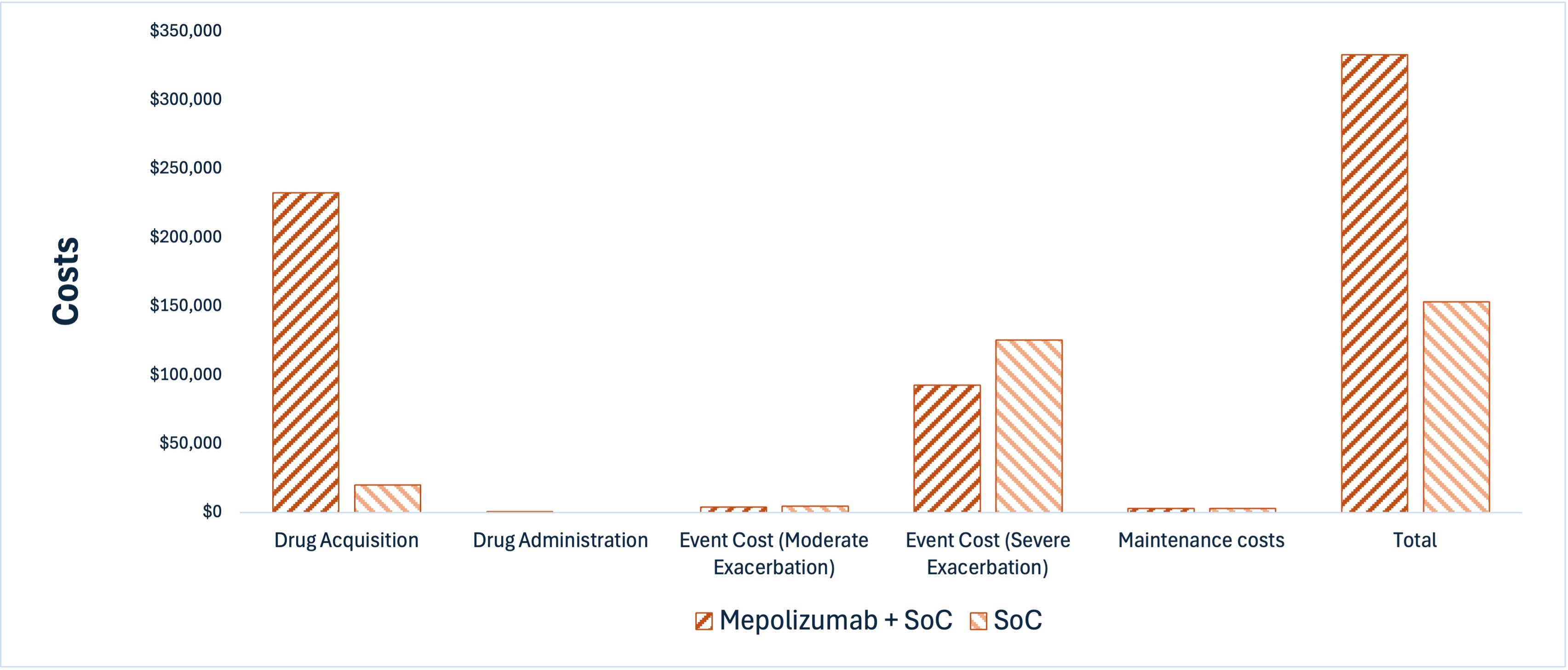
SOC = standard of care; vs. = versus.
Impact on Health
Relative to SOC alone, mepolizumab plus SOC is predicted to increase the amount of time a patient remains in the no-exacerbations and moderate-exacerbation health states, by approximately 0.16 year (1.9 months) and 0.82 year (9.8 months), respectively (refer to Figure 2). Mepolizumab is not predicted to extend survival; it is predicted only to impact quality of life. Specifically, mepolizumab plus SOC is predicted to result in 0.09 additional QALYs per patient compared to SOC alone. Approximately 98% of the predicted incremental benefit was accrued with extrapolation beyond 24 months (the MATINEE study duration).
Figure 2: Impact of Mepolizumab Plus SOC vs. SOC on Patient Health
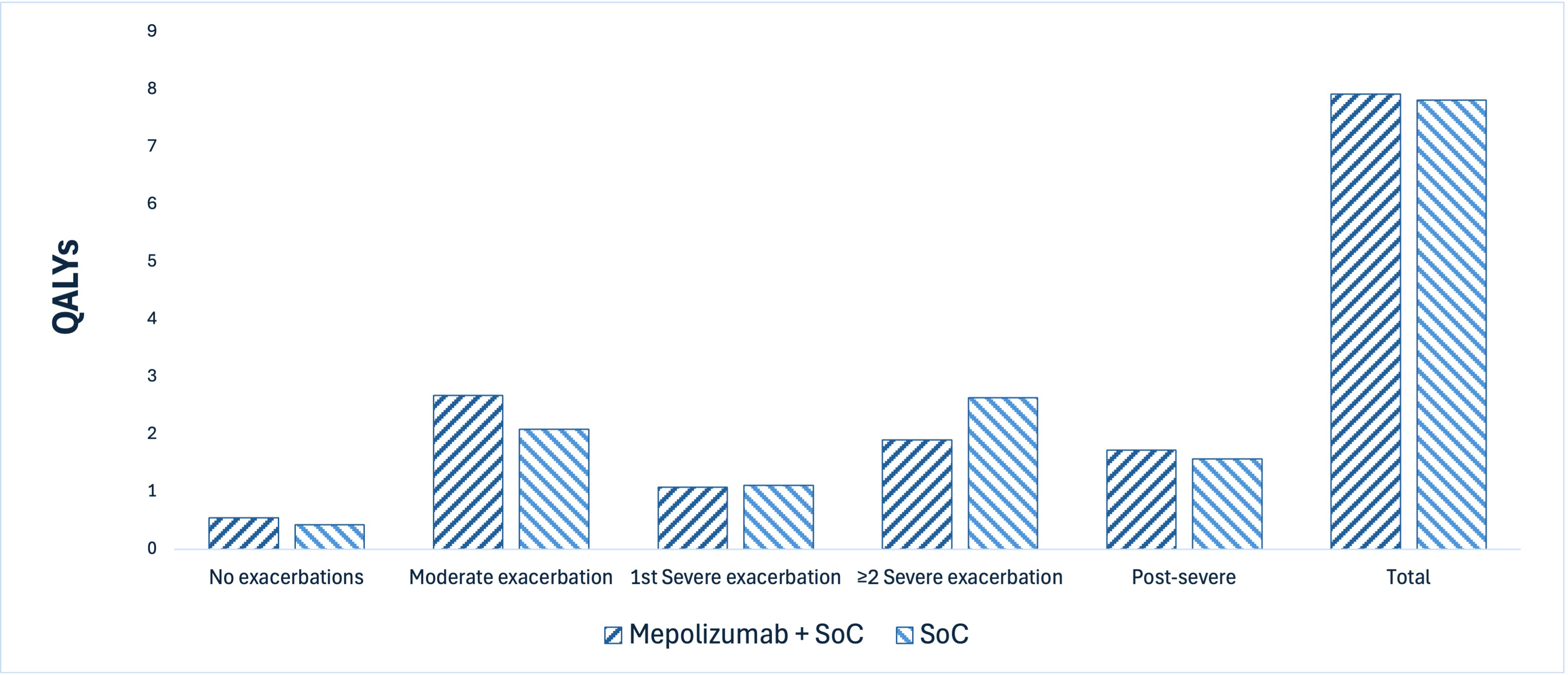
QALY = quality-adjusted life-year; SOC = standard of care; vs. = versus.
Overall Results
The results of the CDA-AMC base case suggest an ICER of $1,887,930 per QALY gained for mepolizumab plus SOC compared to SOC (refer to Table 7). Additional details on the CDA-AMC base case and an additional scenario analysis that explore the impact of introducing a mortality benefit related to the reduction in severe exacerbations are available in Appendix 4 of the Supplemental Material document.
Table 7: Summary of CDA-AMC Economic Evaluation Results
Drug | Total costs ($) | Total QALYs | ICER vs. SOC ($/QALY) |
|---|---|---|---|
SOC | $153,071 | 7.82 | Reference |
Mepolizumab plus SOC | $333,100 | 7.91 | $1,887,930 |
CDA-AMC = Canada’s Drug Agency; ICER = incremental cost-effectiveness ratio; QALY = quality-adjusted life-year; SOC = standard of care; vs. = versus.
Note: Publicly available list prices were used for all comparators.
Uncertainty and Sensitivity
Uncertainty was explored in scenario analyses to address the key issues outlined in Table 2. Uncertainty about mortality benefit had the largest impact on cost-effectiveness, as shown in the CDA-AMC scenario analyses that explored a potential relationship between severe exacerbation and mortality (refer to Table 26 in Appendix 11 of the Supplemental Material document).
Summary of the Budget Impact
The sponsor submitted a budget impact analysis to estimate the 3-year (2026 to 2028) budget impact of reimbursing mepolizumab plus SOC for use in the Health Canada–indicated population. The sponsor assumed that the payer would be CDA-AMC–participating public drug plans and derived the size of the eligible population using an epidemiologic approach.45 The price of mepolizumab was aligned with the price included in the sponsor’s economic evaluation; the prices of comparators were based on publicly available list prices.47 Additional information pertaining to the sponsor’s submission is provided in Appendix 5 of the Supplemental Material document.
CDA-AMC identified a number of issues with the sponsor’s estimated budget impact and made changes to model parameters and to assumptions in consultation with clinical experts to derive the CDA-AMC base case (Appendix 5 of the Supplemental Material document). CDA-AMC estimated that by year 3, 74,893 patients would be eligible for mepolizumab plus SOC; of these, 11,766 patients would be expected to receive mepolizumab plus SOC. The incremental budget impact of reimbursing mepolizumab plus SOC is estimated to be approximately $757 million over the first 3 years; this is identical to the expected expenditure on mepolizumab, given that mepolizumab is an add-on therapy to SOC. The actual budget impact will depend on the number of people eligible for treatment and the market uptake of mepolizumab.
Conclusion
Based on the CDA-AMC base case, mepolizumab plus SOC would be considered cost-effective at the submitted price if the public health care system was willing to pay at least $1,887,930 for each additional QALY gained. If the public health care system is not willing to pay that amount, a price reduction should be considered (refer to Figure 3; full details of the impact of price reductions on cost-effectiveness are presented in Table 25 in Appendix 11 of the Supplemental Material document). The estimated cost-effectiveness of mepolizumab plus SOC versus SOC alone is sensitive to the assumption of mortality associated with severe exacerbation. Although the CDA-AMC base-case analysis assumed that there is no benefit (i.e., no reduction in death related to less frequent severe exacerbation episodes), an alternative scenario analysis that assumed a mortality benefit of mepolizumab by reducing severe exacerbations showed that the ICER would decrease (by $279,427 to $298,295 per QALY gained).
The budget impact of reimbursing mepolizumab plus SOC on public drug plans in the first 3 years is estimated to be approximately $757 million. The 3-year expenditure on mepolizumab (i.e., not accounting for current expenditure on comparators) is identical to its budget impact (i.e., $757 million), given that mepolizumab is an add-on therapy to SOC. The estimated budget impact of reimbursing mepolizumab plus SOC depends on the number of people eligible for treatment and the market uptake of mepolizumab.

References
1.Global Initiative for Chronic Obstructive Lung Disease. Global Strategy for Prevention, Diagnosis and Management of COPD: 2025 Report [sponsor supplied reference]. 2025. Accessed April 1, 2025. https://goldcopd.org/2025-gold-report/
2.Agusti A, Celli BR, Criner GJ, et al. Global Initiative for Chronic Obstructive Lung Disease 2023 Report: GOLD Executive Summary. Eur Respir J. 2023;61(4):2300239. doi:10.1183/13993003.00239-2023 PubMed
3.Barnes PJ, Burney PG, Silverman EK, et al. Chronic obstructive pulmonary disease. Nat Rev Dis Primers. 2015;1:15076. doi:10.1038/nrdp.2015.76 PubMed
4.Vogelmeier CF, Criner GJ, Martinez FJ, et al. Global Strategy for the Diagnosis, Management, and Prevention of Chronic Obstructive Lung Disease 2017 Report. GOLD Executive Summary. Am J Respir Crit Care Med. 2017;195(5):557-582. doi:10.1164/rccm.201701-0218PP PubMed
5.Hurst JR, Vestbo J, Anzueto A, et al. Susceptibility to exacerbation in chronic obstructive pulmonary disease. N Engl J Med. 2010;363(12):1128-38. doi:10.1056/NEJMoa0909883 PubMed
6.Donaldson GC, Law M, Kowlessar B, et al. Impact of Prolonged Exacerbation Recovery in Chronic Obstructive Pulmonary Disease. Am J Respir Crit Care Med. 2015;192(8):943-50. doi:10.1164/rccm.201412-2269OC PubMed
7.Hurst JR, Skolnik N, Hansen GJ, et al. Understanding the impact of chronic obstructive pulmonary disease exacerbations on patient health and quality of life. Eur J Intern Med. 2020;73:1-6. doi:10.1016/j.ejim.2019.12.014 PubMed
8.Rothnie KJ, Mullerova H, Smeeth L, Quint JK. Natural History of Chronic Obstructive Pulmonary Disease Exacerbations in a General Practice-based Population with Chronic Obstructive Pulmonary Disease. Am J Respir Crit Care Med. 2018;198(4):464-471. doi:10.1164/rccm.201710-2029OC PubMed
9.Suissa S, Dell'Aniello S, Ernst P. Long-term natural history of chronic obstructive pulmonary disease: severe exacerbations and mortality. Thorax. 2012;67(11):957-63. doi:10.1136/thoraxjnl-2011-201518 PubMed
10.Global Initiative for Chronic Obstructive Lung Disease. Global strategy for the diagnosis, management, and prevention of chronic obstructive pulmonary disease [sponsor supplied reference]. 2021. Accessed November 9, 2024. https://goldcopd.org/wp-content/uploads/2020/11/GOLD-REPORT-2021-v1.1-25Nov20_WMV.pdf
11.Connors AF, Jr., Dawson NV, Thomas C, et al. Outcomes following acute exacerbation of severe chronic obstructive lung disease. The SUPPORT investigators (Study to Understand Prognoses and Preferences for Outcomes and Risks of Treatments). Am J Respir Crit Care Med. 1996;154(4 Pt 1):959-67. doi:10.1164/ajrccm.154.4.8887592 PubMed
12.Toy EL, Gallagher KF, Stanley EL, Swensen AR, Duh MS. The economic impact of exacerbations of chronic obstructive pulmonary disease and exacerbation definition: a review. COPD. 2010;7(3):214-28. doi:10.3109/15412555.2010.481697 PubMed
13.Tse G, Emmanuel B, Ariti C, et al. A Long-Term Study of Adverse Outcomes Associated With Oral Corticosteroid Use in COPD. Int J Chron Obstruct Pulmon Dis. 2023;18(2565-2580):2565-2580. doi:10.2147/COPD.S433326
14.Bafadhel M, McKenna S, Terry S, et al. Blood eosinophils to direct corticosteroid treatment of exacerbations of chronic obstructive pulmonary disease: a randomized placebo-controlled trial. Am J Respir Crit Care Med. 2012;186(1):48-55. doi:10.1164/rccm.201108-1553OC PubMed
15.Barnes PJ. Targeting cytokines to treat asthma and chronic obstructive pulmonary disease. Nat Rev Immunol. 2018;18(7):454-466. doi:10.1038/s41577-018-0006-6 PubMed
16.Brightling CE, McKenna S, Hargadon B, et al. Sputum eosinophilia and the short term response to inhaled mometasone in chronic obstructive pulmonary disease. Thorax. 2005;60(3):193-8. doi:10.1136/thx.2004.032516 PubMed
17.Brightling CE, Monteiro W, Ward R, et al. Sputum eosinophilia and short-term response to prednisolone in chronic obstructive pulmonary disease: a randomised controlled trial. Lancet. 2000;356(9240):1480-5. doi:10.1016/S0140-6736(00)02872-5 PubMed
18.Christenson SA, Steiling K, van den Berge M, et al. Asthma-COPD overlap. Clinical relevance of genomic signatures of type 2 inflammation in chronic obstructive pulmonary disease. Am J Respir Crit Care Med. 2015;191(7):758-66. doi:10.1164/rccm.201408-1458OC PubMed
19.Tan WC, Bourbeau J, Nadeau G, et al. High eosinophil counts predict decline in FEV(1): results from the CanCOLD study. Eur Respir J. 2021;57(5):2000838. doi:10.1183/13993003.00838-2020 PubMed
20.Vedel-Krogh S, Nielsen SF, Lange P, Vestbo J, Nordestgaard BG. Blood Eosinophils and Exacerbations in Chronic Obstructive Pulmonary Disease. The Copenhagen General Population Study. Am J Respir Crit Care Med. 2016;193(9):965-74. doi:10.1164/rccm.201509-1869OC PubMed
21.Bafadhel M, Pavord ID, Russell REK. Eosinophils in COPD: just another biomarker? Lancet Respir Med. 2017;5(9):747-759. doi:10.1016/S2213-2600(17)30217-5 PubMed
22.Siva R, Green RH, Brightling CE, et al. Eosinophilic airway inflammation and exacerbations of COPD: a randomised controlled trial. Eur Respir J. 2007;29(5):906-13. doi:10.1183/09031936.00146306 PubMed
23.Singh D, Agusti A, Martinez FJ, et al. Blood Eosinophils and Chronic Obstructive Pulmonary Disease: A Global Initiative for Chronic Obstructive Lung Disease Science Committee 2022 Review. Am J Respir Crit Care Med. 2022;206(1):17-24. doi:10.1164/rccm.202201-0209PP PubMed
24.Canadian Institute for Health Information. Hospital stays in Canada, 2023–2024 [sponsor supplied reference]. 2023. Accessed October 13, 2024. https://www.cihi.ca/en/hospital-stays-in-canada-2023-2024.
25.Institute for Clinical Evaluative Sciences. One in 4 Ontarians will be diagnosed with COPD [sponsor supplied reference]. 2011. Accessed February 15, 2024. https://www.ices.on.ca/news-releases/one-in-4-ontarians-will-be-diagnosed-with-copd/
26.Lung Health Foundation. Helping the missing million: Improving the diagnosis and treatment of COPD. 2022. Accessed June 3, 2025. https://lunghealth.ca/pastpolicyforums/national-studies/the-missing-million-copd/
27.Gershon AS, Warner L, Cascagnette P, Victor JC, To T. Lifetime risk of developing chronic obstructive pulmonary disease: a longitudinal population study. Lancet. 2011;378(9795):991-6. doi:10.1016/S0140-6736(11)60990-2 PubMed
28.Hermus G SCGDTLBF. The Conference Board of Canada: cost risk analysis for chronic lung disease in Canada. 2012;1 April 2025.
29.Global Initiative for Chronic Obstructive Lung Disease. GLOBAL STRATEGY FOR PREVENTION, DIAGNOSIS AND MANAGEMENT OF COPD: 2026 Report. 2026. Accessed November 25, 2025. https://goldcopd.org/wp-content/uploads/2025/11/GOLD-REPORT-2026-v1.2-20Nov2025_WMV.pdf
30.Bourbeau J, Bhutani M, Hernandez P, et al. 2023 Canadian Thoracic Society Guideline on Pharmacotherapy in Patients With Stable COPD. Chest. 2023;164(5):1159-1183. doi:10.1016/j.chest.2023.08.014 PubMed
31.Bird Y, Moraros J, Mahmood R, Esmaeelzadeh S, Kyaw Soe NM. Prevalence and associated factors of COPD among Aboriginal peoples in Canada: a cross-sectional study. Int J Chron Obstruct Pulmon Dis. 2017;12:1915-1922. doi:10.2147/copd.S138304 PubMed
32.Foreman MG, Zhang L, Murphy J, et al. Early-onset chronic obstructive pulmonary disease is associated with female sex, maternal factors, and African American race in the COPDGene Study. Am J Respir Crit Care Med. 2011;184(4):414-20. doi:10.1164/rccm.201011-1928OC PubMed
33.Canadian Institute for Health Information. Trends in Income-Related Health Inequalities in Canada: Summary Report. Canadian Institute for Health Information. 495 Richmond Road, Suite 600, Ottawa, Ontario K2A 4H6 2015. Accessed September 18, 2025. https://www.cihi.ca/sites/default/files/document/summary_report_inequalities_2015_en.pdf
34.GlaxoSmithKline Inc. Clinical Study Report: 208657. A multi-center, randomized, double-blind, parallel-group, placebo-controlled study of mepolizumab 100 mg SC as addon treatment in participants with COPD experiencing frequent exacerbations and characterized by eosinophil levels (Study 208657) [internal sponsor's report]. October 24, 2024.
35.GlaxoSmithKline Inc. Clinical Study Report: MEA117106. Mepolizumab vs. placebo as add-on treatment for frequently exacerbating COPD patients [internal sponsor's report]. 2017.
36.GlaxoSmithKline Inc. Clinical Study Report: MEA117113. Mepolizumab vs. Placebo as add-on treatment for frequently exacerbating COPD patients characterized by eosinophil level [internal sponsor's report]. 2017.
37.GlaxoSmithKline Inc. Mepolizumab (Nucala) as add-on maintenance treatment for adult patients with chronic obstructive pulmonary disease (COPD) with an eosinophilic phenotype [internal sponsor's report]. In: Drug Reimbursement Review sponsor submission: Nucala (mepolizumab injection), 100 mg/mL solution for subcutaneous injection. July 9, 2025. https://ca.gsk.com/media/6157/breo-ellipta.pdf
38.GlaxoSmithKline Inc. Drug Reimbursement Review sponsor submission: Nucala (mepolizumab injection), 100 mg/mL solution for subcutaneous injection [internal sponsor's package]. July 9, 2025.
39.Bhatt SP, Rabe KF, Hanania NA, et al. Dupilumab for COPD with Blood Eosinophil Evidence of Type 2 Inflammation. N Engl J Med. 2024;doi:10.1056/NEJMoa2401304 PubMed
40.Bhatt SP, Rabe KF, Hanania NA, et al. Dupilumab for COPD with Type 2 Inflammation Indicated by Eosinophil Counts. N Engl J Med. 2023;389(3):205-214. doi:10.1056/NEJMoa2303951 PubMed
41.Jones PW. St. George's Respiratory Questionnaire: MCID. COPD. 2005;2(1):75-9. doi:10.1081/copd-200050513 PubMed
42.Jones PW, Beeh KM, Chapman KR, Decramer M, Mahler DA, Wedzicha JA. Minimal clinically important differences in pharmacological trials. Am J Respir Crit Care Med. 2014;189(3):250-5. doi:10.1164/rccm.201310-1863PP PubMed
43.Chapman KR, Bergeron C, Bhutani M, et al. Do we know the minimal clinically important difference (MCID) for COPD exacerbations? COPD. 2013;10(2):243-9. doi:10.3109/15412555.2012.733463 PubMed
44.GlaxoSmithKline Inc. Pharmacoeconomic evaluation [internal sponsor's report]. In: Drug Reimbursement Review sponsor submission: Nucala (mepolizumab injection), 100 mg/mL solution for subcutaneous injection. July 3, 2025.
45.GlaxoSmithKline Inc. Budget Impact Analysis [internal sponsor's report]. In: Drug Reimbursement Review sponsor submission: Nucala (mepolizumab injection), 100 mg/mL solution for subcutaneous injection. July 9, 2025.
46.GlaxoSmithKline. Mepolizumab as Add-on Treatment IN participant with COPD characterized by frequent exacerbations and eosinophil level, MATINEE clinical study report [sponsor supplied reference]. GSK; 2025. https://www.gsk.com/en-gb/media/press-releases/gsk-announces-positive-results-from-phase-iii-trial-of-nucala-mepolizumab-in-copd/
47.Ontario Ministry of Health. Ontario Drug Benefit Formulary/Comparative Drug Index 2025 [sponsor supplied reference]. Updated 30/04/2025. Accessed May 21, 2025. https://www.formulary.health.gov.on.ca/formulary/
ISSN: 2563-6596
Canada’s Drug Agency (CDA-AMC) is a pan-Canadian health organization. Created and funded by Canada’s federal, provincial, and territorial governments, we’re responsible for driving better coordination, alignment, and public value within Canada’s drug and health technology landscape. We provide Canada’s health system leaders with independent evidence and advice so they can make informed drug, health technology, and health system decisions, and we collaborate with national and international partners to enhance our collective impact.
Disclaimer: CDA-AMC has taken care to ensure that the information in this document was accurate, complete, and up to date when it was published, but does not make any guarantee to that effect. Your use of this information is subject to this disclaimer and the Terms of Use at cda-amc.ca.
The information in this document is made available for informational and educational purposes only and should not be used as a substitute for professional medical advice, the application of clinical judgment in respect of the care of a particular patient, or other professional judgments in any decision-making process. You assume full responsibility for the use of the information and rely on it at your own risk.
CDA-AMC does not endorse any information, drugs, therapies, treatments, products, processes, or services. The views and opinions of third parties published in this document do not necessarily reflect those of CDA-AMC. The copyright and other intellectual property rights in this document are owned by the Canadian Agency for Drugs and Technologies in Health (operating as CDA-AMC) and its licensors.
Questions or requests for information about this report can be directed to Requests@CDA-AMC.ca.