Drugs, Health Technologies, Health Systems
Reimbursement Review
Caplacizumab (Cablivi)
Sponsor: Sanofi-Aventis Canada Inc.
Therapeutic area: Acquired thrombotic thrombocytopenic purpura (aTTP)
Summary
What Is Acquired Thrombotic Thrombocytopenic Purpura?
Acquired thrombotic thrombocytopenic purpura (aTTP) is a rare and serious blood condition. It is caused by an immune reaction that stops an enzyme (ADAMTS13) — which is involved in regulating the blood clotting process — from functioning properly. This allows small blood clots to form throughout the body, which can lead to organ damage and death. Patients may show symptoms of tiredness, shortness of breath, weakness, bleeding, nausea, headaches, stroke, or coma. If aTTP is left untreated, the risk of death is greater than 90%.
In Canada, it is estimated that 1 to 3.2 people per million develop aTTP each year based on data from treatment centres in Quebec, Ontario, Saskatchewan, and British Columbia.
What Are the Treatment Goals and Current Treatment Options for aTTP?
Current treatment goals for aTTP include reducing the risk of death and disease complications, as well as preventing future aTTP episodes.
Having treatments that work immediately, reduce treatment time, improve health-related quality of life, and are safe was identified as important in the patient group input. Other important outcomes identified through clinician and clinical expert input include improving survival, quickly raising platelet levels to normal values, reducing the amount of time spent in hospitals, and improving signs of organ damage. Outcomes assessed in the included study consisted of survival at 3 months, the occurrence of aTTP that does not respond to treatment (refractory disease), signs of disease that reoccur within 1 month of stopping treatment (exacerbation), time for platelet counts to rise to normal levels, the number of plasma exchange (PE) treatments, and the time between starting PE treatment and ADAMTS13 enzyme improvement.
To treat aTTP, PE therapy is started immediately. Replacing the patient’s plasma with donor plasma helps restore platelets and functional ADAMTS13 enzymes in the blood and to remove the parts of the blood that are causing clots to form. Drugs (e.g., rituximab and corticosteroids) can also be given to reduce the body’s immune reaction that is causing ADAMTS13 enzymes to stop working. Cablivi prevents components in the blood from forming new clots.
What Is Cablivi and Why Did Canada’s Drug Agency Conduct This Review?
Cablivi is a drug administered by IV infusion or subcutaneous injection. Health Canada has approved Cablivi for the treatment of adults with aTTP in combination with PE and immunosuppressive therapy.
Canada’s Drug Agency (CDA-AMC) previously reviewed Cablivi for aTTP and issued a recommendation not to reimburse. Since then, new evidence has become available.
CDA-AMC reviewed Cablivi to inform a recommendation to participating public drug programs on whether Cablivi should be reimbursed for the Health Canada–approved indication.
How Did CDA-AMC Evaluate Cablivi?
CDA-AMC reviewed the clinical evidence on the beneficial and harmful effects, as well as the economic evidence, of Cablivi versus other treatments used in Canada for aTTP. PE and immunosuppressive therapy were considered relevant treatments to compare with Cablivi when reviewing the clinical evidence.
CDA-AMC identified equity and ethical considerations relevant to Cablivi and aTTP.
The review was informed by materials submitted by the sponsor, which included clinical and economic evidence.
The review was also informed by 1 patient group submission and 1 clinician group submission (with letters of support from 6 clinicians) in response to the call for input and by input from the participating public drug programs on issues that may affect their ability to implement a recommendation.
Three specialists with expertise in hematological pathology and nephrology were consulted as part of the review process.
What Were the Findings?
Clinical Evidence
CDA-AMC reviewed the following clinical evidence:
1 retrospective observational study (the Capla 1000+ project) that compared patients with aTTP who received Cablivi with PE and immunosuppressive therapy (n = 1,015) versus a historical control group of patients with aTTP who received PE and immunosuppressive therapy alone (n = 510)
studies reviewed during the initial CDA-AMC reimbursement review of Cablivi, the HERCULES and TITAN studies, and studies reviewed during the first resubmission, the Post-HERCULES study, an integrated analysis of the HERCULES and TITAN studies, and 3 studies of 2 real-world evidence cohorts.
Findings from the comparison of Cablivi with PE and immunosuppressive therapy versus PE and immunosuppressive therapy alone, based on the Capla 1000+ project, included the following:
Comparisons of Cablivi with PE and immunosuppressive therapy versus PE and immunosuppressive therapy alone for 3-month survival and time from first PE session to death were very uncertain due to the risk of bias in the selection of participants in the study, time-related bias, and risk of bias from confounding.
Treatment with Cablivi with PE and immunosuppressive therapy may reduce refractory disease compared to PE and immunosuppressive therapy alone. There was uncertainty due to the risk of bias from the selection of participants in the study and from confounding.
Treatment with Cablivi with PE and immunosuppressive therapy may reduce disease exacerbations compared to treatment with PE and immunosuppressive therapy alone. There was uncertainty due to the risk of bias from the selection of participants in the study and from confounding.
The evidence is very uncertain about the effect of Cablivi with PE and immunosuppressive therapy on reducing the time from the first PE session to when platelet counts normalize compared to treatment with PE and immunosuppressive therapy alone due to the risk of bias from the selection of participants in the study, confounding, and time-related bias.
The evidence is very uncertain about the effect of Cablivi with PE and immunosuppressive therapy on reducing the number of PE sessions it takes for platelet counts to normalize compared to treatment with PE and immunosuppressive therapy alone due to the risk of bias from the selection of participants in the study, confounding, and time-related bias.
The evidence is very uncertain about the effect of Cablivi with PE and immunosuppressive therapy on reducing the time for ADAMTS13 enzyme activity to increase to at least 20% compared to treatment with PE and immunosuppressive therapy alone due to the risk of bias from the selection of participants in the study, confounding, and time-related bias.
There was no evidence comparing treatment with Cablivi with PE and immunosuppressive therapy to treatment with PE and immunosuppressive therapy alone for treatment-emergent adverse events, serious adverse events, or withdrawals due to adverse events. According to the Health Canada product monograph, Cablivi is associated with an increased risk of bleeding events.
In previous reviews, the Canadian Drug Expert Committee identified the following concerns: gaps in the evidence for clinically important outcomes (e.g., long-term survival, reduced organ damage, reduced long-term disease recurrence, reduced health care use, and improved health-related quality of life), the inability to identify a subpopulation most likely to benefit from Cablivi, and limited generalizability of the evidence to clinical practice in Canada. The Capla 1000+ project provides new information that may support generalizability to clinical practice in Canada and support the findings of the pivotal evidence, but it does not address the other evidence gaps or assist in the identification of the subpopulation most likely to benefit from Cablivi.
Economic Evidence
Note: Cablivi was previously reviewed by CDA-AMC for the treatment of adults with aTTP and received a recommendation of do not reimburse. The same economic information was filed for the current submission as was filed for the previous submission. As no additional economic information was provided, no updates were made to the CDA-AMC critical appraisal or to the reanalysis of the sponsor’s base case for this review.
Cablivi is available as a single-use vial of powder for solution (11 mg). At the submitted price of $6,200.00 per 11 mg vial, the daily cost of Cablivi is expected to be $12,400 per patient in the first day of treatment and $6,200 for subsequent days, based on the Health Canada–recommended dosage. Based on the HERCULES trial (median duration of therapy = 35 days), the expected course cost is $223,200. The maximum duration of therapy is 65 days, with an associated per-course, per-patient cost of $409,200.
Key clinical efficacy data (proportion of patients whose disease is refractory to treatment, proportion of patients experiencing disease exacerbations, proportion of patients who experience disease recurrence, mortality) used to inform the economic model were derived from the HERCULES and Post-HERCULES studies, which compared Cablivi in combination with standard of care (SOC) treatment (PE, corticosteroid treatment, and optional rituximab) versus placebo in combination with SOC treatment. The data submitted by the sponsor for the previous review of Cablivi suggested that the administration of Cablivi resulted in a statistically significant decrease in the frequency of disease recurrence during the HERCULES study period and was associated with 1 patient death (n = 72 patients) within the same time period compared to 3 deaths in patients treated with SOC alone (n = 73 patients). Numerically fewer patients randomized to receive Cablivi experienced disease recurrences (early or late exacerbations), and fewer had disease that was refractory to treatment, than patients randomized to receive SOC treatment alone during the HERCULES trial.
The results of the CDA-AMC base case suggest the following:
Cablivi in combination with SOC treatment is predicted to be associated with higher costs to the health care system than SOC treatment alone (incremental costs = $278,078), primarily driven by increased costs associated with drug acquisition.
Cablivi in combination with SOC treatment is predicted to be associated with a gain of 0.65 life-years compared to SOC treatment alone and may result in a gain of 1.03 quality-adjusted life-years (QALYs) compared to SOC treatment alone.
The incremental cost-effectiveness ratio of Cablivi in combination with SOC treatment compared to SOC treatment alone was $269,158 per QALY gained in the CDA-AMC base case. The estimated incremental cost-effectiveness ratio was sensitive to alternative estimates for long-term outcomes (relative risk of long-term sequelae). Approximately 65% of the incremental QALYs were gained after the first 3.25 years in the portion of the model that was fully extrapolated (i.e., after the mean follow-up period of the Post-HERCULES study).
There is uncertainty associated with the long-term outcomes predicted by the economic model. Additional price reductions than those presented in this report may therefore be required to achieve cost-effectiveness at a given willingness-to-pay threshold.
CDA-AMC estimates that the budget impact of reimbursing Cablivi in combination with SOC for the treatment of adult patients with aTTP will be approximately $24.9 million over the first 3 years of reimbursement compared to the amount currently spent on SOC treatment, with an estimated expenditure of $24.9 million on Cablivi over this period. The actual budget impact of reimbursing Cablivi will depend on the number of patients eligible for this treatment.
Abbreviations
AE
adverse event
aTTP
acquired thrombotic thrombocytopenic purpura
CDA-AMC
Canada’s Drug Agency
CDEC
Canadian Drug Expert Committee
CI
confidence interval
HRQoL
health-related quality of life
ICER
incremental cost-effectiveness ratio
IQR
interquartile range
PE
plasma exchange
QALY
quality-adjusted life-year
SC
subcutaneous
SOC
standard of care
TTP
thrombotic thrombocytopenic purpura
vWF
von Willebrand factor
Background
Introduction
The objectives of this report are as follows:
Review and critically appraise the evidence submitted by the sponsor on the beneficial and harmful effects of caplacizumab, 11 mg, IV or subcutaneous (SC) injection, in the treatment of acquired thrombotic thrombocytopenic purpura (aTTP) in adults. The focus will be placed on comparing caplacizumab to relevant comparators in clinical practice in Canada and identifying gaps in the current evidence. This focus is outlined in Table 1.
Review and critically appraise the economic information submitted by the sponsor, including a cost-effectiveness analysis and a budget impact analysis. The focus of the Economic Review is aligned with the scope of the Clinical Review, unless otherwise stated. For most reviews, a Canada’s Drug Agency (CDA-AMC) base case is developed, informed by clinical expert input, the available clinical evidence, and the best interpretation of the economic evidence based on the information provided by the sponsor.
Caplacizumab was initially reviewed for the treatment of adults with aTTP in combination with plasma exchange (PE) and immunosuppressive therapy and received a recommendation of do not reimburse from the Canadian Drug Expert Committee (CDEC) on September 1, 2020.1 The recommendation was based on evidence assessed in the Clinical Review report for the initial submission of caplacizumab,2 the executive summary of which is reproduced in Appendix 2 in the Supplemental Material document. Key reasons for the recommendation included the following: insufficient evidence for clinically important outcomes (e.g., survival, organ damage, health care use, or long-term aTTP recurrence) and, given caplacizumab’s mechanism of action, uncertainty in the correlation between time to normalization of platelet count and these outcomes; lack of long-term clinical outcome data, including on aTTP recurrence, beyond the relatively short durations of the trials; lack of an identifiable subpopulation most likely to benefit from treatment with caplacizumab, given the variability in the natural history of aTTP; unclear generalizability of the trial results, primarily due to higher rates of rituximab use compared with clinical practice in Canada; and absence of data on health-related quality of life (HRQoL). In response to the draft CDEC recommendation, the sponsor submitted a request for reconsideration in which the potential role caplacizumab might play in reducing aTTP mortality and microvascular thrombosis was emphasized, as was the potential clinical importance of consistent numerical improvements achieved with caplacizumab across many outcomes. In addition, to better align with the views of the clinical experts consulted for the review, the sponsor’s reimbursement request was narrowed to patients with multiorgan involvement, indicating more severe disease, as well as patients with refractory aTTP that did not respond well to standard of care (SOC) treatment for a given time period. However, CDEC maintained its initial position that direct evidence showing an advantage for caplacizumab in clinically relevant outcomes was not currently available and that subgroup analyses justifying the use of caplacizumab in patients with severe or refractory aTTP were unavailable.
Caplacizumab was resubmitted by the sponsor for review on June 7, 2022, on the basis of the availability of new evidence. The executive summary of the Clinical Review Report for the first resubmission of caplacizumab3 is reproduced in Appendix 2 in the Supplemental Material document. The submitted evidence included a prospective long-term follow-up study of patients who had completed the HERCULES study (the Post-HERCULES study); a variety of post hoc analyses of clinical trial data, including an integrated analysis of data from the HERCULES and TITAN studies; and several real-world evidence studies to address CDEC’s concerns outlined in the 2020 recommendation. CDEC issued a recommendation not to reimburse caplacizumab on April 5, 2023.4 Key reasons for the recommendation included the following: the studies not having been designed to assess the effects of caplacizumab on clinically important outcomes (e.g., survival, reduction in organ damage, health care use, or long-term recurrence of aTTP); the uncertainty between the outcomes measured in the study and their link to meaningful clinical outcomes; the methodologic limitations in the reviewed studies that precluded CDEC from determining whether caplacizumab provides clinically meaningful value compared with PE plus immunosuppressive therapy alone; and limitations with the data that prevented making definitive conclusions about the impact on HRQoL. In response to the draft CDEC recommendation, the sponsor submitted a request for reconsideration asking CDEC to consider the evidence in the context of a rare disease and how the submitted evidence aligns with clinical expert input; the importance of the results on mortality, refractory disease, and reduction in PE therapy; the value of the submitted real-world evidence studies for a rare disease; and the characterization of rituximab use as a confounding factor. CDEC maintained its initial position, citing the substantial uncertainty with the submitted evidence.
Caplacizumab was resubmitted a second time by the sponsor on September 18, 2025, for review based on the availability of new efficacy and safety evidence. A review of the sponsor-submitted evidence is presented in this Clinical Review Report.
Table 1: Information on the Application Submitted for Review and on the CDA-AMC Review
Item | Description |
|---|---|
Information on the application submitted for review | |
Drug | Caplacizumab (Cablivi), 11 mg, powder for solution, IV or SC injection |
Sponsor | Sanofi-Aventis Canada Inc. |
Health Canada indication | For the treatment of adults with acquired thrombotic thrombocytopenic purpura (aTTP) in combination with plasma exchange (PE) and immunosuppressive therapy |
Health Canada approval status | NOC |
Health Canada review pathway | Priority review |
NOC date | February 28, 2020 |
Mechanism of action | A humanized bivalent nanobody (antibody fragment) that reduces platelet activation and adhesion and prevents the formation of ultra-large vWF-rich platelet microthrombi |
Recommended dosage | Caplacizumab should be administered upon initiation of PE therapy as recommended:
|
Submission type | Resubmission |
Submission history for the indication | Previously reviewed for: aTTP (initial review and resubmission) Recommendation category: Do not reimburse (initial review and resubmission) Recommendation dates: August 26, 2020 (initial review), April 5, 2023 (resubmission) |
Sponsor’s reimbursement request | Per indication |
Submitted price | Caplacizumab, 11 mg, powder for solution: $6,200.0000 per single-use vial |
Information on the CDA-AMC review | |
Review type | Complex |
Clinical review focusa | Population: As defined in the Health Canada indication Subgroups: None Intervention: Per recommended dosage Comparators: PE and immunosuppressive therapy Outcomes:
|
AE = adverse event; aTTP = acquired thrombotic thrombocytopenic purpura; CDA-AMC = Canada’s Drug Agency; NOC = Notice of Compliance; PE = plasma exchange; SC = subcutaneous; vWF = von Willebrand factor.
aThe Economic Review aligns with the scope of the Clinical Review, unless otherwise stated.
Sources: Caplacizumab submission files; Health Canada product monograph for caplacizumab.5,6
Submission History for the Drug Under Review
CDA-AMC has not previously reviewed caplacizumab through the reimbursement review process for other indications.
Sources of Information
The contents of the Reimbursement Review report are informed by materials submitted by the sponsor, input received from interested parties (patient groups, clinician groups, and drug programs), and input from the clinical experts consulted for this review.
Calls for patient group and clinician group input are issued for each reimbursement review. One patient group submission from Answering TTP Canada (with support from the Network of Rare Blood Disorder Organizations) and 1 clinician group submission from the Canadian Apheresis Group (with letters of support from 6 clinicians) were received. Answering TTP Canada conducted an online survey from May to June 2022 and received 49 responses from patients with aTTP, their caregivers, and their families, most of whom were in Canada, and the organization conducted 7 interviews with patients and caregivers in September 2025. The input from the Canadian Apheresis Group was authored by 11 physicians who described their experiences with caplacizumab, and it included an updated review of the caplacizumab literature. The full submissions received are available on the project landing page in the Patient and Clinician Group Input document. The drug programs provide input on each drug being reviewed through the reimbursement review process by identifying issues that may affect their ability to implement a recommendation. This is summarized in the Supplemental Material document.
Input from patient and clinician groups is considered throughout the review, including in the selection of outcomes to include in the Clinical Review and in the interpretation of the clinical and economic evidence. Relevant patient and clinician group input is summarized in the Disease Background, Current Management, and Unmet Needs and Existing Challenges sections.
Each review team includes at least 1 clinical expert with expertise in the diagnosis and management of the condition for which the drug is indicated. Clinical experts are a critical part of the review team and are involved in all phases of the review process. Three clinicians with expertise in the diagnosis and management of aTTP participated as part of the review team.
Disease Background
Thrombotic thrombocytopenic purpura (TTP) is a rare condition caused by a severe deficiency in ADAMTS13 activity.7 It is estimated that more than 95% of cases of TTP are caused by an ADAMTS13 autoantibody (i.e., these cases are aTTP), and the minority of cases are hereditary or congenital TTP caused by biallelic genetic variants in ADAMTS13.7,8 ADAMTS13 is a protease that cleaves ultra-large von Willebrand factor (vWF) molecules (which block small blood vessels) into smaller and less reactive multimers. In aTTP, ADAMTS13 activity is significantly reduced (usually < 10%), allowing vWF molecules and platelets to adhere to the endothelium, resulting in microthrombi, ischemic organ damage, and possibly death.7,9 Information from the literature and from the clinicians who submitted input for this review noted that aTTP is more common among individuals who are female and of reproductive age; have African ancestry; have a high body mass index; or have other autoimmune, rheumatic, or immunologic conditions.7,10 In Canada, the incidence of TTP is estimated to range from 1 to 3.2 people per million, based on data from treatment centres in Quebec, Ontario, Saskatchewan, and British Columbia.11,12 The prevalence of TTP is estimated to be 4.3 people per million based on data from 2012 to 2019 in Quebec.11
The clinical experts noted that there is considerable variability in disease presentation. TTP is suspected when a patient presents with microangiopathic hemolytic anemia and a platelet count lower than 150 × 109/L without another clear cause.10 The clinical experts stated that diagnosis involves laboratory testing, including ADAMTS13 activity with or without enzyme inhibitor level, lactate dehydrogenase, complete blood count, peripheral blood film review, and diagnostic imaging. They added that low ADAMTS13 activity and the presence of ADAMTS13 autoantibodies support confirmation of an aTTP diagnosis, but they noted that treatment is not delayed in the absence of these results. The signs and symptoms of aTTP include fatigue, dyspnea, numbness, abdominal pain, weakness, dizziness, bleeding, bruising, nausea, vomiting, headaches, transient confusion, seizures, stroke, coma, and reduced blood flow to the heart.7,10 Renal and pulmonary involvement are less common. The clinical experts noted that an aTTP episode is a medical emergency during which patients can experience sudden and unexpected clinical decline and that, if left untreated, the risk of death is greater than 90% in the first 30 days. With treatment, mortality is reduced to 10% to 20% but remains elevated (> 30%) for disease that is refractory to standard treatments. The experts added that once an episode resolves, patients can still develop depression and posttraumatic stress disorder.
According to the patient group, aTTP is a terrifying condition in which episodes occur without warning. Respondents from the patient group input noted that without immediate treatment, patients can die, and that even with treatment, there is the risk of serious complications, such as stroke, heart attack, kidney injury, permanent cognitive impairment, and organ damage, with each episode. Patients described the signs and symptoms of an episode as experiencing confusion, memory loss, migraines, dizziness, weakness, jaundice, abdominal pain, shortness of breath, chest pain, kidney injury, and bleeding. The seriousness and suddenness of an aTTP episode often causes a patient to be admitted to the intensive care unit and have an extended hospital stay. This can lead to traumatic experiences for both the patient and their family, time away from the patient’s family when the treatment centre is far away from their home, lost time at work or school, and lost income. One respondent noted that recovery from an episode can take a year, and another respondent stated that they never return to how they were before the aTTP episode. Episodes are described as being unpredictable, and patients and caregivers live with the constant stress of the next episode on their minds. The disease also affects a patient’s ability to travel due to the need to be close to a medical care team that understands the seriousness of aTTP and its immediate treatment. aTTP also interferes with a patient’s social life due to chronic fatigue, time spent receiving treatment, and anxiety that can cause them to withdraw from social events. Patients may also need family or caregivers to advocate for them because symptoms can appear minor but delayed treatment is life-threatening.
Current Management
Treatment Goals
Patients stated that the main goal of treatment for aTTP is to reduce the risk of death and life-threatening complications.
The clinician group and the clinical experts who provided input for this review stated that the main goals of treatment are to prevent death, reduce end-organ damage, and prevent disease relapse. This is done by rapidly normalizing platelet counts to greater than 150 × 109/L, reducing platelet activation and aggregation, restoring ADAMTS13 activity, and stopping ADAMTS13 autoantibody production.
Current Treatment Options
Based on the mechanism of the disease, the clinician group that submitted input for this review described 3 approaches to treating aTTP: rapidly normalize platelet counts, stop production of ADAMTS13 autoantibodies, and reduce platelet activation and aggregation and microvascular thrombosis.
According to the clinical experts consulted for this review and the literature, once a diagnosis of aTTP is suspected, PE is started immediately while the cause of the thrombotic microangiopathy is investigated.13 PE works to normalize platelet counts, restore ADAMTS13 from donor plasma, and remove ADAMTS13 autoantibody and vWF multimers from circulation. However, PE is slow to work, associated with complications due to the use of a central venous catheter, and exposes the patient to donor blood product. Despite the use of PE, the clinical experts noted that the mortality rate associated with aTTP has been reported to be as high as 20%. Moreover, this therapy is available only in specialized hospital centres, and patients who live outside of major cities must travel to access it. PE is continued until platelet counts are normalized and stable. The clinical experts noted that when there is a delay in PE initiation, plasma infusion can be used as a temporary treatment to supply ADAMTS13 while arrangements are made to transfer the patient to an apheresis centre, though it is not as effective as PE.
Immunosuppressive therapies (e.g., rituximab, cyclosporine, cyclophosphamide, vincristine, bortezomib, and corticosteroids) work to suppress ADAMTS13 autoantibody production.13 These treatments do not address the microvascular thrombosis that causes end-organ damage. Furthermore, aTTP responds slowly (days to weeks) to these drugs or may have limited response due to toxicity. The clinical experts and the clinician group stated that rituximab or a biosimilar is SOC as first-line therapy, particularly to treat refractory disease, exacerbations that occur shortly after PE is stopped, or relapsing disease. In situations in which patients are not able to access rituximab or a biosimilar through public or private insurance or an exceptional access program, they are at an increased risk of relapse and poor clinical outcomes. Health care resource use also increases with each aTTP episode. Treatment continues after PE is stopped until the full course of rituximab is completed and/or ADAMTS13 activity is restored if using corticosteroids.13 A clinical expert noted that access to immunosuppressive therapies varies across jurisdictions and may only be funded for relapsing disease, which adds to the challenges of managing this disease.
Guidelines from the International Society on Thrombosis and Haemostasis on managing TTP recommend that an acute aTTP event be treated with caplacizumab plus SOC and that treatment with caplacizumab be continued if ADAMTS13 activity remains lower than 10%.8,9 Where ADAMTS13 activity testing is not accessible, it is recommended that patients receive SOC without caplacizumab.8 Likewise, the clinician group stated that, based on the available evidence, caplacizumab should only be used once aTTP is confirmed (i.e., low ADAMTS13 activity and the presence of ADAMTS13 autoantibodies) because there are other causes of thrombotic microangiopathy. The treatment of subsequent aTTP episodes is similar to the initial treatment. The management of disease that relapses multiple times can include maintenance rituximab, other immunosuppressive therapies, or splenectomy.
Caplacizumab prevents the interaction between vWF molecules and platelets, thus reducing platelet activation and adhesion, which leads to microthrombi formation and organ damage.5 Caplacizumab is continued after PE is stopped, and it has been suggested that the drug continue until ADAMTS13 activity is restored to approximately 20%.13 The Health Canada product monograph states that caplacizumab can be used for 30 days following the last daily PE, with additional treatment for a maximum 28 days if signs of persistent underlying disease, such as low ADAMTS13 activity levels, remain present.5 The clinical experts noted that caplacizumab does not affect the immune-mediated pathogenesis of aTTP but complements existing disease-modifying therapy. The key characteristics of caplacizumab are summarized with other treatments available for aTTP in the Supplemental Material document (available on the project landing page), in Table 1 in Appendix 1.
Unmet Needs and Existing Challenges
The patient group noted that PE and immunosuppressive therapy are untargeted, invasive, slow to work, and traumatizing to patients. More specifically, patients describe PE as arduous, time consuming, uncomfortable, and a cause of serious infection. As patients wait for the treatment to work, they can remain in a critical, life-threatening state for days or weeks. The patient group reported that PE and immunosuppressive therapy have adverse effects, such as vision loss, nausea, weakness, weight gain, hair loss, insomnia, bone pain, depression, bleeding, allergic reaction, and the development of scar tissue. It was also noted that current therapies are insufficient for up to 20% of patients and that patients still die despite receiving treatment. The patient group stated that there is a need for treatment that is safe and immediately effective and that reduces treatment time.
The clinical experts stated that identification and timely treatment of aTTP depends on health care professionals quickly recognizing the disease and consulting with TTP experts. They added that many hospitals lack onsite ADAMTS13 testing, which causes delays in diagnosis and treatment. Moreover, they noted that the provincial funding approval process can range from 2 to 8 weeks. Treatments are reimbursed inconsistently across Canada, and the clinical experts and the clinician group both stated that reimbursement of rituximab tends to be approved only for patients whose disease is relapsing or refractory and not as a first-line treatment for the first aTTP episode. Patients, particularly those in rural and remote communities, may need to relocate to receive PE because there is limited or no access to apheresis centres outside of major cities. This creates additional financial and social burdens on patients when separated from their families. The clinical experts noted that care models in apheresis centres can also vary, which leads to different outcomes and varying comfort levels among health care professionals. Additionally, the clinical experts indicated that rural and underserviced communities often include a higher proportion of systemically marginalized groups who may experience a disproportionate burden of harms.
The clinical experts noted that response to treatment is highly variable depending on the organs involved. The clinician group noted that patients are admitted to the hospital for the entire time they receive PE, which can be for weeks. Refractory disease (estimated to occur in 30% of patients) and other complications keep patients admitted for even longer. Input from the clinician group and clinical experts noted that prolonged PE and long hospital admissions put additional strain on the inpatient units and health care system, which are already overburdened. They stated that reducing PE duration and intensive care unit exposure results in improved patient outcomes and more efficient use of scarce health system resources. The clinical experts added that there are limited treatment options, which makes it challenging to manage refractory disease. Patients can have mental health issues, neurocognitive issues, hypertension, headaches, and reduced HRQoL throughout treatment and after recovery. Further, general follow-up after an aTTP episode adds time, travel, and financial burden to patients and their caregivers. Despite the availability of current therapies, there is still a need for treatment that rapidly normalizes platelet counts and addresses the long-term complications of the disease.
Input from patients with aTTP in Canada described access to treatment as critical for their families and caregivers. Clinicians who submitted input for this review expressed concern that current limitations with accessing caplacizumab in Canada prevent patients from receiving the same SOC recommended and used in other countries. Both patient and clinician groups described caplacizumab as providing life-saving benefits that cannot be achieved with current SOC therapies alone.
Considerations for Using the Drug Under Review
The contents within this section have been informed by input from the clinical experts consulted for this review and from the clinician group input, as well as the reimbursement conditions proposed by the sponsor (refer to Table 2 in Appendix 1 in the Supplemental Material document, available on the project landing page). The implementation questions from the public drug programs and corresponding responses from the clinical experts consulted for this review are summarized in the Supplemental Material document, in Table 3 in Appendix 1. The following has been summarized by the review team.
Place in Therapy
The clinical experts and the clinician group agreed that caplacizumab could be used to treat a confirmed aTTP episode as a first-line treatment in addition to PE and immunosuppressive therapy. The addition of caplacizumab would not shift the current treatment paradigm because existing treatment options would continue to be used. The clinician group and clinical experts stated that caplacizumab would be added to existing treatments as per the HERCULES trial14 and continued until ADAMTS13 activity recovers to at least 10% to 20% after PE is stopped. In general, the clinical experts and the clinician group noted that trying other therapies before caplacizumab plus SOC would not be reasonable.
Patient Population
The clinical experts stated that patients with aTTP who could receive caplacizumab would be identified based on clinical assessment and laboratory testing (for low ADAMTS13 activity). They noted that caplacizumab would only be added to SOC once ADAMTS13 activity results indicate aTTP because there are other causes of thrombotic microangiopathy for which this drug is not indicated. They added that misdiagnosis is possible, particularly in regions where there is limited access to specialized testing and specialist care, though this is less likely in major academic centres.
The clinical experts and the clinician group noted that patients with highly active disease, significant organ damage at presentation (particularly brain and heart involvement), or refractory disease have the greatest need for critical treatment like caplacizumab and because of that these patients should have quicker access to caplacizumab to prevent further organ damage. Patients who cannot receive PE and have disease that is relapsing and/or refractory to PE require treatment that acts immediately while immunosuppressive therapy takes effect. The clinical experts suggested that older age at onset, persistently low ADAMTS13 activity, and refractory disease could indicate a higher risk of relapsing disease, morbidity, and mortality. However, because aTTP is associated with a high risk of mortality and a need for immediate treatment, all patients are treated the same.
Patients with active bleeding or who are on anticoagulation therapy are at greater risk of harm from caplacizumab and should not receive the drug. The clinical experts noted that patients who are pregnant and patients who have HIV, congenital TTP, or secondary thrombotic microangiopathy that is not aTTP should not receive caplacizumab.
Assessing the Response to Treatment
The clinical experts stated that response to treatment is monitored daily through platelet counts, lactate dehydrogenase levels, and ADAMTS13 activity. The clinician group noted that a low platelet count indicates ongoing disease, microthrombosis, and risk of organ damage. They added that time to platelet count recovery correlates with a decrease in microthrombi generation and symptom resolution. It is expected that reducing the time to platelet count normalization would reduce morbidity in patients; thus, there is a need for treatments that work immediately before slower immunosuppressive therapies take effect. PE is used until platelet levels are greater than 150 × 109/L for at least 48 hours, lactate dehydrogenase levels are less than 1.5 to 2 times the upper limit of normal, and markers of organ damage (e.g., creatinine and troponin) have stabilized or resolved. When there is evidence of treatment response, monitoring becomes less frequent. The clinical experts cautioned that although improvement in platelet counts may signal treatment response, it is not necessarily an indicator of immune-mediated disease activity. If ADAMTS13 activity remains lower than 10%, patients are considered at high risk for relapse, and the clinical experts recommend treatment with rituximab to prevent this.
Exacerbations typically occur within the first week of stopping PE or caplacizumab, necessitating routine bloodwork to monitor for disease relapse.13 Follow-up is performed in an outpatient setting. Patients must have access to testing, rapid results, and supportive care if there is a change in symptoms and immediate medical treatment is needed. Long-term monitoring is a challenge for patients, particularly those living in rural or remote areas, when specialized treatment centres and the necessary tests are unavailable or inaccessible. Clinicians also monitor other important outcomes, such as survival; reduction in hospital stay; PE duration and volume; and resolution of neurologic, cardiac, and renal signs or symptoms. Clinical remission is generally defined as a sustained response for at least 30 days after completing PE and/or caplacizumab.15 The clinician group added that disease remission is characterized as having normalized platelet counts, normalized lactate dehydrogenase values, and ADAMTS13 activity greater than 10% to 20% after PE has stopped. They suggested that ADAMTS13 activity and autoantibody levels be monitored with ongoing treatment and that disease remission be confirmed before discontinuing caplacizumab.
Discontinuing Treatment
In alignment with the Health Canada product monograph, the clinical experts noted that caplacizumab would be used for at least 30 days after the last PE. The clinical experts suggested that the treatment duration of caplacizumab could be guided by ADAMTS13 response for a maximum total treatment of 60 days of caplacizumab. This suggestion was based on evidence that suggested fewer relapses and exacerbations occur when caplacizumab is continued until ADAMTS13 activity exceeds 10% to 20%. A clinical expert noted that if ADAMTS13 activity remains lower than 10% despite caplacizumab treatment for 60 days, enzyme activity is not likely to recover and caplacizumab should be discontinued. Another expert noted that low ADAMTS13 activity is an issue to be treated directly, which caplacizumab cannot do. Monitoring of ADAMTS13 activity requires ready access to ADAMTS13 testing, which an expert noted is becoming less of an issue with more reference laboratories offering the test.
Caplacizumab directly inhibits platelet-vWF interaction; therefore, patients treated with caplacizumab are at a higher risk of bleeding. The Health Canada product monograph notes that caplacizumab should be used with caution in patients with underlying conditions that predispose them to a higher risk of bleeding.5 If a patient is at risk of severe bleeding that is not responsive to source control, caplacizumab should be stopped.
Prescribing Considerations
The clinical experts stated that treating physicians who suspect aTTP should consult specialists who operate apheresis units. Management of aTTP and caplacizumab should be restricted to physicians with expertise in this area, such as a hematologist or a general internist. The clinical experts and the clinician group agreed that caplacizumab would be initiated in an inpatient setting and that physicians should have access to ADAMTS13 testing. They noted that when the disease enters remission and a patient is released from the hospital, caplacizumab can be administered in a community or specialty clinic or by the patient at home after adequate education and supervision.
Clinical Review
Methods
Clinical Evidence for the Resubmission
The objective of this Clinical Review report is to review and critically appraise new evidence submitted by the sponsor on the beneficial and harmful effects of caplacizumab, 11 mg, powder for solution, IV or SC injection, in the treatment of patients with aTTP. Based on discussions between CDA-AMC and the sponsor, the systematic review was waived, and the focus was placed on the new evidence submitted for the resubmission and how any evidence gaps identified by CDEC during the initial submission and resubmission were addressed in the new evidence. The randomized controlled trial evidence remains unchanged from the initial submission and resubmission, and no reappraisal of the previously submitted evidence was conducted. The new evidence consists of 1 retrospective observational study. The executive summaries of the Clinical Review reports of the initial submission and resubmission are in Appendix 2 in the Supplemental Material.
Gaps in the Evidence Identified by CDEC
CDEC identified the following gaps in the evidence during the original submission and resubmission for caplacizumab:
insufficient evidence of clinically meaningful outcomes, such as long-term survival, reduced organ damage, reduced long-term disease recurrence, reduced health care resource use, and lack of HRQoL information
lack of an identifiable subpopulation most likely to benefit from the drug
uncertainty around the generalizability to clinical practice in Canada.
Included Studies
One sponsor-submitted study was included and appraised in this review that could potentially address some of the gaps identified by CDEC: a retrospective observational study conducted by Coppo et al. (the Capla 1000+ project).16
Description of the Study
One retrospective observational study, the Capla 1000+ project (the Coppo et al. [2025] study),16 was summarized to provide evidence of new clinical information published since the original and resubmission CDA-AMC reviews of caplacizumab. The new evidence related to the efficacy and safety of treatment with caplacizumab with PE and immunosuppressive therapy compared to PE and immunosuppressive therapy alone.
The Capla 1000+ project was an initiative from the TTP International Working Group exploring the impact of caplacizumab on survival and its optimal timing relative to first PE treatment. The optimal timing of caplacizumab initiation is outside the scope of this review and will not be further discussed.
In the Capla 1000+ retrospective observational study, records were gathered for patients who received caplacizumab with SOC (i.e., PE and immunosuppressive therapy, which included corticosteroids with or without rituximab). Follow-up data must have been available for at least 3 months after the first PE unless death occurred before 3 months. Patients in the caplacizumab group were living in Austria, Brazil, Canada, France, Germany, Hungary, Italy, Japan, Luxembourg, Spain, the UK, or the US and were treated between 2018 and 2023. The historical control group consisted of patients who were treated with SOC from 2015 to 2018, which were the most recent years before caplacizumab was used in clinical practice. Patient information for the control group was gathered from patients treated in France, Germany, Spain, the UK, and the US and from most of the same medical teams that recruited patients for the caplacizumab group. The study authors reported that this strategy was used to increase consistency in the background care between treatment groups based on the use of daily PE, corticosteroid, and rituximab.
Selection was performed on consecutive patients until the expected number was reached for the caplacizumab and control groups (based on a 2:1 ratio of patients in the caplacizumab group versus control group). Patients whose records contained data of insufficient quality were excluded and replaced by the next consecutive patient. Patients were excluded if the primary end point or other key data were not available in their records, if caplacizumab was used without PE, if caplacizumab was added after clinical response, or if their ADAMTS13 activity was at least 20%. The same data were collected for the control and caplacizumab groups.
The details of the sponsor-submitted study for the resubmission are shown in Table 2.
Table 2: Details of the Sponsor-Submitted Real-World Study for the Resubmission
Detail | Capla 1000+ project |
|---|---|
Design and populations | |
Funding source | None |
Primary objective | To evaluate if caplacizumab reduces mortality and the optimal timing of its initiation |
Study design | International, multicentre, retrospective cohort study |
Study location | 12 university hospitals in Austria, Brazil, Canada, France, Germany, Hungary, Italy, Japan, Luxembourg, Spain, the UK, and the US |
Setting or data source | Clinical data from patients treated for aTTP in hospital study locations |
Recruitment period | Caplacizumab group: 2018 to 2023 Control group: 2015 to 2018 |
Patient records, N |
|
Key inclusion criteria |
|
Key exclusion criteria |
|
Intervention and exposure | |
Drugs | Caplacizumab, PE, corticosteroids, rituximab. Caplacizumab was started either within 3 days of the first PE (early initiation) or on day 4 or later after the first PE (delayed initiation). The drug was to be administered following the schedule from the pivotal trial: for 30 days, with an additional 4 weeks or longer if ADAMTS13 activity remained low (< 20%). Drug continuation was at the discretion of the investigator. |
Outcomes | |
Primary end point | Three-month survival after the first PE (3 months was considered by study investigators to be sufficient time to capture aTTP-related deaths) |
Key secondary end points | Outcomes experienced during the 3 months after the first PE:
|
Sources | |
Publication | Coppo et al. (2025) study16 |
AE = adverse event; aTTP = acquired thrombotic thrombocytopenic purpura; PE = plasma exchange.
Source: Coppo et al. (2025).16
Eligibility Criteria
In most of the Capla 1000+ project centres (Austria, Brazil, Canada, France, Germany, Hungary, Italy, Japan, Luxembourg, Spain, and the US), an aTTP diagnosis was based on presentation with thrombotic microangiopathy and a French score of 1 or 2 or a PLASMIC score of 6 or 7.17,18 The diagnosis was confirmed based on ADAMTS13 activity of less than 10% with the presence of ADAMTS13 autoantibodies.19 Confirmation of ADAMTS13 activity within 24 hours was available in hospitals in Austria, Canada, Hungary, Italy, and the UK and in some hospitals in France, Germany, and the US.
Disease severity was based on cerebral involvement, patient age, and lactate dehydrogenase levels (indicating the presence of end-organ damage). Patients were also grouped based on their risk of early death.20 Baseline troponin was used to place patients into groups with either severe or nonsevere disease.21,22
Interventions and Exposures
Daily PE was administered until platelet counts were greater than 150 × 109/L for at least 24 hours.23 Upon platelet count recovery, PE was stopped.
Once clinical response was confirmed, corticosteroids (typically oral prednisone up to a maximum of 100 mg/day or methylprednisolone IV 1 mg/day) were tapered as recommended.23
At the investigator’s discretion, rituximab (typically 375 mg/m2 by IV) was administered on days 1, 4, 8, and 15 or weekly as first-line treatment or salvage therapy.23-25
Caplacizumab was administered as a 10 mg IV loading dose followed by a 10 mg SC dose each day. The drug was initiated when aTTP was suspected (based on clinical judgment and predictive scores) or after it was confirmed based on suppressed ADAMTS13 activity. Caplacizumab was added to PE and immunosuppression on a variable schedule, either within 3 days of the first PE or at 4 or more days following the first PE. Continuation of caplacizumab was at the investigator’s discretion and followed a 30-day fixed period with up to 4 additional weeks of treatment if ADAMTS13 activity remained lower than 20%.
Outcomes
The primary end point of the Capla 1000+ project was 3-month survival after the first PE (in association with caplacizumab). Secondary outcomes were disease refractoriness, disease exacerbations, time to clinical response from first PE, number of PE sessions to achieve clinical response, time from first PE session to sustained ADAMTS13 activity response (≥ 20% on weekly assessments after PE), and caplacizumab-related adverse events (AEs).
Secondary outcomes26,27 were defined based on the following:
“Clinical response: Full resolution of the neurologic manifestations (or stabilization of neurologic abnormalities in patients considered as having permanent sequels) and renal failure and sustained recovery of normal platelet count (at least 150 × 109/L), allowing to stop PE.
Exacerbation: Reappearance of thrombocytopenia, with or without clinical evidence of new ischemic organ injury within 30 days of stopping PE or caplacizumab, with need to restart treatment.
Refractoriness: Persistent thrombocytopenia (considered severe if no doubling of baseline platelet count or platelet count less than 30 × 109/L; usually needs salvage therapy) by 4 days of standard treatment (based on French and UK recommendations), together with persistently elevated LDH [lactate dehydrogenase] levels.”16
Reported AEs included bleeding events and inflammatory reactions. Major bleeding and clinically relevant nonmajor bleeding were defined by the International Society on Thrombosis and Haemostasis.28
Statistical Analysis
Details of the methods used in the study are available in the Coppo et al. (2025) study.16 The patient baseline characteristics were described using absolute numbers for nominal variables or medians with interquartile ranges (IQRs). Treatment groups were compared using the rank-based Mann-Whitney-Wilcoxon test and the Feeman-Halton test. Logistic regression was used to calculate odds ratios and 95% confidence intervals (CIs). Backward multivariable logistic regression analysis was conducted including only covariates that had been significant (using P < 0.05) in univariate analyses that examined baseline characteristics associated with 3‑month survival. Study authors reported that age, French severity score, troponin values greater than the upper limit of normal value, corticosteroid use, and rituximab use were significantly associated with 3-month survival in the univariate analyses. The differences between groups for the cumulative probability of mortality were compared using the log-rank test. Study authors reported P values for the between-group comparisons of clinical response and exacerbation rates obtained from Cox models.
Patient Disposition
Overall, 1,067 patient charts were screened and 52 were excluded due to caplacizumab being used without PE (n = 34), caplacizumab being used after disease response (n = 8), baseline ADAMTS13 activity being at least 20% (n = 4), and missing data (n = 6).
Of the 1,015 patients included in the study who received a triplet regimen (caplacizumab, PE, and immunosuppressive therapy), 72% received caplacizumab within 3 days of starting PE, of which the study authors reported at least half received caplacizumab on the day of their first PE. For 237 patients (23%), caplacizumab was administered at least 4 days after starting PE (median = 8 days; IQR, 4 to 11 days). For 50 patients (5%), the start date for caplacizumab was missing. Of the 237 patients who received delayed caplacizumab, 90 patients (9% [90 of 1,015]) received the drug to manage disease exacerbation or refractory disease and 147 patients (14% [147 of 1,015]) received the drug later due to either delayed availability or clinician’s choice. In the control group, rituximab was administered to 55% of patients (278 of 510) because they were experiencing refractoriness or exacerbation and as front-line therapy in 16% of patients (84 of 510). The proportion of patients using rituximab as rescue therapy rather than front-line therapy was not reported for the caplacizumab group.
Baseline Characteristics
The patient baseline characteristics are provided in Figure 1. The median patient age was 46 years (IQR, 33 years to 58 years) in the caplacizumab group and 43 years (IQR, 33 years to 56 years) in the control group. There were more females (67% in the caplacizumab group and 69% in the control group) than males in the study. For most patients (81% for both groups), data were reported based on the first disease episode, and few patients had a history of 2 or more prior episodes (5% in the caplacizumab group versus 1% in the control group). There were imbalances in ethnicity: most patients were of “African–West Indies ancestry” [wording from original source] (32% in the caplacizumab group versus 19% in the control group) or “Caucasian” [wording from original source] (62% in the caplacizumab group versus 77% in the control group). Clinical presentation also appeared to be imbalanced between the groups, with neurologic involvement, headache, confusion, and focal deficiency being more prevalent in the caplacizumab group. More patients in the caplacizumab group than in the control group had a high French severity score (15% versus 11%) or intermediate French severity score (28% versus 24%). Nearly all patients received corticosteroids in the caplacizumab group (99%), compared to 94% in the control group, and more patients received rituximab in the caplacizumab group (91%) than in the control group (71%).
Figure 1: Baseline Characteristics at Diagnosis From the Capla 1000+ Project
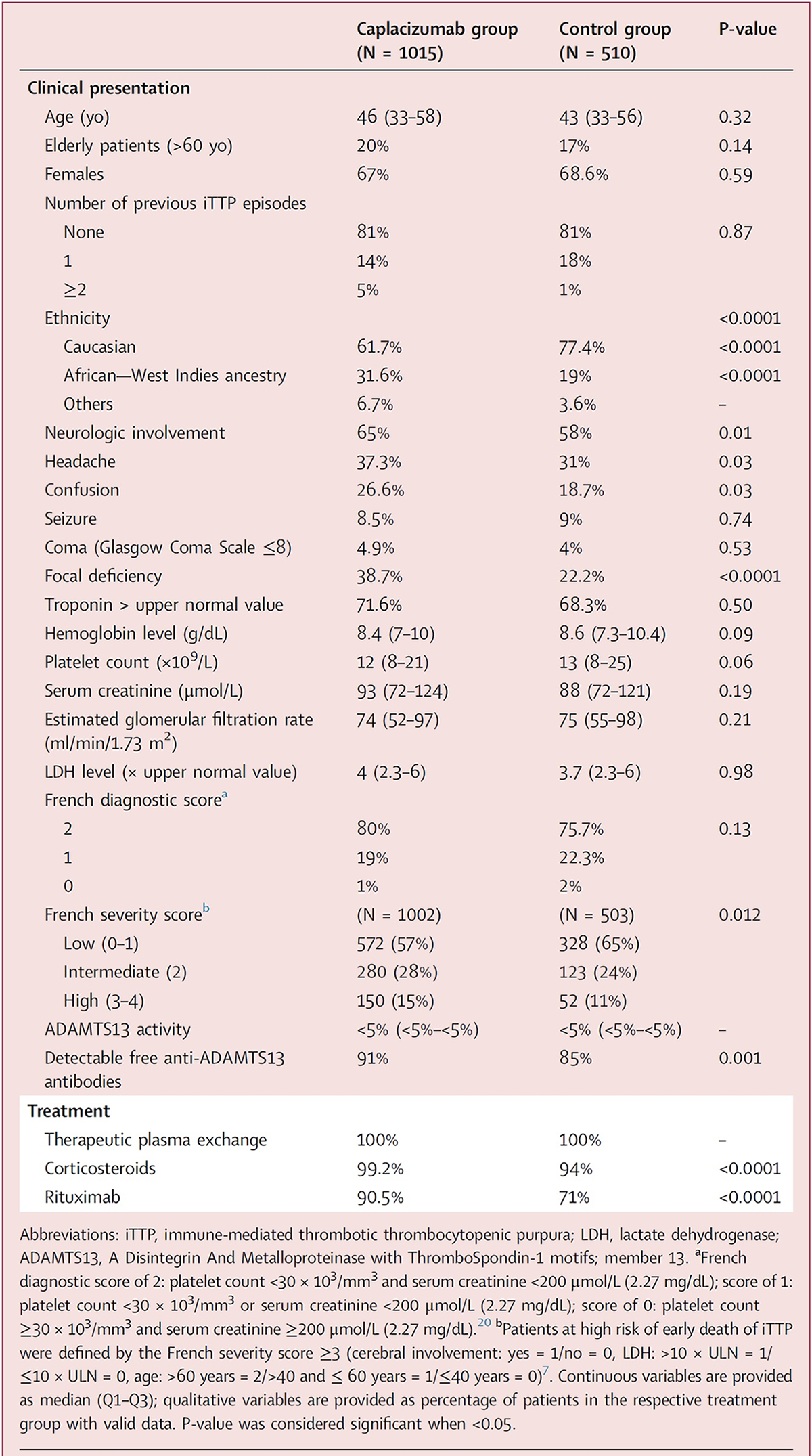
aTTP = acquired thrombotic thrombocytopenic purpura; CDA-AMC = Canada’s Drug Agency; iTTP = immune-mediated thrombotic thrombocytopenic purpura.
Notes: In the footnotes embedded in Figure 1, citation 20 corresponds to reference 17 in this report’s reference list and citation 7 corresponds to reference 20.
iTTP and aTTP refer to the same disease.
Source: Coppo et al. Caplacizumab use in immune-mediated thrombotic thrombocytopenic purpura: an international multicentre retrospective Cohort study (The Capla 1000+ project). EClinicalMedicine. 2025;82:103168. Available from: https://pmc.ncbi.nlm.nih.gov/articles/PMC11997362/. Used under Creative Commons licence (CC BY 4.0) (Attribution 4.0 International). This figure is cropped from the original. CDA-AMC does not own this work, and permission should be sought from the copyright owner.16
Critical Appraisal
Internal Validity
The CDA-AMC Guidance for Reporting Real-World Evidence29 outlines the foundations for the transparent reporting of real-world evidence studies; adherence with this guidance facilitates the appraisal by CDA-AMC.30 The study by Coppo et al. (2025)16 did not report the following: a predefined protocol, the quality of the data specifications (e.g., cleaning), the reasons for excluding participants in each analysis, a description of the exposure definition requirements (e.g., relevant start and stop windows), a description of all relevant statistical methods, and between-group absolute effect estimates with CIs. The Risk Of Bias In Non-Randomized Studies – of Interventions (ROBINS-I) tool31 and the APPRAISE tool32 were used to guide the critical appraisal.
The study has serious methodological concerns that threaten the internal validity of the findings. There is a risk of bias in the selection of patients into the study due to the inclusion of patients without prior aTTP episodes who had received no previous treatment and the inclusion of patients with a history of aTTP episodes who could have been previously treated with PE, corticosteroids, and rituximab. The inclusion of patients with a history of aTTP and treatment introduces survivorship bias because patients must have survived prior therapy and some patient characteristics measured before the start of the follow-up period may have already been impacted by previous treatment, introducing potential confounding. Also, patients must survive the initial acute phase of aTTP to receive rituximab, and a higher proportion of patients had received rituximab in the caplacizumab group than in the control group, though this may also be influenced by greater use of rituximab over time. The clinical experts consulted for this review noted that rituximab is typically provided to patients with more severe, refractory, or exacerbating disease. This survivorship bias may have inflated survival estimates in the treatment group, biasing results in favour of the caplacizumab group.
Further, eligibility for the study was based on treatment exposure occurring after the start of the follow-up period. For the treatment group, the start of the follow-up period occurred upon receiving the first PE. In the control group, the start of the follow-up period was also defined by when the first PE was received; however, it was not clear how this was defined for patients with a history of aTTP. In the caplacizumab group, the initiation of treatment with caplacizumab varied over the follow-up period and occurred after the first PE in most patients; about one-third of patients received caplacizumab on the same day as the first PE. The variability in treatment exposure was further compounded by including patients who received caplacizumab for the management of an exacerbation or for refractory aTTP; in these cases, inclusion in the treatment group depended on events occurring after baseline. This misalignment between the start of the treatment and the follow-up period between the treatment and control groups may have inflated survival estimates in the caplacizumab group if patients were considered to have been treated before they received caplacizumab; in addition, patients had to survive long enough to receive caplacizumab. The timing of treatment initiation is an important study design consideration, particularly because the clinical experts consulted for this review noted that the risk of mortality is highest within the first few days of an aTTP episode. The interval between the onset of an aTTP episode and the initiation of caplacizumab and SOC therapies (i.e., PE, corticosteroids, rituximab) was not adequately accounted for in the study design. This time-related bias may have overestimated survival estimates in the treatment group, biasing results in favour of caplacizumab. For the outcomes of time from the first PE to clinical response and number of PE sessions to achieve clinical response, the time-related bias may have also inflated estimates in the treatment group if all days before the patient received caplacizumab were counted as part of the time to clinical response or if all PE sessions that occurred before caplacizumab initiation were included, biasing results against caplacizumab.
There is also a risk of bias in the selection of participants into the historical control group because selection was based on limited specified criteria (daily PE, corticosteroids, rituximab use). Based on the study description, it appears that the caplacizumab group was formed first and that the historical control group was selected subsequently from some of the same sites as the caplacizumab group. This may have led to differential inclusion of participants if the reasons why some patients had missing data were not random (e.g., missing data due to more severe disease), and investigator knowledge of treatment may have affected patient selection into the study, which may have introduced bias in favour of caplacizumab. Furthermore, given the dates for inclusion in the caplacizumab group cohort (2018 to 2023) and the control group cohort (2015 to 2018), there is the potential for overlap, where patients in the control group may also have been recruited to the caplacizumab group. It is unclear if this overlap occurred in the trial, but it would have introduced a lack of independence among outcome measures, although given the lack of reporting, the magnitude and direction of the potential bias would be unknown. The use of a historical control group may also have introduced bias in favour of caplacizumab because the observed differences between the caplacizumab and control groups may be driven by differences in care, earlier diagnosis of the disease in the more recent cohort, and greater rituximab use over time.
There is serious risk of bias due to confounding in the study. Patients in the caplacizumab group appeared to have greater disease severity (e.g., more confusion, focal deficits, higher French severity score, and greater rituximab use) than those in the control group at baseline, suggesting that caplacizumab may have been used in patients with more severe disease. There were notable differences in patient ethnicity between the caplacizumab and control groups, possibly due to differences in participating countries between groups. Nevertheless, the study authors did not apply robust methods to control for potential confounding variables (e.g., rituximab use, disease severity, treatment history, frailty, ethnicity, study centre). Although the authors reported that 3‑month survival was similar for patients who did and did not receive rituximab among patients treated with caplacizumab, this comparison has low credibility and is limited by the small group of patients that did not receive rituximab (n = 95) and the lack of a comparison group. It is likely that residual confounding remains, but the direction and magnitude are difficult to predict because no evaluation of the presence or extent of residual confounding was reported. The results might be driven by differences in prognostic factors and/or confounders across studies, rather than true differences in treatment effects.
The statistical analysis approach did not adequately account for caplacizumab initiation as a time-varying exposure or for rituximab initiation as a time-dependent confounder. The logistic regression analysis assessing the association between caplacizumab and 3‑month survival, which considered rituximab use and other potential confounding variables, was limited because it used data-driven backward selection to only include covariates that were significant in univariate analyses. Data-driven covariate selection can exclude relevant confounders33,34 and may have been further limited because some covariates (e.g., rituximab use) were measured postbaseline and may have been affected by prior treatment or postbaseline events. Finally, the lack of multiplicity adjustment and the low number of deaths despite the large cohort of patients contribute to the imprecision. There was no prespecified publicly available protocol or statistical analysis plan. Consequently, there is an increased risk that the presented results are selected from multiple analyses of the data based on a favourable direction, magnitude, or statistical significance of point estimates.
External Validity
According to the clinical experts consulted for this review, the patient population included in the study was generally representative of adult patients with aTTP treated in clinical practice in Canada. “Other” ethnic groups [wording from original source] (e.g., Asian, Hispanic, Latino) were underrepresented in the trial (making up 6.7% of the patients in the caplacizumab group and 3.6% of the control group). This may not be representative of the ethnic diversity of patients in Canada with aTTP; as a result, it is uncertain if the study findings can be generalized to these groups. The clinical experts did not anticipate that treatment effects would vary by ethnicity. Only the caplacizumab group included patients in Canada; however, the clinical experts did not expect this to impact the generalizability of the findings. The clinical experts also noted that the sites included from Canada were overall reflective of clinical practice in Canada. They noted that the mortality rate was lower than would be expected in routine clinical practice, which could partly reflect the recruitment of patients from teams familiar with aTTP into the study.
Approximately 90% of patients in the caplacizumab group were treated with rituximab, which was overall aligned with current practice in Canada according to the clinical experts consulted for this review. Patients in the study received rituximab both upfront and as rescue therapy. In the control group, about 77% of patients received rituximab for refractoriness or exacerbation; however, this proportion was not reported for the caplacizumab group. The clinical experts noted that in Canada rituximab is provided as rescue therapy for patients experiencing refractoriness or exacerbation and that the proportion receiving the drug as rescue therapy is likely to be larger in clinical practice in Canada than it was in the study. The clinical experts noted that the use of rituximab was more common in 2018 to 2023 than in 2015 to 2018, which may also explain differences in the use of rituximab between the caplacizumab group and the historical control group. Further, other relevant comparators used in clinical practice in Canada, including immunosuppressive therapies such as cyclosporin, cyclophosphamide, vincristine, and bortezomib, were not considered in the study.
According to the clinical experts, the study duration of 3 months was appropriate to assess survival during the acute phase of an aTTP episode. However, 3 months was not considered sufficient to evaluate the impact of caplacizumab on aTTP relapses, exacerbations, safety, or survival associated with subsequent aTTP episodes because the clinical experts noted that aTTP relapse is common. Important clinical outcomes, including organ damage and transplant, longer-term aTTP-related events (e.g., mortality, relapse, and major thromboembolic events), health care use, and HRQoL, were not assessed in the study. In the study, harms data were only reported for the caplacizumab group, and the longer-term safety of caplacizumab remains a gap in the evidence.
Results
Although organ damage, long-term disease recurrence, health care use, and HRQoL were considered important to this review, they were not assessed in the included study.
Efficacy
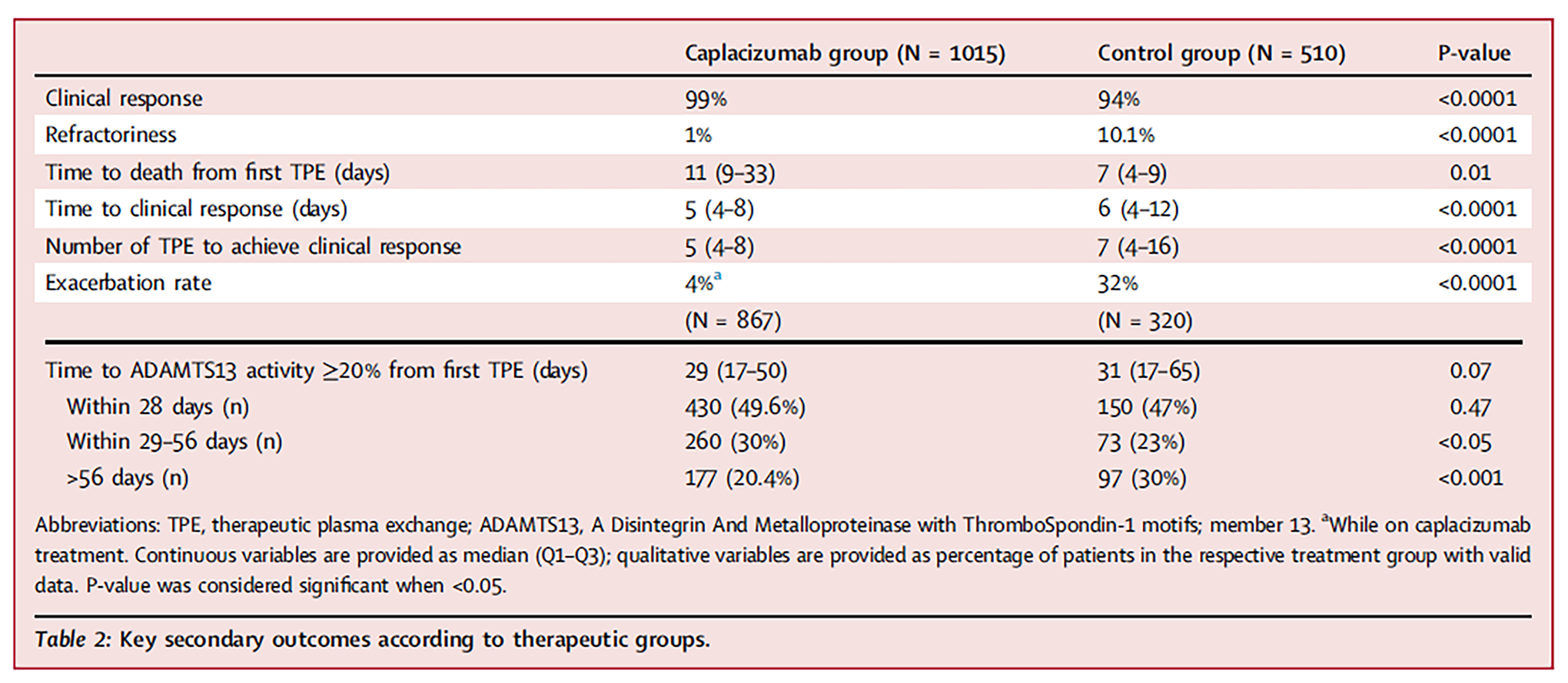
Key secondary outcomes are summarized in Figure 2.
Figure 2: Key Secondary Outcomes From the Capla 1000+ Project
CDA-AMC = Canada’s Drug Agency.
Source: Coppo et al. Caplacizumab use in immune-mediated thrombotic thrombocytopenic purpura: an international multicentre retrospective Cohort study (The Capla 1000+ project). EClinicalMedicine. 2025;82:103168. Available from: https://pmc.ncbi.nlm.nih.gov/articles/PMC11997362/. Used under Creative Commons licence (CC BY 4.0) (Attribution 4.0 International). This figure is cropped from the original. CDA-AMC does not own this work, and permission should be sought from the copyright owner.16
Key results include the following:
Three-month survival after the first PE was 98.5% in the caplacizumab group and 94.0% in the control group (P < 0.0001), corresponding to an odds ratio of 3.00 (95% CI, 1.37 to 6.98; P < 0.01).
The rate of refractory disease was 1% in the caplacizumab group and 10.1% in the control group (P < 0.0001).
The rate of disease exacerbation was 4% in the caplacizumab group and 32% in the control group (P < 0.0001).
The median time to clinical response from the first PE (defined as a sustained platelet count ≥ 150 × 109/L) was 5 days (IQR, 4 days to 8 days) in the caplacizumab group and 6 days (IQR, 4 days to 12 days) in the control group (P < 0.0001).
The median number of PE sessions to achieve clinical response was 5 sessions (IQR, 4 sessions to 8 sessions) in the caplacizumab group and 7 sessions (IQR, 4 sessions to 16 sessions) in the control group (P < 0.0001).
The median time from the first PE session to death was 11 days (IQR, 9 days to 33 days) in the caplacizumab group and 7 days (IQR, 4 days to 9 days) in the control group (P = 0.01).
The median time from the first PE session to ADAMTS13 response (i.e., sustained ADAMTS13 activity recovery ≥ 20% on weekly assessments after PE) was 29 days (IQR, 17 days to 50 days) in the caplacizumab group and 31 days (IQR, 17 days to 65 days) in the control group (P = 0.07).
Harms
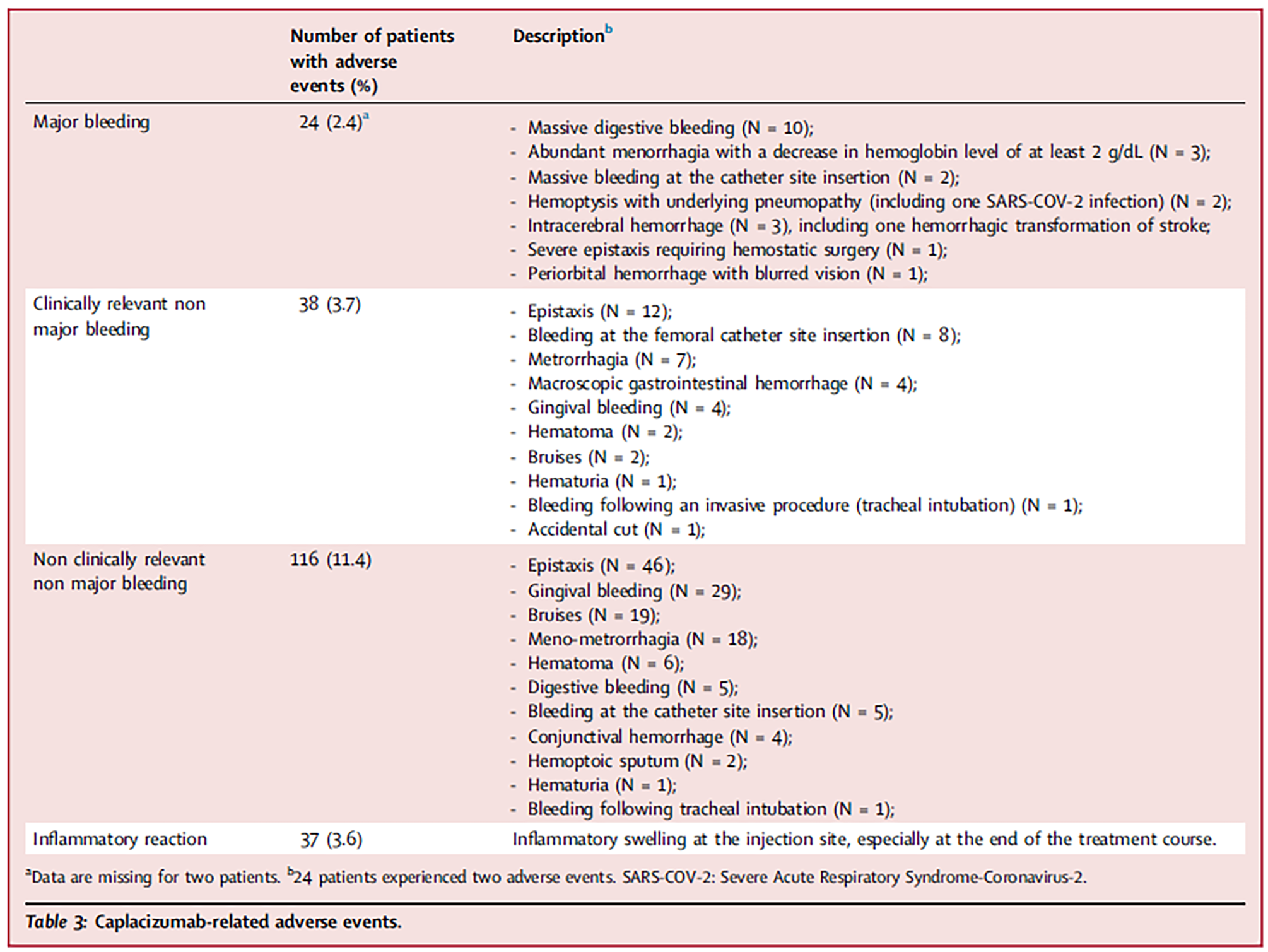
Caplacizumab-related harms are summarized in Figure 3.
Figure 3: Caplacizumab-Related Harms From the Capla 1000+ Project
CDA-AMC = Canada’s Drug Agency.
Source: Coppo et al. Caplacizumab use in immune-mediated thrombotic thrombocytopenic purpura: an international multicentre retrospective Cohort study (The Capla 1000+ project). EClinicalMedicine. 2025;82:103168. Available from: https://pmc.ncbi.nlm.nih.gov/articles/PMC11997362/. Used under Creative Commons licence (CC BY 4.0) (Attribution 4.0 International). This figure is cropped from the original. CDA-AMC does not own this work, and permission should be sought from the copyright owner.16
Key results include the following:
In the caplacizumab group, 21% of patients (215 of 1,015) reported 239 caplacizumab-related AEs, including major bleeding (2.4%), clinically relevant nonmajor bleeding (3.7%), non–clinically relevant nonmajor bleeding (11.4%), and inflammatory reaction (3.6%).
In the caplacizumab group, there were 15 deaths. Eight were considered to be directly related to uncontrolled aTTP, 4 were associated with aTTP-related comorbidities, and 3 were unrelated to aTTP.
In the control group, there were 30 deaths. Multiorgan failure was reported for 18 patients. Neurologic worsening (n = 4), cardiac involvement (n = 2), hemorrhagic shock (n = 1), and refractory aTTP and salvage splenectomy (n = 1) were also reported. Reasons were not available for 4 patients.
Indirect Evidence
No indirect evidence was submitted by the sponsor.
Studies Addressing Gaps in the Systematic Review Evidence
In discussion with the sponsor, the systematic review portion of this review was waived; thus, no studies addressing gaps in the systematic review evidence were submitted by the sponsor.
Discussion
Caplacizumab was initially reviewed for the treatment of adults with aTTP in combination with PE and immunosuppressive therapy, and CDEC issued a recommendation not to reimburse the drug on September 1, 2020.1 The drug was resubmitted by the sponsor for review on the basis of the availability of new evidence; CDEC again issued a recommendation not to reimburse caplacizumab on April 5, 2023.4 Based on the evidence from the initial review and the first resubmission, CDEC concluded that treatment with caplacizumab added to PE and immunosuppressive therapy resulted in a statistically significant reduction in the time to normalization of platelet counts; however, CDEC was unable to conclude that treatment with caplacizumab resulted in clinically meaningful improvement in important outcomes including long-term survival, reduced organ damage, reduced long-term disease recurrence, reduced health care resource use, and improved HRQoL. Additionally, CDEC noted concerns regarding the lack of an identifiable subpopulation most likely to benefit from caplacizumab and uncertainty around the generalizability of the study results to clinical practice in Canada.
The sponsor filed a second resubmission based on new clinical evidence to address the issues identified by CDEC in the previous recommendations. This report summarizes the efficacy and safety data for caplacizumab in the treatment of aTTP in adult patients from 1 retrospective observational study (the Capla 1000+ project [N = 1,525])16 that compared caplacizumab with PE and immunosuppressive therapy versus PE and immunosuppressive therapy alone. Records for patients who received caplacizumab with PE and immunosuppressive therapy between 2018 and 2023 (n = 1,015) were compared with records from a historical control group of patients who received only PE and immunosuppressive therapy (with or without rituximab) between 2015 and 2018 (n = 510).
Efficacy
Input from the patient group noted that current treatment options for aTTP — PE and immunosuppressive therapy — are invasive, time consuming, untargeted, and slow to work. The patients and clinicians who provided input identified a need for treatment that works immediately, reduces total treatment time, and rapidly normalizes platelet counts. The main goals of treatment include reducing the risk of death and long-term disease complications, preventing disease relapse, and addressing the underlying immune-mediated cause of the disease.
Caplacizumab is administered initially as an IV infusion and subsequently as an SC injection. The clinical experts consulted by CDA‑AMC for this review noted that the SC doses may be administered at home by the patient. Reduction in the duration and invasiveness of treatments (i.e., PE) is important to patients, particularly as they have described PE as being invasive and requiring the placement of a central venous catheter and hours each day spent in an apheresis clinic. Additionally, previous reviews of caplacizumab identified a reduction in the number of PE treatments to be an important consideration in treatment selection for patients. In the Capla 1000+ project, the median number of PE sessions to achieve clinical response (i.e., a sustained platelet count of ≥ 150 × 109/L) was lower in the caplacizumab group than in the control group. However, the evidence supporting this was very uncertain. The clinical experts added that the difference in the number of PE sessions between groups may represent little benefit and that it is unknown if the results are clinically meaningful. Moreover, there were serious methodological limitations (selection bias, confounding, and time-related bias) with the study that reduce the internal validity of the results.
Caplacizumab targets and prevents the interaction between vWF molecules and platelets, preventing new microthrombi formation during an acute episode. In the study, the median time to clinical response (i.e., a sustained platelet count of ≥ 150 × 109/L) was shorter in the caplacizumab group than in the control group, although the evidence was very uncertain due to the risk of selection bias, confounding, and time-related bias in the study. Further, the clinical experts noted that the difference between groups may not be clinically meaningful. The clinical experts consulted on previous reviews of caplacizumab, as well as the current review, noted that the drug increases platelet counts through its mechanism without necessarily addressing the underlying cause of aTTP (i.e., the presence of ADAMTS13 autoantibodies). The drug also does not disrupt existing microthrombi.9 Based on literature identified by the sponsor, it has been suggested that time to platelet recovery may categorize the disease as being reversible (when adequate management results in positive outcomes) or irreversible (when there is a high risk of poor outcomes despite management).35 It was found that patients with aTTP who experienced early platelet recovery (5 × 10⁹/L per 24 hours by day 3) were 30 times (95% CI, 7.7 times to 119.9 times) more likely to experience sustained remission.35 Early platelet recovery was also associated with an increased risk of exacerbations and relapses once PE was stopped; as a result, it was recommended that PE be continued with long-term follow-up to avoid exacerbations and detect potential relapses.35 Another study found that the inability to raise platelet counts to at least 150 × 109/L by day 7 of PE was associated with early mortality.36 The International Society on Thrombosis and Haemostasis guidelines recommend using caplacizumab with PE and immunosuppressive therapy for patients with confirmed low ADAMTS13 activity based on evidence demonstrating quicker platelet count normalization, fewer exacerbations, and reduced PE use with this regimen.9 These guidelines recognize that much of the recent data are based on retrospective and noncomparative evidence that may be at risk of selection bias.9
Three-month survival was the primary outcome of the Capla 1000+ project, but the evidence supporting it was very uncertain. The high risk of bias from the selection of participants into the study, time-related bias (e.g., potential for immortal time bias), differential use of background treatments (particularly rituximab), and imbalance in prognostic factors prevent conclusions from being made. Patients and CDEC are both interested in long-term benefits, but the study only captured survival during the first 3 months after PE initiation, and it is unknown if caplacizumab influences long-term survival. The clinical experts also noted that follow-up of at least 6 to 12 months is typical in clinical practice. They noted that caplacizumab is administered daily and prevents new microthrombi forming during an acute aTTP episode; therefore, caplacizumab may not be expected to have direct long-term effects on survival or on subsequent aTTP episodes. The clinical experts and prior recommendations from CDEC agreed that there is a need for evidence that caplacizumab prevents short-term and long-term end-organ damage and for trials to assess neurologic, cardiac, and renal function. According to the clinical experts, it is expected that by preventing microthrombi, organ injury should be reduced. However, these outcomes were not evaluated in the study.
Although caplacizumab targets platelet activation and adhesion, the clinical experts noted that the drug is not expected to impact possible relapses in the future or address the underlying immune-mediated cause of the disease, both of which are treated with immunosuppressive therapies like corticosteroids and/or rituximab. In the study, the median time to ADAMTS13 response, defined as sustained ADAMTS13 activity recovery of at least 10% to 20%, was shorter in the caplacizumab group than in the control group. The evidence for this outcome was very uncertain due to potential selection bias, confounding, and time-related bias. The differences between groups were largest following 29 days after PE, which the clinical experts noted could be attributed to rituximab use, given the delayed onset of its effect. It is unknown if this is a meaningful improvement for the caplacizumab group. The clinical experts noted that the risk of relapse is low when there is sustained platelet recovery and that ADAMTS13 activity has risen to at least 10% to 20%. They also stated that patients who receive rituximab are less likely to experience relapsing disease during the 12 months after an episode. In the study, use of corticosteroids and rituximab was different between the treatment groups and may have biased the results in favour of treatment with caplacizumab. The clinical experts consulted for the previous resubmission noted that the proportion of patients with aTTP who receive treatment with rituximab upfront is likely lower than in the Post-HERCULES trial (6 of 13; 46.2%). However, the clinical experts consulted for the current review indicated that nearly all patients receive rituximab and corticosteroids in clinical practice in Canada, which is similar to the rates observed in the caplacizumab group in the Capla 1000+ project, and reflects differences in practice over time.
Input from patients with aTTP in Canada described access to treatment as critical for their families and caregivers. Clinicians who submitted input for this review expressed concern that current limitations with accessing caplacizumab in Canada prevent patients from receiving the same SOC recommended and used in other countries. Both patient and clinician groups described caplacizumab as providing life-saving benefits that cannot be achieved with current SOC therapies alone.
CDEC identified a gap in the evidence for how caplacizumab reduces health care resource use or improves HRQoL, neither of which was evaluated in the Capla 1000+ project. The committee also noted that there is a lack of an identifiable subpopulation most likely to benefit from treatment with caplacizumab. The clinical experts indicated that all patients with aTTP could receive the drug and explained that because there is no rapid way to determine which patients would benefit more and due to the urgency of treatment, all patients are treated the same. Lastly, CDEC was uncertain if the results from previously reviewed studies were generalizable to clinical practice in Canada. The Capla 1000+ project included patients in Canada. The clinical experts were of the opinion, based on the baseline characteristics and high rates of corticosteroid and rituximab use, that the patients and treatments in the study were generally representative of patients and clinical practice in Canada. They noted that the study included more patients experiencing a first aTTP episode than a relapsing episode, which is also consistent with what clinical experts observe in clinical practice. Despite the limitations with the most recent sponsor-submitted evidence, and although gaps in the evidence remain, the clinical experts were of the opinion, based on caplacizumab’s mechanism of action, that caplacizumab could provide benefit for the treatment of the acute phase of an aTTP episode before slower PE and immunosuppressive therapies become effective.
Harms
The patient and clinician groups that submitted input for this review noted that PE and immunosuppressive therapy are associated with adverse effects and that there is a need for safe therapies that may also reduce the risk of treatment-associated harms. Patients indicated an interest in treatment that reduces the risks associated with PE and immunosuppressive therapy. A meaningful reduction in the duration of PE treatment could reduce a patient’s exposure to donor plasma and reduce the risk of PE-associated harms (e.g., discomfort, serious infection, and allergic reaction). However, it is unclear if the decrease in PE sessions in the study is clinically meaningful. It is unknown if caplacizumab can reduce immunosuppressive therapy use and, given that caplacizumab is not expected to have an impact on the underlying immune-mediated disease, it may be unlikely to reduce a patient’s exposure to immunosuppressive therapy and its associated harms.
The Capla 1000+ project only reported caplacizumab-related AEs for the caplacizumab group; deaths were reported for both treatment groups. Therefore, it is not possible to compare AEs, serious AEs, or treatment withdrawals due to AEs between groups. Regardless, the retrospective nature of the study and the high risk of bias limit conclusions from being made on the comparative harms between the treatment groups.
The clinical experts consulted for this review stated that because caplacizumab increases the risk of bleeding, active bleeding and intracranial bleeding must be ruled out before the drug is initiated. In the Capla 1000+ project, caplacizumab-related AEs included bleeding and inflammatory reactions, which the clinical experts noted were similar to what has been observed in practice and what is known to be associated with caplacizumab. They noted that the most common AEs in the Capla 1000+ project (non–clinically relevant nonmajor bleeding [116 of 1,015 patients] and injection site inflammation [37 of 1,015 patients]) were manageable. Additionally, they stated that serious bleeding events may require pausing caplacizumab treatment and restarting once the bleeding has resolved or permanently stopping the drug if the bleeding is considered a major bleeding event.
During the 3-month follow-up period of the Capla 1000+ project, there were proportionately fewer deaths in the caplacizumab group (15 of 1,015 patients) than in the control group (30 of 510 patients). However, the impact of caplacizumab compared to SOC on mortality is very uncertain due to the methodological limitations of the study (e.g., time-related bias and selection of participants), the differential use of background treatments, and the imbalance in prognostic factors and confounders.
Ethics and Equity Considerations
The clinical experts consulted for this review also highlighted the challenges with conducting studies for aTTP given how serious the condition is and its rarity in the general population. In these circumstances, it may be difficult or infeasible to design trials that are sufficiently powered to detect clinically meaningful effects for all clinically important and patient-important outcomes.
The clinicians who provided input also noted that prolonged PE and long hospital admissions put additional strain on the inpatient units and health care system, which are already overburdened. They stated that reducing PE duration and intensive care unit exposure results in improved patient outcomes and more efficient use of scarce health system resources.
The patient and clinician groups and the clinical experts identified several unmet needs associated with treatment for aTTP. There is considerable geographic distance between tertiary care centres equipped to provide PE services. Therefore, patients may have to be moved from the hospital where they present to specialized care centres, putting them at increased risk of severe morbidity and mortality; moving them can also separate them from their families and add to the stress they are experiencing. This is particularly true for patients living in rural and remote areas who have limited or no access to apheresis clinics nearby. aTTP also requires regular monitoring during an episode and after it resolves, which can increase the financial burden on patients and families as well as the time spent away from work or school for appointments.
The International Society on Thrombosis and Haemostasis guidelines recommend caplacizumab for patients with a confirmed ADAMTS13 deficiency and recommend against its use if ADAMTS13 activity testing is not available, which is consistent with clinical expert opinion.8,9 This could limit the use of caplacizumab if ADAMTS13 activity testing is not readily available or results are delayed. This also likely prevents caplacizumab from being used outside of a population with confirmed aTTP. The clinician group added that there is little risk of inappropriate use of caplacizumab and that patient selection and oversight of the use of the drug would be rigorous.
The literature and clinical experts indicated that aTTP may disproportionately affect individuals who are female and of reproductive age; have African ancestry; have high body mass index; or have other autoimmune, rheumatologic, or immunologic conditions.7,10 Approximately two-thirds of patients in the Capla 1000+ project were female and 19% to 32% of patients were identified as being of “African–West Indies ancestry” [wording from original source]. However, there were no subgroup analyses for these patients or patients in the other disproportionately affected groups (i.e., patients of African ancestry; of reproductive age; with high body mass index measurements; or with other autoimmune, rheumatic, or immunologic conditions).
Conclusion
Caplacizumab in combination with PE and immunosuppressive therapy for the treatment of adults with aTTP has been previously reviewed twice by CDA-AMC. One phase III, double-blind, randomized, placebo-controlled trial (the HERCULES trial) and 1 phase II, single-blind randomized, placebo-controlled trial (the TITAN trial) were reviewed in the original submission, and 1 phase III, prospective, long-term follow-up study (the Post-HERCULES trial), multiple post hoc analyses of the HERCULES and TITAN trials, and data from 2 real-world evidence cohorts were reviewed in the first resubmission. All this evidence was used as the basis of the previous CDEC recommendations not to reimburse caplacizumab. Key reasons for the committee’s recommendations were insufficient evidence of clinically meaningful outcomes (lack of evidence on long-term survival, reduced organ damage, reduced long-term disease recurrence, reduced health care resource use, and improved HRQoL), lack of an identifiable subpopulation most likely to benefit from the drug, and uncertainty around the generalizability of the results to clinical practice in Canada.
As part of the current resubmission, evidence from 1 retrospective observational study (the Capla 1000+ project) was reviewed, which showed that patients receiving caplacizumab with PE and immunosuppressive therapy may have a lower rate of refractory disease and disease exacerbation than patients treated with PE and immunosuppressive therapy alone. The evidence was very uncertain on whether treatment with add-on caplacizumab improved 3-month survival or reduced the time to sustained platelet count normalization, reduced the number of PE sessions, or reduced the time to ADAMTS13 activity recovery. Serious limitations with the study design and the high risk of bias prevent firm conclusions from being made. There were no new safety signals from the study, and the most common harms were considered to be manageable. Caplacizumab is known to be associated with an increased risk of bleeding; therefore, active bleeding must be ruled out before initiation of treatment with caplacizumab, or if bleeding is identified once treatment has started, caplacizumab may need to be paused or discontinued.
Overall, despite the limitations with the evidence included in this resubmission, the collective evidence included across the reviews generally suggest a consistent effect from treatment with caplacizumab in reducing the time to normalization of platelet counts and reducing the frequency of aTTP exacerbations. However, the new evidence reviewed for the current submission provides little to address the evidence gaps previously identified by CDEC. There remains a lack of information on how caplacizumab affects important outcomes of long-term survival, reduced organ damage, reduced long-term disease recurrence, reduced health care use, and improved HRQoL. According to the clinical experts consulted by CDA-AMC, caplacizumab is used to treat the acute phase of an aTTP episode and is not expected to have an impact on subsequent episodes. Further, all patients with aTTP could receive caplacizumab, and at this time there is no subpopulation that is most likely to benefit from this drug. The study did not identify a subgroup of patients who would benefit more from caplacizumab. The study also included patients treated with caplacizumab in Canada and whose baseline characteristics were generally representative of those in Canada, which may support improved generalizability. While acknowledging the uncertainty and limitations of the totality of the evidence, the clinical experts noted that, based on the mechanism of action, caplacizumab has the potential to address some of the unmet needs identified by both patients and clinicians when treating the acute phase of an aTTP episode.
Economic Review
Methods
The review team appraised the pharmacoeconomic evidence submitted by the sponsor on the cost-effectiveness and budget impact of caplacizumab in combination with SOC compared to SOC alone for the treatment of adult patients with aTTP.
Summary of the Submitted Economic Evaluation
The sponsor submitted a cost-utility analysis to estimate the cost-effectiveness of caplacizumab in combination with SOC from the perspective of a public health care payer in Canada over a lifetime horizon (53 years).37 The modelled population comprised adult patients who experienced an index acute aTTP episode, which is aligned with the Health Canada indication and was based on the participants in the HERCULES trial.37 The sponsor’s base-case analysis included costs related to drug acquisition, resource use, and AE management.37
In the sponsor’s base case, caplacizumab in combination with SOC was associated with incremental costs of $283,010 and 1.34 incremental quality-adjusted life-years (QALYs) gained relative to SOC.37 This resulted in an incremental cost-effectiveness ratio (ICER) of $210,903 per QALY gained.37 Of the incremental benefit compared to SOC (0.98 incremental QALYs), approximately 73% of the benefit was predicted to be accrued after the first 3 years, in the proportion of the model that was fully extrapolated (i.e., that occurred later than the mean follow-up duration of the Post-HERCULES study).37 Additional information about the sponsor’s submission is summarized in Appendix 10 in the Supplemental Material document.
CDA-AMC identified several key issues with the sponsor’s analysis (refer to Table 3; full details are provided in Appendix 11 in the Supplemental Material document).
Table 3: Key Issues With the Sponsor’s Economic Submission
Issue | What evidence is there to inform this issue? | How was this issue addressed by CDA-AMC? | Did CDA-AMC explore uncertainty in a scenario analysis? |
|---|---|---|---|
Long-term probability of relapse is highly uncertain. | The relapse rates derived from the Post-HERCULES study38 are associated with uncertainty because protections provided by randomization against bias and confounding did not apply to the extension study. Additionally, while clinical experts expected a short-term difference in relapse risk between caplacizumab in combination with SOC compared to SOC alone, they did not anticipate a change in long-term relapse risk. | CDA-AMC assumed different probabilities of relapse for 3 years, after which all patients were applied a 0.5% probability of relapse per 3-month cycle. | To explore uncertainty around this issue, CDA-AMC conducted a scenario analysis in which patients would experience the same relapse risk after 1 year. |
Inflexible model structure leads to uncertainty in long-term model estimates. | The sponsor’s model implicitly assumes that patients can relapse only once,37 which is not consistent with the patient input received for this review. This assumption implicated the estimate of modelled long-term sequelae because the sponsor used prevalence data of sequelae after the initial aTTP event rather than the incidence of sequelae after an aTTP event, resulting in an overestimation of long-term sequelae.37 Additionally, patients were assumed to experience either cognitive or neuropsychological impairment, without the possibility of experiencing both.37 | CDA-AMC was unable to address these issues due to the model structure. | No scenario analysis was conducted. |
Neuropsychological impairment is unlikely to be lifelong. | The sponsor assumed that neuropsychological impairments from aTTP events would be life long;37 however, clinical expert feedback indicated that neuropsychological impairment would be expected to resolve over time and with treatment. | CDA-AMC adjusted the duration of neuropsychological impairment to 1 year after an aTTP event. | To explore the uncertainty surrounding this issue, CDA-AMC conducted a scenario analysis in which the duration of neuropsychological impairment was 3 years. |
Relative risk of long-term sequelae is uncertain. | The sponsor assumed that the relative risk of experiencing long-term sequelae for a patient who received caplacizumab, compared to SOC, was 0.66, based on clinical expert input and the ratio of time spent in the hospital or ICU among treatment groups in the HERCULES trial.37 Clinical expert feedback received for this review noted that the relative risk was potentially reasonable, but the experts noted that the absence of data to inform the estimate made the estimate highly uncertain. | CDA-AMC was unable to address this issue due to a lack of alternative estimates. | To explore the uncertainty surrounding this issue, CDA‑AMC conducted scenario analyses in which the alternative estimates (relative risk = 0.80 or 0.50) were used for the relative risk of long-term sequelae. |
aTTP = acquired thrombotic thrombocytopenic purpura; CDA-AMC = Canada’s Drug Agency; ICU = intensive care unit; SOC = standard of care.
Note: Full details of the issues identified by CDA-AMC are provided in Appendix 11 in the Supplemental Material document.
CDA-AMC Assessment of Cost-Effectiveness
The CDA-AMC base case was derived by making changes to model parameter values and assumptions (refer to Appendix 11, Table 12, in the Supplemental Material document), in consultation with the clinical experts. Detailed information about the CDA-AMC base case is provided in Appendix 11.
Impact on Health Care Costs
Caplacizumab in combination with SOC is predicted to be associated with additional health care costs compared to SOC alone (incremental costs = $278,078). This increase in health care spending primarily results from drug acquisition costs associated with caplacizumab (refer to Figure 4).
Figure 4: Impact of Caplacizumab Plus SOC vs. SOC Alone on Health Care Costs
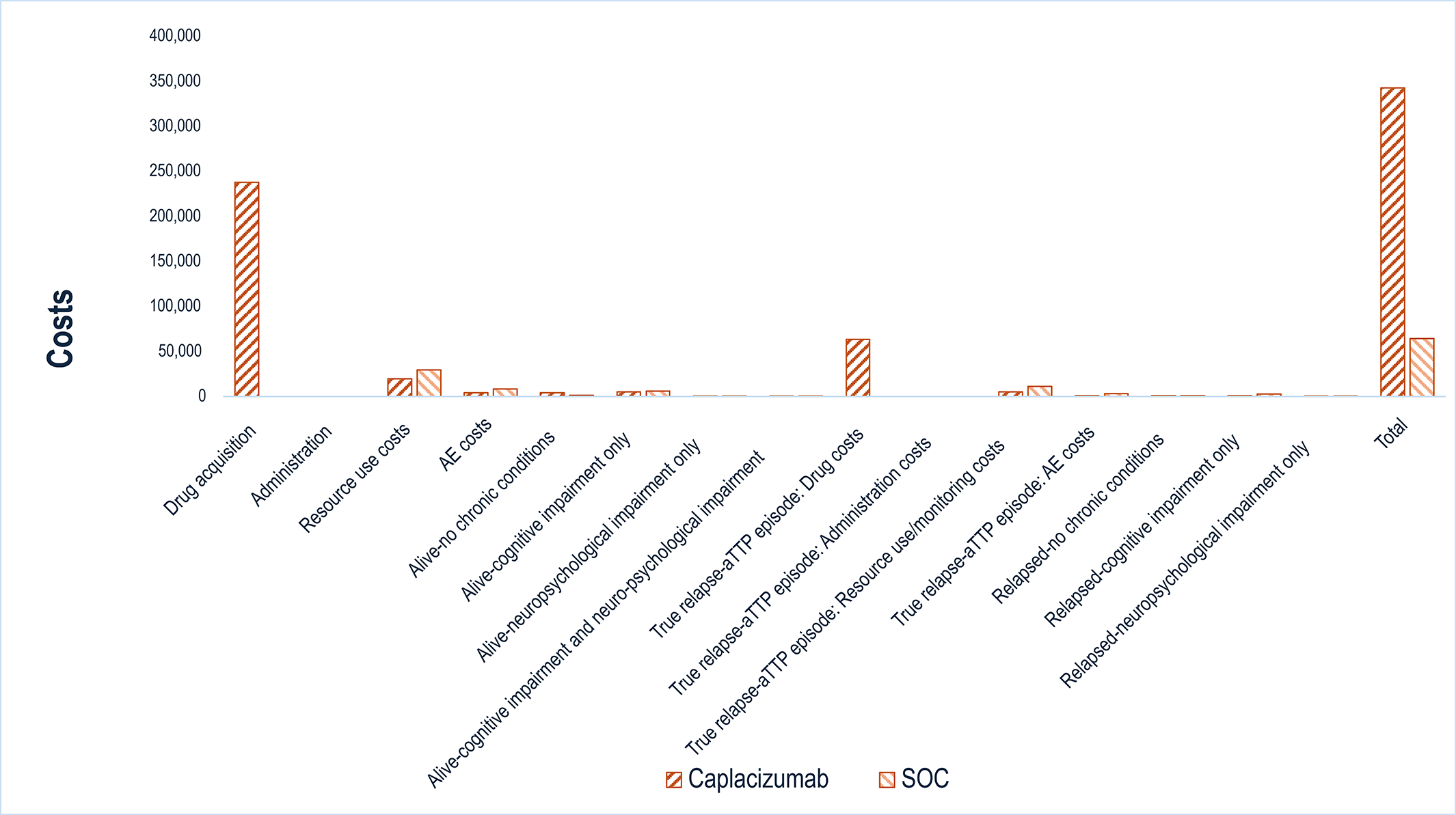
AE = adverse event; aTTP = acquired thrombotic thrombocytopenic purpura; SOC = standard of care; vs. = versus.
Impact on Health
Relative to SOC alone, caplacizumab plus SOC is predicted to increase the amount of time a patient remains in the alive with no chronic conditions health state by approximately 4.4 years and predicted to extend life by 0.65 years. Considering the impact of treatment on both quality and length of life, caplacizumab plus SOC is predicted to result in 1.03 additional QALYs per patient compared to SOC alone (refer to Figure 5). Approximately 65% of the predicted incremental benefit was accrued on the basis of extrapolation.
Figure 5: Impact of Caplacizumab Plus SOC vs. SOC Alone on Patient Health
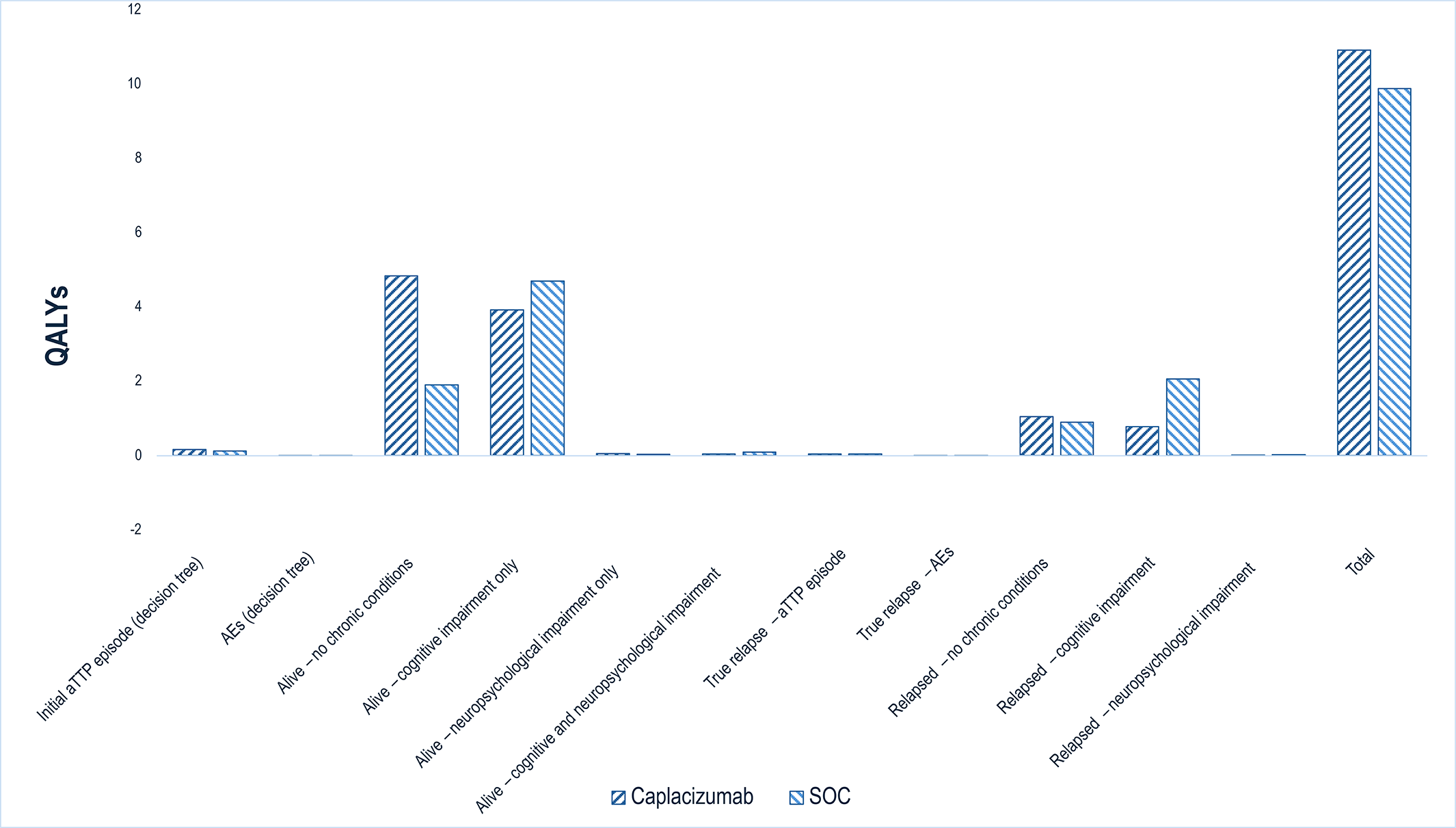
AE = adverse event; aTTP = acquired thrombotic thrombocytopenic purpura; QALY = quality-adjusted life-year; SOC = standard of care; vs. = versus.
Overall Results
The results of the CDA-AMC base case suggest an ICER of $269,158 per QALY gained for caplacizumab in combination with SOC compared to SOC alone (refer to Table 4). Additional details on the CDA-AMC base case are available in Appendix 11 in the Supplemental Material document.
Table 4: Summary of CDA-AMC Economic Evaluation Results
Drug | Total costs ($) | Total QALYs | ICER vs. SOC alone ($/QALY) |
|---|---|---|---|
SOC alone | 64,545 | 9.88 | Reference |
Caplacizumab + SOC | 342,623 | 10.91 | 269,158 |
CDA-AMC = Canada’s Drug Agency; ICER = incremental cost-effectiveness ratio; QALY = quality-adjusted life-year; SOC = standard of care; vs. = versus.
Note: Publicly available list prices were used for all comparators.
Uncertainty and Sensitivity
Uncertainty was explored in scenario analyses, as outlined in Table 3. Due to the uncertainty in the long-term evidence, alternative estimates were explored for the relative risk of long-term sequelae, the duration of relapse risk, and the duration of neuropsychological impairment. Explorations regarding the relative risk of long-term sequelae had the greatest impact on cost-effectiveness results. When the relative risk was lowered to 0.50 and increased to 0.80, the resulting ICERs for caplacizumab plus SOC versus SOC alone were $207,826 and $340,311 per QALY gained, respectively. Assuming a shorter duration of relapse risk increased the ICER to $280,887 per QALY gained. Assuming the duration of neuropsychological impairment was 3 years reduced the ICER to $262,392 per QALY gained.
Summary of the Budget Impact
The sponsor submitted a budget impact analysis to estimate the 3-year (2022 to 2025) budget impact of reimbursing caplacizumab in combination with SOC for use in the Health Canada–indicated population. The sponsor assumed that the payer would be CDA‑AMC–participating public drug plans and derived the size of the eligible population using an epidemiological approach. The unit cost of caplacizumab was aligned with the price included in the sponsor’s economic evaluation. Additional information pertaining to the sponsor’s submission is provided in Appendix 12 in the Supplemental Material document.
CDA-AMC identified a number of issues with the sponsor’s estimated budget impact and made changes to model parameters and assumptions in consultation with the clinical experts to derive the CDA-AMC base case (refer to Appendix 12 in the Supplemental Material document). CDA-AMC estimated that by year 3 of reimbursement, 79 patients would be eligible for caplacizumab; of these, 55 patients would be expected to receive caplacizumab. The estimated incremental budget impact of reimbursing caplacizumab is predicted to be approximately $24.9 million over the first 3 years, with an expected expenditure of $24.9 million on caplacizumab. The results are sensitive to the number of patients eligible for caplacizumab.
Conclusion
Based on the CDA-AMC base case, caplacizumab would be considered cost-effective at the submitted price if the public health care system was willing to pay at least $269,158 for each additional QALY gained. If the public health care system is not willing to pay that amount, a price reduction should be considered (refer to Figure 6; full details of the impact of price reductions on cost-effectiveness are presented in Appendix 11, Table 15, in the Supplemental Material document). The estimated cost-effectiveness of caplacizumab plus SOC compared to SOC alone is uncertain due to the absence of data informing the long-term risk of sequelae, the extrapolation of relapse rates reported in the Post-HERCULES study, and the approach used in the sponsor’s model for valuing costs and outcomes associated with multiple true relapses.
The budget impact of reimbursing caplacizumab to the public drug plans in the first 3 years is estimated to be approximately $24.9 million. The 3-year expenditure on caplacizumab (i.e., not accounting for current expenditure on comparators) is estimated to be $24.9 million.
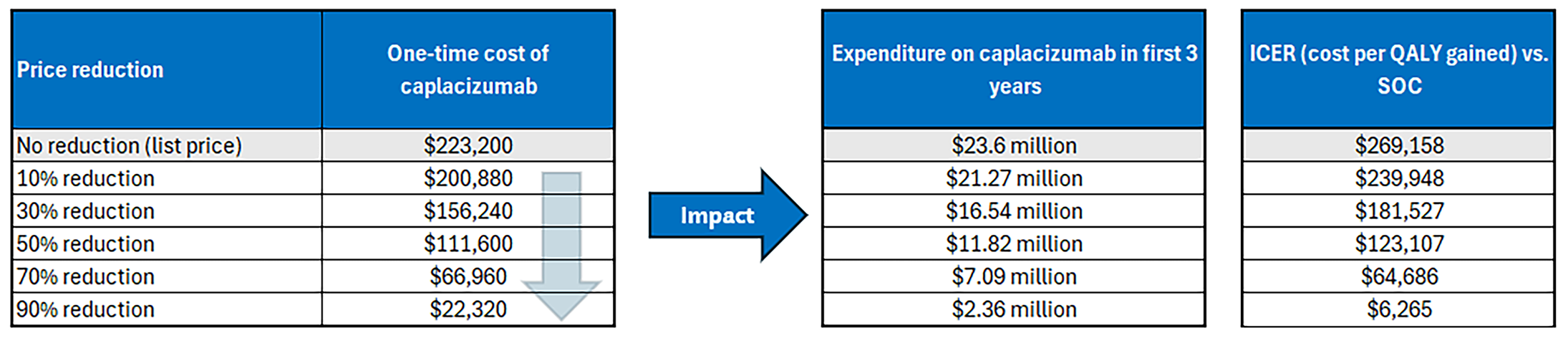
References
1.CADTH. Drug Reimbursement Expert Review Committee final recommendation: caplacizumab (Cablivi - Sanofi-Aventis Canada Inc.). September 1, 2020. Accessed October 30, 2025. https://www.cda-amc.ca/sites/default/files/cdr/complete/SR0633%20Cablivi%20-%20CDEC%20Final%20Recommendation%20September%201%2C%202020%20for%20posting.pdf
2.CADTH. Drug Reimbursement Review clinical guidance report: caplacizumab (Cablivi - Sanofi-Aventis Canada Inc.) for the treatment of adults with acquired thrombotic thrombocytopenic purpura in combination with plasma exchange and immunosuppressive therapy. October 2020. Accessed October 30, 2025. https://www.cda-amc.ca/sites/default/files/cdr/clinical/sr0633-cablivi-clinical-review-report.pdf
3.Canada's Drug Agency. Reimbursement Review: caplacizumab (Cablivi). Can J Health Technol. 2023;3(7):1-213. doi:https://doi.org/10.51731/cjht.2023.690
4.Canada's Drug Agency. Reimbursement recommendation: caplacizumab (Cablivi). Can J Health Technol. 2023;3(4):1-21. doi:https://doi.org/10.51731/cjht.2023.630
5.sanofi-aventis Canada Inc. CABLIVI (caplacizumab): powder for solution, 11 mg, intravenous or subcutaneous [product monograph]. 2020 Feb 28 Updated 2024 May 14. Accessed October 30, 2025. https://pdf.hres.ca/dpd_pm/00075565.PDF
6.sanofi-aventis Canada Inc. Sponsor's clinical summary report title [internal sponsor's report]. In: Drug Reimbursement Review sponsor submission: CABLIVI (caplacizumab), powder for solution, 11 mg, intravenous or subcutaneous. 2025 Sep 18. https://pdf.hres.ca/dpd_pm/00075565.PDF
7.Cuker A, Chaturvedi S. UpToDate, ed. Pathophysiology of TTP and other thrombotic microangiopathies (TMAs) In: Post TW. 2025. Accessed 2025 Oct 30. http://www.uptodate.com
8.Zheng XL, Vesely SK, Cataland SR, et al. ISTH guidelines for the diagnosis of thrombotic thrombocytopenic purpura. J Thromb Haemost. 2020;18(10):2486-2495. doi:10.1111/jth.15006 PubMed
9.Zheng XL, Al-Housni Z, Cataland SR, et al. 2025 focused update of the 2020 ISTH guidelines for management of thrombotic thrombocytopenic purpura. J Thromb Haemost. 2025;23(11):3711-3732. doi:10.1016/j.jtha.2025.06.002 PubMed
10.Cuker A. UpToDate, ed. Diagnosis of immune TTP In: Post TW. 2025. Accessed 2025 Oct 30. http://www.uptodate.com
11.Merlen C, Pépin E, Barry O, et al. Incidence of thrombotic microangiopathies in Quebec: insight from a laboratory centralizing ADAMTS-13 testing. Orphanet J Rare Dis. 2022;17(1):308. doi:10.1186/s13023-022-02409-3 PubMed
12.Tse B, Buchholz M, Patriquin C, Pavenski K. How rare is rare? The first multi-centre epidemiological study of thrombotic thrombocytopenic purpura in a large Canadian city. Transfus Apher Sci. 2025;64(1):104065. doi:10.1016/j.transci.2024.104065 PubMed
13.Cuker A. UpToDate, ed. Immune TTP: Initial treatment In: Post TW. 2025. Accessed 2025 Oct 30. http://www.uptodate.com
14.Scully M, Cataland SR, Peyvandi F, et al. Caplacizumab Treatment for Acquired Thrombotic Thrombocytopenic Purpura. N Engl J Med. 2019;380(4):335-346. doi:10.1056/NEJMoa1806311 PubMed
15.Cuker A. UpToDate, ed. Immune TTP: Management after recovery and treatment of refractory or relapsed disease In: Post TW. 2025. Accessed 2025 Oct 30. http://www.uptodate.com
16.Coppo P, Bubenheim M, Benhamou Y, et al. Caplacizumab use in immune-mediated thrombotic thrombocytopenic purpura: an international multicentre retrospective Cohort study (The Capla 1000+ project). EClinicalMedicine. 2025;82:103168. doi:10.1016/j.eclinm.2025.103168 PubMed
17.Coppo P, Schwarzinger M, Buffet M, et al. Predictive features of severe acquired ADAMTS13 deficiency in idiopathic thrombotic microangiopathies: the French TMA reference center experience. PLoS One. 2010;5(4):e10208. doi:10.1371/journal.pone.0010208 PubMed
18.Bendapudi PK, Hurwitz S, Fry A, et al. Derivation and external validation of the PLASMIC score for rapid assessment of adults with thrombotic microangiopathies: a cohort study. Lancet Haematol. 2017;4(4):e157-e164. doi:10.1016/s2352-3026(17)30026-1 PubMed
19.Kremer Hovinga JA, Coppo P, Lämmle B, Moake JL, Miyata T, Vanhoorelbeke K. Thrombotic thrombocytopenic purpura. Nat Rev Dis Primers. 2017;3:17020. doi:10.1038/nrdp.2017.20 PubMed
20.Benhamou Y, Assié C, Boelle PY, et al. Development and validation of a predictive model for death in acquired severe ADAMTS13 deficiency-associated idiopathic thrombotic thrombocytopenic purpura: the French TMA Reference Center experience. Haematologica. 2012;97(8):1181-6. doi:10.3324/haematol.2011.049676 PubMed
21.Hughes C, McEwan JR, Longair I, et al. Cardiac involvement in acute thrombotic thrombocytopenic purpura: association with troponin T and IgG antibodies to ADAMTS 13. J Thromb Haemost. 2009;7(4):529-36. doi:10.1111/j.1538-7836.2009.03285.x PubMed
22.Benhamou Y, Boelle PY, Baudin B, et al. Cardiac troponin-I on diagnosis predicts early death and refractoriness in acquired thrombotic thrombocytopenic purpura. Experience of the French Thrombotic Microangiopathies Reference Center. J Thromb Haemost. 2015;13(2):293-302. doi:10.1111/jth.12790 PubMed
23.Zheng XL, Vesely SK, Cataland SR, et al. ISTH guidelines for treatment of thrombotic thrombocytopenic purpura. J Thromb Haemost. 2020;18(10):2496-2502. doi:10.1111/jth.15010 PubMed
24.Scully M, McDonald V, Cavenagh J, et al. A phase 2 study of the safety and efficacy of rituximab with plasma exchange in acute acquired thrombotic thrombocytopenic purpura. Blood. 2011;118(7):1746-53. doi:10.1182/blood-2011-03-341131 PubMed
25.Froissart A, Buffet M, Veyradier A, et al. Efficacy and safety of first-line rituximab in severe, acquired thrombotic thrombocytopenic purpura with a suboptimal response to plasma exchange. Experience of the French Thrombotic Microangiopathies Reference Center. Crit Care Med. 2012;40(1):104-11. doi:10.1097/CCM.0b013e31822e9d66 PubMed
26.Scully M, Cataland S, Coppo P, et al. Consensus on the standardization of terminology in thrombotic thrombocytopenic purpura and related thrombotic microangiopathies. J Thromb Haemost. 2017;15(2):312-322. doi:10.1111/jth.13571 PubMed
27.Cuker A, Cataland SR, Coppo P, et al. Redefining outcomes in immune TTP: an international working group consensus report. Blood. 2021;137(14):1855-1861. doi:10.1182/blood.2020009150 PubMed
28.Schulman S, Kearon C. Definition of major bleeding in clinical investigations of antihemostatic medicinal products in non-surgical patients. J Thromb Haemost. 2005;3(4):692-4. doi:10.1111/j.1538-7836.2005.01204.x PubMed
29.CADTH. Guidance for Reporting Real-World Evidence. 2023. Accessed Nov 21, 2025. https://www.cda-amc.ca/sites/default/files/RWE/MG0020/MG0020-RWE-Guidance-Report-Secured.pdf
30.CDA-AMC. Methods Guide for Health Technology Assessment. 2025. Accessed Nov 21, 2025. https://www.cda-amc.ca/sites/default/files/MG%20Methods/MG0030-Quantitative-Methods-Manual-Line-Numbered.pdf
31.Collaboration TC. Risk Of Bias In Non-Randomized Studies - of Interventions (ROBINS-I). 2025. Accessed 2025 Dec 12. https://methods.cochrane.org/bias/risk-bias-non-randomized-studies-interventions
32.Bykov K, Jaksa A, Lund JL, et al. APPRAISE: A Tool for Appraising Potential for Bias in Real-World Evidence Studies on Medication Effectiveness or Safety. Value Health. 2025;28(12):1849-1856. doi:10.1016/j.jval.2025.07.024 PubMed
33.Steyerberg EW, Vergouwe Y. Towards better clinical prediction models: seven steps for development and an ABCD for validation. Eur Heart J. 2014;35(29):1925-31. doi:10.1093/eurheartj/ehu207 PubMed
34.Lewer D, Brothers T, O'Nions E, Pickavance J. Factors associated with: problems of using exploratory multivariable regression to identify causal risk factors. BMJ Med. 2025;4(1):e001375. doi:10.1136/bmjmed-2025-001375 PubMed
35.Liu C, Kallogjeri D, Dynis M, Grossman BJ. Platelet recovery rate during plasma exchange predicts early and late responses in patients with thrombotic thrombocytopenic purpura. Transfusion. 2013;53(5):1096-107. doi:10.1111/j.1537-2995.2012.03857.x PubMed
36.Staley EM, Cao W, Pham HP, et al. Clinical factors and biomarkers predict outcome in patients with immune-mediated thrombotic thrombocytopenic purpura. Haematologica. 2019;104(1):166-175. doi:10.3324/haematol.2018.198275 PubMed
37.sanofi-aventis Canada Inc. Pharmacoeconomic evaluation [internal sponsor's report]. In: Drug Reimbursement Review sponsor submission: CABLIVI (caplacizumab), powder for solution, 11 mg, intravenous or subcutaneous. September 18, 2025.
38.sanofi. Clinical Study Report: ALX0681-C302/LTS16371. Prospective Follow-up Study for Patients who Completed Study ALX0681-C301 (HERCULES) to Evaluate Long-term Safety and Efficacy of Caplacizumab (PostHERCULES) [internal sponsor's report]. June 15, 2021.
ISSN: 2563-6596
Canada’s Drug Agency (CDA-AMC) is a pan-Canadian health organization. Created and funded by Canada’s federal, provincial, and territorial governments, we’re responsible for driving better coordination, alignment, and public value within Canada’s drug and health technology landscape. We provide Canada’s health system leaders with independent evidence and advice so they can make informed drug, health technology, and health system decisions, and we collaborate with national and international partners to enhance our collective impact.
Disclaimer: CDA-AMC has taken care to ensure that the information in this document was accurate, complete, and up to date when it was published, but does not make any guarantee to that effect. Your use of this information is subject to this disclaimer and the Terms of Use at cda-amc.ca.
The information in this document is made available for informational and educational purposes only and should not be used as a substitute for professional medical advice, the application of clinical judgment in respect of the care of a particular patient, or other professional judgments in any decision-making process. You assume full responsibility for the use of the information and rely on it at your own risk.
CDA-AMC does not endorse any information, drugs, therapies, treatments, products, processes, or services. The views and opinions of third parties published in this document do not necessarily reflect those of CDA-AMC. The copyright and other intellectual property rights in this document are owned by the Canadian Agency for Drugs and Technologies in Health (operating as CDA-AMC) and its licensors.
Questions or requests for information about this report can be directed to Requests@CDA-AMC.ca.