Drugs, Health Technologies, Health Systems
Reimbursement Review
Glecaprevir-Pibrentasvir (Maviret)
Sponsor: AbbVie Corporation
Therapeutic area: Hepatitis C
Summary
What Is Acute Hepatitis C Virus Infection?
Hepatitis C virus (HCV) is transmitted through contact with infected blood, such as with shared needles or sexual contact. During the first 6 months of infection after exposure (acute HCV infection), people are often asymptomatic and some infections (15% to 25%) may clear on their own (spontaneous clearance). However, if the infection lasts longer than 6 months (chronic HCV infection) there is a risk of liver damage, including fibrosis, cirrhosis, hepatocellular carcinoma, and liver-related mortality.
It is very difficult to estimate the prevalence of acute HCV infection because it is often asymptomatic and screening is not widespread. It is also difficult to distinguish between acute and chronic HCV infection. In 2021, the estimated incidence of acute and chronic HCV infection ranged from 9.4 to 42.3 per 100,000 people across provinces and territories in Canada.
What Are the Treatment Goals and Current Treatment Options for Acute HCV Infection?
Key treatment goals are curing the infection, measured by sustained virologic response (SVR), and preventing transmission of HCV to others.
By curing the infection, the aim is to avoid progression to chronic hepatitis infection and associated liver damage.
Treating patients with an acute infection is important for preventing transmission because the virus is more infectious in this phase and people with acute infection may be at risk for transmitting HCV to others.
Patient group input emphasized the importance of treating HCV immediately rather than waiting until after 6 months when the condition is considered chronic, which is the current approach to treatment. Patients identified other benefits associated with immediate cure, including reduced stigma, sustained engagement in care, greater trust in health care and public health systems, and physical symptom relief. They noted the certainty that comes with cure offers patients relief from anxiety and concerns about transmitting the virus to others, and it provides a sense of stability, enabling them to plan for the future.
What Is Maviret and Why Did Canada’s Drug Agency Conduct This Review?
Maviret (glecaprevir-pibrentasvir) is a drug that is taken orally. Health Canada has approved Maviret for acute HCV infection.
Canada’s Drug Agency (CDA-AMC) reviewed Maviret to inform a recommendation to the participating public drug programs on whether it should be reimbursed for the treatment of acute HCV infection.
How Did CDA-AMC Evaluate Maviret?
CDA-AMC reviewed the clinical evidence on the beneficial and harmful effects, as well as the economic evidence, of Maviret versus other treatments used in Canada for acute HCV infection. When reviewing the clinical evidence, the most relevant comparator was waiting for the condition to be considered chronic (after around 6 months) and then treating chronic HCV infection.
CDA-AMC identified equity and ethical considerations relevant to Maviret and acute HCV infection.
The review was informed by materials submitted by the sponsor, which included clinical and economic evidence.
The review was also informed by 1 patient group submission and 1 clinician group submission, in response to our call for input, and by input from the participating public drug programs around issues that may impact their ability to implement a recommendation.
One gastroenterologist and 1 hepatologist from Ontario and British Columbia were consulted as part of the review process.
What Were the Findings?
Clinical Evidence
CDA-AMC reviewed the following clinical evidence:
1 single-arm phase IIIb study (the M20-350 study) in 286 patients with acute HCV infection treated with Maviret.
Based on the evidence without a comparison: The evidence is very uncertain about the efficacy or harms of Maviret versus any comparator for outcomes, such as SVR at 12 weeks after treatment (SVR12), virologic nonsuppression during treatment, posttreatment relapse, health-related quality of life, and adverse events. However, the clinical experts consulted for this review considered that there was strong evidence of virologic efficacy because the SVR12 rate was much higher than would be expected for spontaneous clearance without treatment. In the trial, 96% of patients had SVR12 and none had virologic nonsuppression during treatment. Among the patients for whom results were available, none experienced posttreatment relapse. The clinical experts also noted that the reported harms were consistent with the use of Maviret for chronic HCV infection.
No long-term extension studies, studies addressing gaps, or indirect treatment comparison data were included in this report.
The main limitations of the evidence included concerns about generalizability to people who inject drugs, particularly the expected levels of treatment adherence or nonadherence.
Key gaps in the evidence include:
a comparison of Maviret with any comparator
the use of Maviret in children aged younger than 12 years (or the use of the granule form of Maviret for children), in adolescents, or in people aged 65 years or older.
Economic Evidence
Maviret is available as a tablet (glecaprevir [100 mg]–pibrentasvir [40 mg]) and as a sachet (glecaprevir [50 mg]–pibrentasvir [20 mg]). At the submitted price of $238.10 per tablet, the per-course cost of Maviret is expected to be $40,000 per patient, based on the Health Canada–recommended dosage. At the submitted price of $119.05 per sachet, the per-course cost of Maviret is expected to be between $20,000 and $33,334 per patient, based on the Health Canada–recommended dosage.
The treatment efficacy of Maviret for acute HCV infection was derived from the single-arm M20-350 clinical trial. The evidence from the trial is very uncertain about the efficacy or harms of Maviret versus any comparator for outcomes such as SVR12, on-treatment virologic failure, posttreatment relapse, health-related quality of life, and adverse events. However, the clinical experts consulted for this review noted there was strong evidence of virologic efficacy because the SVR12 rate was much higher than would be expected for spontaneous clearance without treatment. In the trial, 96% of patients had SVR12 and none had on-treatment virologic failure. The experts additionally noted that people who are cured are unlikely to transmit HCV to others, though there is no direct evidence of reduced HCV transmission after treatment with Maviret.
The results of the CDA-AMC base case suggest the following:
Treating patients with acute HCV with Maviret is predicted to be associated with lower costs to the health care system than treating patients upon the development of chronic HCV infection (incremental costs = –$32,967) over a lifetime (56-year) horizon, primarily driven by reduced costs associated with disease management.
Treating patients with acute HCV with Maviret is predicted to be associated with a gain of 0.08 life-years compared to treating patients upon the development of chronic HCV and may result in a gain of 0.12 quality-adjusted life-years compared to treating patients upon the development of chronic HCV over a lifetime (56-year) horizon.
In the CDA-AMC base case, treating patients with acute HCV with Maviret was more effective and less costly than treating patients upon the development of chronic HCV infection with a mix of Maviret, sofosbuvir-velpatasvir, or sofosbuvir-ledipasvir. This finding is robust with respect to assumptions about HCV transmission, acute HCV treatment efficacy, and rates of spontaneous clearance of HCV infection. In a scenario analysis that excludes the impact of treating patients with acute HCV on the transmission of HCV, the incremental cost-effectiveness ratio for Maviret is $6,318 per quality-adjusted life-year gained.
CDA-AMC estimated that reimbursing Maviret for the treatment of acute HCV would result in approximately $6.4 million in cost savings over the first 3 years of reimbursement compared to the amount currently spent on comparators, with an estimated expenditure of $62.8 million on Maviret over this period. The actual budget impact of reimbursing Maviret will depend on the proportion of patients with otherwise untreated HCV infection who will access treatment in the acute setting, the impact of HCV transmission on drug costs, and trends in the increasing screening and diagnosis of HCV. In an analysis that did not include the impact of HCV transmission, the 3-year budget impact was estimated to be approximately $5.4 million in costs over the first 3 years.
Abbreviations
AE
adverse event
CDA-AMC
Canada’s Drug Agency
CI
confidence interval
GP
glecaprevir-pibrentasvir
HCV
hepatitis C virus
ITT
intention to treat
LDV
ledipasvir
QALY
quality-adjusted life-year
RNA
ribonucleic acid
SOF
sofosbuvir
SVR
sustained virologic response
SVR12
sustained virologic response at 12 weeks after the last dose
TEAE
treatment-emergent adverse event
VEL
velpatasvir
Background
Introduction
The objectives of this report are as follows:
Review and critically appraise the evidence submitted by the sponsor on the beneficial and harmful effects of glecaprevir-pibrentasvir (GP) (Maviret), taken orally. The focus will be placed on comparing GP to relevant comparators in clinical practice in Canada and identifying gaps in the current evidence; this focus is outlined in Table 1.
Review and critically appraise the economic information submitted by the sponsor, including a cost-effectiveness analysis and a budget impact analysis. The focus of the Economic Review is aligned with the scope of the Clinical Review, unless otherwise stated. For most reviews, a Canada’s Drug Agency (CDA-AMC) base case is developed, informed by clinical expert input, the available clinical evidence, and the best interpretation of the economic evidence based on the information provided by the sponsor.
Table 1: Information on the Application Submitted for Review and on the CDA-AMC Review
Item | Description |
|---|---|
Information on the application submitted for review | |
Drug | Glecaprevir-pibrentasvir (Maviret) tablet (100 mg glecaprevir / 40 mg pibrentasvir) or granules (50 mg glecaprevir / 20 mg pibrentasvir) per sachet taken orally |
Sponsor | AbbVie Corporation |
Health Canada indication | For the treatment of acute and chronic HCV infection in adults and pediatric patients 3 years of age and older and weighing ≥ 12 kg |
Health Canada approval status | NOC |
Health Canada review pathway | Standard |
NOC date | December 18, 2025 (for the addition of acute HCV infection) |
Mechanism of action | Glecaprevir is a NS3/4A protease inhibitor and pibrentasvir is a NS5A inhibitor that targets multiple steps in the HCV viral life cycle |
Recommended dosagea | For adults, adolescents 12 years and older, or pediatric patients weighing 45 kg or more: fixed daily dosage 3 tablets (total 300 mg glecaprevir and 120 mg pibrentasvir) taken orally once daily for 8 weeks for treatment-naive patients For pediatric patients aged from 3 to less than 12 years who weigh less than 45 kg: weight-based daily dosage using sachets with granules taken orally once daily for 8 weeks for treatment-naive patients:
No dose adjustment required for:
|
Submission type | Initial |
Sponsor’s reimbursement request | Extended reimbursement to include acute HCV infectionb |
Submitted price | $20,000.00 per carton of 84 tablets (100 mg glecaprevir / 40 mg pibrentasvir) $3,333.40 per carton of 28 sachets (50 mg glecaprevir / 20 mg pibrentasvir) |
Information on the CDA-AMC review | |
Review type | Standard |
Clinical review focusc | Population: Acute HCV infection in adults and pediatric patients 3 years of age and older and weighing greater than or equal to 12 kg (as defined in the Health Canada indication) Subgroups: None Intervention: Per recommended dosage Comparators: “Wait for chronicity to treat” or none Outcomes:
Harms:
|
AESI = adverse event of special interest; CDA-AMC = Canada’s Drug Agency; HBV = hepatitis B virus; HCV = hepatitis C virus; NOC = Notice of Compliance; SVR12 = sustained virologic response at 12 weeks after the last dose; TEAE = treatment-emergent adverse event; VAS = visual analogue scale.
aThe product monograph1 notes that screening for HBV is required, as is monitoring of patients living with HCV and HBV for HBV reactivation, because this reactivation has occurred in patients living with both viruses who have received direct-acting antivirals and has led to fulminant hepatitis, hepatic failure, and death. It also notes that glecaprevir-pibrentasvir is not recommended for patients with moderate hepatic impairment (Child-Pugh score B) and is contraindicated if there is severe hepatic impairment (Child-Pugh score C).
bCDA-AMC has previously issued a reimbursement recommendation for this drug for chronic HCV infection.2
cThe Economic Review aligns with the scope of the Clinical Review, unless otherwise stated.
Submission History for the Drug Under Review
CADTH previously reviewed GP through the Reimbursement Review process for chronic hepatitis C virus (HCV) infection and issued a recommendation of reimburse with clinical criteria conditions and/or conditions.2
Sources of Information
The contents of this Reimbursement Review report are informed by materials submitted by the sponsor, input received from interested parties (patient groups, clinician groups, and drug programs), and input from clinical experts consulted for this review.
Calls for patient group and clinician group input are issued for each Reimbursement Review. One combined patient group submission was received from Liver Canada, the Centre Associatif Polyvalent d’Aide Hépatite C, and the BC Hepatitis Network. One clinician group submission from a group of 7 independent clinicians involved in the treatment of patients with HCV was also received. The patient group submission was informed by informal conversations over several decades, as well as an online survey to which 13 adults from New Brunswick, Quebec, Ontario, and British Columbia responded. The clinician group solicited feedback from the group members about their clinical experience and relevant literature to complete their submission. The full submissions received are available on the project landing page in the consolidated input document. The drug programs provide input on each drug being reviewed through the Reimbursement Review process by identifying issues that may impact their ability to implement a recommendation.
Input from patient and clinician groups is considered throughout the review, including in the selection of outcomes to include in the Clinical Review and in the interpretation of the clinical and economic evidence. Relevant patient and clinician group input is summarized in the Disease Background, Current Management, and Unmet Needs and Existing Challenges sections.
Each review team includes at least 1 clinical expert with expertise regarding the diagnosis and management of the condition for which the drug is indicated. Clinical experts are a critical part of the review team and are involved in all phases of the review process. One gastroenterologist and 1 hepatologist from Ontario and British Columbia with expertise in the diagnosis and management of acute HCV infection participated as part of the review team.
Disease Background
HCV is transmitted through contact with infected blood. In Canada, acute HCV infection is most commonly detected in people who inject drugs, but it is also common in gay and bisexual men and in other men who have sex with men.3 Acute HCV infection occurs less than 6 months after initial exposure.4 It is often asymptomatic, but some people may develop jaundice, nausea, abdominal pain, or flu-like symptoms.4 Some cases (around 15% to 25%) resolve on their own (spontaneous clearance) within the first 6 months,5 but clearance rates can vary and are lower for people who inject drugs and men who have sex with men.6 Acute HCV infection progresses to chronic HCV if the infection is still present 6 months or later after the initial exposure.4 Chronic HCV infection occurs in around 75% to 85% of people with acute HCV infection.5,7,8
Chronic HCV infection can result in liver damage, such as fibrosis and cirrhosis, and can lead to hepatocellular carcinoma.9 Many patients also develop at least 1 condition outside the liver, which may present with dermatological symptoms. These conditions might include cryoglobulinemia (which can cause skin rash, fatigue, joint pain, or nerve damage); severe kidney disease (membranoproliferative glomerulonephritis); metabolic disorders like porphyria cutanea tarda, which can cause fragile blistering skin; or autoimmune conditions like lichen planus and vitiligo, which can affect the skin and hair.10-12
Clinical experts note that the true incidence of acute HCV infection is unknown. This is because it is often asymptomatic or because the symptoms may not lead people to be tested. Also, screening or frequent testing, particularly in people who inject drugs, is currently not routine. Further, it is difficult to distinguish between an acute and a chronic infection because the time of initial exposure may be unknown. Estimates of the incidence of acute and chronic HCV infection in 2021 vary from 9.4 to 42.3 per 100,000 people living in Canada.13 Among 7,535 people diagnosed with HCV in Canada in 2021, a total of 209 cases were reported to be acute and 2,026 cases were reported to be chronic, but 5,300 cases were not reported to be either acute or chronic.13 The sponsor’s estimated incidence of acute HCV infection in Canada in 2021, excluding Quebec, was 187 (range, 140 to 233).14 However, the clinical experts consulted for this review were cautious about this estimate, which they considered likely too low.
Acute HCV infection disproportionately affects people in several systemically marginalized or equity-deserving populations. This includes people who inject drugs; gay and bisexual men and other men who have sex with men; people who are incarcerated; and immigrant populations.3 It also affects other underserved people, such as people with mental health conditions, people who are unhoused or have unstable housing, and sex workers.15,16 In addition to experiencing disparities in exposure risk, people in these groups can experience barriers to timely diagnosis and treatment, inconsistent links to care, changing insurance coverage, geographic isolation, systemic inequities, and stigma and discrimination. People in these groups may also experience more barriers to treatment adherence. Inequities that these groups may experience are influenced by social and structural determinants (e.g., stigma, criminalization, housing insecurity) rather than by biological differences. The clinical experts consulted for this review noted that the racial demographic characteristics of people who have HCV infection in Canada vary by geographical location. However, HCV infection disproportionately affects Indigenous Peoples, particularly among people who inject drugs, and being Indigenous is a significant predictor of death in people with HCV infection.3,16-18
Patient group input: The patient group input for this review highlighted the experience of acute HCV infection being governed by uncertainty, fear of transmitting the virus to others, and difficulty navigating the health system. Patient groups characterized the health system as not responding quickly to the risk of infectious disease.
Current Management
Treatment Goals
Patient group input: The patient group input noted important outcomes identified by patients, including immediate and certain cure; prevention of transmission to partners, peers, and communities; and avoidance of progression to chronic infection. Other goals reported by patients included reduced stigma and avoidance of prolonged identification with HCV infection, sustained engagement in care, trust in health care and public health systems, and physical symptom relief. Patients emphasized that the most meaningful benefit of treatment is the certainty that comes with cure. This includes relief from anxiety, elimination of concern about transmitting the virus to others, and an improved sense of stability for future planning.
Clinician input: One clinical expert and the clinician group that provided input for this review agreed that the primary objective of anti-HCV therapy is cure. The clinical expert noted that a sustained virologic response (SVR) indicates cure. SVR is the absence of viremia for a period (e.g., 4, 8, or 12 weeks) after completion of therapy. They reported that curing HCV infection prevents progression to fibrosis, cirrhosis, hepatocellular carcinoma, and liver-related mortality.
One clinical expert considered that a secondary — although important — objective in treating and curing HCV infection in the acute phase is to prevent transmission. This is because people with acute infection had a recent high-risk exposure, so they may be at risk of further exposure and of continuing to transmit HCV to others. The expert also noted that the virus is more infectious when it is in the acute phase. The clinician group noted that the WHO elimination goal is to treat 80% of people with HCV infection by 2030.19
Current Treatment Options
The clinical experts and the clinician group highlighted that there are no on-label treatments in Canada for acute HCV infection. The clinician group noted that the treatment paradigm in Canada requires an HCV infection to be considered chronic (referred to as waiting for chronicity), around 6 months after exposure, before treatment is given.20 The infection is then treated with direct-acting antivirals such as GP, sofosbuvir-velpatasvir (SOF-VEL), or SOF-ledipasvir (SOF-LDV), with or without ribavirin. SOF-VEL-voxilaprevir is sometimes used if other treatments fail.
Both clinical experts noted that some treatments licensed for chronic HCV infection are used off label for acute HCV infection in Canada, and this usage is supported by international and Canadian hepatology guidance.20-23 Such treatments typically include GP or SOF-VEL, which are both recommended by CDA-AMC and are included in provincial and territorial drug plans for the treatment of chronic HCV infection. The same dosing regimen used for chronic HCV infection is used for the off-label treatment of acute HCV infection. Because of the difficulty in determining the timing of exposure, one expert noted that people with suspected acute infection may be offered treatments for chronic HCV infection. Recently, several drug plan formularies in Canada have been updated and no longer require the condition to be chronic for treatment initiation. Consequently, these off-label treatments are permitted to be used for acute HCV infection in some jurisdictions.
If it is not possible to provide curative treatment when an HCV infection is considered acute, 1 clinical expert noted that the following supportive approaches are used:
liver enzyme monitoring
avoidance of hepatotoxic substances, including alcohol
harm reduction counselling
vaccination for hepatitis A and B if patients are not immune
mental health and addiction services
needle exchange or opioid agonist therapy
sexual transmission risk counselling.
Unmet Needs and Existing Challenges
Patient group input: About half the 13 survey respondents were unaware whether their infection was acute or chronic when they were diagnosed. Respondents reported being confused when they were not offered treatment when diagnosed. The burden of preventing transmission is placed on patients, and the fear of transmitting HCV to others affects their personal relationships. The group also emphasized that delaying treatment undermines patient engagement, which can result in missed appointments, loss of contact, and disengagement from care. This may increase the likelihood of progression to chronic infection and ongoing transmission. The group highlighted the stigma associated with HCV infection, which is often linked to assumptions about substance use or personal behaviour.
Clinician input: The clinical experts and the clinician group agreed that there is an unmet need for a licensed treatment for acute HCV infection, both for reducing harm in individuals and for preventing the spread of HCV to others.
The experts and the clinician group expressed concern that those at greatest risk of developing acute HCV infection (e.g., people who are unhoused, people who inject drugs) may also be at the greatest risk of being lost to follow-up while waiting for treatment. The clinician group noted that care settings are often not designed for the needs of people who inject drugs and that these individuals often have poor links to care. The clinician group also noted that the more steps a person must take before being offered treatment, the greater the likelihood they are lost to follow-up (the care cascade); therefore, treatment during the acute stage of the infection may be the only opportunity for care.
The clinical experts and the clinician group noted that the viral load is increased when the infection is acute and that the virus itself is more infectious because it is less likely to be bound by antibodies. The increased risk of transmission that results from the combination of behaviours associated with risk of infection and increased viral load is a threat to public health. The current treatment paradigm contributes to the overall burden of disease, and treatment during the acute phase of HCV infection is a much-needed form of “treatment as prevention.”24
The clinical experts noted that while some treatments are used off label for acute HCV infection, they are used inconsistently and some people may have to pay for them out of pocket. One clinical expert noted that some health care professionals may be uncomfortable offering off-label treatments. Another expert noted that people who do not have off-label access to GP in acute HCV infection are often in underserved populations with inequitable access to care. They noted that a system approach to ensure access to treatment is lacking, and this is mainly due to inequity.
Considerations for Using the Drug Under Review
Contents within this section have been informed by input from the clinical experts consulted for the purpose of this review and from clinician groups, as well as the by reimbursement conditions proposed by the sponsor (refer to the Initiation, Renewal, Discontinuation, and Prescribing Conditions Proposed by the Sponsor table in Appendix 1 in the Supplemental Material document available on the project landing page). The implementation questions from the public drug programs and corresponding responses from the clinical experts consulted for this review are summarized in the Supplemental Material document, in the Summary of Drug Program Input and Clinical Expert Responses table in Appendix 1. The following has been summarized by the review team.
Place in Therapy
One clinical expert noted that the widespread availability of GP to treat acute HCV infection, regardless of the presence of symptoms, would represent a treatment shift that would facilitate a test-and-treat approach to HCV infection. The patient group considered that it would be a shift from treating HCV infection as a chronic condition to treating it as an infectious disease that can be cured.
Patient Population
The sponsor proposed no initiation criteria, and the clinical experts agreed that it is important to have no restrictions on access to treatment. Both clinical experts noted that patients with decompensated liver disease or fulminant liver failure should not receive GP because there are increased risks to these patients, as reflected in the product monograph.1 One clinical expert also noted that patients with ascites or hepatic encephalopathy (signs of hepatic decompensation) should not receive GP but noted that these conditions are very rare in acute HCV infection and would likely only occur if someone with underlying advanced liver disease acquired acute HCV infection. Another clinical expert highlighted that there should be no initiation criteria related to fibrosis, which was required for some treatments for chronic HCV infection in the past. They noted that cirrhosis could affect response to treatment, but that cirrhosis is uncommon unless people have it from another cause (i.e., prior HCV infection or alcohol use). The clinical experts were confident that all these conditions are relatively easy to identify in community settings.
The clinical experts considered that all people who are at risk for loss to follow-up or who have ongoing risk exposures should be prioritized for immediate treatment. One expert considered that people who acquire HCV through health care exposures should also be prioritized for treatment to enable them to return to work and alleviate anxiety and other negative aspects of acquiring HCV through such exposure.
One clinical expert noted that while adults have been the focus of eliminating HCV infection worldwide, children and adolescents can also receive lifelong benefits from effective curative treatment.25
The clinical experts acknowledged that HCV infection is disproportionately concentrated in several systemically marginalized and equity-deserving populations, as noted in the Disease Background section. Improved access to treatment would particularly benefit these groups, who are disproportionately affected by the lack of a systemic approach to the treatment of acute HCV infection.
Identification and Diagnosis
The clinical experts stated that a positive HCV ribonucleic acid (RNA) test result is needed before initiating treatment. This result confirms an active infection and is detectable around 1 to 2 weeks after exposure. They considered a positive antibody test to be insufficient on its own because it may be positive in people who have had spontaneous clearance. Sometimes, an antibody test is used first and, if positive, an RNA test is used to confirm a diagnosis. However, they noted that this approach is less likely to be used in the acute phase because HCV RNA tests will be positive before antibodies are apparent, around 8 to 12 weeks after the infection. The clinician group considered that acute infection can also be confirmed using historical results (known to be HCV seronegative within the past 6 months but is then HCV seropositive) or using clinical presentation (acute hepatitis and known risk factor).
The clinical experts noted that HCV RNA testing is widely available in Canada but that the main challenges are gaining early diagnosis of acute HCV infection and having inadequate links to care. Also, screening for HCV infection varies across the country and for different groups of people. Screening is commonly available at sexual health clinics but may be less accessible for people who inject drugs, as they are often not linked to care.
Assessing the Response to Treatment
Both clinical experts noted that response to treatment is usually assessed after treatment is completed. Typically, an HCV RNA test is repeated 4 and 12 weeks after treatment is completed, and a sustained negative RNA test confirms cure or viral eradication.20-22 The experts noted that having an SVR at 12 weeks after the last dose (SVR12) is the accepted definition for viral eradication, but having an SVR at 4 weeks after the last dose is a suitable surrogate marker. They also noted it may be useful to measure SVR 4 weeks after the last dose in people who are more likely to be lost to follow-up to confirm cure, in case the patient is lost to follow-up by 12 weeks.
The experts considered that, during treatment, the aim of any contact with patients is to ensure they adhere to treatment. Liver tests may be assessed for a small number of patients who have markedly abnormal test results before treatment.
The sponsor did not propose renewal conditions, and the clinical experts agreed that this is appropriate. One expert noted that some patients experience relapse, but a different regimen would then be required. The expert noted that, in exceptional circumstances, there may be extensions to treatment for interruptions in therapy (following American Association for the Study of Liver Diseases– Infectious Diseases Society of America guidelines).21 In these circumstances, a reapplication to the drug plan to complete the course may be needed, but this would not be considered a renewal. The other expert noted that many people with acute HCV infection are highly underserved and living in challenging situations, so it is not uncommon for medications to be lost or stolen, and this can lead to treatment interruptions. They noted that it can be challenging to get replacement medications, but medications would ideally be redispensed rather than the regimen being extended.
Discontinuing Treatment
The clinical experts noted that GP is well tolerated and that treatment would rarely be discontinued. The main reasons for stopping treatment would be adverse events (AEs), allergies, or development of liver disease decompensation, but these are all very uncommon. The clinician group input was consistent with that of the clinical experts and added that people with an acute infection do not typically develop hepatic decompensation or failure.
Prescribing Considerations
The clinical experts and clinician groups agreed that GP can be offered in community settings and that this can ensure more timely treatment. Appropriate settings include primary care, including with nurse practitioners, and addiction and public health clinics. The clinical experts and clinician groups agreed that a specialist is not required to diagnose, treat, or monitor patients for whom GP may be a suitable treatment. However, the clinician group noted that treatment should be initiated by a clinician experienced in managing patients with HCV infection. Clinical expert input noted that specialists may only need to be involved if there is evidence of liver failure or fulminant acute HCV infection.
Additional Considerations
The clinical experts and the clinician group highlighted the importance of an on-label treatment for acute HCV infection being available on public drug plans; this would enhance the ability to reach provincial and national HCV elimination goals. It would also enable more equitable access to treatment for acute HCV infection because people from equity-deserving groups are less likely to be able to access off-label treatment. One expert noted that treating acute infection can disrupt transmission, benefit the wider population, and reduce the overall burden of HCV and its pressure on the health care system.
Clinical Review
Methods
The review team considered studies in the sponsor’s systematic review (pivotal studies and randomized controlled trials), sponsor-submitted long-term extension studies, indirect treatment comparisons, and studies addressing gaps in the evidence for inclusion. Eligible studies for the systematic review included published and unpublished pivotal studies and phase III and IV randomized controlled trials, or single-arm studies. Relevant patients and interventions were defined by the indication and the recommended dosage in the product monograph.1 The relevant comparator was waiting for chronicity and then treating chronic HCV infection, which is the current approach used in clinical practice in Canada for patients described in the indication under review. Long-term extension studies of the pivotal studies and randomized controlled trials were included, regardless of whether there was a comparison group. Indirect treatment comparisons and studies addressing gaps submitted by the sponsor were included when they filled an identified gap in the systematic review evidence (e.g., missing comparator, longer follow-up time).
The review team selected outcomes (and follow-up times) for review considering the sponsor’s summary of clinical evidence, clinical expert input, and patient and clinician group input. Included outcomes are those considered relevant to expert committee deliberations, and they were selected in consultation with committee members. Evidence from the systematic review for the most important outcomes was assessed using the Grading of Recommendations Assessment, Development and Evaluation (GRADE) approach. The selected outcomes were as follows.
SVR12 (using intention-to-treat [ITT] analysis): Addresses 1 of the main treatment goals for acute hepatitis, is commonly used in clinical practice, is considered critical to decision-making by the clinical experts and the clinician group, and is a key input in the sponsor’s pharmacoeconomic model.
Hepatic decompensation or failure: Identified as critical to decision-making by both clinical experts. Avoiding longer-term liver damage caused by HCV is an important goal of treatment.
HCV transmission: Addresses 1 of the main treatment goals during the acute infection phase and is considered important by both clinical experts and by the clinician and patient groups.
Virologic nonsuppression during treatment: Considered critical to decision-making by 1 of the clinical experts.
Posttreatment relapse: Considered important to decision-making by both clinical experts.
EQ-5D-5L and EQ visual analogue scale: Quality of life is considered very important to patients, as identified in the patient group input, and important to decision-making by 1 clinical expert.
Serious treatment-emergent AEs (TEAEs): Considered critical or important to decision-making by clinical experts.
TEAEs leading to treatment discontinuation: Considered critical or important to decision-making by clinical experts.
Methods for data extraction, risk of bias appraisal, and certainty of evidence assessment are in the Supplemental Material document in Appendix 2.
Clinical Evidence
In this report, the following sources of evidence submitted by the sponsor are reviewed and appraised:
1 pivotal single-arm trial included in the systematic review: the M20-350 trial.26
Systematic Review
Description of Studies
Study Characteristics
Characteristics of the included study are summarized in Table 2. Details pertaining to the eligibility criteria, prohibited medications or supplements, and relevant outcome measures are in the Supplemental Material document in Appendix 3.
The M20-350 trial was a phase IIIb, single-arm prospective study that examined an 8-week treatment period of GP in adults and adolescents with acute HCV infection confirmed by blood RNA testing. The study was conducted across 70 sites and 8 countries, including 4 sites (6%) in Canada, and other sites in Australia, Austria, France, Germany, Italy, Spain, and the US. Patients were included between August 2021 and September 2024.
Patients (N = 286) received treatment of GP (glecaprevir [300 mg]–pibrentasvir [120 mg]) once daily for 8 weeks. After screening, patients were assessed at baseline (or day 1, when the first dose was administered); at weeks 2, 4, and 8 during treatment; and then 4 and 12 weeks after treatment. Some of these visits were in person but could also have been virtual or by phone after the visit to initiate treatment if the COVID-19 pandemic prevented in-person visits. Some physical examinations (like weight or vital signs) and the assessment for Child-Pugh score, which needed to be performed in person, were scheduled at the earliest feasible opportunity.
Several protocol amendments clarified the eligibility criteria. The amended eligibility criteria were related to ensuring absence of decompensated cirrhosis (by assessing indeterminate liver tests), ensuring absence of hepatocellular carcinoma in people with indeterminate cirrhosis, clarifying a discontinuation period for prohibited investigational drugs before treatment, and prohibiting concomitant use of some medicines.
Table 2: Characteristics of Study Included in the Systematic Review
Study name, design, and sample size | Key inclusion criteria | Key exclusion criteria | Intervention | Relevant end points |
|---|---|---|---|---|
M20-350 trial Single-arm, prospective, phase IIIb, multicentre study Total N = 286 |
|
| Glecaprevir (300 mg)–pibrentasvir (120 mg) taken orally (3 tablets) once daily for 8 weeks | Assessed 12 weeks after treatment stopped:
|
HCV = hepatitis C virus; ITT = intention to treat; RNA = ribonucleic acid; SVR12 = sustained virologic response at 12 weeks after the last dose; TEAE = treatment-emergent adverse event; VAS = visual analogue scale.
aRecent behaviours associated with risk of infection were those documented within 6 months before positive HCV RNA or HCV core antigen test.
bIncludes ascites, hepatic encephalopathy, esophageal variceal bleeding, hepatorenal syndrome, and spontaneous bacterial peritonitis.
Source: M20-350 Clinical Study Report.26 Details included in the table are from the sponsor’s summary of clinical evidence.14
Statistical Testing and Analysis Populations
The estimand for the primary efficacy outcome was the proportion of people who were assigned 8 weeks of GP with SVR12.
In place of a control arm in the study, the sponsor used an efficacy threshold derived from data on GP in chronic hepatitis to establish the efficacy of treatment in acute HCV infection rather than demonstrate noninferiority to an active control. The sponsor considered that an active control arm would not provide value because high SVR12 rates have been reported in people with chronic HCV infection. The threshold was calculated by subtracting a margin of 6% from the weighted average of the SVR12 rates in chronic HCV infection among people who inject drugs and people who do not inject drugs (refer to Table 3). The data on chronic HCV infection were taken from US Prescribing Information in 2020. The term people who inject drugs was defined as people who currently inject drugs or have recently injected drugs; the term people who do not inject drugs included people who have formerly injected drugs or who have never injected drugs. In the M20-350 trial, patients who self-reported illicit injection drug use in the 12 months before having GP were considered people who inject drugs, and people who reported illicit injection drug use more than 12 months before having GP were considered people who do not inject drugs. The sponsor selected a margin of 6% to apply to the calculated efficacy threshold, which it considered would be clinically acceptable in acute HCV infection relative to the historical SVR12 rate in chronic HCV infection. The resulting efficacy threshold was 90.5%, based on the proportions of people who inject drugs and people who do not inject drugs in the M20‑350 trial (refer to Table 3 for calculations). The primary hypothesis was that the SVR12 resulting from the use of GP in the ITT population of the M20-350 trial is superior to the threshold. To achieve this, the lower bound of the 2-sided 95% confidence interval (CI) (calculated using the Wilson score method) for the percentage of participants experiencing SVR12 had to be greater than the threshold.
Table 3: Data From People With Chronic HCV Infection Used as a Historical Control to Create a Threshold of Comparison
Subpopulation | Efficacy in chronic HCV infection: SVR12 (ITT) | Calculation of efficacy threshold for comparison |
|---|---|---|
People who inject drugsa | 88.7% (55 of 62) | (proportion of people who inject drugs in the ITT population from the M20-350 trial [0.143] × efficacy in chronic HCV infection in people who inject drugs [88.7%]) + (proportion of people who do not inject drugs in the ITT population from the M20-350 trial [0.857] × efficacy in chronic HCV infection in people who do not inject drugs [97.8%]) minus a margin of 6% = 90.5% |
People who do not inject drugsb | 97.8% (4,147 of 4,241) | — |
HCV = hepatitis C virus; ITT = intention to treat; SVR12 = sustained virologic response at 12 weeks after the last dose.
aDefined as people who currently inject drugs or have recently injected drugs.
bDefined as people who have formerly or never injected drugs.
Source: M20-350 statistical analysis plan.27
The aim for the M20-350 study was to enrol around 283 participants, which would provide:
80% power to show that 88.7% SVR12 in the population with acute HCV infection is superior to a threshold of 82.7% in the population with chronic HCV infection, using a 2-sided 95% CI, assuming all ITT participants were people who inject drugs
95% power to show that 97.8% SVR12 in the population with acute HCV infection is superior to the threshold of 91.8% in the population with chronic HCV infection, using a 2-sided 95% CI, assuming all ITT participants were people who do not inject drugs
94% probability to detect any toxicity that has as true incidence rate of at least 1% in participants with acute HCV infection.
The analysis populations included the following groups.
ITT population: all participants who received at least 1 dose of GP.
Modified ITT population, excluding patients with virologic nonsuppression during treatment: all participants in the ITT population except participants who did not experience SVR12 for reasons other than virologic nonsuppression during treatment. The reasons participants were excluded from this population included HCV reinfection, premature discontinuation of GP resulting in SVR12 not being reached, and missing HCV RNA data in the SVR12 window after backward imputation. This modified population was only used in the trial for the key secondary efficacy end point: SVR12 excluding patients with virologic nonsuppression during treatment.
Safety analysis set: all participants who had at least 1 dose of GP.
Imputation for missing data was addressed as follows.
SVR12: The nearest HCV RNA data after the missing visit were imputed backward if they were quantifiable and detectable. If HCV RNA data were missing after an imputation, values from a local laboratory were used (rather than using the central laboratory, if available); otherwise, if a participant had missing data in the analysis window after an imputation, they were considered to have experienced treatment failure. Participants who discontinued the study with unknown SVR12 rates were also considered to have experienced treatment failure for this outcome.
Virologic nonsuppression during treatment and posttreatment relapse: If central laboratory data were missing but a local laboratory value was available in the appropriate period, the local laboratory value was used. Otherwise, no imputation was performed for missing data.
EQ-5D-5L and EQ visual analogue scale scores: No imputation was performed.
Subgroup analyses were performed on baseline coinfection with HIV-1, illicit injection drug use, opiate substitution treatment status, and prior HCV infection.
Patient Disposition
Of the 359 people screened, 80% (286) were enrolled and treated in the study. Most patients excluded at the screening phase did not meet eligibility criteria (92% [67 of 73]), with 1% (1) lost to follow-up and 7% (5) excluded for other reasons. Some reasons why participants did not meet the eligibility criteria included that the participant was not able to understand or adhere to the study protocol (12% [9 of 73], or that the participant’s drug use was expected to impair protocol adherence (5% [4 of 73]).
Of those enrolled, 97% (278 of 286) completed the study treatment. Of those who discontinued treatment:
1% (3) were lost to follow-up
1% (3) did not adhere to the treatment
less than 1% (1) withdrew (no reason given by patient)
less than 1% (1) had an AE unrelated to treatment.
Significant protocol deviations occurred in 10% of patients (28 of 286). The deviations included not meeting eligibility criteria (8%; 22 patients) and use of prohibited concomitant medications (2%; 6 patients).
Baseline Characteristics
Important baseline characteristics are included in Table 4, and additional baseline characteristics are summarized in the Supplemental Material, Appendix 4.
Treatment Exposure and Concomitant Medications
The mean duration of treatment was 56.6 days (standard deviation = 5.62). All but 1 patient adhered to the treatment, which was defined as taking 80% to 120% of expected tablets.
In addition to HIV medication, used by all 142 patients with HIV, concomitant medications included:
27% of patients (78 of 286) used nonprescribed illicit drugs, of which 23% (18 of 78) were injections.
8% of patients (23 of 286) received opioid substitution therapy.
81% of patients (232 of 286) received other concomitant medications.
Among patients with a history of nonprescribed illicit injection drug use in the study, 4% (10 of 286) were still taking nonprescribed illicit drugs at the end of the study treatment. One patient (0.3%) had their last dose of nonprescribed illicit injection drugs after they had their last dose of GP; 1 patient (0.3%) had their last dose of nonprescribed illicit injection drugs during the study treatment period.
Table 4: Summary of Baseline Characteristics From Studies Included in the Systematic Review
Characteristic | M20-350 trial, glecaprevir-pibrentasvir ITT population (N = 286) |
|---|---|
Age (years), median (range) | 43.0 (20 to 78) |
Male, n (%) | 255 (89.2) |
Race, n (%) | |
Asian | 7 (2.4) |
Black | 30 (20.5) |
Multiple | 3 (1.0) |
White | 246 (86.0) |
Baseline HCV RNA, n (%) | |
< 800,000 IU/mL | 191 (66.8) |
≥ 800,000 IU/mL | 95 (33.2) |
HCV genotype, n (%)a,b | |
1 | 165 (64.2) |
2 | 11 (4.3) |
3 | 33 (12.8) |
4 | 48 (18.7) |
5 or 6 | 0 |
Missing | 29 (11%) |
Prior HCV infection, n (%) | |
Yes | 52 (18.2) |
No | 234 (81.8) |
Acute HCV infection duration,c,d n (%) | |
< 6 months | 259 (90.56) |
≥ 6 months | 21 (7.5) |
Illicit injection drug use,e n (%) | |
People who currently inject drugs or have recently injected drugs | 41 (14.3) |
People who have formerly or have never injected drugs | 245 (85.7) |
History of nonprescribed illicit injection drug use, n (%) | |
Last dose during GP treatment | 1 (0.3) |
Last dose < 6 months before start of GP treatment | 20 (7.0) |
Last dose 6 to 12 months before start of GP treatment | 7 (2.4) |
Last dose > 12 months before start of GP treatment | 7 (2.4) |
Timing of last dose unknown | 0 (0.0) |
No | 238 (83.2) |
History of opiate substitution therapy, n (%) | |
Ongoing at start of GP treatment | 21 (7.5) |
< 6 months before start of GP treatment | 3 (1.1) |
6 to 12 months before start of GP treatment | 1 (0.4) |
> 12 months before start of GP treatment | 3 (1.1) |
No | 252 (90.0) |
Unknown | 6 (2.1) |
Behaviours associated with risk of HCV infection,f n (%) | |
Shared drug injection equipment | 54 (18.9) |
Shared noninjection drug use equipment | 53 (18.5) |
Sexual transmission | 226 (79.0) |
Unprotected sexual activity with multiple partners | 172 (60.1) |
Unprotected sexual activity with other male(s) | 190 (66.4) |
Risky tattoos or body piercings | 11 (3.8) |
Shared personal items possibly contaminated with blood | 20 (7.0) |
Health care worker with occupational exposure | 6 (2.1) |
Other | 25 (8.7) |
HIV-1 coinfection,g n (%) | 142 (49.7) |
GP = glecaprevir-pibrentasvir; HCV = hepatitis C virus; ITT = intention to treat; RNA = ribonucleic acid.
aGenotype from phylogenetic analysis or central laboratory if phylogenetic result was not available.
bPercentages calculated using nonmissing and known values.
cCriterion definitions were as follows: Criterion a = negative anti-HCV antibody, HCV RNA and/or HCV core antigen followed by a positive HCV RNA or HCV core antigen all within an 8-month period prior to screening. Criterion b = negative anti-HCV antibody, HCV RNA and/or HCV core antigen followed by a positive HCV RNA or HCV core antigen all within an 11-month period prior to screening; and risk behaviour within 6 months prior to positive HCV RNA or HCV core antigen. Criterion c = clinical signs and symptoms compatible with acute hepatitis (ALT > 5 × upper limit of normal and/or jaundice) in the absence of a history of chronic liver disease or other cause of acute hepatitis and positive HCV RNA or HCV core antigen all within an 8-month period prior to screening; and risk behaviour within 6 months prior to positive HCV RNA or HCV core antigen. Criterion d = negative anti-HCV antibody with a positive HCV RNA or HCV core antigen within a 5-month period prior to screening.
dEstimated duration calculated as (study treatment start date – estimated infection start date) + 1 day. Estimated infection start date is defined as follows using the HCV test(s) that define the acute diagnosis: criterion a and criterion b, the midpoint between the HCV negative test and the HCV positive test; criteria c and d, 42 days before the date of the positive HCV test. Because a patient could have qualified under multiple acute criteria, the following prioritization was used to estimate the infection start date: d, a, b, c.
eCurrently or recently defined as ongoing at the start of study drug treatment (< 6 months before starting study drug treatment, 6 to 12 months before starting study drug treatment). Formerly defined as > 12 months before starting study drug treatment or timing of last dose unknown.
fPatients may be counted under ≥ 1 behaviour associated with risk of infection; therefore, the sum of the counts may be greater than the overall number of patients.
gAll these patients received HIV treatment.
Source: M20-350 Clinical Study Report.26 Details included in the table are from the sponsor’s summary of clinical evidence.14
Critical Appraisal
Internal Validity
Single-arm trial design: The M20-350 trial was a single-arm, multicentre trial. While a single-arm trial can provide some evidence of clinical efficacy and harms, it is usually not sufficient to draw conclusions about a treatment versus any comparator.28,29 As there was no comparison between GP and the relevant comparator, waiting until chronicity to treat, it is not possible to consider the potential impact of measured or unmeasured confounding between the GP and the reported outcomes in the trial. Also, while effects observed in single-arm trials could be due to the drug, they can also be due to a placebo effect or the natural history of the disease.28 So, it is difficult to estimate the magnitude of the treatment effect and the variation of this effect from single-arm trials. Nonetheless, because of the disease mechanism (viral infection), a placebo effect is unlikely, particularly for the more important outcomes, which are biochemical objective measures of the disease. Given the subjective nature of the EQ-5D measure and some AEs, in the absence of a comparator group, placebo effects cannot be excluded as a contributing factor in the estimates observed.
In terms of the natural history of the disease, the clinical experts noted that the main consideration for acute HCV infection (compared to waiting for chronicity) is the spontaneous clearance rate, which usually occurs early after infection. The sponsor reported that 12 patients did not have quantifiable HCV RNA levels at baseline (11 of them had quantifiable levels at screening). While the sponsor attributed these unquantifiable levels to HCV RNA instability during the acute phase, spontaneous clearance represents an alternative explanation that cannot be definitively excluded, as acknowledged in the product monograph.1 If these were occurrences of spontaneous clearance, the inclusion of these participants in the results may have resulted in an overestimation of the effect of GP. Also, there was a large proportion of participants with HIV (50%), which clinical experts have noted is associated with a lower spontaneous clearance rate. Although SVR12 rates were similar between participants with acute and chronic HCV infection, because of the inability to assess spontaneous clearance in the trial, it is uncertain how spontaneous clearance affected the results.
Other aspects of the study design: There is also a risk of bias in the selection of participants into the study. There is no universally accepted definition of acute HCV infection. The trial investigators used a composite definition that included HCV RNA positive status and 1 or more other characteristics, such as seroconversion, recent behaviour associated with risk of infection, and/or signs and symptoms of acute hepatitis. The use of enrolment criteria based on clinical criteria rather than a biomarker meant that there could be variability in measurement in determining inclusion for the trial. This results in uncertainty in the precision of the effect estimates from the trial specific to the acute HCV infection. Also, because of the composite definitions used, some people with chronic infection (lasting more than 6 months) could have been included in the trial. It is difficult to determine if this could have affected the results, but it is possible that the efficacy is underestimated if patients with chronic HCV infection were included in the trial, because people with chronic HCV infection are much less likely to experience spontaneous clearance.
In addition to the 11 participants in the trial who had HCV RNA positive test results at screening but not at baseline, 22 participants (8%) enrolled in the study were later considered to have had protocol deviations because eligibility criteria were not met. These participants remained in the study but appear to have been misclassified.
Due to the open-label design, measurement bias is a concern for the subjective outcome measures (EQ-5D-5L and some AEs). Knowledge of treatment assignment by both participants and assessors could have influenced how responses were reported and interpreted, although the impact on these estimates is unknown.
Study analysis methods: In the absence of a comparator, the use of an efficacy threshold was considered reasonable by the regulators and the clinical experts. The latter considered that using data from chronic HCV infection to calculate the threshold for acute infection was appropriate. The use of a 6% margin was based on clinical consensus but may be appropriate given a lack of prior data related to acute infection. Statistical power derived from the use of this threshold appears adequate. However, there is some uncertainty about the appropriateness of using data from chronic HCV infection to apply to acute HCV infection given the potential difference in clinical presentation and spontaneous clearance rates between the groups.
An ITT analysis was completed for the primary outcome of SVR12, but not for the end point of posttreatment relapse. Posttreatment relapse was analyzed in a modified ITT population rather than a true ITT population, as individuals without evaluable HCV RNA (due to early discontinuation, withdrawal of consent, or missing assessments) were excluded, resulting in 8 participants being absent from the analysis.
Imputation methods appear reasonable for the SVR12 end point. For other virologic outcomes (virologic nonsuppression during treatment and posttreatment relapse), imputation from local laboratory values was only used if central laboratory data were missing.27 The sponsor clarified that local laboratory values were used for analysis in only 3 participants and that it considered the risk of bias to be minimal because all 3 participants had experienced SVR12. Imputation was not used for any other missing data for these outcomes. The direction of any bias is unknown. EQ-5D-5L had the most missing data (14% of patients), and this was not accounted for in the analysis; this may have led to bias in the results, but the direction and magnitude are unknown.
The sponsor made some protocol amendments during the study to clarify eligibility criteria. These amendments related to the interpretation of indeterminate liver tests to determine if cirrhosis was decompensated, the timing for prohibited investigational medicines before or concomitant during the study, and requirements for quantifiable HCV RNA. The introduction of additional eligibility criteria during the study may have modified the eligible population, but it is uncertain how this may have affected the study results.
Outcomes: SVR12 is an established regulatory standard for trials on direct-acting antivirals for HCV infection. It has been validated as a reliable surrogate for long-term virologic cure in chronic HCV infection in people who have had a long disease history. The total observation period in the M20-350 trial for acute HCV infection was 20 weeks (8-week treatment and 12-week follow-up). This follow-up cannot provide information on late virologic relapse or hepatic outcomes. However, the clinical experts noted that the use of a 12-week follow-up is established for chronic HCV infection and that late relapse after direct-acting antivirals for chronic HCV infection is rare. They expect these results to be applicable to acute disease and note this is also consistent with trials of other treatments for acute HCV infection.
There was only 1 patient-reported outcome, EQ-5D-5L, and this could be important because patient input highlighted that delayed treatment could increase anxiety in patients, in relation to transmitting the virus to others and to the effect on a person’s own health. However, as there is no comparison in the M20-350 trial, any impact of GP on anxiety or any other aspect of health-related quality of life, compared to waiting for chronicity, is unknown. Also, because many participants do not experience symptoms during acute HCV infection, there may be little change in EQ-5D-5L for some patients. This may be reflected in the variability of the estimates reported for this outcome in the M20-350 trial.
The results of prespecified subgroup analyses showed that SVR12 results were broadly consistent across subgroups, apart from injection drug use and opiate substitution therapy use (refer to the Supplemental Material document, Appendix 4). SVR12 occurred more often among people who did not inject drugs or who previously injected drugs (98%, versus 88% for people who currently inject or recently injected drugs) and among people with no history of opiate substitution therapy at the start of treatment (98%, versus 76% for people with ongoing opiate substitution therapy). In addition to the uncertainty from no comparative evidence, there are small numbers of patients in some subgroups, particularly for opiate substitution therapy use, which limits the confidence in the results. There was no formal testing of significance of the difference between results in the subgroups, and these analyses should be interpreted as supportive evidence for the overall effect of GP on SVR12.
One M20-350 study inclusion criterion required participants to have had no prior treatment including interferon for this HCV infection. This means participants may have had treatment for a prior acute or chronic HCV infection. The subgroup analysis did not appear to show differences between those who did and did not have a prior HCV infection. However, as with the other subgroup analyses, these results are limited by small numbers in subgroups and a lack of comparative evidence.
External Validity
There were some important differences between the M20-350 trial participants and people with acute HCV infection in Canada who may be treated with GP. However, overall, the clinical experts considered the efficacy and safety reported in the trial to be applicable to the treatment of people with acute HCV infection in Canada. The M20-350 trial included 4 sites (6%) based in Canada. This was a relatively small proportion of sites, but the clinical experts were not concerned because they did not expect there to be generalizability concerns from the other countries to settings in Canada.
Population and intervention: The generalizability of the M20-350 trial results to patients in clinical practice in Canada could be reduced because a large proportion (21%) of participants who were screened were excluded from the trial. Several participants (18%) were excluded because the investigator considered that the participant was unable to understand and adhere to treatment or that the participant had uncontrolled drug use that may impair protocol adherence. The clinical experts noted that while removing participants from the trial who are less likely to adhere can help determine the efficacy of the drug, it also lowers the generalizability of the trial to clinical practice. Nonadherence is an important issue for the population that is likely to be treated for acute HCV infection in clinical practice.
The clinical experts noted that the trial predominantly included people who met criterion C of the criteria used in the trial to define acute HCV infection, and this is likely to be comparable to clinical practice. Criterion C required clinical signs and symptoms compatible with acute hepatitis, a positive HCV RNA or HCV core antigen test within an 8-month period, and behaviour associated with risk of infection 6 months before the positive HCV RNA or HCV core antigen tests. For more details, refer to the additional baseline characteristics described in the Supplemental Material document, Appendix 4.
However, the clinical experts highlighted some important differences between the M20-350 trial participants and the patients in Canada who will be treated with GP. A key difference is that the trial participants were predominantly people who contracted HCV through sexual transmission (79%), while the population with acute HCV infection in Canada is predominantly people who inject drugs. The experts considered the proportion of people who inject drugs in the trial (14%) to be substantially lower than in clinical practice. While it is difficult to determine the true distribution of causes of HCV infection, because people with acute infection often do not have symptoms leading them to seek treatment, and most people who inject drugs are not regularly screened, the experts consider that the real-world proportion of patients who inject drugs is likely much higher. Estimates of people who inject drugs range from 45%3 to 85%14,30 of people who have acute HCV infection in Canada. However, the clinical experts considered that the true rate may be between 70% and 80%. The experts did not expect the efficacy of GP to differ between populations, but they did expect adherence issues to be substantially higher in populations of people who inject drugs and other populations who are more likely to be lost to follow-up. Nonadherence in the trial was very low (less than 1%). While the increased frequency of contact in the trial could have influenced adherence, the trial population was likely the most important factor. The clinical experts noted that several studies in chronic HCV infection have shown that cure rates can still be high among people who inject drugs without full adherence to treatment.31,32 However, the high adherence in the trial remains an important limitation in the generalizability of the study results to the population in Canada with acute HCV infection, among whom adherence is expected to be lower.
The clinical experts noted several other characteristics of the trial population that may influence the generalizability of the trial results to the population in clinical practice in Canada with acute HCV infection, predominantly comprising people who inject drugs:
The use of opioid agonist therapy was lower in the trial (8% of patients) than would be expected in clinical practice.
The proportion of patients with prior HCV infections (18% of patients) was lower in the trial than would be expected in clinical practice, particularly in a population with ongoing behaviours associated with risk of infection.
The coinfection rate of HIV (50% of patients) was higher than would be expected in clinical practice. The clinical experts noted that this likely reflects the trial population, which predominantly contracted HCV through sexual transmission and included a high proportion of men who have sex with men. People with HIV may also have a lower rate of spontaneous clearance than people who do not have HIV. Thus, this is likely to influence the generalizability of the trial to those without HIV who have acute HCV infection because they may have higher probabilities of spontaneous clearance.
There were several additional factors that may affect the generalizability of the trial:
The clinical experts noted that the viral load of participants in the trial was lower than they would expect in acute infection in clinical practice. For example, about two-thirds (67%) of the population had a baseline RNA under 800,000 IU/mL. The experts acknowledged that a small proportion of trial participants had an estimated HCV infection duration longer than 6 months, and this may have contributed to a lower viral load among the participants. However, the experts did not consider this to have a major impact on the generalizability of the results, because they considered the efficacy of GP to be equally high in people with different viral loads.
GP is licensed to treat HCV genotypes 1 to 6, but the M20-350 study did not include participants with HCV genotypes 5 and 6. The clinical experts noted that people with these genotypes are not very common in Canada. Genotype 5 is very rare outside of central Africa, and there is evidence that genotype 6 responds as well to treatment as other genotypes. There was evidence on HCV genotypes 5 and 6 in chronic HCV infection, and this could be extrapolated to acute HCV infection. There were limited numbers of patients with genotype 5 and 6 in the evidence on chronic HCV infection, but the results were broadly consistent with the evidence in other genotypes.2 While the extrapolation is justified scientifically because GP has a pangenotypic mechanism, there is no direct clinical data in this population.
The current evidence does not include children aged 3 to 11 years and is limited for people aged 65 years or older, who are included in the approved Health Canada indication and in the sponsor’s reimbursement request. Despite its inclusion criteria allowing participants aged 16 years or older, the study did not enrol any adolescents, which the sponsor notes is likely due to low incidence and lack of routine screening in this population. The sponsor suggested that the evidence can be extrapolated from evidence in chronic HCV infection. The clinical experts considered that this is reasonable because they do not foresee a biological reason why the efficacy of GP would differ between acute and chronic HCV infection. The experts also did not expect the natural history, the spontaneous clearance rates, or the efficacy of GP to differ by age. As the trial did not include children, it also did not examine the granule form of the drug, which is based on body weight and is licensed for use in children.
Acute HCV infection may be more common among Indigenous Peoples, but this population was not well represented in the trial. However, the clinical experts noted that they had not encountered any differences in the efficacy or safety of the drug related to race, and they did not know of any biological reason why it would differ based on race. However, there was no evidence to demonstrate this.
Outcomes: The clinical experts and the clinician group confirmed that SVR is a clinically relevant outcome commonly used to assess the resolution of HCV infections. They indicated that attainment of SVR12 indicates cure. The clinical experts also noted that there are data showing that relapsing after SVR12 in acute or chronic HCV infection is extremely rare, so they did not consider the 12-week follow-up from the trial to be a limitation in terms of the durability of efficacy. They also noted that the reinfection rate in the trial was low (only 2 patients, as reported in the Supplemental Material document, Appendix 4), but that is not surprising because this would rarely occur within 12 weeks of treatment. One aim of cure is to prevent progression to fibrosis, cirrhosis, hepatocellular carcinoma, and liver-related mortality. Some liver-related outcomes were measured in the trial (hepatic decompensation or failure, as well as alanine aminotransferase and total bilirubin levels), but the 12-week follow-up of the trial limits the ability to detect these. Also, the severity of hepatic symptoms was not measured in the trial. There is uncertainty about longer-term hepatic outcomes because of the lack of evidence.
The sponsor presented a modified ITT analysis of SVR12 excluding people with virologic nonsuppression during treatment as its key secondary outcome. This analysis excluded people who did not experience SVR12 for reasons other than virologic nonsuppression during treatment. The restricted population further reduces the generalizability of the estimates of clinical effectiveness in clinical practice. Consequently, the results using this modified ITT analysis were not presented in the main body of this report.
Settings: The sponsor and the clinicians highlighted the benefits of GP, which can be given in community settings. However, as is common in trials, GP was administered at larger specialist centres. The sponsor and the clinician group noted that health care professional in community settings in Canada may need specialized training in the management of HCV and monitoring of patients with HCV infection. The difference in knowledge and expertise in specialist settings may reduce the generalizability of the trial to the use of GP in community settings.
Results
The key efficacy and harms results and findings from the Grading of Recommendations Assessment, Development and Evaluation are presented in this section. Detailed efficacy and harms results can be found in the Supplemental Material document, Appendix 4.
Efficacy
Key results at follow-up, 12 weeks after treatment stopped, include the following.
Efficacy — virologic (ITT population):
A total of 275 of 286 patients (96%; 95% CI, 93 to 98) experienced SVR12; as the lower bound of the CI is above the sponsor’s efficacy threshold (90.5%), the results are consistent with the primary hypothesis that SVR12 is superior to the threshold.
Zero of 286 patients (0%; 95% CI, 0.0 to 1.3) had virologic nonsuppression during treatment.
Zero of 278 patients (0%; 95% CI, 0.0 to 1.4) had posttreatment relapses.
Health-related quality of life:
EQ-5D-5L score: the mean change from baseline was 0.01 higher (standard deviation = 0.13).
EQ visual analogue scale: the mean change from baseline was 4.73 higher (standard deviation = 16.68).
Harms
Key results at follow-up, 12 weeks after treatment stopped, among the 286 patients in the trial include the following.
A total of 171 of 286 patients (60%) reported TEAEs; the most common included:
18 patients (6%) had diarrhea
18 patients 6%) had fatigue
14 patients (5%) had nasopharyngitis
12 patients (4%) had headache
10 patients (4%) had asthenia.
Ten of 286 patients (4%) had 1 or more serious TEAEs:
2 patients (0.7%) had abscesses in their limbs
1 patient (0.3%) had alcohol poisoning, bacteremia, drug abuse, enterocolitis, hypoglycemia, overdose, pelvic pain, periorbital cellulitis, rectal perforation, septic embolus, staphylococcal infection, substance-induced psychotic disorder, and toxicity to various agents.
One patient (0.3%) stopped treatment because of upper abdominal pain.
Three patients (1%) interrupted the study treatment because of gastrointestinal disorders (1 patient; 0.3%), limb abscess (1 patient; 0.3%), and overdose (1 patient; 0.3%).
No patients died, had hepatic decompensation or failure, or had abnormal hepatic laboratory test levels of ALT (post-nadir ALT levels > 5 times the upper limit of normal; concurrent total bilirubin levels > 2 times the upper limit of normal, with a direct bilirubin:total bilirubin ratio > 0.4).
Summary of Findings and Certainty of the Evidence
Table 5: Summary of Findings for Glecaprevir-Pibrentasvir for Patients With Acute HCV Infection (No Comparator)
Outcome and follow‑up | Patients, N (studies) | Effect | Certaintya | What happens |
|---|---|---|---|---|
Efficacy: virologic (ITT population) | ||||
SVR12 Follow-up: 12 weeks | 286 (1 single-arm trial) | 962 per 1,000 (95% CI, 932 to 978 per 1,000) | Very lowb (Serious risk of bias) | The evidence is very uncertain about the effect of GP on SVR12 when compared with any comparator. |
Virologic nonsuppression during treatment | 286 (1 single-arm trial) | 0 per 1,000 (95% CI, 0 to 13 per 1,000) | Very lowb,c (Serious risk of bias) | The evidence is very uncertain about the effect of GP on virologic nonsuppression during treatment when compared with any comparator. |
Posttreatment relapse | 278 (1 single-arm trial) | 0 per 1,000 (95% CI, 0 to 14 per 1,000) | Very lowb,c (Serious risk of bias) | The evidence is very uncertain about the effect of GP on posttreatment relapse when compared with any comparator. |
Efficacy: HCV transmission | ||||
NR | — | No data available | NA | There is no evidence on the effect of GP on HCV transmission. |
Health-related quality of life | ||||
EQ-5D-5L score (0 [worst] to 1 [better]), mean (SD) Follow-up: 12 weeks | 286 (1 single-arm trial) | Baseline: 0.89 Follow-up: 0.90 Change from baseline: 0.01 (0.13) | Very lowb,d (Serious risk of bias) | The evidence is very uncertain about the effect of GP on EQ-5D-5L score when compared with any comparator. |
EQ VAS score (0 [worst] to 100 [better]), mean (SD) Follow-up: 12 weeks | 286 (1 single-arm trial) | Baseline: 78.70 Follow-up: 83.48 Change from baseline: 4.73 (16.68) | Very lowb,d (Serious risk of bias) | The evidence is very uncertain about the effect of GP on EQ VAS score when compared with any comparator. |
Safety | ||||
Hepatic decompensation or failure, n Follow-up: 12 weeks | 286 (1 single-arm trial) | No patients had hepatic decompensation during the follow-up period (0 per 1,000) | Very lowb,c (Serious risk of bias) | The evidence is very uncertain about the effect of GP on hepatic decompensation or failure when compared with any comparator. |
Serious TEAEs, n | 286 (1 single-arm trial) |
| Very lowb,c (Serious risk of bias) | The evidence is very uncertain about the effect of GP on serious TEAEs when compared with any comparator. |
TEAEs leading to treatment discontinuation, n | 286 (1 single-arm trial) |
| Very lowb,c (Serious risk of bias) | The evidence is very uncertain about the effect of GP on TEAEs leading to treatment discontinuation when compared with any comparator. |
CI = confidence interval; GP = glecaprevir-pibrentasvir; HCV = hepatitis C virus; ITT = intention to treat; NA = not applicable; NR = not reported; SD = standard deviation; SVR12 = sustained virologic response at 12 weeks after the last dose; TEAE = treatment-emergent adverse event; VAS = visual analogue scale.
Note: All serious concerns with study limitations (which refers to internal validity or risk of bias), inconsistency across studies, indirectness, and publication bias are documented in the table footnotes.
aIn the absence of a comparator group, conclusions about efficacy relative to any comparator cannot be drawn, and the certainty of the evidence started at very low.
bThere is a risk of bias in the selection of participants into the study and a risk of measurement bias in the subjective outcome, EQ-5D-5L, because the trial was open label.
cVery low frequency of events reduces imprecision of the results.
dThere is large data variability, as the SDs exceed the mean. There is also a moderate level of missing data (15%), which was not accounted for in the analysis.
Source: M20-350 Clinical Study Report.26 Details included in the table are from the sponsor’s summary of clinical evidence.14
Long-Term Extension Studies
No long-term extension studies were submitted by the sponsor for this review.
Indirect Evidence
No indirect treatment comparisons were submitted by the sponsor for this review.
Discussion
Efficacy
Patient group input and clinicians agreed that the primary objective of treatment of acute HCV infection is cure, measured by SVR, and the relief from the burden of patients waiting for their condition to be considered chronic. Evidence from a single-arm trial is very uncertain about the effect of GP on virologic response, virologic nonsuppression during treatment, posttreatment relapse, and health-related quality of life compared with the relevant comparator, waiting for chronicity to treat the condition. However, the clinical experts considered the high cure rates in the trial to be clinically meaningful and to provide strong evidence of the efficacy of GP in acute HCV infection. They considered that the very high SVR12 rates would be very unlikely to be due to spontaneous clearance, which ranges from as low as 15% of people with acute HCV to as high as 50%, depending on the population. They also considered that it would be unethical to have a control arm that delayed a potential cure for the disease, because there is a risk of people being lost to follow-up and never being treated and a risk of transmission to others while waiting for chronicity. They noted that single-arm trials are common in prior direct-acting antiviral studies. However, there is some residual uncertainty because it is not possible to determine or measure the spontaneous clearance rate in the trial, and no additional evidence, direct or indirect, was submitted.
Another key issue with the available evidence is the lack of generalizability to the patients who are expected to receive GP for acute HCV infection in clinical practice in Canada, predominantly people who inject drugs. The trial includes a very small proportion of people who inject drugs, and adherence in the trial is much higher than expected in clinical practice among people who inject drugs. Participants in the trial were also more likely to have contracted HCV through sexual contact, had higher rates of HIV and lower rates of opiate substitution therapy, had more links to care, and were more likely to adhere to treatment than people who are expected to receive GP in clinical practice. The subgroup analysis showed lower SVR12 results among people who currently inject drugs or have recently injected drugs and among people receiving opiate substitution therapy, although formal testing of differences between the groups was not conducted, and therefore the results should be considered in light of these limitations. The clinical experts acknowledged that the trial population did not represent the patients they encounter in their clinical practice, particularly with respect to expected adherence levels. They highlighted evidence on chronic HCV that showed high cure rates among patients with adherence less than 80% to HCV treatment and noted they would expect the same for acute HCV infection.31,32 It is possible that lower adherence to treatment in clinical practice would lower the overall effectiveness of GP, but the extent of this effect is uncertain.
The clinical experts did not consider the 12-week trial follow-up to be a limitation in terms of the durability of the efficacy in the trial (SVR12 or cure) for individual patients. They noted that late relapse is rare and that a subsequent positive HCV RNA test in a person would likely be due to reinfection. The trial was not designed to provide information on the impact of treatment on liver disease or mortality.
Reducing the possibility of transmission was important to patients, who said it is difficult to wait for a cure while they can transmit the virus to others. The clinical experts also noted that 1 of the main aims of treatment in the acute phase is to prevent transmission of HCV. However, the M20-350 trial was not designed to measure this outcome. The clinical experts considered that people who were cured (as demonstrated by SVR12) — a large proportion in the M20-350 trial — would not transmit the virus to others. Consequently, they expected that GP would reduce HCV transmission.
The clinical experts acknowledged that the trial did not include children (or the granule form of GP used for children), adolescents, or people aged 65 years or older, despite all being included in the Health Canada indication. The clinical experts considered the sponsor’s extrapolation from evidence in children with chronic HCV infection to be sufficient and justified, but the lack of evidence results in residual uncertainty about efficacy and safety in these populations and with the granule form of GP.
Importantly, the clinical experts emphasized that they often do not know exactly when a person was exposed to the virus, so they are usually unable to reliably differentiate between acute and early chronic HCV infection in clinical practice. Also, in many jurisdictions, the timing of exposure (and thus the definition of chronicity) is not a criterion for enabling access, and the treatment dose and regimen are the same. This also reflects current practice guidelines that recommend treatment for acute HCV infection.31,32 The experts also note that there is little biological reason why acute and chronic HCV infection would respond differently to treatment with GP. As a result, they offer treatment to everyone who presents with a positive RNA. However, this is not the case universally, and access varies because treatment for acute HCV infection has not been approved by Health Canada or recommended by CDA-AMC for any other product.
Offering GP to people with acute HCV infection could address an unmet need and ensure more widespread treatment of acute HCV infection, which could particularly target patients from underserved groups who may otherwise be lost to follow-up.
Harms
No notable issues with safety were reported in the M20-350 study. However, the study was not comparative and so did not provide evidence on the safety of treating acute HCV infection with GP compared to waiting to treat until the patient is considered to have chronic HCV infection. Also, the open-label design of the trial may have influenced the reporting of more subjective harms.
The clinical experts noted that no additional safety concerns or new safety signals emerged from the M20‑350 trial that they have not experienced in clinical practice for chronic HCV infection, and they did not have any concerns about using GP for acute HCV infection. The experts considered that there is no reason to suggest different tolerability between acute and chronic settings.
The clinical experts noted that while GP can be offered in community settings, there may be some situations where safety concerns may lead to stopping the drug, but these are very rare. In these instances, a specialist should become involved.
Ethics and Equity Considerations
Acute HCV infection disproportionately affects people in several systemically marginalized and equity-deserving populations. This includes people who use drugs; gay and bisexual men and other men who have sex with men; people who are incarcerated; immigrant populations; people with mental health conditions; those who are unhoused or have unstable housing; and sex workers. These people can experience barriers to diagnosis and treatment (including access to off-label treatments), links to care, geographic isolation, systemic inequities, and stigma and discrimination. Treatment adherence can be challenging in these groups. Unfortunately, these groups were not well represented in the M20-350 trial.
HCV infection disproportionately affects Indigenous Peoples, who were not well represented in the trial, but the clinical experts did not know of any biological reason why the efficacy or safety of the drug would differ based on race. Some racialized populations with untreated HCV infection may have higher risk for some extrahepatic manifestations.33
The clinical experts highlighted that acute HCV infection disproportionately affects persons with structural inequities. Improved access to treatment would benefit equity-deserving groups who are disproportionately affected by the lack of systemic approach to treating acute HCV infection. The ability to offer treatments in the community at the time of diagnosis could have a substantial impact on these patients, who may otherwise be lost to follow-up. However, 1 expert noted that the main issue for patients with acute HCV infection is that they may need support beyond a drug prescription to make treatment successful. The expert noted that there is substantial evidence that outcomes can be improved using peer navigators to help people adhere to treatment, and that this should be available to people taking GP. The expert also noted that GP should be taken with food; this might be a problem for people with food insecurity, and it may affect the efficacy of the treatment.
A disease-modifying intervention could also be beneficial for children and adolescents, for whom the benefits from an effective treatment can be lifelong.
Other Considerations
The clinical experts note that their main concern is not about the efficacy of GP, even if adherence is not perfect, but about links to care and following up with patients. They noted that people connected to health care through HCV care often experience benefits beyond the treatment of HCV infection, such as improved uptake of care for other conditions, including opioid agonist therapy. The experts considered that these types of benefits are not typically seen in trials. However, they would expect these benefits for patients treated with GP for acute HCV infection.
Conclusion
There is an unmet treatment need for people with acute HCV infection, who are often underserved and have existing health equities, and who will likely progress to chronic infection if not treated. Waiting for the infection to become chronic before offering treatment can result in people being lost to follow-up and not receiving appropriate treatment. There is also an unmet need for reducing HCV transmission, particularly among people from underserved groups who have ongoing behaviours associated with risk of infection.
Fundamental uncertainty about the drug effects from the single-arm trial precludes definitive comparative or causal conclusions. However, the clinical experts considered the cure rates afforded by GP to be clinically meaningful and too high to be attributed to spontaneous clearance alone. The trial was not designed to detect longer-term hepatic outcomes, although the clinical experts did not consider this a limitation in the acute setting. The experts surmised that people who are cured are unlikely to transmit HCV to others, though there is no direct evidence of reduced HCV transmission after treatment with GP. The evidence did not raise any additional safety concerns that have not been noted in the use of GP for chronic HCV infection. Other remaining gaps in the evidence include the use of GP in children younger than 12 years, adolescents, and people aged 65 years or older.
Economic Review
Methods
The review team appraised the pharmacoeconomic evidence submitted by the sponsor on the cost-effectiveness and budget impact of treating patients with acute HCV infection with GP upon diagnosis versus waiting for chronic HCV infection to develop. Patients with chronic HCV infection were treated with GP, SOF-VEL, or SOF-LDV.
Summary of the Submitted Economic Evaluation
The sponsor submitted a cost-utility analysis to estimate the cost-effectiveness of treating patients with acute HCV infection with GP from the perspective of a public health care payer in Canada over a lifetime horizon (56 years). The modelled population comprised adult and adolescent patients aged 12 years or older with newly diagnosed acute HCV infection, which is narrower than population defined in the Health Canada indication (which includes treatment of both acute and chronic HCV infection), and was based on the participants in the M20-350 clinical trial.26 The sponsor’s base-case analysis included costs related to drug acquisition, monitoring, and disease management.
In the sponsor’s base case, treating patients who have acute HCV infection with GP was associated with incremental savings of $48,365 and an incremental quality-adjusted life-year (QALY) gain of 0.15 QALYs relative to treating patients with GP, SOF-VEL, or SOF-LDV upon the development of chronic HCV infection. Treating patients with acute HCV infection dominated the strategy of waiting for chronic HCV infection to develop (i.e., was less costly and more effective). Additional information about the sponsor’s submission is summarized in the Supplemental Material document, Appendix 10.
CDA-AMC identified several key issues with the sponsor’s analysis (refer to Table 6; full details are provided in the Supplemental Material document, Appendix 11).
Table 6: Key Issues With the Sponsor’s Economic Submission
Issue | What evidence is there to inform this issue? | How was this issue addressed by CDA-AMC? | Did CDA-AMC explore uncertainty in a scenario analysis? |
|---|---|---|---|
Treatment efficacy of GP for acute HCV infection was overestimated. | The sponsor used an efficacy estimate of 100% from the mITT population from the M20‑350 clinical trial, which excludes patients who did not experience SVR12 due to reasons other than virologic nonsuppression during treatment. This is not reflective of the real-world treatment effectiveness of GP for acute HCV infection. | CDA-AMC adopted the treatment efficacy estimate from the ITT population from the M20‑350 clinical trial (96.2%), which includes all patients enrolled in the clinical trial, even if they did not experience SVR12 due to reinfection, treatment discontinuation, or missing outcome data. | Given the uncertainty associated with treatment efficacy for acute HCV, CDA-AMC conducted a 1‑way threshold analysis. |
Treatment efficacy for chronic HCV infection was uncertain. | The sponsor aggregated 3 distinct chronic HCV treatments, each with efficacy estimates derived from different study populations and with differing costs, into a single comparator weighted by the HCV genotype distribution of patients in their respective clinical trials. This leads to a lack of comparability between HCV treatment efficacy estimates. | CDA-AMC applied the treatment efficacy estimate from the ITT population from the M20-350 clinical trial to all chronic HCV treatments. | Given uncertainty associated with aggregating all treatments for chronic HCV infection into 1 comparator, CDA‑AMC conducted a scenario analysis in which GP was the only comparator treatment. |
HCV transmission during the 6-month treatment delay was likely overestimated. | The sponsor assumed that each person who did not inject drugs and was living with HCV transmitted HCV to an average of 0.2 susceptible population members, and that each person who injected drugs and was living with HCV transmitted HCV to an average of 0.97 susceptible population members. The former estimate was based on a population that included people who inject drugs, and the latter estimate was based on a calculation that overestimated the number of susceptible population members and the rate of needle sharing. | CDA-AMC assumed that people who did not inject drugs did not transmit HCV during the 6‑month treatment delay and that people who inject drugs transmitted HCV to an average of 0.33 susceptible population members. | Given the uncertainty in the magnitude of HCV transmission during the 6‑month treatment delay, CDA‑AMC conducted a scenario analysis excluding HCV transmission as well as a 1‑way threshold analysis on the transmission risk. |
The proportion of acute HCV infections diagnosed among people who inject drugs was underestimated. | The proportion of infections among people who inject drugs in the economic model was 14% based on the M20-350 clinical trial, whereas surveillance data from Canada suggest that 60% to 85% of infections occur among people who inject drugs.30 | CDA-AMC assumed that 80% of acute HCV infections occurred among people who inject drugs. | No scenario analysis was conducted. |
The proportion of patients experiencing spontaneous HCV clearance is highly uncertain. | The sponsor assumed that 20% of patients with acute HCV infection experience spontaneous viral clearance.5,7,8 Estimated spontaneous clearance rates from the literature range from approximately 15% to 69%34,35 and differ by population characteristics. | CDA-AMC could not address this issue in the base case due to underlying uncertainty in the true rate of spontaneous HCV clearance. | Given the uncertainty associated with the rate of spontaneous clearance, CDA-AMC conducted a 1‑way threshold analysis. |
Loss to follow-up during the 6-month treatment delay is uncertain. | The sponsor assumed that 10% of people who inject drugs would be lost to follow-up during the treatment delay based on the opinion of 1 clinical expert. However, 2 other clinical experts consulted by the sponsor, as well as clinical experts consulted by CDA-AMC said that the loss to follow-up would be higher in clinical practice. | CDA-AMC assumed that 20% of people who inject drugs would be permanently lost to follow-up during the 6-month treatment delay. | No scenario analysis was conducted. |
CDA-AMC = Canada’s Drug Agency; GP = glecaprevir-pibrentasvir; HCV = hepatitis C virus; ITT = intention to treat; mITT = modified intention to treat; SVR12 = sustained virologic response at 12 weeks after the last dose.
Note: Full details of the issues identified by CDA-AMC are provided in Supplemental Materials, Appendix 11.
CDA-AMC Assessment of Cost-Effectiveness
The CDA-AMC base case was derived by making changes to model parameter values and assumptions, in consultation with clinical experts. Detailed information about the CDA-AMC base case is provided in the Supplemental Material document, Appendix 11.
Impact on Health Care Costs
Treating patients with acute HCV infection with GP is predicted to be associated with reduced health care costs compared to treating patients with GP, SOF-VEL, or SOF-LDV upon the development of chronic HCV infection (incremental costs = –$32,967). This reduction in health care spending is driven by HCV transmission assumptions. Delaying treatment until the development of chronic HCV results in additional cases of HCV infection, resulting in additional disease management and treatment costs for people with new cases of HCV (refer to Figure 1).
Figure 1: Impact on Health Care Costs of Treating Acute HCV Infection vs. Treating Upon the Development of Chronic HCV Infection
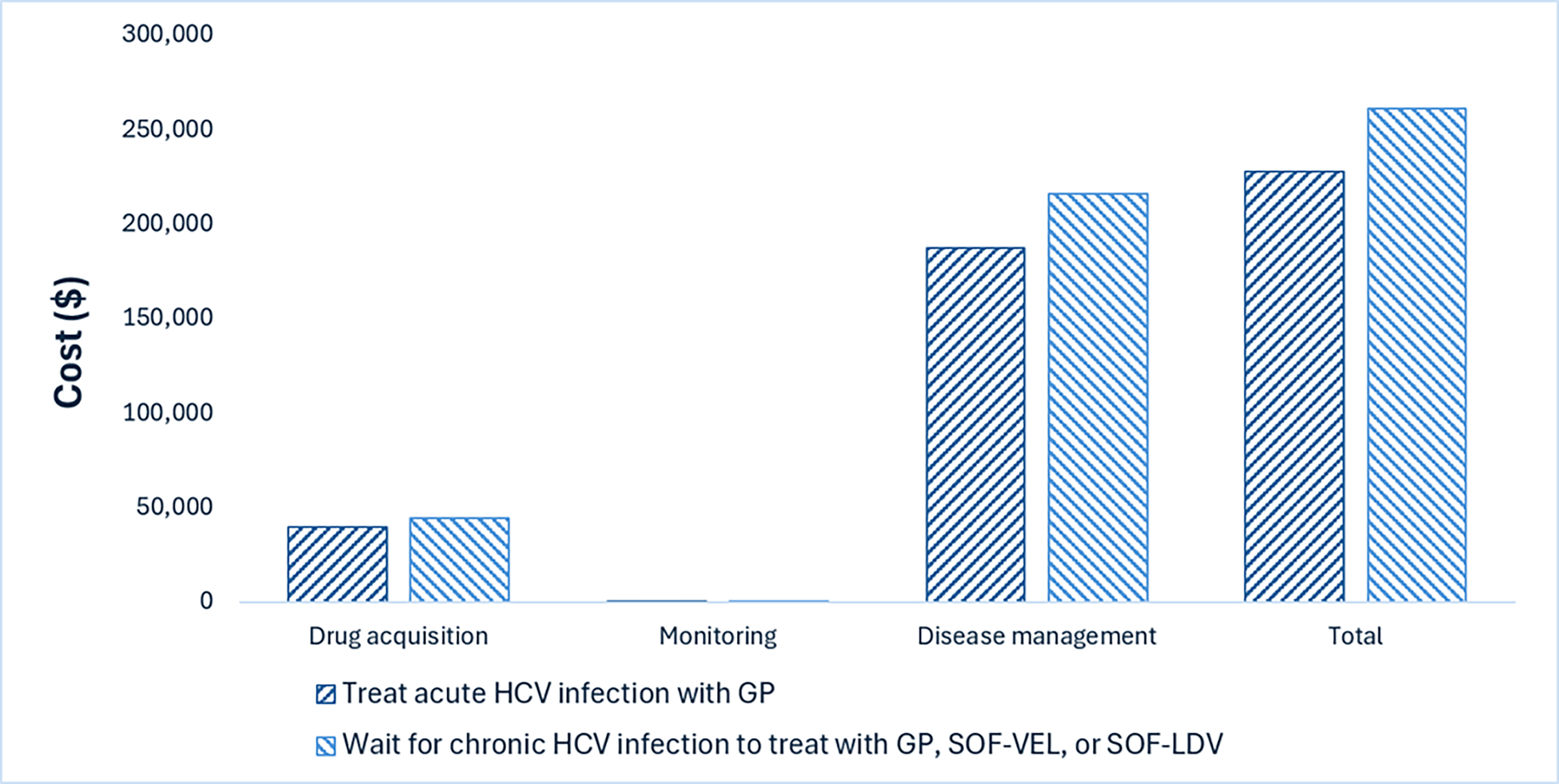
GP = glecaprevir-pibrentasvir; HCV = hepatitis C virus; SOF-LDV = sofosbuvir-ledipasvir; SOF-VEL = sofosbuvir-velpatasvir; vs. = versus.
Impact on Health
In the CDA-AMC base case, treating patients with acute HCV infection with GP is expected to reduce HCV transmission, which decreases the number of patients living with HCV. Each additional case of HCV has the potential to cause liver complications (e.g., cirrhosis, decompensated cirrhosis) if left untreated. Likewise, because some patients are otherwise lost to follow-up, treating acute HCV will prevent liver complications developing in these patients. Considering the impact of treatment on both quality and length of life, treating patients with acute HCV infection is predicted to result 0.12 additional QALYs per patient compared to treating patients upon the development of chronic HCV infection.
Overall Results
The results of the CDA-AMC base case suggest that treating patients with acute HCV infection with GP dominates (i.e., is less costly and more effective) than treating patients with GP, SOF-VEL, or SOF-LDV upon the development of chronic HCV infection (refer to Table 7). Additional details on the CDA-AMC base case are available in the Supplemental Material document, Appendix 11.
Table 7: Summary of CDA-AMC Economic Evaluation Results
Drug | Total costs ($) | Total QALYs | ICER vs. treat acute HCV infection ($/QALY) |
|---|---|---|---|
Treat acute HCV infection | 228,156 | 13.65 | Reference |
Wait for chronic HCV infection to treat | 261,123 | 13.52 | Dominated |
CDA-AMC = Canada’s Drug Agency; HCV = hepatitis C virus; ICER = incremental cost-effectiveness ratio; QALY = quality-adjusted life-year; vs. = versus.
Note: Publicly available list prices were used for all comparators.
Uncertainty and Sensitivity
Uncertainty was explored in the scenario analyses outlined in Figure 2 and Table 6. Uncertainty about transmission had the largest impact on the cost-effectiveness of GP for the treatment of acute HCV infection. In the CDA-AMC base case, each person who injects drugs was assumed to infect 0.33 people from the susceptible population, corresponding to approximately 1 new infection for every 3 people who inject drugs who have acute HCV infection. Under this assumption, treating acute HCV with GP was the dominant strategy (i.e., less costly and more effective than waiting to treat chronic HCV infection), with results largely driven by the prevention of secondary infections. However, in a 1-way threshold analysis using the CDA-AMC base case, treating acute HCV was no longer a dominant strategy when the average number of secondary infections occurring during the 6-month treatment delay was reduced to 0.005 (i.e., approximately 1 new infection per 200 people who inject drugs who have acute HCV infection) (Figure 2). In a CDA-AMC scenario analysis in which transmission was excluded, the incremental cost-effectiveness ratio for treating patients with acute HCV with GP was $6,318 per QALY gained versus treating patients upon the development of chronic HCV infection (refer to the Supplemental Material document, Appendix 11). These findings suggest that the conclusion of dominance was maintained across a wide range of lower transmission assumptions, although this conclusion remained dependent on the inclusion of transmission-related secondary HCV infections.
To assess additional uncertainty associated with comparative clinical efficacy and the likelihood of patients experiencing spontaneous clearance, CDA-AMC tested how these parameters influence whether treating acute HCV is the dominant strategy in 1-way threshold analyses (Figure 2). If acute HCV treatment efficacy is more than 83.5% (compared to 96.2% for chronic HCV treatment efficacy used in the CDA-AMC base case) and if the rate of spontaneous remission is lower than 68.5%, treating acute HCV infection remains the dominant strategy.
Figure 2: One-Way Threshold Analysis
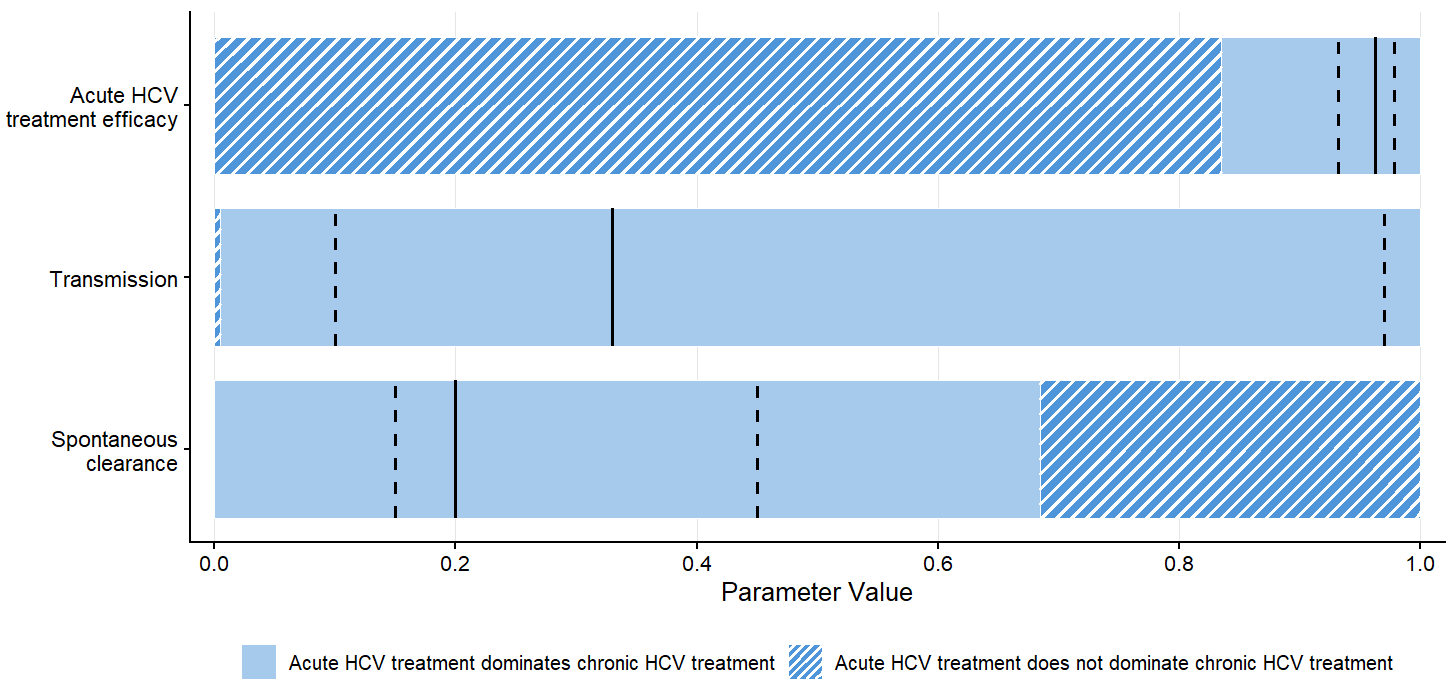
HCV = hepatitis C virus.
Note: Solid lines refer to Canada’s Drug Agency base-case values (refer to the Supplemental Material document, Appendix 11, for values). Dashed lines refer to a range of plausible estimates for each parameter.
Summary of the Budget Impact
The sponsor submitted a budget impact analysis to estimate the 3-year (2027–2029) budget impact of reimbursing GP for use in the reimbursement-requested population. The sponsor assumed that the payer would be CDA-AMC–participating public drug plans and derived the size of the eligible population using an epidemiologic approach. The price of GP was aligned with the price included in the sponsor’s economic evaluation, and the prices of comparators were based on the publicly available list prices. Additional information pertaining to the sponsor’s submission is provided in the Supplemental Material document, Appendix 12.
CDA-AMC identified a number of issues with the sponsor’s estimated budget impact and made changes to model parameters and assumptions in consultation with clinical experts to derive the CDA-AMC base case (refer to the Supplemental Material document, Appendix 12). CDA-AMC estimated that 1,744 patients would be eligible for GP over a 3-year period (year 1 = 568; year 2 = 581; year 3 = 595), of whom 1,570 are expected to receive GP (year 1 = 511; year 2 = 523; year 3 = 535). In the reference scenario, an additional 453 patients would be eligible for treatment in the chronic setting due to the impact of HCV transmission. The estimated incremental budget impact of reimbursing GP in the acute setting is predicted to be approximately –$6.4 million (i.e., is cost saving) over the first 3 years, with an expected expenditure of $62.8 million on GP. The actual budget impact of reimbursing GP will depend on the proportion of patients who would have been untreated but will access treatment in the acute setting, the impact of the wait-to-treat strategy on transmission, potential market capture from off-label therapies, and changes to the screening and diagnosis of HCV. Without accounting for new infections due to transmission, the estimated budget impact of reimbursing GP for the treatment of acute HCV infection was estimated to be approximately $5.4 million in additional spending over the first 3 years.
Conclusion
Based on the CDA-AMC base case, treating patients with acute HCV infection with GP is less costly and more effective than treating patients with GP, SOF-VEL, or SOF-LDV upon the development of chronic HCV infection. The estimated cost-effectiveness of treating patients with acute HCV infection compared to treating patients with chronic HCV infection is uncertain, primarily due to a lack of comparative efficacy data and the uncertain impact of delayed treatment on HCV transmission.
Reimbursing GP for the treatment of acute HCV may result in approximately $6.4 million of cost savings to the public drug plans in the first 3 years. The 3-year expenditure on GP (i.e., not accounting for current expenditure on comparators) is estimated to be $62.8 million. The estimated budget impact is uncertain and is most dependent on assumptions about HCV transmission and the proportion of patients who would have been untreated but will access treatment in the acute setting.
Figure 3: Summary of the CDA-AMC Economic Analysis and Price Reduction
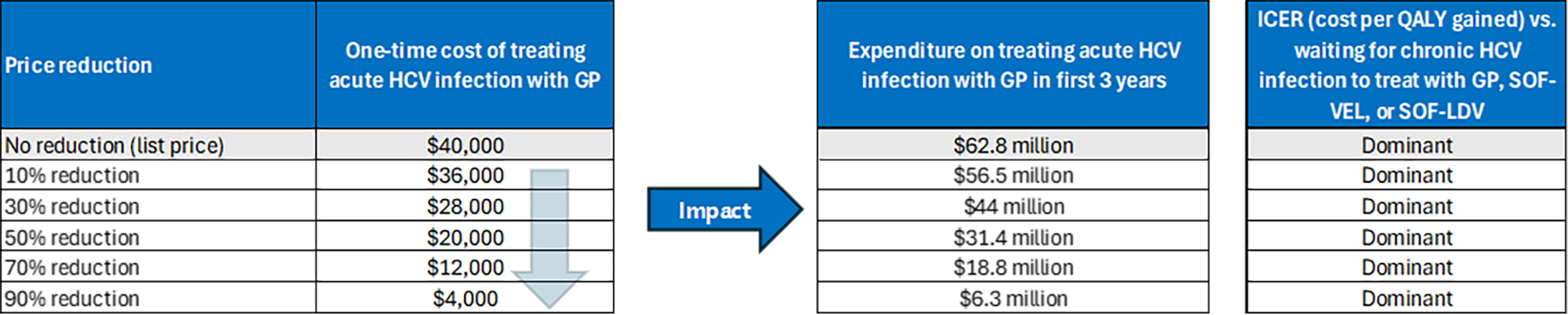
CDA-AMC = Canada’s Drug Agency; GP = glecaprevir-pibrentasvir; HCV = hepatitis C virus; ICER = incremental cost-effectiveness ratio; QALY = quality-adjusted life-year; SOF-LDV = sofosbuvir-ledipasvir; SOF-VEL = sofosbuvir-velpatasvir; vs. = versus.
Note: Expenditure includes only the drug cost of GP. The term dominant indicates that a drug costs less and provides more QALYs than the comparator.
References
1.AbbVie Corporation. Maviret (glecaprevir/pibrentasvir): glecaprevir 100 mg / pibrentasvir 40 mg tablets; glecaprevir 50 mg / pibrentasvir 20 mg granules per sachet for oral use [product monograph]. December 18, 2025. Updated January 1, 1800.
2.CADTH. Drug Reimbursement Expert Review Committee final recommendation: glecaprevir/pibrentasvir (Maviret - AbbVie Corporation). January 25, 2018. Accessed April 7, 2026. https://www.cda-amc.ca/sites/default/files/cdr/complete/SR0523_Maviret_complete-Jan-25-18.pdf
3.Public Health Agency of Canada. People living with hepatitis C (HCV), Canada [sponsor supplied reference]. 2019. Accessed October 31 2025. https://www.canada.ca/en/public-health/services/publications/diseases-conditions/infographic-people-living-with-hepatitis-c.html
4.Public Health Agency of Canada. Hepatitis C: symptoms and treatment [sponsor supplied reference]. 2023. Accessed October 31 2025. https://www.canada.ca/en/public-health/services/diseases/hepatitis-c.html
5.Martinello M, Hajarizadeh B, Grebely J, Dore GJ, Matthews GV. Management of acute HCV infection in the era of direct-acting antiviral therapy. Nat Rev Gastroenterol Hepatol. 2018;15(7):412-424. doi:10.1038/s41575-018-0026-5 PubMed
6.Monin MB, Ingiliz P, Lutz T, et al. Low Spontaneous Clearance Rates of Recently Acquired Hepatitis C Virus in Human Immunodeficiency Virus-Positive Men Who Have Sex With Men (PROBE-C Study). Clin Infect Dis. 2023;76(3):e607-e612. doi:10.1093/cid/ciac680 PubMed
7.Sallam M, Khalil R. Contemporary Insights into Hepatitis C Virus: A Comprehensive Review. Microorganisms. 2024;12(6). doi:10.3390/microorganisms12061035 PubMed
8.Grebely J, Prins M, Hellard M, et al. Hepatitis C virus clearance, reinfection, and persistence, with insights from studies of injecting drug users: towards a vaccine. Lancet Infect Dis. 2012;12(5):408-14. doi:10.1016/S1473-3099(12)70010-5 PubMed
9.Lingala S, Ghany MG. Natural History of Hepatitis C. Gastroenterol Clin North Am. 2015;44(4):717-34. doi:10.1016/j.gtc.2015.07.003 PubMed
10.Cacoub P, Bourliere M, Lubbe J, et al. Dermatological side effects of hepatitis C and its treatment: patient management in the era of direct-acting antivirals. J Hepatol. 2012;56(2):455-63. doi:10.1016/j.jhep.2011.08.006 PubMed
11.Younossi Z, Park H, Henry L, Adeyemi A, Stepanova M. Extrahepatic Manifestations of Hepatitis C: A Meta-analysis of Prevalence, Quality of Life, and Economic Burden. Gastroenterology. 2016;150(7):1599-1608. doi:10.1053/j.gastro.2016.02.039 PubMed
12.Tang SCW, Lai KN. Hepatitis C virus-associated glomerulonephritis. In: Chen N, ed. New insights into glomerulonephritis: pathogenesis and treatment. S. Karger AG; 2013:194–206.
13.Public Health Agency of Canada. Hepatitis C in Canada: 2021 surveillance data update [sponsor supplied reference]. 2023. Accessed October 31 2025. https://www.canada.ca/en/public-health/services/publications/diseases-conditions/hepatitis-c-canada-2021-surveillance-data-update.html
14.AbbVie Corporation. Drug Reimbursement Review sponsor submission: Maviret (glecaprevir/pibrentasvir), glecaprevir 100 mg / pibrentasvir 40 mg tablets; glecaprevir 50 mg / pibrentasvir 20 mg granules per sachet for oral use [internal sponsor's package]. January 30, 2026.
15.Nikoo N, Javidanbardan S, Akm M, et al. Hepatitis C prevalence and associated risk factors among individuals who are homeless and diagnosed with mental illness: at Home/Chez Soi Study, Vancouver, BC. Eur J Public Health. 2019;29(2):242–247. doi:10.1093/eurpub/cky142 PubMed
16.Tarasuk J, Zhang J, Lemyre A, Cholette F, Bryson M, Paquette D. National findings from the Tracks survey of people who inject drugs in Canada, Phase 4, 2017-2019. Can Commun Dis Rep. 2020;46(5):138-148. doi:10.14745/ccdr.v46i05a07 PubMed
17.Saeed S, Thomas T, Dinh DA, et al. Frequent Disengagement and Subsequent Mortality Among People With HIV and Hepatitis C in Canada: A Prospective Cohort Study. Open Forum Infectious Diseases. 2024;11(5). doi:10.1093/ofid/ofae239 PubMed
18.Dunn KPR, Wardman D, Trubnikov M, et al. Epidemiology of Chronic Hepatitis C in First Nations Populations in Canadian Prairie Provinces. Pathogens. 2025;14(7):693. PubMed
19.World Health Organization. Global health sector strategies on HIV, viral hepatitis and sexually transmitted infections for the period of 2022–2030 [sponsor supplied reference]. 2022. Accessed November 24 2025. https://www.who.int/teams/global-hiv-hepatitis-and-stis-programmes/strategies/global-health-sector-strategies
20.Shah H, Bilodeau M, Burak KW, et al. The management of chronic hepatitis C: 2018 guideline update from the Canadian Association for the Study of the Liver. CMAJ. 2018;190(22):E677-E687. doi:10.1503/cmaj.170453 PubMed
21.Bhattacharya D, Aronsohn A, Price J, Lo Re V, Panel A-IHG. Hepatitis C Guidance 2023 Update: AASLD-IDSA Recommendations for Testing, Managing, and Treating Hepatitis C Virus Infection. Clin Infect Dis. 2023. doi:10.1093/cid/ciad319 PubMed
22.European Association for the Study of the Liver, Clinical Practice Guidelines Panel Chair, EASL Governing Board representative, Panel members. EASL recommendations on treatment of hepatitis C: Final update of the series. J Hepatol. 2020;73(5):1170-1218. doi:10.1016/j.jhep.2020.08.018 PubMed
23.World Health Organization. Policy brief: new recommendation on hepatitis C virus testing and treatment for people at ongoing risk of infection [sponsor supplied reference]. 2023. Updated April 14. Accessed November 24 2025. https://iris.who.int/server/api/core/bitstreams/8bad8f1b-84c4-4abd-9653-99dcc807e6ff/content
24.Martin NK TA, Hickman M, et al. Can Hepatitis C Virus (HCV) Direct-Acting Antiviral Treatment as Prevention Reverse the HCV Epidemic Among Men Who Have Sex With Men in the United Kingdom? Epidemiological and Modeling Insights. Clin Infect Dis 2016;62(9):1072-1080. doi:10.1093/cid/ciw075 PubMed
25.Indolfi G E, P, Dusheiko G, et al. Hepatitis C virus infection in children and adolescents. Lancet Gastroenterology & Hepatology, 2019;4(6):477-487. doi:https://doi.org/10.1016/S2468-1253(19)30046-9 PubMed
26.AbbVie Inc. Clinical Study Report: M20-350. A multicenter, single-arm prospective study to evaluate safety and efficacy of GLE/PIB 8-week treatment in adults and adolescents with Acute Hepatitis C Virus (HCV) infection[internal sponsor's report].
27.AbbVie Inc. Statistical Analysis Plan for M20-350. A multicenter, single-arm prospective study to evaluate safety and efficacy of GLE/PIB 8-week treatment in adults and adolescents with Acute Hepatitis C Virus (HCV) infection[internal sponsor's report]. 2024.
28.Canada's Drug Agency. Methods Guide for Health Technology Assessment. 2025. Accessed March 2026. https://www.cda-amc.ca/methods-guide
29.Committee for Medicinal Products for Human Use (CHMP). Reflection paper on establishing efficacy based on singlearm trials submitted as pivotal evidence in a marketing authorisation application: Considerations on evidence from single-arm trials. European Medicines Agency; 2024.
30.Lourenço L, Kelly M, Tarasuk J, et al. The hepatitis C epidemic in Canada: An overview of recent trends in surveillance, injection drug use, harm reduction and treatment. Can Commun Dis Rep. 2021;47(12):561-570. doi:10.14745/ccdr.v47i12a01 PubMed
31.Norton BL, Akiyama MJ, Agyemang L, Heo M, Pericot-Valverde I-, Litwin AH. Low Adherence Achieves High HCV Cure Rates Among People Who Inject Drugs Treated With Direct-Acting Antiviral Agents. Open Forum Infectious Diseases. 2020;7(10). doi:10.1093/ofid/ofaa377 PubMed
32.Heo M, Norton BL, Pericot-Valverde I, et al. Optimal hepatitis C treatment adherence patterns and sustained virologic response among people who inject drugs: The HERO study. J Hepatol. 2024;80(5):702-713. doi:10.1016/j.jhep.2023.12.020 PubMed
33.Jeong D, Wong S, García HAV, et al. Ethnic Disparities in Extrahepatic Manifestations Among People With HCV Infection: A Population-Based Study in British Columbia. Open Forum Infectious Diseases. 2025;12(9). doi:10.1093/ofid/ofaf543 PubMed
34.Smith DJ, Combellick J, Jordan AE, Hagan H. Hepatitis C virus (HCV) disease progression in people who inject drugs (PWID): A systematic review and meta-analysis. Int J Drug Policy. 2015;26(10):911-21. doi:10.1016/j.drugpo.2015.07.004 PubMed
35.Seo S, Silverberg MJ, Hurley LB, et al. Prevalence of Spontaneous Clearance of Hepatitis C Virus Infection Doubled From 1998 to 2017. Clin Gastroenterol Hepatol. 2020;18(2):511-513. doi:https://doi.org/10.1016/j.cgh.2019.04.035 PubMed
ISSN: 2563-6596
Canada’s Drug Agency (CDA-AMC) is a pan-Canadian health organization. Created and funded by Canada’s federal, provincial, and territorial governments, we’re responsible for driving better coordination, alignment, and public value within Canada’s drug and health technology landscape. We provide Canada’s health system leaders with independent evidence and advice so they can make informed drug, health technology, and health system decisions, and we collaborate with national and international partners to enhance our collective impact.
Disclaimer: CDA-AMC has taken care to ensure that the information in this document was accurate, complete, and up to date when it was published, but does not make any guarantee to that effect. Your use of this information is subject to this disclaimer and the Terms of Use at cda-amc.ca.
The information in this document is made available for informational and educational purposes only and should not be used as a substitute for professional medical advice, the application of clinical judgment in respect of the care of a particular patient, or other professional judgments in any decision-making process. You assume full responsibility for the use of the information and rely on it at your own risk.
CDA-AMC does not endorse any information, drugs, therapies, treatments, products, processes, or services. The views and opinions of third parties published in this document do not necessarily reflect those of CDA-AMC. The copyright and other intellectual property rights in this document are owned by the Canadian Agency for Drugs and Technologies in Health (operating as CDA-AMC) and its licensors.
Questions or requests for information about this report can be directed to Requests@CDA-AMC.ca.