Drugs, Health Technologies, Health Systems
Reimbursement Recommendation
Leniolisib (Joenja)
Indication: For the treatment of activated phosphoinositide 3-kinase delta syndrome (APDS) in adults and pediatric patients 12 years of age and older
Sponsor: Pharming Technologies B.V.
Final recommendation: Reimburse with conditions
Summary
What Is the Reimbursement Recommendation for Joenja?
Canada’s Drug Agency (CDA-AMC) recommends that Joenja be reimbursed by public drug plans for the treatment of activated phosphoinositide 3-kinase delta syndrome (APDS) in adults and pediatric patients aged 12 years and older if certain conditions are met.
Why Did CDA-AMC Recommend Reimbursement?
The Canadian Drug Expert Committee (CDEC) determined that it is uncertain whether Joenja demonstrates acceptable clinical value compared with best supportive care (BSC), which includes immunoglobulin (Ig) replacement therapy (IRT), steroids, and immunomodulators, in patients with APDS. Given that Joenja is expected to be an alternative to BSC, acceptable clinical value refers to at least comparable value versus BSC.
Evidence from a clinical study showed that Joenja given for 12 weeks likely helps some immune cell populations return to normal and likely helps reduce the size of enlarged lymph nodes when compared with BSC in patients with APDS. Findings from a clinical study where treatment continued for up to 6 years showed that patients receiving Joenja may have fewer infections and use less IRT. Evidence from 3 additional studies supported the findings from the clinical studies showing a possible reduction in infections among patients receiving treatment with Joenja compared to without Joenja. There was uncertainty in the evidence supporting clinical value due to the clinical studies enrolling a small number of patients, the 12-week duration of 1 study, the focus being on end points that were not direct measures of patient-important outcomes, and the possibility of incomplete, inaccurate, or low-quality data used in the 3 supportive studies.
CDEC established that there was significant unmet clinical need due to the severity of APDS, despite available treatments, and due to challenges with evidence generation in this patient population. Joenja is the first Health Canada–approved therapy that treats the underlying cause of APDS, which BSC does not. CDEC concluded that Joenja addresses a significant unmet clinical need, despite the uncertainty in the clinical value.
Based on all of the preceding considerations, CDEC recommended that Joenja be reimbursed.
Which Patients Are Eligible for Coverage?
Joenja should only be reimbursed for patients who are aged 12 years and older, weigh 45 kg or more, have a genetically confirmed diagnosis of APDS, and have documented evidence of disease, in line with the Health Canada indication.
What Are the Conditions for Reimbursement?
Joenja should only be reimbursed if patients meet the conditions detailed in Table 1, and if the cost of Joenja is reduced. Initiation and management of therapy with Joenja should be performed by clinicians with expertise in APDS or other inborn errors of immunity. The recommended duration of initial authorization is 12 months, followed by annual renewals thereafter. Renewal is recommended to be based on an observation of clinical benefit as assessed by the treating physician.
Important budget impact considerations and organizational implications regarding genetic testing must be addressed for health systems to be able to adopt Joenja.
Review Background
Disease background: APDS is a rare genetic condition that disrupts the development and function of immune cells and makes them unable to effectively manage infections. Dysregulation of the immune system can also cause autoimmunity and malignancy. Most patients experience severe symptoms that affect multiple organs and reduce health-related quality of life (HRQoL). Although the prevalence of APDS in Canada is unknown, it is estimated that APDS affects fewer than 1 to 2 individuals per 1,000,000 worldwide.
Indication and reimbursement request: Leniolisib (Joenja) has been approved by Health Canada for “the treatment of activated phosphoinositide 3-kinase delta (PI3Kδ) syndrome (APDS) in adults and pediatric patients 12 years of age and older.” The sponsor is seeking reimbursement for this patient population.
Drug under review: Leniolisib is a phosphoinositide 3-kinase delta inhibitor. It is available as a 70 mg oral tablet and the dosage recommended in the product monograph is 70 mg, twice a day, approximately 12 hours apart.
Treatment costs: At the submitted price of $1,186.87 per 70 mg tablet, the annual cost of leniolisib is expected to be $867,006 per patient, based on the Health Canada–recommended dosage.
Highlights of Input From Interested Parties
The patient group (Canadian Immunodeficiencies Patient Organization operating as Immunity Canada) noted the following regarding impacts of the disease, unmet needs, and important outcomes:
APDS has substantial impacts on emotional well-being, social functioning, physical activity, education, employment, travel, and family life. Patients reported frequent infections, hospitalizations, autoimmune complications, enlarged lymphoid organs, and long-term organ damage that can result in significant physical, emotional, and financial burdens.
The patient group noted that diagnostic delays are common in APDS, which exacerbates health issues and strains health care systems due to avoidable specialist visits for recurring infections, impacting both patient HRQoL and resource allocation.
Patients identified a need for effective and tolerable treatments that reduce the frequency and severity of infections, reduce hospitalizations, improve overall health and HRQoL, and lessen reliance on supportive therapies.
The clinician group (The Medical Science Advisory Committee of Immunity Canada along with representatives of the Clinical Immunology Network-Canada) and the clinical experts consulted by CDA-AMC noted the following regarding unmet needs arising from the disease and place in therapy for the drug under review:
Current management relies on supportive and off-label therapies such as antimicrobials, IRT, immunomodulators, surgical procedures, and hematopoietic stem cell transplant (HSCT). These treatments primarily address disease manifestations and may be associated with treatment burden, limited effectiveness, or safety concerns. There is a need for an approved medication that addresses both immunodeficiency and lymphoproliferation and provides long-term control of the disease symptoms, thereby improving HRQoL, without serious adverse effects.
Leniolisib is expected to be a first-line treatment for all eligible patients diagnosed with a pathogenic variant for APDS identified by genetic testing.
The participating public drug programs provided input regarding considerations for initiation.

Note: The perspectives shared by people with lived experience who present to the committee reflect their individual experiences and are not necessarily representative of all people with the same condition or course of treatment. Their insights provide valuable context about what a patient, support person, or caregiver might go through with this condition or treatment, helping to inform the committee’s deliberations. These narratives complement other forms of evidence and input and should be considered as 1 element contributing to a broader understanding of the condition and treatment under review.
Recommendation
With a vote of 14 in favour to 0 against, CDEC recommends that leniolisib be reimbursed for the treatment of APDS in patients aged 12 years and older only if the conditions listed in Table 1 are met.
Table 1: Reimbursement Conditions and Reasons
Reimbursement condition | Reason | Implementation guidance |
|---|---|---|
Initiation | ||
1. Treatment with leniolisib should be reimbursed when initiated in patients who are aged 12 years and older, weigh 45 kg or more, have a genetically confirmed diagnosis of APDS caused by a pathogenic variant in a PI3K-delta pathway gene (e.g., PIK3CD or PIK3R1 variants), and have documented evidence of disease. | Evidence from Study 2201 Part II demonstrated that when compared to placebo, treatment with leniolisib likely resulted in improvements in lymphoproliferation and/or improvements in abnormal immunological parameters in patients with these characteristics. | Weight: CDEC agreed with the clinical experts that the 70 mg, twice a day dosage of leniolisib should not be used to treat patients weighing less than 45 kg. This is aligned with the Health Canada–recommended dosage for leniolisib. Genetic diagnosis: CDEC and the clinical experts noted that reimbursement eligibility for leniolisib should require genetic confirmation of a pathogenic APDS variant. In Study 2201 Part II, genetic confirmation was defined as a documented APDS-associated or PASLI-associated genetic PI3K-delta variant (PIK3CD or PIK3R1 variants). The examples listed in the initiation criterion (e.g., PIK3CD or PIK3R1) are not intended to exclude other pathogenic variants that may be subsequently recognized as causing APDS. Evidence of disease: CDEC and the clinical experts agreed that there should be documented evidence of disease. It was noted that this does not need to be active disease manifestations and should not require CT or MRI evidence of nodal disease. Clinical evidence of disease can include, but is not limited to, lymphoproliferation (documented clinically or radiographically), frequent infections, or abnormal immune parameters (identified through laboratory investigations). |
2. Duration of initial authorization is 12 months. | While the pivotal study duration was 12 weeks, the clinical experts noted to CDEC that response to treatment would initially be assessed at 6 months and every 12 months once stable. CDEC considered the clinical experts’ suggestion as well as challenges with accessing specialists to recommend an initial authorization duration of 12 months. | — |
Renewal | ||
3. For renewal after initial authorization and subsequent renewal (every 12 months), the physician must provide proof of beneficial clinical effect when requesting continuation of reimbursement. | Evidence from Study 2201 Part II demonstrated that when compared to placebo, treatment with leniolisib likely resulted in improvements in lymphoproliferation and/or improvements in abnormal immunological parameters. This is to ensure that reimbursement is continued only for patients who demonstrate ongoing clinical benefit from treatment. | CDEC and the clinical experts noted that lymphadenopathy can be evaluated in practice through clinical assessment or ultrasound, but that frequent CT or MRI scans (as was done in Study 2201) are difficult to obtain or are avoided. They added that flow cytometry, to measure B-cell subsets, is generally accessible in tertiary care centres or samples can be sent to where testing is available. According to clinical experts, patients who initiate treatment for APDS would be initially assessed at 6 months and every 12 months once the condition was stable. Examples of clinical benefit may include improvement or stabilization of infection frequency, lymphoproliferation, autoimmune manifestations, abnormal immune parameters, or other clinically relevant features of APDS identified before treatment initiation. |
Prescribing | ||
4. Leniolisib must be prescribed by clinicians with expertise in managing APDS or other inborn errors of immunity, such as a clinical immunologist or a specialist functioning as an immunologist. | This is meant to ensure that leniolisib is prescribed for appropriate patients and that adverse effects are managed in an optimized and timely manner. | CDEC and the clinical experts agreed that there are few clinical immunologists in Canada and to improve patient access to specialized care, clinicians who are part of the Clinical Immunology Network Canada may be appropriate prescribers of leniolisib. Furthermore, clinicians who have adequate training in the disease area and in consultation with an immunologist or specialist could prescribe and monitor treatment with leniolisib. |
5. Leniolisib may be administered in combination with BSC for APDS. | BSC for APDS can include antimicrobials, IRT, immunomodulators, surgery, and HSCT. | CDEC and the clinical experts agreed that patients should not be required to try off-label treatments for APDS before initiating leniolisib. CDEC and the clinical experts agreed that patients who are receiving off-label treatments for APDS would be eligible for leniolisib. The goal is to reduce or stop BSC, but it may not always be possible. |
Pricing | ||
6. A reduction in price. | Using the CDA-AMC base-case analysis, the ICER for leniolisib plus BSC was $8,570,334 per QALY gained when compared with BSC in the indicated population. A band 4 price reductiona would be required to achieve cost-effectiveness at a $50,000 per QALY threshold. A band 4 price reductiona would be required to achieve cost-effectiveness at a $100,000 per QALY threshold. Price reductions for any given willingness-to-pay threshold are available in the CDA-AMC Main Report and Supplemental Material document. | The CDA-AMC analysis is based on public list prices for all treatments. Further price reductions may be required if there are price arrangements (discounts) currently in place for any treatment included in the economic analysis. Likewise, further price reductions may be required to address economic feasibility of adoption. |
Feasibility of adoption | ||
7. The economic feasibility of adoption of leniolisib plus BSC must be addressed. | At the submitted price, the magnitude of uncertainty in the budget impact must be addressed to ensure the feasibility of adoption, given the difference between the sponsor’s estimate and the CDA-AMC estimate. | — |
8. The organizational feasibility of adoption of leniolisib must be addressed regarding genetic testing for APDS. | CDEC acknowledges that the availability of genetic testing for APDS in Canada is a barrier that needs to be addressed. | CDEC noted that access to genetic testing is essential for identifying eligible patients and that testing capacity may be limited in some jurisdictions. To avoid creating additional financial and operational burdens for public health care systems, CDEC recommends that the sponsor continue to support and fund APDS genetic testing across Canada. The sponsor has indicated that no-cost genetic testing is currently available through its navigateAPDS program in partnership with a genetic testing provider. |
APDS = activated phosphoinositide 3-kinase delta syndrome; BSC = best supportive care; CDA-AMC = Canada’s Drug Agency; CDEC = Canadian Drug Expert Committee; HSCT = hematopoietic stem cell transplant; ICER = incremental cost-effectiveness ratio; IRT = immunoglobulin replacement therapy; PASLI = PI3K-p110δ activating mutation causing senescent T-cells, lymphadenopathy, and immunodeficiency; PI3K = phosphoinositide 3-kinase; QALY = quality-adjusted life-year.
aFor the statement regarding the size of the price reduction required, band 1 = 1% to 24%, band 2 = 25% to 49%, band 3 = 50% to 74%, and band 4 = 75% or greater.
Rationale for the Recommendation
Clinical Value
Based on the totality of the clinical evidence, CDEC concluded that it is uncertain whether leniolisib demonstrates acceptable clinical value compared with appropriate comparators (i.e., BSC) in patients with APDS. Given that leniolisib is expected to be an alternative to BSC, acceptable clinical value refers to at least comparable value versus BSC. However, Study 2201 Part II excluded patients with recent or concurrent use of immunosuppressive medications.
Evidence from 1 randomized controlled trial (RCT) demonstrated that treatment for 12 weeks with leniolisib likely results in added clinical benefit for patients aged 12 years and older with APDS compared with placebo in the normalization of immune parameters (e.g., naive B-cell populations) and reduced lymphoproliferation. These were evaluated using surrogate outcomes and the impact of leniolisib on clinical outcomes that are meaningful to patients is uncertain at 12 weeks. Results from 1 open-label extension (OLE) study indicated that continued treatment with leniolisib may result in fewer infections and reduced IRT use. This was based on a noncomparative study design and few patients with 6 years of follow-up data. Evidence from 1 externally-controlled study and 2 real-world evidence studies included to address gaps in the systematic review evidence suggested that the direction of effect with leniolisib is consistent with the RCT and OLE. However, there was uncertainty due to concerns with data completeness, accuracy, quality, and bias.
CDEC noted that the certainty in the clinical value of leniolisib is limited given the evidence was based on a single RCT enrolling a small number of patients (N = 31) for a short duration (12 weeks) and focused on surrogate end points, rather than patient-important outcomes. The committee acknowledged the roles that disease rarity and the ethics of reducing exposure to placebo have in the study design.
Further information on the committee’s discussion around clinical value is provided in the Summary of Deliberation section.
Considering Significant Unmet Clinical Need
CDEC established that there was significant unmet clinical need due to the rarity, severity, and progressive nature of APDS, for which there are no other Health Canada–approved treatments.
CDEC recognized that currently available therapies primarily address disease manifestations and do not directly target the underlying pathogenic pathway. Leniolisib is the first Health Canada–approved therapy that targets the underlying disease mechanism of APDS. Evidence suggests that leniolisib potentially improves lymphoproliferation and immunological parameters associated with APDS and may reduce infections over time. However, uncertainty remains regarding the extent to which these improvements translate into reductions in infections and hospitalizations, improvements in HRQoL, and long-term control of disease manifestations. Therefore, CDEC concluded that leniolisib addresses a significant unmet clinical need to a degree that justifies a positive recommendation despite the uncertainty in the clinical value.
Further information on the committee’s discussion around unmet clinical need is provided in the Summary of Deliberation section.
Developing the Recommendation
Due to the uncertainty in clinical value, CDEC could not recommend whether to reimburse leniolisib based on clinical value alone. Therefore, they also considered whether leniolisib addresses a significant unmet clinical need. CDEC concluded that leniolisib addresses a significant unmet clinical need with an acceptable level of certainty. Based on the preceding considerations, CDEC recommended that leniolisib be reimbursed. As part of the deliberation on whether to recommend reimbursement or not, the committee also considered unmet nonclinical need and health inequity. Information on this discussion is provided in the Distinct Social and Ethical Considerations domain in the Summary of Deliberation section.
Because CDEC recommended that leniolisib be reimbursed, the committee also deliberated on whether reimbursement conditions should be added to address important economic considerations, health system impacts, or social and ethical considerations, or to ensure clinical value is realized. The resulting reimbursement conditions, with accompanying reasons and implementation guidance, are stated in Table 1.
Summary of Deliberation
CDEC considered all domains of value of the deliberative framework before developing its recommendation: clinical value, unmet clinical need, distinct social and ethical considerations, economic considerations, and impacts on health systems. For further information on the domains of value, refer to Expert Committee Deliberation at Canada’s Drug Agency.
The committee considered the following key discussion points, organized by the 5 domains of value.
Clinical Value
Appropriate comparators: CDEC discussed that BSC represents the most appropriate comparator to leniolisib for patients with APDS. However, the committee noted that important components of BSC, including immunosuppressive therapies, such as sirolimus and rituximab, were excluded from the pivotal trial. As a result, uncertainty remains regarding the comparative clinical value of leniolisib relative to all therapies currently used in practice.
Transition from supportive therapies: CDEC discussed how leniolisib may be incorporated into the current management of APDS. Clinical experts indicated that patients receiving supportive therapies, such as IRT, antimicrobials, corticosteroids, or other immunomodulatory treatments, may require a period of overlap when initiating leniolisib. The committee noted that supportive therapies would not necessarily be discontinued immediately upon initiation of leniolisib and that treatment decisions should be individualized based on disease manifestations and clinical response. CDEC recognized that the goal of treatment is to reduce reliance on supportive therapies over time; however, some patients may continue to require concomitant treatment. Clinical experts noted that IRT may be continued after initiation of leniolisib and may be tapered in patients who demonstrate sustained improvement in immune function.
Efficacy versus placebo: One RCT, Study 2201 Part II (N = 31), demonstrated that treatment with leniolisib for up to 12 weeks likely results in a clinically meaningful increase in the percentage of naive B-cells out of total B-cells (N = 13; absolute difference between groups = 37.3%; 95% confidence interval, 24.1% to 50.5%) compared with placebo. The study also suggested that leniolisib may result in a clinically meaningful reduction in the log10-transformed sum of product of diameters (SPD) in the index lesions (N = 26; absolute difference between groups = –0.3; 95% confidence interval, –0.4 to –0.1) compared with placebo. Key limitations with these findings include the increased risk of bias with the small number of patients and indirectness because the SPD in the index lesions is a surrogate for clinical outcomes. Leniolisib likely results in a reduction in IgM concentration, although there was uncertainty in this outcome due to indirectness. It was unclear what impact leniolisib had on reducing infections and IRT use at 12 weeks, due to a discrepancy between the study time frame of 12 weeks and the time frame of interest of at least 52 weeks as well as imprecision in the treatment effect estimates. Results for patient-reported outcomes indicated that leniolisib had little to no effect on HRQoL and uncertainty in the effect estimates was due to imprecision. Although reducing hospitalizations was an important outcome, there was no evidence for this outcome from the pivotal study.
Longer-term evidence: One OLE study, Study 2201E1 (N = 37), suggested that continued treatment with leniolisib for increasing the percentage of naive B-cells, reducing IgM concentration, and reducing the SPD in the index lesions may persist. Moreover, the study results indicated that continuing leniolisib was associated with a reduction in the number of infections per patient and a reduction in the rate of IRT use after the first or second year of treatment, which were inconclusive at 12 weeks in Study 2201 Part II. Leniolisib may be associated with an increase in patient-reported well-being, as measured by the Patient’s Global Assessment visual analogue scale, but there was no clear impact on HRQoL, as measured by the Short Form (36) Health Survey. The results from Study 2201E1 were uncertain due to increased risk of bias and imprecision.
Studies addressing gaps in the evidence: From the externally-controlled study using registry data, leniolisib may reduce respiratory infections and IgM concentration when compared with BSC that included sirolimus and rituximab. Based on the real-world evidence studies using patient-reported events and administrative claims data, leniolisib may be associated with a reduction in infections, outpatient visits, and disease-related hospital visits. However, these studies were at increased risk of bias that increases the uncertainty of the results. It was uncertain if leniolisib had an impact on emergency department visits, inpatient visits, or IRT use due to the increased risk of bias and imprecision in the effect estimates.
Clinical importance of treatment effects: CDEC discussed the lack of published minimal important differences for most of the outcomes, clinical expert opinion on the importance of the results, as well as the limitations with the available evidence and concluded that the treatment effects likely represented meaningful improvements in lymphoproliferation and immunological parameters. However, these are surrogates for clinical outcomes that are important to patients (e.g., reduced infections and hospitalizations) and the committee relied on evidence from open-label and nonclinical studies for these outcomes. CDEC concluded that leniolisib may address the need for treatment that is tolerable and reduces infections, restores normal immune parameters, and reduces lymphoproliferation, but the impact on hospitalizations was unclear. They also noted that HRQoL was highlighted as being important to patients and clinicians but that leniolisib was not associated with a meaningful change in either the Short Form (36) Health Survey or Patient’s Global Assessment visual analogue scale scores.
Safety: Nearly all patients reported at least 1 adverse event (AE) during Study 2201 Part II, and the committee considered the most common AEs to be manageable. Serious AEs were rare and there were no AEs that led to treatment discontinuation or death. Harms were generally similar in Study 2201E1, and safety data were not collected in the studies addressing gaps in the evidence.
Clinical value: Based on all of the preceding considerations, the committee determined that leniolisib demonstrated added clinical value versus placebo; however, the clinical value of leniolisib relative to BSC remains uncertain.
Unmet Clinical Need
Input on unmet clinical need: Input from patients identified a need for tolerable treatments that reduce the frequency and severity of infections and hospitalizations as well as improve overall health and HRQoL. They also noted the importance of having access to treatment that addresses the elevated risks of physical disability, permanent organ damage, death, autoimmune disorders, and cancer associated with APDS. Input from clinicians stated that there is a need for treatment that addresses the underlying disease mechanism of APDS and provides long-term control of disease symptoms. CDEC discussed the disease burden and treatment burden associated with APDS that affects both patients and caregivers.
Severity of the disease: CDEC discussed the severity of APDS and how it is a progressive, multiorgan disease that leads to severe clinical manifestations. They acknowledged that diagnosis, management, and progression of APDS have a negative impact on HRQoL and increase caregiver burden.
Availability of treatment options: CDEC noted that, aside from leniolisib, there are no Health Canada–approved therapies or disease-modifying treatments for APDS and that current therapies do not directly target the underlying disease mechanism of APDS. As a result, clinicians rely on off-label, nonspecific treatments (some of which are not publicly reimbursed) that only partially manage the clinical manifestations of APDS. These treatments include antimicrobials, IRT, and immunomodulators, while procedures include surgical debulking of enlarged lymphoid tissues and HSCT. Input from clinicians stated that these options are limited in efficacy, associated with notable adverse effects, burdensome, or challenging to access.
Significant unmet clinical need: Due to challenges with evidence generation associated with the rarity of APDS and the severity of the disease despite available treatment options, CDEC considered there to be significant unmet need as described in the recommendation framework in the Procedures for Reimbursement Reviews.
Distinct Social and Ethical Considerations
Input on unmet nonclinical need: CDEC identified unmet nonclinical needs in managing APDS relating to the geographic setting, care setting, and mode of administration. Patients with APDS living outside of urban areas must travel to major cities to access specialist care. Additionally, not all off-label treatments can be administered at home, thereby necessitating travel to appropriate care centres for administration and follow-up. The committee acknowledged that APDS is a rare disease requiring expertise in immunology, which is not uniformly available across Canada. They noted that the availability of leniolisib, as an oral medication that can be administered at home, may help to reduce geographic disparities in access to other treatments (e.g., IRT or HSCT) that are not easily accessible across jurisdictions. However, they noted that leniolisib may not eliminate the need for other supportive treatments for APDS.
Equity considerations: CDEC acknowledged equity considerations and how leniolisib may address some of these issues. This is discussed in the previous point for input on unmet nonclinical need.
Ensuring equitable access to APDS genetic testing: CDEC discussed the need for a sustainable mechanism to ensure access to genetic testing for APDS across Canada. Given the limited availability of testing and the potential resource implications for public drug plans and health care systems, CDEC agreed that responsibility for maintaining access to testing should not fall solely on jurisdictions. CDEC therefore emphasized the importance of continued sponsor support for the provision and funding of APDS genetic testing to ensure equitable patient access to leniolisib.
Ethical implications: CDEC recognized the ethical implications of reimbursing leniolisib for APDS. The committee noted that expensive drugs for rare disease, such as leniolisib, raise ethical considerations related to distributive justice and equitable access, resource stewardship, sustainability of health care budgets, opportunity costs, and fair pricing of pharmaceuticals. Ethical implications are also discussed in the previous point for input on unmet nonclinical need.
Economic Considerations
Health impacts of leniolisib plus BSC versus relevant comparators: Leniolisib plus BSC is predicted to be associated with a gain of 1.04 life-years compared to BSC and may result in a gain of 1.64 quality-adjusted life-years compared to BSC over a lifetime horizon.
Cost of leniolisib plus BSC versus relevant comparators: Leniolisib plus BSC is predicted to be associated with higher costs to health care systems than BSC (incremental costs = $14,032,854) over a lifetime horizon, primarily driven by increased costs associated with drug acquisition cost of leniolisib.
Key findings of the economic evaluation: Based on the submitted evidence using the sponsor’s cost-utility analysis, the CDA-AMC base-case analysis estimated that the incremental cost-effectiveness ratio for leniolisib plus BSC for the treatment of APDS in adults and pediatric patients aged 12 years and older was $8,570,334 per quality-adjusted life-years gained when compared with BSC (Figure 1).
Figure 1: Estimate of the ICER Used by CDEC to Inform the Price Condition
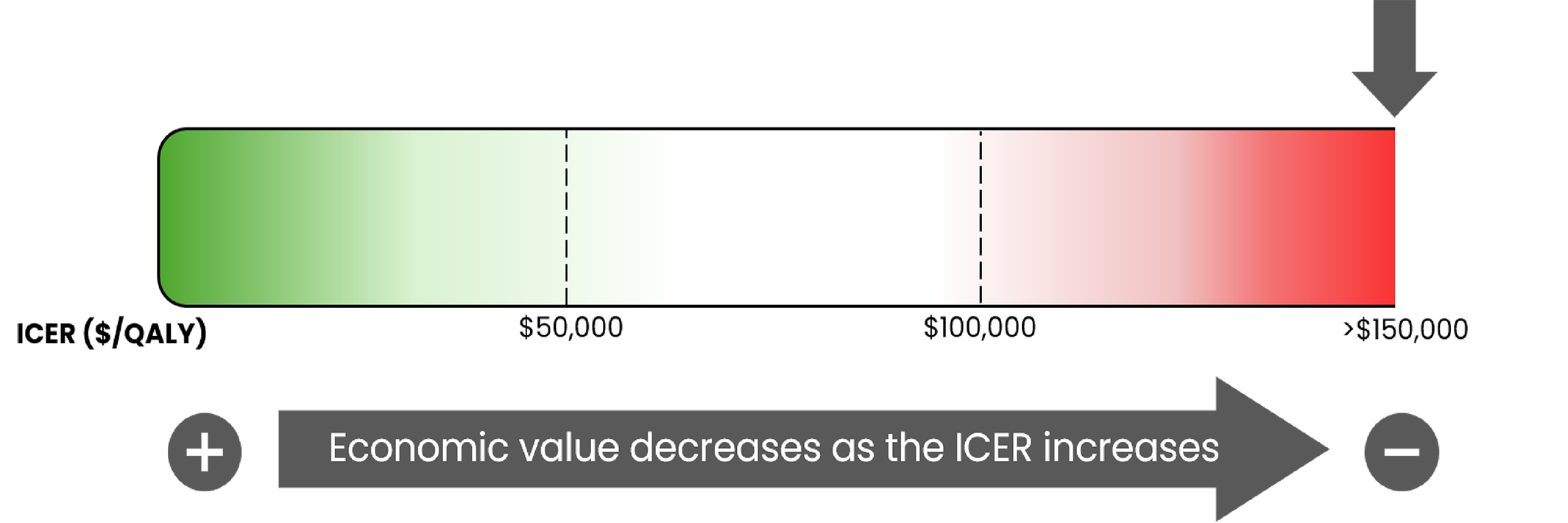
CDEC = Canadian Drug Expert Committee; ICER = incremental cost-effectiveness ratio; QALY = quality-adjusted life-year.
Certainty of the evidence: The evidence informing the economic evaluation is highly uncertain. While the pivotal trial demonstrated that leniolisib likely results in improvements in immunological parameters and lymphoproliferation, according to the clinical review, there is a lack of evidence to confirm a relationship between improvements in these outcomes and longer-term clinical outcomes (including the incidence, resolution, and severity of APDS manifestations, infections, APDS-related treatment use, and survival) remains uncertain. Many of these modelled effects were instead informed by noncomparative evidence, post hoc analyses, clinical expert opinion, and sponsor assumptions. As a result, the magnitude and durability of the long-term clinical benefit predicted by the model are highly uncertain.
Other considerations: The sponsor submitted an additional cost-effectiveness analysis adopting a societal perspective. In this analysis, the sponsor’s estimates of productivity losses were uncertain due to reliance on proxy conditions and methodological issues that overestimated absenteeism costs. Given these limitations, CDA-AMC presented the societal perspective as a scenario analysis only. The cost-effectiveness results from the societal perspective scenario analysis were similar to those from the analysis using a health care payer perspective.
Impacts on Health Systems
Anticipated budget impact: The sponsor estimates that the budget impact of reimbursing leniolisib plus BSC for the treatment of adult and pediatric patients aged 12 years and older with APDS will be approximately $58.6 million over the first 3 years of reimbursement compared to the amount currently spent on BSC, with an estimated expenditure of $58.6 million on leniolisib over this period. The actual budget impact of reimbursing leniolisib plus BSC will depend on the number of people eligible for treatment, and the impact that leniolisib may have on drug costs to treat APDS manifestations. The magnitude of uncertainty in the budget impact must be addressed to ensure the feasibility of adoption, given the difference between the sponsor’s estimate and the CDA-AMC estimate.
Organizational implications: CDEC and the clinical experts agreed that patients should have a genetically confirmed pathogenic APDS variant to receive leniolisib. At the time of this review, the sponsor had partnered with a genetic testing company to offer no-charge genetic testing for individuals in Canada who are suspected of having APDS through navigateAPDS. It is unclear if the no-charge genetic testing program has an end date.
Equity considerations: Individuals with APDS can face delays in diagnosis due to a lack of awareness among health care providers and limited access to specialists with experience managing inborn errors of immunity. This issue is magnified for those living in rural and remote communities. Delays in diagnosis and access to specialist care can lead to disease progression, poor health outcomes, and inefficient use of health care resources. Leniolisib is an oral medication that can be taken at home and may alleviate some of the geographic and socioeconomic barriers to accessing care for APDS, but it does not eliminate the need for other supportive treatments for APDS.
Sources of Information Used by the Committee
To make its recommendation, the committee considered the following information (links to the full documents for the review can be found on the project webpage):
the CDA-AMC review of the clinical and pharmacoeconomic evidence submitted by the sponsor, as well as relevant ethical issues related to leniolisib (refer to the Main Report and Supplemental Material document)
the sponsor’s comments on the draft report and the CDA-AMC responses
patients' perspectives gathered by 1 patient group, Canadian Immunodeficiencies Patient Organization (operating as Immunity Canada) (refer to the Patient and Clinician Group Input document)
input from a person with lived experience who delivered a brief presentation and answered questions from the committee (refer to the Person With Lived Experience section in this document)
input from 1 clinician group, The Medical Science Advisory Committee of Immunity Canada along with representatives of the Clinical Immunology Network Canada (refer to the Patient and Clinician Group Input document)
input from public drug programs that participate in the reimbursement review process (refer to the Supplemental Material document)
input from 4 clinical experts and panellists with expertise in the management of APDS consulted by CDA-AMC.
Special thanks: CDA-AMC extends our special thanks to the individuals who presented directly to CDEC and to the patient organizations representing the community of those living with APDS, including Immunity Canada.
General note: CDA-AMC makes every attempt to engage with people with lived experience as closely to the indication under review as possible; however, at times, CDA-AMC is unable to do so and instead engages with individuals with similar treatment journeys to ensure lived experience perspectives are included and considered in Reimbursement Reviews. CDA-AMC is fortunate to be able to engage with individuals who are willing to share their treatment journeys with CDEC.
All feedback received in response to the draft recommendation is available on the CDA-AMC project webpage.
CDEC Information
Members of the Committee
Dr. Peter Jamieson (Chair), Dr. Kerry Mansell (Vice-Chair), Sally Bean, Daryl Bell, Dan Dunsky, Dr. Ran Goldman, Dr. Trudy Huyghebaert, Dr. Dennis Ko, Dr. Christine Leong, Alicia McCallum, Dr. Srinivas Murthy, Dr. Nicholas Myers, Dr. Krishnan Ramanathan, Dr. Marco Solmi, Carla Velastegui, Dr. Edward Xie, and Dr. Peter Zed.
Meeting date: August 27, 2026
Regrets: Two expert committee members did not attend.
Conflicts of interest: None
ISSN: 2563-6596
Canada’s Drug Agency (CDA-AMC) is a pan-Canadian health organization. Created and funded by Canada’s federal, provincial, and territorial governments, we’re responsible for driving better coordination, alignment, and public value within Canada’s drug and health technology landscape. We provide Canada’s health system leaders with independent evidence and advice so they can make informed drug, health technology, and health system decisions, and we collaborate with national and international partners to enhance our collective impact.
Disclaimer: CDA-AMC has taken care to ensure that the information in this document was accurate, complete, and up to date when it was published, but does not make any guarantee to that effect. Your use of this information is subject to this disclaimer and the Terms of Use at cda-amc.ca.
The information in this document is made available for informational and educational purposes only and should not be used as a substitute for professional medical advice, the application of clinical judgment in respect of the care of a particular patient, or other professional judgments in any decision-making process. You assume full responsibility for the use of the information and rely on it at your own risk.
CDA-AMC does not endorse any information, drugs, therapies, treatments, products, processes, or services. The views and opinions of third parties published in this document do not necessarily reflect those of CDA-AMC. The copyright and other intellectual property rights in this document are owned by the Canadian Agency for Drugs and Technologies in Health (operating as CDA-AMC) and its licensors.
Questions or requests for information about this report can be directed to Requests@CDA-AMC.ca