Drugs, Health Technologies, Health Systems
Reimbursement Recommendation
Donanemab (Kisunla)
Indication: For the treatment of adults with a clinical diagnosis of mild cognitive impairment or mild dementia due to Alzheimer’s disease, who are apolipoprotein E epsilon 4 (APOE4) heterozygotes or noncarriers, and who have confirmed amyloid pathology.
Sponsor: Eli Lilly Canada Inc.
Final Recommendation: Reimburse with conditions
Summary
What Is the Reimbursement Recommendation for Kisunla?
Canada’s Drug Agency (CDA-AMC) recommends that Kisunla be reimbursed by public drug plans for the treatment of adult patients in the early stages of Alzheimer disease (AD) (i.e., mild cognitive impairment [MCI] or mild dementia) who have evidence of amyloid in the brain and who are APOE epsilon 4 (APOE4) noncarriers or heterozygotes, if certain conditions are met.
Why Did CDA-AMC Recommend Reimbursement?
The Canadian Drug Expert Committee (CDEC) determined that Kisunla demonstrates acceptable clinical value versus placebo in adult patients with a clinical diagnosis of MCI or mild dementia due to AD, who are APOE4 heterozygotes or noncarriers, and who have confirmed amyloid pathology. This determination was enough for CDEC to recommend that Kisunla be reimbursed. Given that Kisunla is expected to be an additive treatment to best supportive care (BSC), acceptable clinical value refers to added value versus BSC alone.
Evidence from a clinical trial showed that, compared with placebo, treatment with Kisunla for up to 76 weeks provided a clinical benefit in slowing cognitive and functional decline in adults with MCI or mild dementia due to AD who were APOE4 heterozygotes or noncarriers and had confirmation of amyloid in the brain. CDEC determined that the evidence showed that Kisunla addresses a significant unmet clinical need in this patient population.
Which Patients Are Eligible for Coverage?
Kisunla should only be covered to treat adult patients aged 50 years or older who have a clinical diagnosis of MCI or mild dementia due to AD with confirmed amyloid pathology using a validated method, and who are APOE4 noncarriers or heterozygotes.
What Are the Conditions for Reimbursement?
Kisunla should only be reimbursed if prescribed by clinicians with expertise and experience in the diagnosis, management, and treatment of AD, in a setting with timely access to MRI. Infusions should be administered by qualified health care professionals trained to monitor for, recognize, and manage infusion-related reactions. Reimbursement should be continued after every 6 months of treatment, up to a maximum of 18 months, if there is evidence of ongoing benefit and patient safety can be ensured. Treatment should be discontinued if the patient’s condition progresses to moderate dementia, if they do not undergo the required MRI surveillance, or if they develop symptomatic amyloid-related imaging abnormalities (ARIAs) or moderate to severe radiographic ARIAs. Kisunla should not be used in combination with other monoclonal antibody therapies for AD and should only be reimbursed if its price is reduced.
Important budget impact considerations and organizational implications must be addressed for health systems to be able to adopt Kisunla.
Review Background
Disease background: AD is a progressive and irreversible neurodegenerative disorder and the most common cause of dementia. It is characterized by worsening cognitive decline, functional impairment, and loss of independence that ultimately lead to complete dependence and substantial effects on patients’ health-related quality of life (HRQoL) and caregiver burden. As of 2025, an estimated 771,939 people in Canada were living with dementia, with AD accounting for approximately 60% to 80% of cases.
Indication and reimbursement request: Donanemab (Kisunla) has been approved by Health Canada “for the treatment of adults with a clinical diagnosis of mild cognitive impairment or mild dementia due to Alzheimer’s disease, who are apolipoprotein E [epsilon 4] (ApoE [epsilon 4]) heterozygotes or non-carriers, and who have confirmed amyloid pathology.” The sponsor is seeking reimbursement for this patient population.
Drug under review: Donanemab is an IgG1 monoclonal antibody directed against insoluble N-truncated pyroglutamate amyloid beta. It is available as a 17.5 mg/mL solution administered by IV infusion after dilution. According to the product monograph recommendations, donanemab is to be administered every 4 weeks as follows: 350 mg for infusion 1 (week 0), 700 mg for infusion 2 (week 4), 1,050 mg for infusion 3 (week 8), and 1,400 mg for infusion 4 (week 12) and beyond, to a maximum of 18 months.
Treatment costs: At the submitted price of $1,027.17 per 20 mL vial, the annual cost of Kisunla is expected to be $51,359 per patient in the first year of treatment and $24,652 in the second year of treatment, based on the Health Canada–recommended dosage.
Highlights of Input From Interested Parties
The patient groups (the Alzheimer Society of Canada, the Alzheimer Society of Ontario, the International Federation on Ageing, and Dementia Network Calgary) noted the following regarding impacts of the disease, unmet needs, and important outcomes:
MCI and AD affect memory, cognition, independence, emotional well-being, social participation, and identity, with progressive loss of autonomy and increasing dependence as the disease advances and substantial effects on family and caregivers.
Existing treatments offer only modest, temporary, or uncertain benefits, with notable side effects and no meaningful impact on disease progression.
The most important goals to patients and caregivers in the treatment of early AD are to halt or slow disease progression, preserve cognition and functional capacity, prevent memory loss, maintain quality of life, and reduce caregiver burden and the impact on caregivers’ own quality of life. Patients and caregivers emphasized the importance of extending the amount of time lived well.
The clinician groups (the Cognitive Neurosciences Clinic [at the University of Calgary], the Covenant Community Health Centre Lakewood, the Douglas Mental Health University Institute Memory Clinic [in Montréal, Quebec], Trillium Health Partners, the University of British Columbia Hospital Clinic for Alzheimers and Related Disorders, the Canadian Consortium on Neurodegeneration in Aging [CCNA], and the Consortium of Canadian Centres for Clinical Cognitive Research) and the clinical experts consulted by CDA-AMC noted the following regarding unmet needs arising from the disease and place in therapy for the drug under review:
There is a need for publicly reimbursed and accessible disease-modifying therapies for patients with MCI and mild dementia due to AD that maintain or slow the decline in cognition, function, and independence.
Donanemab is a disease-modifying therapy that is anticipated to be used as a first-line treatment for MCI or mild dementia due to AD and which may be used in combination with symptomatic treatments for mild dementia.
The participating public drug programs provided input regarding considerations for initiation and prescribing of therapy; health system implementation considerations; relevant comparators; and system and economic considerations.

Note: The perspectives shared by people with lived experience who present to the committee reflect their individual experiences and are not necessarily representative of all people with the same condition or course of treatment. Their insights provide valuable context about what a patient, support person, or caregiver might go through with this condition or treatment, helping to inform the committee’s deliberations. These narratives complement other forms of evidence and input and should be considered as 1 element contributing to a broader understanding of the condition and treatment under review.
Recommendation
With a vote of 11 in favour to 3 against, CDEC recommends that donanemab be reimbursed for the treatment of adults with a clinical diagnosis of MCI or mild dementia due to AD, who are APOE epsilon 4 (APOE4) noncarriers or heterozygotes, and who have confirmed amyloid pathology, only if the conditions listed in Table 1 are met.
Table 1: Reimbursement Conditions and Reasons
Reimbursement condition | Reason | Implementation guidance |
|---|---|---|
Initiation | ||
1. Treatment with donanemab should be reimbursed for adult patients with MCI or mild dementia due to AD with all the following criteria: 1.1. APOE4 noncarrier or heterozygote 1.2. confirmed amyloid pathology using amyloid PET scan, CSF analysis, or equivalent validated method 1.3. aged 50 years or older. | Evidence from the TRAILBLAZER-ALZ 2 trial demonstrated that donanemab reduced cognitive and functional decline in patients aged 60 to 85 years with these characteristics. CDEC agreed with the clinical experts consulted by CDA-AMC that there is no pragmatic reason to expect the eligible age range for donanemab to differ from that of lecanemab. According to the Health Canada indication, treatment with donanemab is approved for patients who are APOE4 noncarriers or heterozygotes. According to the product monograph for donanemab, the presence of amyloid-beta pathology must be confirmed using approved methods such as amyloid PET scan, CSF analysis, or equivalent validated methods before initiating treatment with donanemab. | Although the TRAILBLAZER-ALZ 2 trial enrolled patients with an MMSE score of 20 to 28 at baseline, CDEC agreed with the clinical experts consulted by CDA‑AMC that for cognitive assessment, alternative memory assessment scales accepted for use in clinical practice (e.g., the MoCA) may be used to confirm MCI or mild dementia due to AD in clinical practice. The participating drug programs have requested clarification on which specific memory assessment scales would be appropriate for the purposes of identifying patients with MCI or mild dementia due to AD, along with the thresholds that should be used for each of those scales. CDA‑AMC considered this feedback and concluded that this exceeds the scope of a reimbursement review and has advised that a panel of specialists be convened to provide detailed advice on those diagnostic conditions. |
Renewal | ||
2. Reimbursement of donanemab should be continued after every 6 months of treatment up to a maximum of 18 months if all the following conditions are met: 2.1. There is evidence of ongoing benefit, such that the patient’s disease has not progressed to moderate dementia (e.g., MMSE score < 20 or MoCA score < 17, or equivalent reflecting the upper threshold for moderate dementia). 2.2. Patient safety can be ensured, meaning the patient is able to adhere to the required MRI monitoring schedule before the second, fourth, and seventh doses (approximately at weeks 4, 12, and 24) and before the 14th dose (approximately at week 52) when deemed necessary by the treating clinician. Treatment should be discontinued for patients who do not undergo MRI surveillance. 2.3. Patient does not exhibit symptomatic ARIAs or moderate to severe radiographic ARIAs. Radiographic ARIA severity should be classified according to the MRI classification criteria for radiographic severity of ARIAs provided in the product monograph for donanemab. | The product monograph for donanemab states that treatment with donanemab should be discontinued if the patient’s disease progresses to moderate AD before the end of the 18-month maximum. The clinical experts consulted by CDA‑AMC agreed that donanemab should be discontinued if there is evidence of disease progression to a moderate or worse stage of dementia. | The clinical experts consulted by CDA‑AMC stated that response to treatment should be assessed every 6 to 12 months. CDEC agreed with the clinical experts consulted by CDA-AMC that alternative assessment scales may be used to monitor progression to a moderate or worse stage of dementia. CDA-AMC is advising jurisdictions that guidance on the assessment scales and the appropriate thresholds for each scale could be addressed by the aforementioned implementation panel. CDEC noted that in the TRAILBLAZER-ALZ 2 trial, treatment with donanemab was discontinued in patients who met the amyloid plaque clearance stopping criteria, defined as an amyloid level of < 11 CL on a single PET scan or 11 to < 25 CL on 2 consecutive PET scans. However, CDEC agreed with clinical experts consulted by CDA-AMC that routine PET imaging to monitor amyloid clearance would not be feasible in clinical practice. As such, treatment with donanemab may continue for up to 18 months, consistent with the product monograph. CDEC also agreed with the clinical experts that treatment with donanemab should be discontinued in patients experiencing any macrohemorrhage, 1 area of superficial siderosis, more than 10 microhemorrhages after initiation of treatment, or more than 2 episodes of ARIAs. |
Prescribing | ||
3. Donanemab should be prescribed by clinicians with expertise and experience in diagnosing, managing, and treating patients with AD, and with timely access to MRI. 4. Donanemab infusions should be administered by qualified health care professionals trained to monitor for, recognize, and manage infusion-related reactions. | This is meant to ensure that donanemab is prescribed for appropriate patients and that adverse effects are managed in an optimized and timely manner. | CDEC noted that the product monograph for donanemab recommends MRI monitoring before the second, fourth, and seventh infusions. Additional MRI scans are recommended when clinically indicated because of suspected ARIA and before the 14th dose in patients at increased risk for ARIAs, such as APOE4 heterozygotes or those who experienced ARIAs earlier in treatment. The product monograph also indicates that an MRI before the third dose may facilitate earlier detection of ARIAs. CDEC agreed that prescribers should confirm that the required MRI monitoring can be provided before initiating treatment with donanemab. Jurisdictions may consider requiring that, in addition to having expertise and experience in the diagnosis, management, and treatment of patients with AD (and timely access to MRI), clinicians complete training on the recognition and management of ARIAs, such as the sponsor-provided ARIA educational program, before prescribing donanemab. |
5. Donanemab should not be used in combination with other monoclonal antibody therapies for AD. | The TRAILBLAZER-ALZ 2 trial did not combine donanemab with other monoclonal antibody therapies for AD and CDEC did not review any evidence regarding the efficacy and safety of donanemab when used in combination with these therapies. | — |
Pricing | ||
6. A reduction in price. | Using the CDA-AMC base-case analysis, which adopted a health care payer perspective, the ICER for donanemab plus BSC was $136,669 per QALY gained when compared with BSC alone in the indicated population. This decreases to an ICER of $128,612 per QALY gained when adopting a societal perspective. A band 3a price reduction would be required to achieve cost-effectiveness at a $50,000 per QALY threshold compared to BSC when adopting a health care payer perspective. A band 2a price reduction would be required to achieve cost-effectiveness at a $100,000 per QALY threshold with a health care payer perspective. A smaller price reduction is required to achieve cost-effectiveness at a $50,000 or $100,000 per QALY gained threshold if a societal perspective is adopted. Price reductions for different thresholds for each perspective are available in the CDA-AMC Main Report and the Supplemental Material document. | The CDA-AMC analysis is based on public list prices for all treatments. Further price reductions may be required if there are price arrangements (discounts) currently in place for any treatment included in the economic analysis. Likewise, further price reductions may be required to address economic feasibility of adoption. |
Feasibility of adoption | ||
7. The economic feasibility of adoption of donanemab must be addressed. | At the submitted price, the incremental budget impact of donanemab is expected to be greater than $40 million in years 1, 2, and 3. | — |
8. The following will pose significant challenges to the organizational feasibility of adopting donanemab into the health system: 8.1. access to MRIs for monitoring ARIA events 8.2. access to physicians with expertise in the diagnosis of MCI and mild dementia and access to associated resources (e.g., validated methods to confirm amyloid pathology) to determine patient eligibility for treatment with donanemab. | Monitoring for ARIA events associated with donanemab requires clinical and MRI resources not routinely needed in the care of patients with AD. Access to these resources will be challenging due to capacity constraints. The scope of the CDA-AMC review did not evaluate the potential impact of allocating MRI resources to meet the monitoring requirements for donanemab on the wait times or health outcomes for those with other health conditions for which MRI is warranted. Jurisdictions will need to consider these factors when evaluating the feasibility of providing reimbursement for donanemab. | A sponsor-funded or sponsor-supported registry, developed in collaboration with clinicians, patients, and provincial and territorial jurisdictions, should be established to capture data on utilization (including IV dosing), cognitive outcomes, safety, and patient-reported outcomes. |
AD = Alzheimer disease; APOE4 = apolipoprotein E epsilon 4; ARIA = amyloid-related imaging abnormality; BSC = best supportive care; CDA‑AMC = Canada’s Drug Agency; CDEC = Canadian Drug Expert Committee; CL = Centiloid; CSF = cerebrospinal fluid; ICER = incremental cost-effectiveness ratio; MCI = mild cognitive impairment; MMSE = Mini-Mental State Examination; MoCA = Montreal Cognitive Assessment; QALY = quality-adjusted life-year.
aFor the statement regarding the size of the price reduction required, band 1 = 1% to 24%, band 2 = 25% to 49%, band 3 = 50% to 74%, and band 4 = 75% or greater.
Rationale for the Recommendation
Clinical Value
Based on the totality of the reviewed clinical evidence, CDEC concluded that donanemab demonstrates acceptable clinical value compared with placebo in adult patients with a clinical diagnosis of MCI or mild dementia due to AD, who are APOE4 heterozygotes or noncarriers, and who have confirmed amyloid pathology. Given that donanemab is expected to be an additive treatment to BSC, acceptable clinical value refers to added value versus BSC alone.
CDEC reviewed evidence from the TRAILBLAZER-ALZ 2 phase III trial (N = 1,736), a randomized, double-blind, controlled study in patients with early symptomatic AD and confirmed amyloid pathology. The committee focused on post hoc analyses of APOE4 heterozygotes and noncarriers (N = 1,447), consistent with the Health Canada–approved indication and the sponsor’s reimbursement request. Based on this evidence, CDEC determined that, compared with placebo, treatment with donanemab for up to 76 weeks provided a clinical benefit by slowing cognitive and functional decline in adults with MCI or mild dementia due to AD who were APOE4 heterozygotes or noncarriers and had confirmed amyloid pathology. Specifically, the between-group difference in the change from baseline in Integrated Alzheimer’s Disease Rating Scale (iADRS) scores at week 76, the primary end point, favoured donanemab and was considered clinically meaningful by the clinical experts consulted by CDA-AMC. Similarly, the between-group difference in the change from baseline in Clinical Dementia Rating Scale – Sum of Boxes (CDR-SB) scores at week 76, a secondary end point of key relevance to the review, favoured donanemab and was considered clinically meaningful. Results for other measures of cognition and function — including the Alzheimer’s Disease Assessment Scale – 13-item Cognitive Subscale (ADAS-Cog13), the Alzheimer’s Disease Cooperative Study – Instrumental Activities of Daily Living (ADCS-iADL) scale, and the Mini-Mental State Examination (MMSE) — were aligned with the findings for the iADRS and CDR-SB in favouring donanemab and supported a consistent pattern of benefit in slowing cognitive and functional decline. Furthermore, CDR-SB results from the TRAILBLAZER-ALZ 2 long-term extension (LTE) study suggest that the treatment effect of donanemab in slowing cognitive and functional decline in the indicated population may be maintained through 36 months relative to modelled natural disease progression. However, considerable uncertainty remains with the findings from the LTE study.
CDEC noted that donanemab was associated with a higher incidence of serious adverse events (SAEs) and ARIAs compared with placebo in the TRAILBLAZER-ALZ 2 trial. Notably, ARIA with edema or effusions (ARIA-E) events and ARIA with hemorrhage or hemosiderin deposition (ARIA-H) events occurred more frequently in the donanemab group than in the placebo group, with ARIA-E reported in 20.6% versus 1.8% of patients and ARIA-H reported in 27.6% versus 12.2% of patients, respectively. However, the committee recognized that early AD is a progressive and debilitating condition with limited treatment options. The committee also emphasized the importance of informed patient choice, with treatment decisions made in consultation with health care providers after considering the potential benefits and risks of therapy.
CDEC discussed that sources of uncertainty in the submitted evidence included the absence of established between-group minimal important differences (MIDs) for iADRS and CDR-SB scores; the lack of direct assessment of the effect of donanemab on patient HRQoL and caregiver burden; substantial missing data; and methodological limitations associated with evaluating long-term cognitive decline through comparisons of CDR-SB scores between patients treated with donanemab and an external Alzheimer’s Disease Neuroimaging Initiative cohort.
CDEC acknowledged that patients identified a need for disease-modifying therapies with acceptable safety profiles that maintain or prolong independence, preserve HRQoL, support cognitive function, slow or halt disease progression, and prevent memory loss. The committee noted that iADRS and CDR-SB outcomes of the TRAILBLAZER-ALZ 2 trial, as well as other measures of cognition and function, consistently favoured donanemab and were considered clinically meaningful for patients with early AD by the clinical experts consulted by CDA-AMC. CDEC determined that the reviewed evidence indicates that donanemab addresses some of the needs identified by patients by slowing cognitive and functional decline. However, uncertainty remains regarding the effects of donanemab on patient HRQoL, independence, and caregiver burden because these outcomes were not directly assessed in the submitted evidence. CDEC concluded that the totality of evidence demonstrates that donanemab addresses a significant unmet clinical need in patients with early AD and confirmed amyloid pathology who are APOE4 noncarriers or heterozygotes.
Further information on the committee’s discussion around clinical value is provided in the Summary of Deliberation section.
Developing the Recommendation
The determination of acceptable clinical value was sufficient for CDEC to recommend reimbursement of donanemab. As part of the deliberation on whether to recommend reimbursement, the committee also considered unmet clinical need, unmet nonclinical need, and health inequity. Information on this discussion is provided in the Unmet Clinical Need and Distinct Social and Ethical Considerations domains in the Summary of Deliberation section.
Because CDEC recommended that donanemab be reimbursed, the committee also deliberated on whether reimbursement conditions should be added to address important economic considerations, health system impacts, or social and ethical considerations, or to ensure clinical value is realized. The resulting reimbursement conditions, with accompanying reasons and implementation guidance, are stated in Table 1.
Summary of Deliberation
CDEC considered all domains of value of the deliberative framework before developing its recommendation: clinical value, unmet clinical need, distinct social and ethical considerations, economic considerations, and impacts on health systems. For further information on the domains of value, refer to Expert Committee Deliberation at Canada’s Drug Agency.
The committee considered the following key discussion points, organized by the 5 domains of value.
Clinical Value
Appropriate comparators: At the time the submission was received, there were no disease-modifying therapies for AD that were reimbursed by public drug plans or that had received a recommendation to reimburse from CDEC. Given this, placebo plus BSC (including symptomatic medications for AD) was considered an appropriate comparator for donanemab plus BSC.
Efficacy versus placebo: Evidence from 1 randomized, controlled, phase III trial (the TRAILBLAZER-ALZ 2 trial) demonstrated that in adult patients with MCI or mild dementia due to AD and confirmed amyloid pathology who were APOE4 heterozygotes or noncarriers, treatment with donanemab resulted in less cognitive and functional decline compared to placebo, as measured by iADRS and CDR-SB scores. For iADRS scores (primary end point), the between-group difference in the mean change from baseline to week 76 was 3.38 points (95% CI, 1.832 points to 4.924 points; P < 0.001) in favour of donanemab. iADRS scores range from 0 to 144 points, with lower scores indicating greater impairment. The committee noted that the iADRS tool was developed by the sponsor and that evidence on the validity and reliability of this outcome measure from sources external to the sponsor were not identified. For CDR-SB scores (secondary end point), the between-group difference in the mean change from baseline to week 76 was −0.77 points (95% CI, −1.04 points to −0.49 points; P < 0.001) in favour of donanemab. CDR-SB scores range from 0 to 18, with higher scores indicating greater impairment. CDEC noted that although the CDR-SB is a well-established and validated questionnaire in patients with early AD, it does not have a clearly defined between-group MID. Results for other end points evaluating cognition or function in the trial (i.e., ADAS-Cog13, ADCS-iADL, and MMSE scores) were consistent with iADRS and CDR-SB results in showing less cognitive and functional decline with donanemab compared with placebo.
Clinical importance of treatment effects: The committee reviewed input from the patient groups, clinician groups, and clinical experts consulted for this review that indicated the key goals in the treatment of patients with early AD are to halt or slow disease progression; maintain cognition, functional capacity, and independence; prevent memory loss; maintain quality of life; and reduce caregiver burden and the impact on caregivers’ own quality of life. Based on the submitted efficacy evidence, CDEC concluded that donanemab is a disease-modifying therapy that addresses an unmet clinical need in patients with early AD by reducing cognitive and functional decline.
Certainty of the evidence: The Grading of Recommendations Assessment, Development and Evaluation (GRADE) tool was used to rate the certainty of the iADRS and CDR-SB outcomes from the TRAILBLAZER-ALZ 2 trial in the indicated population. The committee noted that the absence of a published or estimated between-group MID for iADRS scores was a limitation that caused rating down for serious imprecision, resulting in moderate certainty in the evidence for this outcome; the absence of a MID presented challenges in assessing the certainty in the clinical meaningfulness of the treatment effect. However, CDEC considered input from the clinical experts consulted by CDA-AMC who generally agreed that the iADRS findings were clinically meaningful. CDEC noted that the GRADE assessment for CDR-SB applied a between-group MID of 0.5 points, which CDA‑AMC implemented based on published within-group MID estimates for the scale and input from clinical experts, who indicated that a 0.5-point difference is clinically meaningful in patients with early AD. Using this threshold, the certainty of the evidence for CDR-SB was rated as high.
Long-term efficacy: CDEC reviewed analyses comparing changes from baseline in CDR-SB scores among patients treated with donanemab during the core and LTE phases of the TRAILBLAZER-ALZ 2 study with those of an external cohort from the Alzheimer’s Disease Neuroimaging Initiative. The results favoured donanemab, with between-group differences in change from baseline in CDR-SB scores of −0.6 points (95% CI, −0.9 points to −0.2 points) at 18 months and −1.0 point (95% CI, −1.5 points to −0.4 points) at 36 months. These findings suggest that the effect of donanemab in slowing cognitive and functional decline may persist beyond the 18-month core trial period compared with modelled natural disease progression. However, CDEC noted considerable uncertainty in these results due to the lack of a randomized comparator, reliance on an external control cohort, small effective sample sizes, incomplete statistical reporting, and resulting uncertainty in the estimated treatment effects.
Harms findings: CDEC noted that evidence of moderate certainty from the TRAILBLAZER-ALZ 2 trial demonstrated that, compared with placebo, donanemab was associated with higher rates of SAEs, ARIA-E events, and ARIA-H events. Notably, ARIA-E and ARIA-H events occurred more frequently in the donanemab group than in the placebo group, with ARIA-E events reported in 20.6% versus 1.8% of patients and ARIA-H events reported in 27.6% versus 12.2% of patients, respectively. The committee discussed that ARIA events occurred primarily during the first 24 weeks of treatment and that limited access to MRI in some jurisdictions may pose challenges for monitoring. CDEC also reviewed safety data from the TRAILBLAZER-ALZ 2 LTE study, which were generally consistent with those observed in the core trial and did not identify any new safety signals, although interpretation was limited by the absence of a control group and the potential for selective attrition. While recognizing that the safety profile of donanemab is an important consideration, CDEC noted that early AD is a progressive and debilitating condition with limited treatment options and emphasized the importance of informed patient decision-making regarding the potential benefits and risks of treatment.
Health Canada–approved dosing: CDEC discussed that the donanemab dosing regimen used in the TRAILBLAZER-ALZ 2 trials differs from the Health Canada–approved regimen, which recommends a more gradual titration during the first 3 doses. The committee reviewed evidence from the TRAILBLAZER-ALZ 6 phase IIIb trial, a multicentre, randomized, double-blind study, which demonstrated that the Health Canada–approved regimen was associated with a lower frequency of ARIA-E events than the standard dosing regimen used in the TRAILBLAZER-ALZ 2 trial while maintaining comparable donanemab exposure and pharmacodynamic effects on amyloid plaque reduction.
Gaps in the available evidence: CDEC noted that patients and clinicians identified HRQoL and caregiver burden as important outcomes in the treatment of AD. However, these outcomes could not be evaluated because the sponsor did not provide evidence on the effects of donanemab on patient HRQoL or caregiver burden. The committee also noted that the CDA-AMC review was based primarily on evidence from a placebo-controlled trial and that no comparative evidence (direct or indirect) with another disease-modifying therapy was reviewed. However, CDEC considered the placebo-controlled evidence acceptable because, at the time of the review, no disease-modifying therapies met the relevant comparator designation under the CDA‑AMC reimbursement review procedures.
Clinical value: Based on the submitted evidence and all the preceding considerations, CDEC considered that donanemab has acceptable clinical value compared with BSC in adult patients with a clinical diagnosis of MCI or mild dementia due to AD, who are APOE4 heterozygotes or noncarriers, and who have confirmed amyloid pathology.
Unmet Clinical Need
Input on unmet clinical need: Patients and clinicians identified a need for accessible, publicly reimbursed, disease-modifying treatments for early AD (including MCI) that can maintain, or slow declines in, cognition, function, and independence.
Severity of the disease: CDEC discussed that AD is a progressive and irreversible neurodegenerative disorder, characterized by worsening cognitive decline, functional impairment, significant psychological and behavioural symptoms, and loss of independence and identity. AD ultimately leads to complete dependence and has substantial impacts on patients’ HRQoL and caregiver and family burden.
Availability of treatment options: The current pharmacologic treatments for MCI or mild dementia due to AD are acetylcholinesterase inhibitors (i.e., donepezil, galantamine, and rivastigmine) and lecanemab. Memantine is an available treatment for AD but is only approved for the treatment of moderate to severe disease. The clinical experts consulted by CDA‑AMC noted that acetylcholinesterase inhibitors are symptomatic therapies that provide only temporary and modest improvements, are associated with adverse effects, do not alter the course of the disease, and are not approved for the treatment of MCI. Lecanemab is a disease-modifying therapy indicated for MCI and mild dementia stages of AD, but it is not currently publicly reimbursed and therefore is not widely accessible.
Distinct Social and Ethical Considerations
Input on unmet nonclinical need: The committee acknowledged patient group input indicating serious physical and psychological burdens associated with caregiving and the financial strain faced by many caregivers due to the need to decrease work hours or leave the workforce altogether. CDEC noted that uncertainty regarding the effects of donanemab on caregiver burden and caregiver quality of life remains an important evidence gap because these outcomes were not directly evaluated in the submitted evidence.
Equity considerations: CDEC acknowledged existing disparities in timely diagnosis and access to care experienced by many systemically marginalized and equity-deserving groups. In particular, they discussed challenges faced by Indigenous Peoples, populations with low incomes, and those living in rural or remote locations with limited access to specialized care and increased financial burdens associated with travel. They discussed the possibility that donanemab may exacerbate disparities in AD care for some given the additional requirements associated with treatment initiation, administration, and monitoring (i.e., accessing specialized care, confirmation of amyloid pathology, APOE4 testing, infusion schedule, and MRI monitoring). The committee also considered the limited racial and ethnic diversity of the TRAILBLAZER-ALZ 2 trial population and resulting uncertainty regarding benefits and harms across diverse populations.
Ethical implications: CDEC discussed the importance of shared decision-making given the potential benefits, risks, treatment burdens, and uncertainties associated with donanemab. This includes ensuring realistic expectations by considering whether the potential degree of slowing disease progression is meaningful to an individual patient in light of their own goals, their understanding of treatment burden, and their tolerance for risk of experiencing SAEs such as ARIAs. They also discussed how the implementation of donanemab would require expanding and reorganizing health system resource capacity in Canada to support timely, safe, appropriate, and equitable access.
Economic Considerations
Health impacts of donanemab versus relevant comparators: Based on the evidence reviewed for this submission, donanemab plus BSC is predicted to be associated with a gain of 0.35 life-years compared to BSC alone and may result in a gain of 0.44 quality-adjusted life-years (QALYs) compared to BSC over a lifetime (27-year) horizon.
Cost of donanemab versus relevant comparators: Donanemab plus BSC is predicted to be associated with higher costs to the health care system than BSC alone (incremental costs = $59,480) over a lifetime (27-year) horizon, primarily driven by increased costs associated with donanemab treatment (i.e., drug acquisition, administration, diagnostic testing, and AEs).
Key findings of the economic evaluation: The incremental cost-effectiveness ratio (ICER) of donanemab plus BSC compared to BSC alone was $136,669 per QALY gained in the CDA-AMC base case adopting a health care payer perspective. The estimated ICER was sensitive to treatment effect waning assumptions and the starting disease severity of patients. If considering a societal perspective that includes out-of-pocket costs and caregiver HRQoL impacts, the ICER of donanemab plus BSC compared to BSC alone was $128,612 per QALY gained.
Figure 1: Estimate of the ICER Used by CDEC to Inform the Price Condition
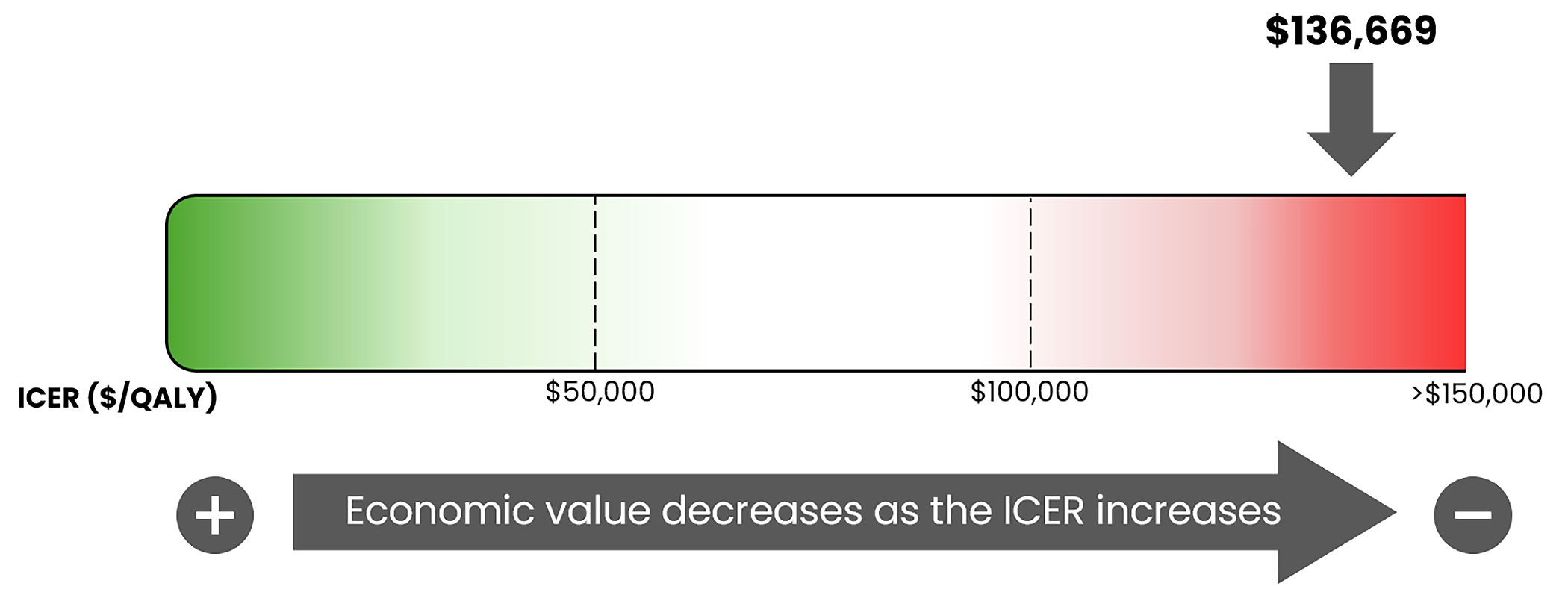
CDEC = Canadian Drug Expert Committee; ICER = incremental cost-effectiveness ratio; QALY = quality-adjusted life-year.
Certainty of the evidence: As donanemab is associated with a fixed treatment duration of 18 months, a substantial portion of health benefits are largely driven by assuming a sustained treatment benefit beyond the 18-month treatment course. CDEC noted that given the absence of long-term clinical evidence beyond 3 years, the effect of donanemab following treatment discontinuation remains highly uncertain and additional price reductions may be required.
Societal value: The committee discussed that treatment with donanemab may have an important impact on societal considerations such as caregiver HRQoL and out-of-pocket costs. Thus, CDA-AMC presented a cost-effectiveness analysis adopting a societal perspective that included these outcomes. The committee agreed that there was sufficient evidence to support that there may be an impact of donanemab on caregiver HRQoL and out-of-pocket costs.
Other considerations: CDEC also discussed that while lecanemab was not publicly reimbursed at the time of this review, if lecanemab were to be publicly funded, the cost-effectiveness of donanemab compared to lecanemab is unknown and it is uncertain how the introduction of lecanemab will affect market share expectations and subsequently the budget impact of donanemab.
Impacts on Health Systems
Anticipated budget impact: CDA-AMC estimated that 36,319 patients would be eligible for donanemab plus BSC over a 3-year period (year 1 = 7,578; year 2 = 11,600; year 3 = 17,141), of whom 16,822 would be expected to receive donanemab plus BSC (year 1 = 3,031; year 2 = 5,220; year 3 = 8,570). The estimated incremental budget impact of reimbursing donanemab plus BSC is predicted to be approximately $642 million over the first 3 years, with an expected expenditure of $644 million on donanemab alone. The actual budget impact of reimbursing donanemab will depend on the number of patients eligible for treatment, which is influenced by access to clinical assessments and diagnostic testing (which were uncertain in the budget impact analysis).
Organizational implications: CDEC discussed that confirmation of amyloid pathology is required for initiation of treatment with donanemab. The committee discussed that there are disparities in amyloid PET access and variability in reimbursement of amyloid PET and cerebrospinal fluid and blood-based AD biomarker testing across jurisdictions in Canada, which leads to inequities in access. CDEC also discussed training requirements related to infusion administration, tools for patient assessment and evaluation of treatment response, and safety monitoring. CDEC noted input from the clinical experts regarding the need for close monitoring for ARIA events and the MRI monitoring requirements stated in the donanemab product monograph. The committee discussed MRI capacity constraints that exist in various provinces and territories across the country, including limited and variable access to MRI, which may pose challenges for safe and equitable treatment initiation, and adequate and timely monitoring for all eligible patients. System capacity constraints along the continuum of care for AD raise questions about who will be responsible for prioritizing eligible patients for access to treatment and supporting infrastructures. The committee also considered that a 10-minute MRI sequence can screen for ARIAs, which could help mitigate capacity constraints. The committee noted concerns regarding current resources and that health care system changes would be required to accommodate the required monitoring, and that MRI capacity remains a practical consideration across jurisdictions. CDEC also discussed discontinuation of donanemab based on amyloid plaque clearance. The committee noted that in the TRAILBLAZER-ALZ 2 trial, patients whose amyloid plaque levels met certain criteria, as measured by amyloid PET performed at 24 weeks and 52 weeks, discontinued treatment with donanemab. CDEC noted input from the clinical experts that this currently would not be feasible in routine clinical practice in Canada due to the variability in, and limited access to, PET scans across the country.
Equity considerations: CDEC noted current systems-level gaps in AD diagnosis, care, and management in Canada. The committee also noted how these gaps tend to be exacerbated for those living in rural or remote areas and for racialized and other equity-deserving groups. The committee discussed how the implementation of donanemab would require expanding and reorganizing health system resource capacity in Canada to support timely, safe, appropriate, and equitable access. The committee discussed the principle of proportionality in relation to the balance of benefits and harms of donanemab, and they noted relevant health system challenges that should inform system-level planning. They also discussed the overall limited population of patients with MCI or mild dementia due to AD who would be eligible for treatment with donanemab as well as resource allocation challenges associated with providing this therapy alongside meeting the needs of those who are ineligible. CDEC also discussed health system capacity considerations and the potential for the implementation of donanemab to affect resources and timely access to care for other patients and conditions.
Testing procedure considerations: APOE genotype testing is not currently performed as part of routine testing for patients with early AD in Canada. Because the testing infrastructure for APOE genotype testing is already established, additional medically necessary indications in Canada for APOE genotyping, including anti–amyloid-beta treatment eligibility and ARIA risk assessment, would be feasible and would not likely significantly impact human or health care resources.
Need for real-world evidence generation: CDEC noted that important uncertainties remain regarding the long-term effectiveness, safety, utilization patterns, and health system impacts of donanemab. The committee discussed that clinical trial follow-up remains limited, particularly after treatment discontinuation, and that the real-world implications of treatment on cognitive outcomes, functional outcomes, caregiver burden, health care resource utilization, and ARIA monitoring remain uncertain. As such, CDEC considered the development of a sponsor-supported registry to be valuable for collecting real-world evidence and informing future assessments of clinical outcomes, safety, and system impact.
Sources of Information Used by the Committee
To make its recommendation, the committee considered the following information (links to the full documents for the review can be found on the project web page):
the CDA-AMC review of the clinical and pharmacoeconomic evidence submitted by the sponsor, as well as relevant ethical issues and potential impacts of testing procedures related to donanemab (refer to the Main Report and the Supplemental Material document)
the sponsor’s comments on the draft report and the CDA-AMC responses
patients’ perspectives gathered by 4 patient groups, the Alzheimer Society of Canada, the Alzheimer Society of Ontario, the International Federation on Ageing, and Dementia Network Calgary (refer to the Patient and Clinician Group Input document)
input from a person with lived experience who delivered a brief presentation and answered questions from the committee (refer to the Person With Lived Experience section earlier in this document)
input from 7 clinician groups, the Cognitive Neurosciences Clinic (University of Calgary), the Covenant Community Health Centre Lakewood, the Douglas Mental Health University Institute Memory Clinic (Montréal, Quebec), Trillium Health Partners, the University of British Columbia Hospital Clinic for Alzheimers and Related Disorders, the CCNA, and the Consortium of Canadian Centres for Clinical Cognitive Research (refer to the Patient and Clinician Group Input document)
input from public drug programs that participate in the reimbursement review process (refer to the Supplemental Material document)
input from 7 clinical experts with expertise in the management of AD consulted by CDA-AMC.
Special thanks: CDA-AMC extends special thanks to the individual who presented directly to CDEC and to the patient group representing the community of those living with AD, including David Black and the Engagement of People with Lived Experience of Dementia (EPLED) program of the CCNA.
General note: CDA-AMC makes every attempt to engage with people with lived experience as closely to the indication under review as possible; however, at times, CDA-AMC is unable to do so and instead engages with individuals with similar treatment journeys to ensure lived experience perspectives are included and considered in Reimbursement Reviews. CDA-AMC is fortunate to be able to engage with individuals who are willing to share their treatment journeys with CDEC.
CDEC Information
Members of the Committee
Dr. Peter Jamieson (Chair), Dr. Kerry Mansell (Vice-Chair), Sally Bean, Daryl Bell, Dan Dunsky, Dr. Ran Goldman, Dr. Trudy Huyghebaert, Dr. Dennis Ko, Dr. Christine Leong, Alicia McCallum, Dr. Srinivas Murthy, Dr. Nicholas Myers, Dr. Krishnan Ramanathan, Dr. Marco Solmi, Carla Velastegui, Dr. Edward Xie, and Dr. Peter Zed.
Meeting date: August 27, 2026
Regrets: Two expert committee members did not attend.
Conflicts of interest: None
ISSN: 2563-6596
Canada’s Drug Agency (CDA-AMC) is a pan-Canadian health organization. Created and funded by Canada’s federal, provincial, and territorial governments, we’re responsible for driving better coordination, alignment, and public value within Canada’s drug and health technology landscape. We provide Canada’s health system leaders with independent evidence and advice so they can make informed drug, health technology, and health system decisions, and we collaborate with national and international partners to enhance our collective impact.
Disclaimer: CDA-AMC has taken care to ensure that the information in this document was accurate, complete, and up to date when it was published, but does not make any guarantee to that effect. Your use of this information is subject to this disclaimer and the Terms of Use at cda-amc.ca.
The information in this document is made available for informational and educational purposes only and should not be used as a substitute for professional medical advice, the application of clinical judgment in respect of the care of a particular patient, or other professional judgments in any decision-making process. You assume full responsibility for the use of the information and rely on it at your own risk.
CDA-AMC does not endorse any information, drugs, therapies, treatments, products, processes, or services. The views and opinions of third parties published in this document do not necessarily reflect those of CDA-AMC. The copyright and other intellectual property rights in this document are owned by the Canadian Agency for Drugs and Technologies in Health (operating as CDA-AMC) and its licensors.
Questions or requests for information about this report can be directed to Requests@CDA-AMC.ca.